Unveiling the Deterioration of a Brooklyn Landmark: The Jay Street Firehouse
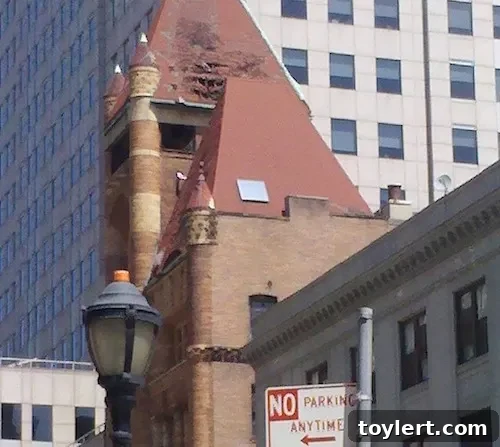
A recent photograph has brought to light the significant and concerning damage afflicting the southern roof of 29 Jay Street, a distinguished building recognized as the Brooklyn Firequarters. This structure holds invaluable historical and architectural significance, proudly standing as a designated landmark within the vibrant borough of Brooklyn. The visible deterioration not only mars its aesthetic appeal but also raises serious questions about the preservation efforts for one of the city’s cherished historical assets. The image, capturing the extent of the roof damage, serves as a stark reminder of the continuous challenges faced in maintaining New York City’s treasured heritage buildings.
The alarming state of the roof has prompted renewed calls for immediate action, especially given the building’s landmark status which inherently demands meticulous upkeep. While discussions around its restoration have circulated for years, the current visual evidence underscores a pressing need to move beyond planning and into tangible reconstruction. The community, residents, and preservationists alike are keenly observing the situation, hoping for a swift and effective resolution that honors the legacy of 29 Jay Street and secures its future for generations to come.
A Glimpse into the Past: The Enduring Legacy of Brooklyn Firequarters
The building at 29 Jay Street is more than just an address; it embodies a rich tapestry of Brooklyn’s history, serving for many years as a vital fire station. Firehouses, historically, were not merely functional structures but cornerstones of their communities, symbolizing protection, bravery, and civic pride. The architecture of such buildings often reflects the era in which they were constructed, showcasing intricate details, robust materials, and a sense of permanence designed to inspire confidence and respect. The Brooklyn Firequarters, with its distinctive features, stands as a testament to this architectural legacy, contributing significantly to the urban fabric and cultural identity of its neighborhood.
Its landmark designation is a formal recognition of this intrinsic value, signifying its importance to the city’s historical, cultural, and architectural landscape. This status is meant to protect the building from inappropriate alterations and neglect, ensuring its preservation for future generations. However, as the recent imagery suggests, even landmarked properties can fall victim to the ravages of time and, perhaps, administrative oversight. Understanding the historical context of 29 Jay Street amplifies the urgency of its current predicament, reminding us that these buildings are living monuments to our past, deserving of diligent care and thoughtful restoration.
The Visible Scars: Major Damage to the Southern Roof
The recently surfaced photograph distinctly illustrates considerable damage to the southern portion of the roof at 29 Jay Street. Such damage, often originating from leaks, can quickly escalate, leading to a host of structural and interior issues. A compromised roof is an open invitation for water infiltration, which can rot supporting timber, degrade masonry, and foster mold growth, all of which pose significant threats to the building’s integrity and occupants’ health. In a landmark structure like the Brooklyn Firequarters, this type of neglect is particularly disheartening as it undermines the very purpose of its protected status.
The visible deterioration is not merely an aesthetic problem; it can accelerate the decay of the entire building, potentially compromising its stability and safety. The impact extends beyond the physical structure, casting a shadow over the neighborhood’s commitment to preserving its historical assets. Addressing roof damage promptly and comprehensively is crucial in any building, but it becomes an imperative when dealing with a landmark. Procrastination can lead to more extensive and costly repairs down the line, ultimately jeopardizing the building’s long-term viability and the public’s investment in its preservation.
Community Hopes and Historical Initiatives: The Pratt Area Community Council’s Role
Back in 2010, there was a significant glimmer of hope for the beleaguered Brooklyn Firequarters. The Pratt Area Community Council (PACC), a respected organization dedicated to community development and preservation, successfully secured a grant specifically earmarked for the restoration of this historic building. This initiative was met with considerable optimism, as it represented a concrete step towards rescuing a valuable piece of Brooklyn’s heritage. PACC’s involvement underscored the power of local advocacy and the critical role community organizations play in driving preservation efforts where governmental action might be slow or insufficient.
Grants of this nature are fundamental to the survival of many historic buildings. They provide the much-needed financial impetus to undertake complex restoration projects that often involve specialized skills, materials, and extensive planning. The securing of the grant by PACC was a testament to the recognized importance of 29 Jay Street and the collective desire to see it revived. However, despite this early success and the initial enthusiasm, the building has remained under city ownership, and the anticipated restoration has not yet materialized, leaving many to wonder about the fate of these crucial funds and the reasons behind the prolonged delay.
The Bureaucratic Maze: City Ownership and HPD’s Maintenance Record
The fact that 29 Jay Street remains under city ownership introduces a unique set of challenges to its restoration. While public ownership can sometimes secure a building’s future, it often comes with the complexities of bureaucratic processes, budget cycles, and shifting priorities. The property is currently overseen by the Department of Housing Preservation and Development (HPD), an agency primarily responsible for promoting quality housing and ensuring the safety of residential properties across New York City. However, their purview can also extend to other city-owned buildings, including former municipal facilities like firehouses.
As noted by Damon Strub, the architect involved in the project, HPD’s “usual level of maintenance” on this particular building has been a source of significant frustration. This implies a standard of care that falls short of what a landmarked property, and indeed any property, requires for its long-term preservation. The challenges faced by large city agencies in managing a vast portfolio of properties are immense, often constrained by limited resources, complex procurement rules, and the sheer volume of competing demands. Nevertheless, the integrity of a landmarked building necessitates a higher degree of attention and a proactive approach to maintenance, something that appears to be lacking in the case of 29 Jay Street, leading to its current state of disrepair.
An Architect’s Frustration: Damon Strub’s Candid Insights
Damon Strub, the architect tasked with overseeing the potential renovation of 29 Jay Street, has voiced profound frustration regarding the project’s protracted delays and the building’s ongoing deterioration. His candid remarks highlight a common predicament faced by architects and preservationists when dealing with large institutional owners, particularly government agencies. Strub notes that the sloped roof has been damaged for several months, directly attributing the lack of resolution to HPD’s maintenance practices. His observation of their “usual level of maintenance” suggests a systemic issue, where essential repairs are either delayed or inadequately addressed, leading to an exacerbation of existing problems.
The architect’s skepticism about the project moving forward into construction, despite being scheduled for June, is particularly telling. He recounts a history of similar scheduling only for plans to be “cancelled and backed up at the last minute.” This pattern of stops and starts is not only demoralizing for those involved but also economically inefficient. Each delay can lead to increased costs due to inflation, further deterioration of the structure, and the need for re-evaluation of plans. Strub’s heartfelt lament – “It’s a shame that HPD can’t get their act together on this building. It and its tenants deserve better.” – encapsulates the deep concern felt by professionals and the community alike, emphasizing that the building and its potential occupants are being underserved by the current management.
Beyond the Bricks and Mortar: Impact on the Community and Tenants
When Damon Strub states that “it and its tenants deserve better,” he touches upon a crucial aspect often overlooked in the discussion of building preservation: the human element and the broader community impact. While 29 Jay Street was historically a firehouse, the term “tenants” might refer to current occupants if the building has been repurposed, or it could be a broader metaphorical reference to the community that benefits from or is affected by the building’s presence. A neglected landmark can become an eyesore, detracting from neighborhood aesthetics, potentially lowering property values, and conveying a sense of civic indifference.
Moreover, the deterioration of a historic building can strip a community of a tangible connection to its past, diminishing its unique character and cultural identity. For residents, especially those living nearby, witnessing a significant piece of their shared history fall into disrepair can be disheartening, eroding pride in their neighborhood. A successfully restored 29 Jay Street, however, could serve as a beacon of community revitalization, potentially offering new public spaces, cultural centers, or housing that enhances the quality of life for all. The well-being of a community is inextricably linked to the care and respect shown for its architectural heritage.
The Imperative of Preservation: Why Landmarks Like 29 Jay Street Matter
The ongoing saga of 29 Jay Street serves as a poignant reminder of the vital importance of historic preservation. Landmark buildings are not merely old structures; they are irreplaceable repositories of our collective memory, embodying architectural artistry, historical narratives, and cultural values. Preserving them is an act of stewardship for future generations, allowing them to connect directly with the past and understand the evolution of their communities. Economically, historic preservation can be a powerful driver of local economies, attracting tourism, fostering local businesses, and often increasing property values in surrounding areas.
Furthermore, from an environmental perspective, reusing and restoring existing buildings is inherently sustainable, reducing the demand for new construction materials and minimizing landfill waste. The cost of neglecting a landmark like the Brooklyn Firequarters far outweighs the investment in its timely restoration. Allowing it to deteriorate to a point where extensive and emergency interventions are required, or worse, risking its structural integrity, represents a failure to uphold our responsibility to history and to the future. The fate of 29 Jay Street underscores the continuous need for proactive policies, adequate funding, and robust community engagement to ensure that Brooklyn’s landmarks endure.
Paving the Way Forward: Advocating for Immediate Action and Sustainable Solutions
The current state of 29 Jay Street demands immediate and decisive action. To safeguard this significant Brooklyn landmark, a concerted effort is required from all stakeholders. This includes HPD, community organizations like PACC, local elected officials, and concerned citizens. The first critical step must be to honor the existing commitment and ensure that the renovation project, already plagued by delays, is swiftly moved into the construction phase. This would involve a clear communication strategy from HPD, outlining definitive timelines and committing to transparent progress reports.
Beyond immediate repairs, a long-term strategy for the sustainable maintenance and future use of 29 Jay Street is essential. This could involve exploring partnerships with non-profit organizations for ongoing stewardship, securing dedicated funding streams for landmark properties, or even considering alternative ownership models that ensure proactive care. Public awareness campaigns and continued community advocacy can play a crucial role in maintaining pressure on authorities and rallying support for the building’s revival. The vision for a fully restored Brooklyn Firequarters should extend beyond mere structural integrity to envision its potential as a vibrant community asset, contributing anew to the cultural and social life of Brooklyn for many years to come.
Resources and Further Information
For more details on the earlier efforts to restore the Brooklyn Firequarters and continued updates, please refer to the articles below:
Fix-Up for Jay Street Firehouse [Brownstoner]
To locate 29 Jay Street (also often referenced as 365 Jay Street in some historical contexts) on a map and understand its vicinity:
GMAP