Preserving Brooklyn’s Legacy: The Fight to Landmark Historic Firehouses
Brooklyn, a borough rich in history and architectural diversity, is constantly evolving. Amidst this change, the preservation of its iconic structures becomes paramount. Recently, the Landmarks Preservation Commission (LPC) convened for two crucial public hearings concerning the proposed landmark designation for two historically significant Brooklyn firehouses. While no immediate vote was cast, the hearings underscored the deep architectural and communal value embedded in these buildings, sparking vital conversations about protecting New York City’s built heritage for future generations. These structures represent more than just brick and mortar; they are enduring symbols of public service, architectural prowess, and the vibrant history of their respective neighborhoods.
The Enduring Significance of Historic Firehouses
Firehouses, often overlooked in the broader context of urban development, hold a unique place in a city’s history. They are not merely functional buildings; they are critical infrastructure that facilitated the growth and safety of communities, standing as monuments to the brave men and women who served. Architecturally, firehouses frequently showcase the dominant styles of their era, reflecting the aesthetic values and construction techniques prevalent during their inception. Their sturdy designs and prominent locations often made them focal points in their neighborhoods, contributing significantly to the civic identity and streetscape. Preserving these buildings ensures that the architectural narratives of our cities remain intact and that the legacy of public service continues to inspire.
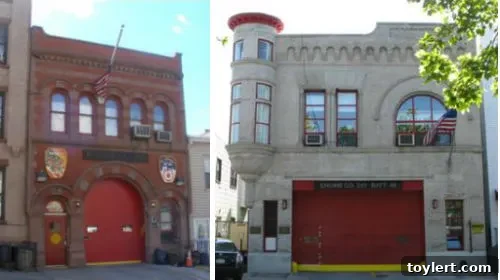
The two Brooklyn firehouses under consideration, Engine Company 28 (now Engine Company 228) and Engine Company 40, are prime examples of this legacy. Both are exemplary specimens of the Romanesque Revival style, an architectural movement popular in the late 19th century known for its robust character, intricate detailing, and fortress-like appearance. Their proposed landmark status seeks to protect them from inappropriate alterations or demolition, ensuring their architectural integrity and historical narrative are maintained.
Engine Company 228: A Romanesque Revival Gem in Sunset Park
436 39th Street, Borough of Brooklyn
- Block: 709/ Lot 19
- Built: 1891
- Architect: Department of City Works
- Original Owner: Brooklyn Fire Department
- Style: Romanesque Revival
Originally established as Engine Company 28 in 1890, this firehouse at 436 39th Street in Sunset Park was a direct response to the burgeoning population and rapid development of the area. As Sunset Park transitioned from a rural expanse to a bustling commercial and residential hub in the late 19th century, the demand for robust public services, particularly fire protection, became critical. Initially housed in rented quarters, the company proudly moved into its purpose-built firehouse in December 1891, a testament to Brooklyn’s commitment to modern civic infrastructure.
The building itself is a magnificent example of the Romanesque Revival style. Its distinctive stone and brick facade, characterized by its substantial massing and visual strength, immediately commands attention. Large, round-arched openings, a hallmark of the Romanesque aesthetic, punctuate the lower levels, originally designed to accommodate horse-drawn fire apparatus. These arches are not merely functional; they contribute significantly to the building’s imposing and elegant presence. Decorative moldings further enhance the facade, adding layers of intricate detail that speak to the craftsmanship of the era.
The LPC specifically highlighted how this structure provides a “distinctive presence on the busy streets of Sunset Park,” a sentiment that resonates deeply with local residents and architectural historians alike. Its design, robust and enduring, reflects the prosperity and civic pride of Brooklyn during the 1890s. The architects from the Department of City Works masterfully blended functionality with aesthetic appeal, creating a building that was both highly practical for its original purpose and remarkably beautiful.
The operational history of this firehouse is also intertwined with the evolution of New York City’s public services. The Brooklyn Fire Department, a paid professional force established in 1869, played a crucial role in securing the city. Upon consolidation with the City of New York in 1898, the house was reorganized and renamed Engine 128. Later, a subsequent reorganization led to its current designation as Engine 228, a name it has proudly carried to this day. Throughout these administrative changes, the firehouse has maintained its continuous service, standing as a vigilant guardian of the Sunset Park community. Its enduring presence not only offers essential public safety but also acts as a vital civic anchor in this dynamic section of Brooklyn, connecting past generations with the present.
Engine Company 40: Modernization and Asymmetry on Prospect Avenue
1307-1309 Prospect Avenue, Borough of Brooklyn
- Built: 1895
- Architect: Department of City Works (likely, given the era and public ownership)
- Original Owner: Brooklyn Fire Department
- Style: Romanesque Revival
Further demonstrating Brooklyn’s commitment to state-of-the-art firefighting infrastructure, Engine Company 40, located at 1307-1309 Prospect Avenue, was constructed in 1895. This period marked a significant campaign by the Brooklyn Fire Commissioner to systematically replace older, often inadequate firehouses with modern, purpose-built facilities. The initiative was driven by a need to adapt to technological advancements in firefighting equipment, accommodate the city’s rapidly expanding population, and enhance the overall efficiency and responsiveness of the fire department. These new buildings were designed to be more durable, spacious, and better equipped to house the increasingly sophisticated apparatus and personnel.
Engine Company 40 stands as another superb example of the Romanesque Revival style, yet it presents its own distinct architectural character. Crafted with a blend of robust limestone and brick, its facade exudes strength and durability. What sets this particular firehouse apart, however, is its striking asymmetrical design. Unlike the more balanced compositions often found in Romanesque Revival architecture, Engine Company 40 embraces an off-center elegance that adds visual intrigue and dynamic movement to its exterior. This asymmetry might have been a practical response to site constraints or an artistic choice to break from convention, offering a unique interpretation of the popular style.
The building’s design, featuring varied window sizes and placements, and potentially a tower or distinct entry bay, contributes to its individualistic appeal. The use of different materials and textural variations between the limestone and brick further accentuates its unique qualities. These details collectively create a visual richness that is characteristic of high-quality late 19th-century public architecture.
Like its counterpart in Sunset Park, Engine Company 40 has served its community continuously since its completion. It represents a vital piece of the city’s operational history, reflecting the foresight and investment made by the Brooklyn Fire Department to safeguard its citizens. Its proposed landmark designation is a recognition of its architectural merit and its integral role in the civic life and historical fabric of the neighborhood surrounding Prospect Avenue.
The Landmarks Preservation Commission: Guardians of NYC’s Heritage
The Landmarks Preservation Commission (LPC) plays a pivotal role in protecting New York City’s architectural, historical, and cultural heritage. Established in 1965, the LPC is responsible for identifying and designating individual landmarks and historic districts, thereby safeguarding them from inappropriate alteration or demolition. The process of landmark designation is thorough and involves extensive research, public hearings, and careful consideration of a property’s historical, architectural, and cultural significance.
For structures like these Brooklyn firehouses, landmark status means they will be subject to the LPC’s review process for any proposed exterior changes, ensuring that their distinctive features and historic character are preserved. This protection is crucial for maintaining the visual and historical authenticity of New York’s neighborhoods. The recent hearings for Engine Company 228 and Engine Company 40 underscore the Commission’s ongoing commitment to identifying and protecting buildings that tell the story of the city’s past and contribute significantly to its present identity.
The public hearings provide a forum for community members, preservationists, and property owners to voice their perspectives, which the LPC takes into account before making a final decision. Such engagement is vital, as it ensures that designations reflect not only expert architectural opinion but also the collective value that communities place on their historic assets.
A Future Secured for Brooklyn’s Firefighting Past
The potential landmark designation of Engine Company 228 and Engine Company 40 is a significant step towards celebrating and preserving Brooklyn’s rich heritage. These two Romanesque Revival firehouses are more than just old buildings; they are tangible links to a bygone era of rapid urban expansion, architectural ambition, and unwavering public service. They tell stories of communities coming into their own, of a city building robust infrastructure, and of the enduring spirit of its fire departments.
By safeguarding these structures, the Landmarks Preservation Commission, alongside dedicated community members and preservation advocates, ensures that these architectural treasures will continue to stand as proud testaments to Brooklyn’s past, inspiring appreciation for history and design in future generations. Their continued presence will enrich the streetscapes of Sunset Park and Prospect Avenue, reminding everyone of the foundational role these civic buildings played, and continue to play, in defining the borough’s unique character. The vote, when it comes, will not just be about two buildings; it will be about affirming the value of history in a constantly evolving city.