Empire Stores Dumbo: Unpacking the Controversial Glass Rooftop Addition and Preservation Debate
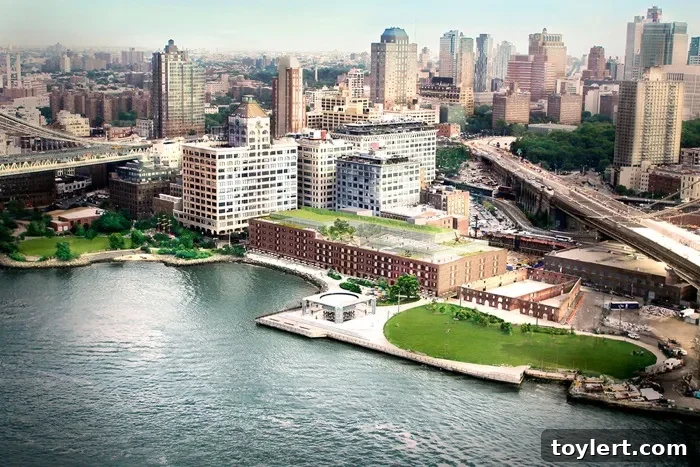
The picturesque waterfront neighborhood of Dumbo, Brooklyn, known for its cobblestone streets, stunning views of the Manhattan skyline, and iconic industrial architecture, became the focal point of a significant preservation debate. At the heart of this discussion lay the venerable Empire Stores warehouses, a set of historic buildings slated for an ambitious adaptive reuse project. However, a specific aspect of the proposed renovation—a sleek, glassy rooftop addition—ignited fervent opposition from local residents and ardent preservationists. This contentious proposal eventually faced a critical review by the Landmarks Preservation Commission (LPC), whose decision underscored the delicate balance between modern development and the imperative to safeguard historical integrity.
The Iconic Empire Stores: A Glimpse into Dumbo’s Past
Before delving into the controversy, it’s essential to understand the significance of Empire Stores. Located at the nexus of Dumbo’s vibrant community and the East River, these massive brick warehouses stand as enduring relics of Brooklyn’s industrial past. Constructed between 1869 and 1885, they were once bustling hubs for coffee, sugar, and spice storage, crucial to New York City’s commercial prowess. Their robust, Romanesque Revival architecture, characterized by thick brick walls, arched windows, and a commanding presence along the waterfront, tells a story of an era when Brooklyn’s docks were integral to global trade. For decades, these buildings lay dormant, contributing to Dumbo’s somewhat derelict, yet charming, industrial aesthetic. Their potential for adaptive reuse represented a chance to breathe new life into these historic structures, transforming them into a contemporary mixed-use destination while honoring their heritage.
The Adaptive Reuse Vision: Modernity Meets History
The overarching plan for Empire Stores involved a substantial adaptive reuse initiative, a common practice in urban renewal that seeks to repurpose old buildings for new functions while retaining their historical character. This project envisioned transforming the abandoned warehouses into a vibrant complex featuring retail spaces, office environments, restaurants, and public areas, including a much-anticipated rooftop park. Adaptive reuse is lauded for its sustainable benefits, reducing the demand for new construction materials, minimizing waste, and, crucially, preserving the architectural legacy of a city. The developers aimed to create a modern commercial and cultural hub that would complement Dumbo’s evolving identity as a creative and tech-savvy neighborhood, drawing visitors and businesses alike to its unique setting.
The Spark of Controversy: A Glassy Rooftop Proposal
Amidst the excitement for revitalization, one design element emerged as a flashpoint for widespread concern: the proposed two-story glassy rooftop addition. Envisioned as a contemporary crown atop the historic brick edifice, this modern structure was intended to provide additional commercial space, offering panoramic views of the Manhattan skyline and the Brooklyn Bridge. The architectural approach often championed such additions as a way to clearly distinguish new construction from the old, creating a dialogue between different eras. Proponents argued that a transparent, lightweight structure would minimize visual impact and allow the historic brickwork to remain the dominant feature. However, this interpretation clashed sharply with the sensibilities of local residents and preservation groups.
Community and Preservationist Outcry
The unveiling of the glassy rooftop plans immediately triggered a wave of objections. Residents, who cherished Dumbo’s historic character, expressed alarm that the addition would irrevocably alter the iconic silhouette of the Empire Stores. Preservationists, dedicated to maintaining the architectural integrity of designated landmarks, argued that the proposed glass structure was out of sync with the building’s robust Romanesque Revival style. They feared that such a starkly modern intervention would detract from, rather than enhance, the historical narrative of the warehouses. The sentiment was clear: while adaptive reuse was welcomed, the method of expansion had to be sensitive to the existing fabric. The Daily Eagle reported on the growing chorus of dissent, noting that a significant turnout at a Landmarks meeting highlighted the depth of community feeling.
The Landmarks Preservation Commission Steps In
The focal point for this contention was the Landmarks Preservation Commission (LPC). Tasked with safeguarding New York City’s architectural, historical, and cultural heritage, the LPC plays a critical role in reviewing any proposed changes to designated landmarks or buildings within historic districts. Their approval is mandatory for projects like the Empire Stores adaptive reuse. At the Tuesday meeting, residents and preservationists seized the opportunity to articulate their objections directly to the commissioners. Their arguments centered on the perceived incongruity of the glass addition with the building’s original design and the potential for it to diminish the historic value of the entire complex. The atmosphere was charged with a clear desire to protect Dumbo’s unique heritage.
The Commissioners’ Verdict: A Rejection of “Generic Quality”
The commissioners, after carefully considering the proposal and listening to public testimony, ultimately sided with the objectors. Their decision was a clear rejection of the specific design put forth for the glassy rooftop addition. The Daily Eagle’s report highlighted the commissioners’ candid remarks, which offered insight into their concerns:
- Material Mismatch: One commissioner explicitly stated that any rooftop construction should “better match the brick of the historic buildings.” This highlighted a preference for material continuity or, at the very least, a harmonious material relationship, rather than a jarring contrast.
- “Generic Quality”: Another commissioner voiced strong disapproval, stating, “I am troubled by its generic quality.” This criticism suggested that the design lacked distinctiveness or sensitivity to its unique historical context, appearing as a standard, off-the-shelf modern addition rather than a bespoke solution for a landmark building.
- “Too Slick Looking”: A third commissioner described the design as “too slick looking,” further emphasizing the perceived stylistic disconnect. The polished, contemporary aesthetic was seen as an uncomfortable juxtaposition against the rugged, weathered charm of the 19th-century warehouses.
Collectively, these comments underscored the LPC’s commitment to maintaining the authenticity and character of historic structures. The commissioners weren’t inherently against rooftop additions but demanded that such interventions be thoughtfully conceived, respectful of the existing architecture, and avoid a sense of generic modernism imposed upon a unique historical canvas.
The Broader Implications for Adaptive Reuse and Historic Districts
The LPC’s decision on the Empire Stores rooftop addition carries significant weight beyond Dumbo. It serves as a powerful reminder of the inherent tensions and necessary compromises involved in adaptive reuse projects, especially within designated historic districts:
- Balancing Modernity and Preservation: The case exemplifies the perpetual challenge of integrating contemporary design with historical architecture. While modern additions can bring new life and functionality, they must do so without overshadowing or disrespecting the original structure.
- The Role of Public Opinion: Community engagement and activist groups play a vital role in shaping urban development. The vocal opposition from Dumbo residents and preservationists clearly influenced the LPC’s deliberations, demonstrating the power of collective advocacy.
- Defining “Appropriate” Design: The rejection of a “generic quality” and “too slick” aesthetic pushes designers and developers to consider more nuanced and context-specific approaches when modifying historic buildings. It encourages innovation that is rooted in respect for the past.
- Setting Precedents: This decision could influence future proposals for developments in other historic areas across New York City and beyond, emphasizing a higher standard for rooftop additions on landmark properties.
Designing for the Future, Respecting the Past
The Empire Stores controversy highlights a crucial aspect of urban development: the need for architectural solutions that are both forward-thinking and deeply rooted in historical context. When considering additions to historic buildings, designers often explore several sensitive approaches:
- Setbacks: Placing new structures inward from the building’s edge, making them less visible from street level.
- Material Harmony: Using materials that complement the existing structure, either through contrast that is subtle and well-integrated or through matching tones and textures.
- Scale and Proportion: Ensuring that any addition respects the overall scale and rhythm of the historic building, avoiding dominance.
- Reversible Design: Sometimes, new elements are designed to be reversible, meaning they could be removed in the future without damaging the original structure.
The Dumbo debate underscores that for historic landmarks like Empire Stores, the choice of design is not merely aesthetic; it’s a statement about a city’s values and its commitment to preserving its unique narrative for future generations.
Conclusion: A Win for Dumbo’s Heritage
The Landmarks Preservation Commission’s decision regarding the glassy rooftop addition to Empire Stores in Dumbo marked a significant moment for historic preservation in New York City. It reaffirmed the principle that even in an era of rapid development and innovative architectural ambition, the unique character and historical integrity of landmark buildings must be protected. The strong objections from residents and preservationists, coupled with the commissioners’ decisive comments on the “generic quality” and material mismatch, sent a clear message: adaptive reuse projects must be executed with profound sensitivity and respect for the past. While the Empire Stores complex has since been successfully transformed into a vibrant mixed-use destination, the debate over its rooftop stands as a powerful testament to Dumbo’s unwavering commitment to its industrial heritage and the ongoing dialogue between progress and preservation.
The original report was featured in the Daily Eagle.