Brooklyn’s Dynamic Canvas: Exploring History, Development, and Community Life
Brooklyn, New York’s most populous borough, stands as a vibrant tapestry woven from rich history, groundbreaking development, and an unparalleled sense of community. From its iconic brownstones to its bustling waterfronts, Brooklyn continues to evolve, drawing attention for its unique blend of past and present. This article delves into various facets that define Brooklyn’s enduring appeal, touching upon critical moments in its urban planning, real estate shifts, community dynamics, and intriguing historical debates.
Preserving the Past, Shaping the Future: Urban Planning and Landmark Protection
The Landmarks Preservation Commission Tackles its Backlog
In a city as historically rich as New York, the role of the Landmarks Preservation Commission (LPC) is paramount. Tasked with safeguarding the architectural, historical, and cultural heritage of NYC, the LPC often faces the monumental challenge of a backlog of sites awaiting designation. The year 2016 marked a significant period as the LPC announced decisive action to address this substantial list, which included the revered Green-Wood Cemetery. This move signaled a renewed commitment to accelerate the review process, ensuring that worthy historical structures and sites receive the protection they deserve before potentially succumbing to the pressures of modern development.
The backlog issue highlights the delicate balance between urban growth and historical preservation. For decades, numerous properties across the five boroughs, each with compelling historical narratives, lingered in a state of uncertainty. The LPC’s initiative not only aimed to clear this slate but also to streamline future designation processes, making the commission more efficient and responsive to the city’s ever-changing landscape. This effort was widely lauded by preservationists and community advocates who recognized the intrinsic value of these sites to New York’s identity.
Green-Wood Cemetery: A National Historic Landmark
Among the sites considered for designation was Green-Wood Cemetery, an illustrious institution that has been a National Historic Landmark since 2006. Located on the border of Park Slope and Sunset Park, Green-Wood is far more than just a burial ground; it is a sprawling 478-acre oasis of nature, art, and history. Established in 1838, it quickly became a popular tourist attraction in the mid-19th century, second only to Niagara Falls, drawing visitors with its picturesque landscapes, Gothic Revival architecture, and elaborate monuments. Its rolling hills, glacial ponds, and arboretum-like collection of trees provide a vital green space for both human reflection and diverse wildlife.
The cemetery serves as the final resting place for countless historical figures, from artists and politicians to Civil War generals and baseball legends, making it a living archive of American history. Its designation by the LPC would further solidify its protected status, ensuring that its unique blend of funerary art, landscape design, and ecological significance continues to inspire and educate future generations. Green-Wood represents a cornerstone of Brooklyn’s historical fabric, embodying the borough’s commitment to honoring its past while providing a sanctuary within the bustling metropolis.
Tishman Speyer’s Major Deal at Brooklyn Macy’s
In another significant development that underscored Brooklyn’s booming commercial appeal, real estate giant Tishman Speyer finalized a monumental deal involving the iconic Macy’s store in Downtown Brooklyn. This transaction was not merely a property sale; it represented a strategic investment in the heart of one of New York City’s fastest-growing commercial districts. The deal involved the sale of the upper floors of the historic Macy’s building, allowing the retail giant to downsize its physical footprint while retaining its ground-floor presence, and for Tishman Speyer to embark on a massive redevelopment project transforming the upper levels into modern office spaces.
This venture exemplified the larger trend of adaptive reuse and vertical integration in urban real estate. As traditional retail landscapes evolve, developers are finding innovative ways to revitalize landmark department store buildings, converting underutilized space into prime commercial real estate. The transformation of the Macy’s building further cemented Downtown Brooklyn’s reputation as a burgeoning tech and creative hub, attracting new businesses and talent to the borough. Such deals reflect the confidence of major investors in Brooklyn’s sustained economic growth and its future as a vibrant commercial center, seamlessly blending historical facades with contemporary functionality.
The Heartbeat of Brooklyn: Community, Culture, and Urban Quirks
Park Slope Parents’ Fight Club: A Humorous Glimpse into Community Rules
Brooklyn neighborhoods are renowned for their distinct characters, and Park Slope stands out with its picturesque streets, family-friendly atmosphere, and tight-knit community. A humorous article from The New Yorker, titled “Park Slope Parents’ Fight Club: A Friendly Reminder of the Rules,” playfully satirized the unique social dynamics and unspoken codes that often govern affluent, urban parent groups. While entirely fictional, the piece cleverly captured the essence of community-specific norms and the sometimes-intense, albeit often well-intentioned, social competitions that can arise among parents striving for the best for their children.
This satirical take, widely shared and chuckled over, resonated because it touched upon the universal experience of navigating community expectations, whether concerning school choices, stroller etiquette, or organic snack preferences. It highlighted the charmingly particular aspects of Park Slope life, where parental engagement is high, and social circles can feel both supportive and subtly competitive. Such cultural commentaries, even in jest, offer valuable insights into the social fabric of Brooklyn neighborhoods, showcasing how communities, through shared experiences and even shared anxieties, develop their own distinctive “rules” and bonds.
A Makeshift Golf Course on the Brooklyn-Queens Expressway
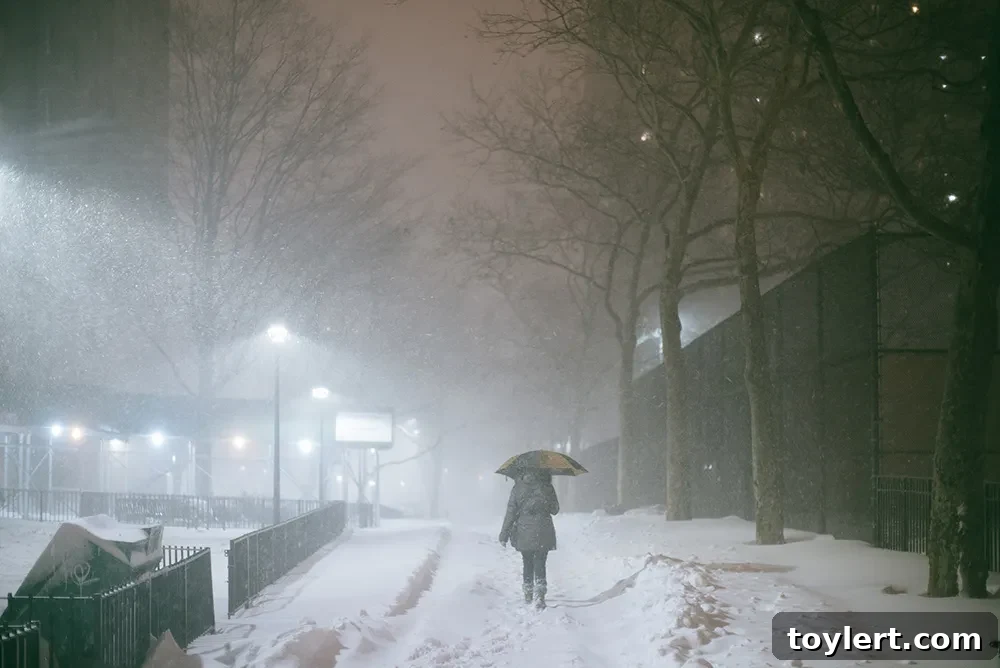
New Yorkers are masters of improvisation, and the city itself often becomes a canvas for spontaneous acts of creativity. One such instance, captured by The Atlantic, featured a truly unique urban spectacle: a makeshift golf course established on a snow-covered section of the Brooklyn-Queens Expressway (BQE). During the massive Winter Storm Jonas in 2016, which blanketed the city in feet of snow and brought traffic to a standstill, enterprising individuals seized the opportunity to transform an ordinarily congested highway into an impromptu recreational area. This creative appropriation of urban space underscored the resilient and resourceful spirit of New Yorkers.
The image of individuals putting and chipping on the BQE became an instant symbol of the city’s ability to find joy and normalcy even amidst unusual circumstances. It was a fleeting moment of whimsy, a rebellion against the urban grind, and a testament to the fact that when the city pauses, its residents often find innovative ways to play. This whimsical act, born from a severe weather event, perfectly encapsulates the ingenuity and lightheartedness that can emerge from the heart of a metropolis, turning an infrastructural behemoth into a temporary playground.
Real Estate and Connectivity: Navigating Brooklyn’s Housing Landscape
A Tale of Two Neighborhoods: Dumbo and The Upper East Side Real Estate Booms
New York City’s real estate market is notoriously complex and diverse, with each neighborhood presenting its own unique narrative. A fascinating comparison often drawn is between Brooklyn’s Dumbo (Down Under the Manhattan Bridge Overpass) and Manhattan’s Upper East Side. While vastly different in character and history, both neighborhoods have experienced significant real estate booms, albeit driven by distinct factors. Dumbo, once an industrial and artist-laden enclave, has transformed into one of Brooklyn’s most expensive and sought-after neighborhoods. Its loft apartments, cobblestone streets, and stunning waterfront views — coupled with its proximity to Manhattan — have attracted a new wave of affluent residents and tech companies, driving property values sky-high.
The Upper East Side, by contrast, has long been synonymous with old money, classic pre-war apartments, and luxurious townhouses. Its real estate market, while always robust, has maintained its elite status through a combination of prestigious addresses, top-tier schools, and cultural institutions. The comparison between Dumbo’s rapid, contemporary luxury development and the Upper East Side’s enduring, traditional affluence highlights the multifaceted nature of NYC’s real estate. It demonstrates how different historical trajectories and cultural identities can both lead to highly desirable, yet distinct, luxury markets within the same city, shaping the urban fabric in unique ways.
The L Train’s Impact: Commute Times and Rent Across NYC Neighborhoods
Transportation is the lifeblood of New York City, and its subway lines are critical determinants of where people live and how much they pay for housing. The L train, connecting Manhattan to several key Brooklyn neighborhoods like Williamsburg, Bushwick, and Canarsie, has long been a vital artery for commuters. The relationship between L train commute times and rental prices is a prime example of how infrastructure directly impacts affordability and desirability across different NYC neighborhoods. Interactive graphs and analyses frequently illustrate this delicate balance: the closer one lives to an L train stop with efficient service, the higher the rent typically climbs.
This dynamic creates a constant push-pull for New Yorkers seeking housing. While proximity to convenient transit is a major draw, the exorbitant rents near popular L train stops often force residents further out into Brooklyn or to consider alternative boroughs. These analyses reveal stark contrasts in housing costs and travel burdens, underscoring the challenges of maintaining affordability in a high-demand market. Understanding these correlations is crucial for urban planners, policymakers, and residents alike, as they shed light on the economic pressures influencing daily life and migration patterns within the city.
Brooklyn’s Culinary Evolution: A Taste of Red Hook
Billy Durney to Open Hometown Fried Chicken in Red Hook
Brooklyn’s culinary scene is a constant source of innovation and excitement, and the borough’s neighborhoods often become epicenters for new gastronomic ventures. Red Hook, with its industrial charm, waterfront views, and tight-knit community, has emerged as a particularly fertile ground for independent eateries. The announcement that Billy Durney, the acclaimed pitmaster behind the legendary Hometown BBQ, planned to open Hometown Fried Chicken in Red Hook, sent ripples of anticipation through the city’s food community. This expansion was more than just a new restaurant; it signaled Durney’s continued commitment to Red Hook and his ability to diversify his culinary offerings while maintaining his signature quality.
Hometown BBQ had already established itself as a pilgrimage site for barbecue aficionados, drawing crowds from across the globe. The prospect of Durney bringing his Midas touch to fried chicken promised another must-visit destination. Such culinary expansions not only enrich the local food landscape but also contribute significantly to the economic vitality and cultural identity of neighborhoods like Red Hook. They transform previously underserved or industrial areas into vibrant dining destinations, attracting visitors and further solidifying Brooklyn’s reputation as a world-class food mecca.
Deep Dive into History: The Enigma of Wallabout’s Name Origins
Beyond the modern developments and dynamic shifts, Brooklyn holds layers of history, often revealing itself in the most unexpected places—like the names of its neighborhoods. The origins of the name “Wallabout,” a historic Brooklyn neighborhood nestled between the Brooklyn Navy Yard and Fort Greene, have long been a subject of fascinating debate among historians and local enthusiasts. This linguistic mystery offers a captivating glimpse into the borough’s Dutch colonial past and the evolution of its cultural landscape.
Tracing the Roots: Dutch Influence and Linguistic Evolution
One prevalent theory suggests that “Wallabout” is a derivative of the Dutch term “Waal Bocht,” which translates roughly to “Walloon Bend” or “Foreigner’s Bend.” The “Waal” part is believed to refer to the Walloons, a group of French-speaking Protestants from what is now Belgium, who were among the earliest European settlers in New Netherland in the 17th century. These Walloons were integral to the initial colonial efforts, and a bend in the East River near their settlement could have easily adopted a descriptive name reflecting their presence. This theory is supported by early Dutch maps and records that show various spellings approximating “Waal Bocht” in the area.
Another perspective, sometimes intertwined with the Walloon theory, posits a more general Dutch origin where “Waal” referred to a harbor or inlet, and “bocht” meaning “bend” or “cove.” This interpretation would simply describe the geographical feature—a curving inlet off the main waterway—which the area certainly is. Over centuries, as the language shifted from Dutch to English, and through various transcriptions by different colonial administrators, “Waal Bocht” could have phonetically evolved into “Wallabout,” mirroring similar transformations of Dutch place names across New York.
Indigenous Heritage and Other Interpretations
While the Dutch theories are strong, some discussions also touch upon potential influences from the indigenous Lenape language, though concrete evidence for this specific name origin is less widely cited. It’s common for colonial names to either absorb or be influenced by native appellations, and the area was certainly home to the Lenape long before European arrival. However, direct linguistic links between “Wallabout” and Lenape terms relating to that specific geographical feature have not gained as much academic consensus as the Dutch interpretations.
The debate surrounding Wallabout’s name highlights the complex layers of history embedded in New York City’s landscape. It serves as a reminder that every street, every neighborhood, carries echoes of its past—from the first indigenous inhabitants to the Dutch settlers, English colonists, and successive waves of immigrants. Understanding these etymological puzzles enriches our appreciation for Brooklyn’s deep historical roots and its ongoing journey of cultural and demographic change. The discussion, often fueled by local historians and passionate community members, underscores the value of preserving these narrative threads that connect contemporary Brooklyn to its earliest foundations.
Brooklyn’s Enduring Legacy
From the landmark decisions of its preservation commission to the innovative spirits shaping its real estate and culinary scenes, Brooklyn continues to captivate and inspire. Its vibrant communities, rich historical narrative, and relentless pursuit of progress make it a truly unique urban experience. Whether it’s the satirical take on Park Slope parenting, the impromptu golf course on a snow-laden highway, or the deep dive into Wallabout’s mysterious origins, Brooklyn’s story is one of constant evolution, marked by a profound respect for its heritage and an unwavering embrace of its future. The borough remains a testament to the dynamic interplay between tradition and modernity, continually redefining what it means to be a New Yorker.