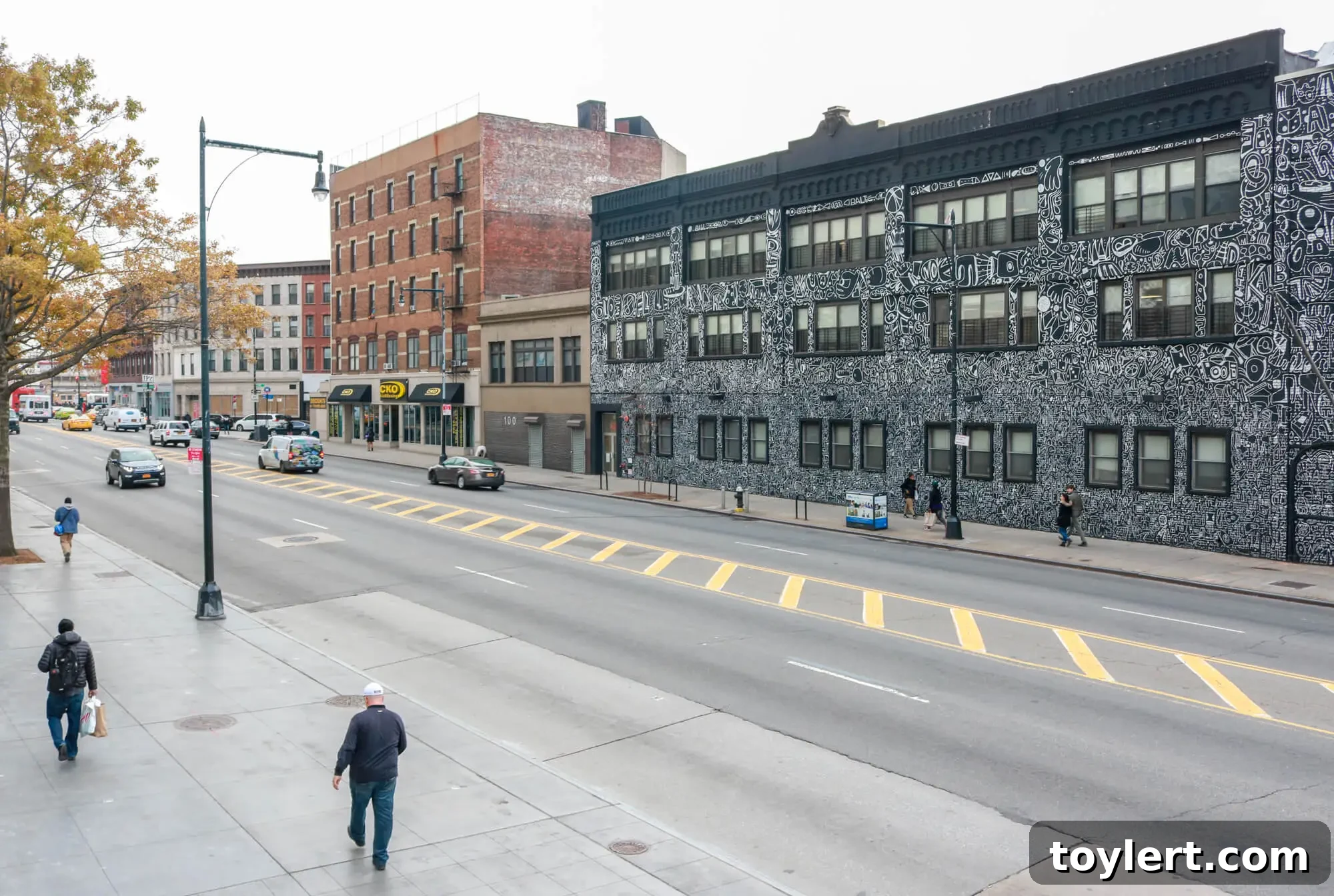
Navigating the intricate landscape of urban development is a perpetual challenge, particularly in a city as dynamic as New York. The proposed 80 Flatbush Avenue project stands as a salient example, encapsulating the complex interplay between developers’ ambitions, community aspirations, and the critical role of public oversight. At the heart of a recent City Council hearing, a profound question echoed through the chamber, posed by Councilmember Stephen Levin: “Is there a way to strike a balance?” This inquiry was directed at both the proponents of the large-scale development and the passionate community advocates gathered to voice their concerns, marking the latest crucial step in the city’s rigorous Uniform Land Use Review Procedure (ULURP) process.
The essence of Levin’s question cut directly to the core of urban planning dilemmas: how to foster growth and address pressing needs like housing and education, while simultaneously preserving the character and liveability of existing neighborhoods. While acknowledging the developers’ “good faith” efforts to address some of the community’s initial issues, a fundamental and unresolved concern loomed large: the project’s sheer size and, critically, its location. The debate surrounding 80 Flatbush Avenue is not just about a single development; it is a microcosm of the broader challenges New York City faces in its relentless pursuit of responsible and equitable growth.
The Heart of the Matter: 80 Flatbush Avenue’s Ambitious Vision
The 80 Flatbush Avenue project, spearheaded by Alloy Development, represents a truly ambitious vision for downtown Brooklyn. The proposal outlines the construction of two towering structures that would dramatically reshape the local skyline. Together, these towers are designed to house approximately 900 apartments, a significant portion of which – 200 units – are designated as affordable housing. Beyond residential space, the plan also includes the creation of two new schools, a crucial amenity for an increasingly dense urban environment. This mixed-use approach aims to create a vibrant hub that integrates residential, educational, and commercial elements into one cohesive development.
Developers often argue that such large-scale projects are essential to meet the burgeoning demand for housing in New York City, particularly in transit-rich areas like Flatbush Avenue. The inclusion of affordable units is frequently cited as a direct response to the city’s pervasive housing crisis, offering opportunities for diverse income levels to reside in desirable neighborhoods. Furthermore, the provision of new schools is presented as a significant community benefit, alleviating pressure on existing educational infrastructure and catering to the needs of new and current residents. From the developer’s perspective, 80 Flatbush Avenue is not merely a construction project; it is an investment in the city’s future, promising economic vitality, increased housing stock, and essential public services.
The ULURP Journey: A Crucial Step for NYC Developments
Any development of this magnitude in New York City must navigate the comprehensive and often contentious Uniform Land Use Review Procedure (ULURP). This multi-stage public review process is designed to ensure that major land use actions, such as rezonings or large-scale development proposals, are thoroughly vetted by community boards, borough presidents, the City Planning Commission, and ultimately, the City Council. The ULURP process is a cornerstone of democratic planning in New York, giving residents and elected officials a formal mechanism to influence the shape of their city.
The public hearing held yesterday morning for 80 Flatbush Avenue was a pivotal moment within this extensive ULURP framework. It provided a direct forum for community members, stakeholders, and developers to present their cases, ask questions, and engage in dialogue with their elected representatives. The City Council’s role in ULURP is particularly critical, as it has the final say in approving, modifying, or rejecting land use applications. This stage often involves intense negotiation and compromise, as councilmembers strive to balance city-wide development goals with specific neighborhood needs and concerns. The rigorous nature of ULURP underscores the profound impact such projects have on the urban fabric and the collective effort required to guide the city’s evolution.
Community Voices: Concerns Beyond the Blueprint
Despite the potential benefits highlighted by the developers, community advocates presented a compelling counter-narrative, centered on the profound implications of the project for their neighborhood. The “fundamental issue left unresolved: the location” encapsulates a spectrum of concerns that go far beyond mere aesthetics. Residents worry about the sheer scale of the development in relation to the existing low-rise and historic character of the surrounding area, fearing a loss of neighborhood identity and a drastic alteration of their quality of life.
Increased density is a primary concern. The addition of 900 new apartments and potentially thousands of new residents, coupled with two schools, raises serious questions about the capacity of existing infrastructure. Local residents voice anxieties over overburdened public transportation systems, increased traffic congestion on already busy streets, and strain on essential services like water, sewer, and sanitation. The towering structures also pose environmental concerns, including significant shadowing over public spaces, parks, and nearby residences, impacting light access and green areas.
Advocates for Responsible Growth
Community advocates, often organized into local associations and coalitions, serve as vigilant guardians of their neighborhoods. Their efforts are not simply anti-development; rather, they advocate for responsible growth that respects existing communities and ensures sustainable development practices. They dedicate countless hours to studying detailed proposals, organizing public meetings, and presenting well-researched arguments to city officials. Their role is to ensure that the voices of those directly impacted are heard and that developers are held accountable for the broader effects of their projects.
While Councilmember Levin noted the developers’ “good faith” efforts to address some community issues, such as potential modifications to building design or specific concessions, advocates often feel that these efforts do not fully mitigate the fundamental issues tied to the project’s scale and its proposed location. For many residents, the concern is not whether development should happen, but rather what kind of development is appropriate for a specific site, and whether the proposed benefits truly outweigh the potential drawbacks to their established community and way of life.
Councilmember Stephen Levin’s Balancing Act
Councilmember Stephen Levin, representing the district where 80 Flatbush Avenue is located, finds himself in a uniquely challenging position. As an elected official, his responsibility is twofold: to represent the immediate interests of his constituents who live and work in the affected area, and to consider the broader needs of the city as a whole, including its demand for housing and economic development. His repeated question, “What is appropriate on a lot like this?” underscores the inherent difficulty in finding an equitable solution that satisfies all parties.
Mediating between powerful developers, who often present compelling arguments for growth and investment, and passionate community groups, who articulate legitimate concerns about their neighborhood’s future, requires immense skill and political acumen. Levin’s role is not just to preside over a hearing, but to actively seek common ground, explore potential compromises, and ultimately, make a decision that he believes best serves the public interest. This often involves intricate negotiations to secure additional community benefits, modify building designs, or even scale back certain aspects of a proposal in exchange for community support.
The Search for Compromise
The concept of “striking a balance” is deceptively simple. In practice, it means grappling with trade-offs. For developers, compromise might mean reducing height, increasing affordable housing percentages, or investing more significantly in local infrastructure. For the community, it might involve accepting a certain degree of change and density in exchange for guaranteed amenities or protections. A true balance implies that neither side gets everything it wants, but both sides gain something meaningful, and the overall outcome is perceived as a net positive for the city and its residents.
However, achieving this balance is rarely straightforward. The emotional investment of residents in their homes and neighborhoods often clashes with the economic imperatives driving large-scale development. The decisions made regarding projects like 80 Flatbush Avenue set important precedents for future urban planning, making the search for compromise not just a negotiation tactic, but a fundamental exercise in shaping the future of Brooklyn and New York City at large.
Beyond 80 Flatbush: Broader Implications for Urban Development
The intense debate surrounding 80 Flatbush Avenue is far from an isolated incident; it serves as a powerful microcosm of the complex urban development challenges faced by New York City and other global metropolises. As urban populations continue to grow, cities grapple with an escalating demand for housing, infrastructure, and public services. Developments like 80 Flatbush Avenue are often proposed as solutions to these pressing needs, promising to inject new life, economic activity, and much-needed residential units into existing neighborhoods.
However, these projects frequently ignite fierce debates about gentrification, displacement, and the preservation of local character. The tension between promoting growth and safeguarding community identity is a constant struggle in a city undergoing rapid transformation. Developers often emphasize the economic benefits and the creation of jobs, while community members focus on the potential for increased rents, displacement of long-time residents and businesses, and the irreversible alteration of their beloved neighborhoods. The outcome of such projects often reflects the city’s broader priorities regarding housing affordability, sustainable growth, and social equity.
The Future of Brooklyn Development
Brooklyn, in particular, has experienced a dramatic surge in development over the past two decades, transforming many of its once industrial or low-rise areas into dense, vibrant urban centers. Decisions made today regarding projects like 80 Flatbush Avenue will undoubtedly set precedents for future developments across the borough. They will influence zoning regulations, impact design standards, and shape expectations for community benefits and public engagement. Therefore, the discussions at the City Council hearing are not merely about one lot; they are about defining the future trajectory of urban evolution in one of the world’s most dynamic cities.
Thoughtful urban planning, which integrates community input with strategic development goals, is crucial for fostering sustainable growth. This means not just building more, but building smarter – creating developments that are well-integrated into their surroundings, provide genuinely affordable housing options, and enhance rather than detract from the quality of life for both new and existing residents. The Flatbush Avenue project underscores the ongoing necessity for transparent processes, robust public engagement, and a genuine commitment to balancing the diverse needs and aspirations of all New Yorkers.
Striking the Balance: An Ongoing Dialogue
Councilmember Stephen Levin’s simple yet profound question—”Is there a way to strike a balance?”—remains central to the ongoing discourse surrounding the 80 Flatbush Avenue development. This question is not just a rhetorical device; it is a call to action, urging all stakeholders to move beyond entrenched positions and actively seek mutually beneficial solutions. The ULURP process, with its public hearings and deliberative stages, serves as the primary arena for this critical dialogue.
Ultimately, the resolution of the 80 Flatbush Avenue dilemma will reflect the collective will and priorities of New York City. It will demonstrate whether the city can successfully integrate significant new development while honoring the concerns of its existing communities. The path forward demands continued engagement, a willingness to compromise, and a shared vision for a Brooklyn that is both thriving and equitable for all its residents. The search for balance in urban development is never truly over; it is an ongoing, essential dialogue that continuously shapes the future of our urban landscape.