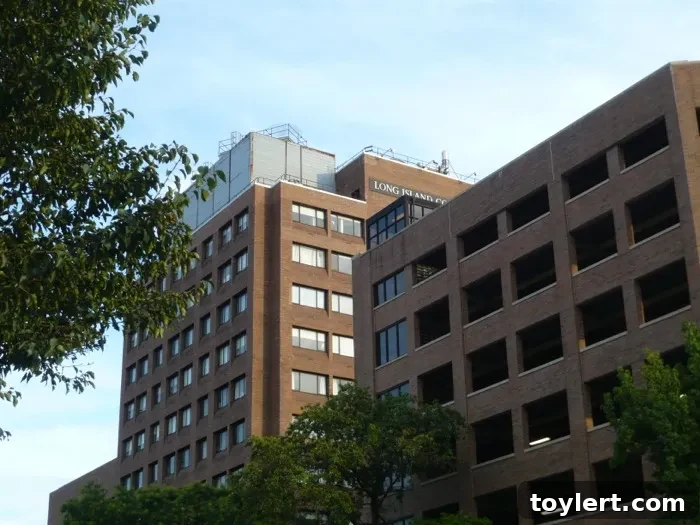
The Future of Long Island College Hospital: A Pivotal Moment for Brooklyn Healthcare
On the evening of March 24, 2014, a critical juncture in the history of Brooklyn’s healthcare landscape unfolded at St. Francis College in Brooklyn Heights. Nine prospective bidders convened to unveil their detailed visions for the future of Long Island College Hospital (LICH), a cherished institution whose fate had become a focal point of intense community debate and legal battles. This public presentation represented a crucial step in resolving the complex challenges surrounding LICH, setting the stage for a decision that would profoundly impact the health services, economic development, and overall fabric of this vibrant Brooklyn neighborhood. The diverse array of proposals presented that night underscored the multifaceted interests at play, ranging from the desire to preserve comprehensive medical care to ambitious real estate development opportunities, each vying for a chance to redefine a significant piece of Brooklyn’s legacy.
Understanding the Legacy and Crisis of Long Island College Hospital (LICH)
Long Island College Hospital, affectionately known as LICH, had served the communities of Brooklyn Heights, Cobble Hill, Carroll Gardens, and beyond for over 150 years. Established in 1858, it was more than just a hospital; it was an integral part of the community, a major employer, and a symbol of reliable healthcare access. Its comprehensive services, including a robust emergency department, specialized clinics, and a teaching affiliation, made it indispensable to countless residents. However, like many urban medical centers, LICH faced escalating financial difficulties in the early 21st century. These challenges eventually led to its operation being transferred to the State University of New York (SUNY) Downstate Medical Center. Despite SUNY’s efforts, the financial strain persisted, ultimately prompting SUNY to seek to close the facility, triggering widespread outrage and legal action from community groups, healthcare advocates, and labor unions determined to save their local hospital.
The impending closure and subsequent community outcry highlighted a broader national debate about the sustainability of urban hospitals and the balance between financial viability and public health needs. The legal battles between SUNY and the community culminated in a settlement reached in February 2014, which mandated a transparent process for evaluating bids from entities interested in acquiring and developing the LICH site. This settlement paved the way for the pivotal public presentations, ensuring that community input remained a crucial component in determining the hospital’s future and ensuring that any decision would factor in the vital healthcare needs of Brooklyn residents.
The Request for Proposals (RFP) Process: A Search for Sustainable Solutions
Following the legal settlement, SUNY issued a comprehensive Request for Proposals (RFP) to solicit bids for the acquisition and redevelopment of the Long Island College Hospital campus. The RFP sought innovative and sustainable solutions that could address both the site’s economic potential and the pressing healthcare needs of the surrounding community. This rigorous process aimed to attract a wide range of contenders, from established healthcare providers to ambitious real estate developers, each tasked with outlining how they would transform the historic LICH property. The urgency was palpable, with a tight deadline for proposal submissions and an equally swift evaluation period. The diverse responses reflected the complexity of the challenge: how to breathe new life into a historic property while ensuring continued access to vital medical services in a densely populated urban area.
Diverse Visions: Unpacking the Nine Bidding Concepts for LICH
The nine proposals presented offered a wide spectrum of possibilities for the Long Island College Hospital site, reflecting varied priorities and development philosophies. These visions could broadly be categorized into three main approaches: preserving LICH as a full-service hospital, creating hybrid models incorporating freestanding emergency rooms with mixed-use developments, and a unique “vanilla box” healthcare space concept. Each proposal represented a significant investment of time and resources, underscoring the high stakes involved in securing this prime Brooklyn real estate and shaping its future use.
Full-Service Hospital Revival: A Community Priority
A significant portion of the bids—specifically four out of the nine—expressed a commitment to operating LICH as a full-service hospital. This approach resonated strongly with community advocates and labor unions, who vehemently campaigned for the continuation of comprehensive inpatient and emergency services. Proposals in this category typically outlined plans for maintaining or expanding existing medical departments, ensuring continuity of care, and addressing the immediate healthcare access concerns of the Brooklyn Heights and surrounding neighborhoods. The proponents of a full-service hospital emphasized the critical role LICH played in providing a wide array of medical services, including surgery, intensive care, and specialized treatment, which are vital for a dense urban population. They sought to demonstrate financial models that could sustain such operations, often highlighting strategic partnerships or innovative management structures designed to overcome past financial hurdles. This category of proposals represented the most direct response to the community’s passionate plea for the preservation of a fully functional hospital, aiming to restore LICH to its former glory as a pillar of local healthcare.
The Hybrid Model: Freestanding ERs and Mixed-Use Developments
Four other bidders proposed a more hybridized approach, focusing on incorporating freestanding emergency rooms (ERs) alongside other medical services within mixed-use developments. These proposals envisioned a blend of healthcare provision with residential, office, or educational components, aiming to create economically sustainable projects that also met some of the community’s medical needs. According to a detailed overview in the Brooklyn Eagle, this model sought to capitalize on the valuable real estate while still providing essential immediate care. Freestanding ERs offer accessible emergency services without the overhead of an entire inpatient hospital, making them potentially more financially viable. The inclusion of residential units, commercial spaces, or even schools within these developments reflected a strategy to generate revenue and integrate the site more broadly into the urban fabric, creating a dynamic new hub in Brooklyn Heights. While not offering the full spectrum of hospital services, these proposals aimed to bridge the gap between complete closure and a full-scale hospital, presenting a pragmatic compromise that could deliver both economic growth and critical healthcare access points.
The “Vanilla Box” Concept: A Developer-Led Approach
Standing apart from the other proposals was the distinctive plan put forth by The Chetrit Group. Their vision involved constructing a 149,000-square-foot “vanilla box” healthcare space. In real estate terms, a “vanilla box” refers to a property that is largely unfurnished and minimally finished, serving as a blank slate for a future tenant or operator to customize. In this context, Chetrit proposed building the shell of a healthcare facility, with the expectation that an operator for this space would be identified later by the public. This healthcare component would be mixed with a 70/30 housing development, indicating a strong emphasis on residential construction. The proposal also included a request for rezoning, suggesting an intent to maximize the development potential of the LICH site significantly. This approach prioritized real estate development and flexibility, providing the physical infrastructure for healthcare without immediately committing to a specific operator or a comprehensive service model. It presented a scenario where the site’s primary transformation would be driven by residential and commercial interests, with healthcare facilities becoming an integrated, albeit less defined, part of a larger development project.
Key Players and Their Pitches for LICH’s Future
The teams that responded to SUNY’s RFP to develop the hospital campus represented a mix of established healthcare providers and prominent real estate developers. Each brought a unique perspective and set of capabilities to the table, vying for the opportunity to reshape a crucial piece of Brooklyn. The bidders included:
- Brooklyn Health Partners: A group focused on maintaining and expanding healthcare services.
- Chinese Community Accountable Care Organization (CCACO): Likely emphasizing community-based healthcare solutions.
- Prime Healthcare Foundation: A well-known hospital system with a track record of acquiring and revitalizing distressed hospitals.
- Trindade Value Partners: A diversified investment and development firm.
- The Chetrit Group: A major real estate developer known for large-scale projects, proposing the “vanilla box” model.
- Brooklyn Hospital Center: A local healthcare provider, potentially seeking to expand its footprint or integrate services.
- Fortis Property Group: A prominent real estate development company.
- LANA Acquisitions: Another real estate investment and development entity.
- Peebles Corporation: A national real estate development company focusing on luxury and mixed-use properties.
The full proposals can be viewed on SUNY’s website, providing comprehensive details of each bidder’s vision, financial projections, and plans for community engagement. These diverse submissions underscored the intense competition and the varied interpretations of how best to utilize the valuable LICH site.
Evaluating the Future: Criteria and Stakeholders
The responsibility of evaluating these complex and often competing proposals fell to panels comprised of state officials and community representatives. This structure, a direct outcome of the legal settlement, ensured that both governmental oversight and local interests were given a voice in the decision-making process. The panels had a critical deadline, needing to evaluate all proposals by the following day. Their assessment criteria were multifaceted, likely considering factors such as financial viability, the extent of healthcare services proposed, community benefit, job creation, and the speed of implementation. The involvement of community representatives was particularly significant, reflecting the deep emotional and practical investment Brooklyn residents had in LICH’s future. Their role was to ensure that any chosen proposal genuinely addressed the healthcare needs of the neighborhood and respected the legacy of the institution, rather than solely prioritizing financial gain or real estate development.
The Broader Impact: Reshaping Urban Healthcare and Community Life
The decision regarding Long Island College Hospital held implications far beyond the immediate site. It served as a potent case study in the challenges of urban healthcare provision, illustrating the constant tension between economic pressures and the public’s right to accessible medical care. For Brooklyn Heights, the outcome would directly influence local employment, property values, and the availability of critical health services for years to come. A full-service hospital would have preserved hundreds of jobs and provided comprehensive care; a hybrid model would have offered a different set of services and integrated development; while a purely real estate-driven approach would have fundamentally altered the neighborhood’s character. The chosen path for LICH would invariably set a precedent for how similar situations might be handled in other urban areas, highlighting the need for innovative solutions that balance diverse stakeholder interests.
Conclusion: A Crossroads for Brooklyn Heights and Beyond
The evening of public presentations marked a critical juncture in the long and arduous journey to determine the fate of Long Island College Hospital. With nine distinct proposals on the table, ranging from a full-service hospital revival to ambitious mixed-use developments, the evaluation panel faced an unenviable task. Their decision, informed by both expert analysis and community input, would not only chart a new course for the historic LICH site but also leave an indelible mark on Brooklyn’s healthcare landscape and its communities for generations to come. The future of LICH, once uncertain, was now poised for a new chapter, defined by the visions presented that night and the choices made in the days that followed.