Gowanus Transformed: Lightstone Begins Demolition for Major 700-Unit Rental Development
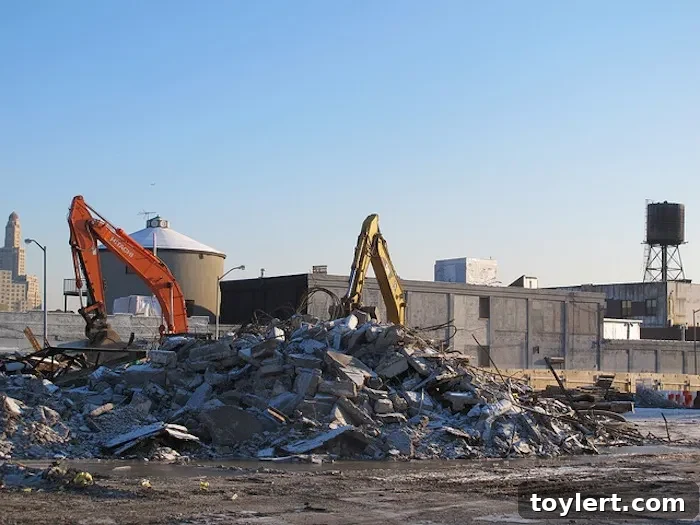
Gowanus, Brooklyn—a neighborhood historically defined by its industrial past and the infamous canal—is once again at the forefront of a significant urban transformation. The Lightstone Group, a prominent real estate developer, has officially commenced work on its ambitious 700-unit rental development on Bond Street, situated between 1st and 2nd streets. This monumental project signals a new chapter for the area, replacing antiquated industrial structures with modern residential living spaces designed to meet the growing demand in Brooklyn’s competitive real estate market. The initial phase of this extensive undertaking has seen the demolition of the first of two long-standing brick warehouses, clearing the path for the future complex.
The commencement of demolition earlier this week was met with keen interest from local residents and urban development observers. However, the process, typical of large-scale urban construction, quickly encountered an unexpected challenge. As Pardon Me For Asking reported, the initial progress on Monday was followed by a significant setback on Tuesday, highlighting the inherent complexities and unpredictable nature of redeveloping older urban sites.
The Unforeseen Setback: A Burst Water Main
The swift pace of demolition was abruptly halted by an unforeseen incident that caused considerable disruption across the site and surrounding areas. According to reports from Gowanus Your Face Off, the demolition crew inadvertently struck and broke a major water main. This catastrophic breach led to an immediate and substantial flooding of the entire southwest end of the development site. The torrent of water did not remain confined to the property, instead flowing rapidly down 2nd Street and eventually making its way into the Gowanus Canal, raising immediate environmental concerns given the canal’s Superfund status.
The timing of the incident only exacerbated its dramatic impact. As GYFO’s vivid photographs showcased, the flooding occurred amidst a snowfall, painting a surreal landscape of gushing water against a wintry backdrop. This combination of snow and flooding created a challenging environment for remediation efforts and underscored the unpredictable elements that often accompany large-scale construction projects in densely populated urban areas.
Lightstone’s Vision for Gowanus: A New Residential Hub
Lightstone Group’s 700-unit rental development represents a pivotal moment for Gowanus. The project aims to capitalize on the neighborhood’s burgeoning appeal, driven by its unique blend of industrial heritage, artistic community, and increasing accessibility to Manhattan and other parts of Brooklyn. With hundreds of new residential units, Lightstone is poised to significantly impact the local housing supply, offering diverse living options ranging from studios to multi-bedroom apartments, designed to attract a broad demographic of residents.
The design ethos behind such developments often emphasizes modern amenities, sustainable features, and communal spaces, aiming to create vibrant vertical communities. These projects typically include features like rooftop access, fitness centers, co-working spaces, and retail components on the ground floor, fostering a live-work-play environment that aligns with contemporary urban lifestyles. The strategic location on Bond Street further enhances its attractiveness, offering residents proximity to newly opened parks, cultural venues, and a growing array of dining and retail establishments that have blossomed in Gowanus over recent years.
The Broader Context: Gowanus’s Transformation Journey
The transformation of Gowanus from a predominantly industrial zone to a mixed-use residential and commercial hub has been a decades-long process. For many years, the neighborhood was characterized by its manufacturing plants, auto repair shops, and storage facilities, all coexisting with the notorious Gowanus Canal—a federally designated Superfund site due to historical pollution. However, with rezoning efforts and significant investments, developers have increasingly turned their attention to the area, recognizing its untapped potential.
The influx of residential developments like Lightstone’s is a direct response to this shifting landscape. It reflects a broader trend seen across Brooklyn, where industrial land is being repurposed to accommodate the borough’s explosive population growth and the demand for urban living. While these developments bring new housing and economic activity, they also spark important conversations about gentrification, the preservation of historical character, and the strain on existing infrastructure, including public transport, schools, and green spaces. Balancing these competing interests is a continuous challenge for urban planners and community leaders.
Implications of the Water Main Incident: Beyond the Immediate Flood
A water main break of this magnitude is more than just a temporary inconvenience; it carries several significant implications for the construction project and the wider community. Firstly, it can lead to substantial delays in the demolition and subsequent construction phases, directly impacting project timelines and budgets. Repairing a major water main involves coordinating with city agencies, securing specialized equipment, and ensuring the safety of workers and the public. Secondly, the environmental aspect, particularly the flow of water into the Gowanus Canal, is a serious concern. While the water itself is potable, its sudden influx can stir up sediments and potentially disrupt ongoing remediation efforts within the canal, which is a sensitive ecosystem still recovering from industrial pollution.
Furthermore, such incidents raise questions about pre-demolition surveys and utility mapping. Thorough assessments of underground infrastructure are crucial for preventing similar accidents. Developers are typically required to conduct detailed investigations to identify the precise location of all utility lines, including water, sewer, gas, and electrical conduits, before heavy machinery is deployed. Lessons learned from this incident will undoubtedly inform future procedures on this site and potentially other urban development projects.
Looking Ahead: The Future of Bond Street and Gowanus
Despite the initial hiccup, the Lightstone Group’s 700-unit development is set to be a cornerstone project in the ongoing evolution of Gowanus. Once completed, it will contribute significantly to the neighborhood’s residential capacity and likely spur further commercial and retail growth in the vicinity. The successful integration of such a large development will depend not only on its architectural merit but also on how well it harmonizes with the existing community fabric and contributes positively to the area’s infrastructure.
The journey from industrial decay to vibrant residential hub is rarely smooth, often punctuated by challenges such as the one witnessed on Bond Street. However, these obstacles are an inherent part of the complex process of urban renewal. As construction progresses, the eyes of Brooklyn will remain fixed on Gowanus, watching as old brick warehouses give way to new architectural forms, shaping the future skyline and community life of one of New York City’s most dynamic neighborhoods. The Lightstone project stands as a testament to the persistent drive to innovate and revitalize urban spaces, even when faced with the unpredictable realities of transforming deeply rooted historical landscapes.