LIRR Atlantic Terminal Transformed: From Obtrusive Barricades to Enhanced Urban Design
The vital intersection of security, aesthetics, and community integration is a constant challenge in urban planning, particularly around major transportation hubs. For years, the Long Island Rail Road (LIRR) terminal at Atlantic Avenue in Brooklyn served as a prominent example of this complex dynamic. Encircling the terminal was a perimeter of bulky, four-foot-tall granite barricades, installed with the crucial aim of enhancing public safety. However, these imposing structures quickly became a source of significant public frustration, drawing criticism for their unwelcoming appearance and their perceived excessiveness.
In a landmark victory for local advocacy and responsive governance, the Metropolitan Transportation Authority (MTA) has now bowed to years of community pressure, spearheaded by Council Member Letitia James and various local stakeholders. This pivotal decision has led to the replacement of the obtrusive granite blocks with modern, less intrusive metal bollards. This transformation not only signifies a triumph for community engagement but also heralds a more visually harmonious and pedestrian-friendly Atlantic Terminal, proving that robust security measures can coexist seamlessly with an inviting urban environment.
The Genesis of Public Discontent: When Security Became a Visual Burden
Following a period of heightened global security concerns, public transportation centers across the United States, including crucial hubs like the LIRR Atlantic Terminal, implemented more stringent protective measures. This often resulted in the installation of physical barriers designed to deter potential threats and safeguard the millions who rely on these services daily. At the Atlantic Avenue terminal, this translated into the erection of numerous granite blocks, each standing four feet tall, forming a formidable perimeter around the facility. While the intention to protect was clear, the execution almost immediately sparked a public outcry.
The core of the issue, first brought to widespread attention by the Brooklyn Paper, revolved around two primary concerns. Firstly, the granite barricades were universally described as “ugly” and aesthetically jarring. Their considerable size and unyielding material created a stark, fortress-like impression that clashed severely with the vibrant, historic, and rapidly developing urban landscape of downtown Brooklyn. This visual harshness was a particular point of contention for a community that prides itself on its unique architectural blend and lively streetscapes. Secondly, and perhaps more significantly, questions were raised about the practical necessity and proportionality of these specific barriers. Critics argued that these granite blocks “exceeded security requirements,” suggesting that their design or sheer number might have been disproportionate to the actual threat level. This crucial argument laid the groundwork for a broader debate: could effective security be maintained through a more nuanced, visually integrated solution?
Atlantic Terminal: More Than Just a Station
The LIRR Atlantic Terminal is far more than a simple transit point; it is a critical artery of Brooklyn life. As a major gateway for Long Island Rail Road commuters, it also offers connections to numerous subway lines, serves as a significant bus hub, and anchors the bustling Atlantic Center and Atlantic Terminal Mall. This constant influx and outflow of people mean that the surrounding public spaces are integral to the daily routines of countless residents, workers, and visitors. The presence of such imposing barriers not only disrupted natural pedestrian flows but also created visual clutter, fostering a sense of detachment between the terminal and its dynamic surroundings. It actively undermined efforts to cultivate a welcoming, accessible, and integrated urban experience in one of Brooklyn’s busiest areas.
A United Voice: The Power of Community Advocacy and Political Leadership
The widespread dissatisfaction with the granite barriers did not remain fragmented complaints; it swiftly evolved into a coordinated and powerful advocacy campaign. At the forefront of this movement was Council Member Letitia James, a dedicated and influential representative for Brooklyn’s diverse communities. James keenly understood the deep-seated frustrations of her constituents and championed their cause with unwavering commitment. Her leadership was instrumental in transforming individual grievances into a collective and potent force, driving the push for a resolution that would successfully balance essential security with the equally vital well-being and aesthetic needs of the community.
Council Member James tirelessly communicated the community’s concerns to the MTA and other relevant governmental agencies. She effectively highlighted how the granite blocks, rather than solely providing security, were actively diminishing the quality of life and the visual appeal of the area. Her strategic engagement with local media outlets, various community organizations, and direct negotiations with MTA officials were crucial in keeping the issue in the public spotlight and on the institutional agenda. Her steadfast resolve ultimately yielded significant results, culminating in what she proudly declared a “major victory” for the community. This sentiment underscored not only the successful removal of the barriers but also the profound impact that dedicated local representation can have in shaping urban policy and infrastructure.
MTA’s Responsive Turn: Embracing a Collaborative Solution
While large public authorities responsible for security measures can often be hesitant to alter established protocols, particularly when public safety is the paramount concern, the sustained pressure from Council Member James, complemented by consistent investigative reporting from outlets like the Brooklyn Paper and the NY Daily News, brought undeniable public attention to the issue. An MTA spokesman publicly acknowledged this shift in approach, stating, “The MTA and LIRR listened to the concerns of community leaders and local elected officials.” This statement marked a crucial willingness on the part of these significant public transportation bodies to engage in meaningful dialogue and adapt their strategies based on genuine community feedback, showcasing a commitment to public partnership.
The turning point in the controversy involved identifying a viable alternative that could meet stringent security standards without the significant visual and practical drawbacks of the existing granite blocks. The agreed-upon solution was the replacement of the imposing four-foot-tall granite behemoths with “less obtrusive metal bollards.” This innovative compromise powerfully demonstrates that effective security measures do not inherently need to be visually aggressive or create an intimidating, fortress-like environment. Modern metal bollards are meticulously engineered to provide robust protection against potential vehicular threats while occupying a significantly smaller physical footprint and presenting a much lighter, more integrated visual impact. Crucially, the MTA spokesman further confirmed that this thoughtful alternative “[meets] all of the security requirements spelled out by the NYPD,” providing essential reassurance that public safety remains absolutely uncompromised with the new design.
The Transformation Takes Shape: Removal, Installation, and a Brighter Outlook
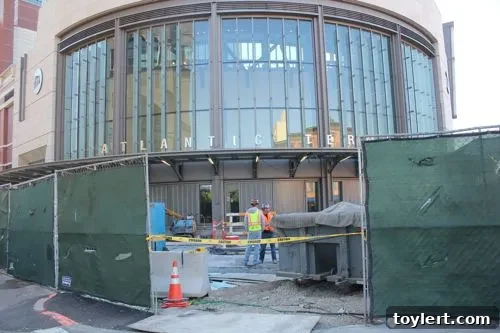
The physical transformation of the Atlantic Terminal perimeter commenced earlier this week, marking the culmination of years of dedicated advocacy and planning. Dedicated workers methodically began the arduous task of removing the 15 formidable granite blocks that had long characterized, and some might say marred, the terminal’s exterior. By this morning, captured in the accompanying photograph of the newly cleared area, all of these obtrusive barriers had been successfully removed. This immediate visual change is one of noticeable relief and renewed accessibility, clearing the way for the scheduled installation of the new, more discreet, and aesthetically pleasing metal bollards.
The removal of the granite barriers signifies far more than just a mere change in infrastructure; it embodies a successful negotiation between vital public safety imperatives and the equally crucial goal of cultivating humane, aesthetically pleasing, and functional urban environments. This positive outcome carries several profound implications for the Atlantic Terminal area and beyond:
- Enhanced Pedestrian Experience: The significant reduction in visual clutter and physical obstruction will dramatically improve the experience for pedestrians navigating this notoriously busy area, fostering a greater sense of openness, ease of movement, and overall comfort.
- Improved Urban Aesthetics: The upcoming replacement with sleek, less imposing metal bollards will undeniably contribute to a more modern, integrated, and visually appealing look for the Atlantic Terminal area, harmonizing much better with downtown Brooklyn’s contemporary architectural landscape and vibrant street life.
- Community Empowerment and Trust: This tangible victory reinforces the powerful idea that sustained community advocacy, combined with dedicated political leadership, can indeed lead to meaningful and tangible improvements in local infrastructure and the overall quality of urban life. It serves as an inspiring model for future civic engagement and underscores the importance of trusting local voices.
- Balanced Security Solutions: The project brilliantly highlights the distinct possibility and paramount importance of implementing security measures that are not only highly effective but also sensitive and well-integrated into their specific urban context, thus actively preventing the creation of sterile, intimidating, or alienating public spaces.
A Model for Progressive Urban Planning and Genuine Community Collaboration
The entire saga surrounding the LIRR Atlantic Terminal bollards stands as an invaluable and instructive case study in the realms of progressive urban planning and genuine community collaboration. It unequivocally demonstrates the critical need for governmental agencies, professional urban planners, and security experts to engage in continuous, transparent, and respectful dialogue with the very communities they are established to serve. While robust security undeniably remains a paramount concern, particularly in high-traffic and critical infrastructure areas, the thoughtful design and sensitive implementation of protective measures must also thoughtfully consider their broader impact on the urban environment and the daily lives of its residents.
This remarkable success story in Brooklyn underscores a growing and vital trend in contemporary urban development: a deliberate shift towards “soft security” approaches or integrated design solutions. These innovative methods are engineered to provide formidable protection without needlessly sacrificing public accessibility, aesthetic appeal, or the unique character and soul of a neighborhood. The replacement of the unwelcoming granite blocks with more discreet and visually appealing metal bollards at Atlantic Terminal is poised to serve as a significant benchmark for how similar urban challenges can be effectively addressed and resolved in other metropolitan areas, ultimately fostering environments that are both robustly secure and truly welcoming to all.
The newly transformed perimeter of the LIRR Atlantic Terminal stands as a vibrant testament to the enduring power of persistent advocacy and genuinely responsive governance. It is a vivid and inspiring reminder that even seemingly minor elements of urban design can profoundly affect how people experience, perceive, and interact with their city on a daily basis. With the ‘ugly’ and obtrusive barricades now gracefully consigned to memory, Atlantic Terminal is definitively poised to become an even more integral, harmonious, and celebrated part of Brooklyn’s rich and dynamic urban tapestry.
MTA Begins Removing ‘Ugly’ Barricade Around LIRR Terminal [NY Daily News]