Smith-Ninth Street Subway Station: A Grand Reopening and Artistic Revival in Brooklyn
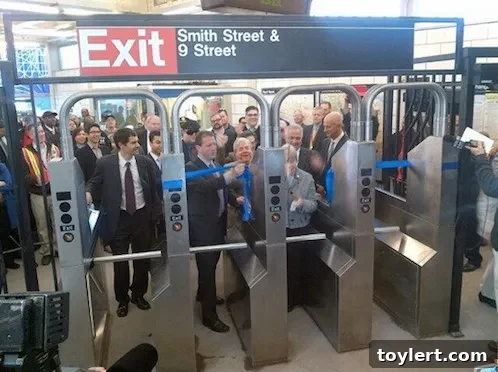
After a painstaking two-year period of intensive reconstruction, the Smith-Ninth Street subway station, a critical transportation artery for thousands of Brooklyn residents, has finally thrown open its doors once more. The much-anticipated reopening was marked by a celebratory ribbon-cutting ceremony held today at 11 AM, attended by notable figures including Marty Markowitz, highlighting the immense significance of this renewed transit hub to the local community. For residents of lower Carroll Gardens and the vibrant neighborhood of Red Hook, the return of this station is more than just a convenience; it’s a reconnection to the wider city, ending a challenging period of detours and alternative travel arrangements.
Ribbon cutting photo via Twitter
A Vital Lifeline for Carroll Gardens and Red Hook
The Smith-Ninth Street station holds a unique and indispensable position within New York City’s expansive transit network, serving as the sole subway access point for the lower sections of Carroll Gardens and the entirety of Red Hook. Its closure for such an extended period posed considerable challenges for commuters, students, and businesses in these areas, forcing many to rely on longer bus routes or other less direct modes of transportation. The reopening signifies a return to normalcy and efficiency for these communities, drastically cutting travel times and improving connectivity to Manhattan and other parts of Brooklyn. This station is not just a point of transit; it’s a vital economic and social link, fostering accessibility and enhancing the quality of life for its users.
Extensive Upgrades for a Modern Commute
The comprehensive reconstruction project wasn’t merely about cosmetic changes; it involved a deep overhaul and modernization of the entire facility, ensuring enhanced safety, accessibility, and an improved passenger experience. Commuters returning to the Smith-Ninth Street station will immediately notice a host of significant upgrades. These include an expanded street-level control house, designed to improve passenger flow and operational efficiency. A brand-new metal escalator enclosure now provides sheltered and reliable vertical transportation, a welcome addition for daily users. Furthermore, the stairs and platforms have been thoroughly rehabilitated, addressing years of wear and tear and ensuring structural integrity. Beyond these physical improvements, the station now boasts state-of-the-art new lighting, significantly enhancing visibility and safety both day and night. The integration of closed-circuit television (CCTV) cameras offers increased security, while a fancy, upgraded public address (PA) system ensures clear and effective communication for all passengers, from routine announcements to emergency information.
Elevating the Commute with Public Art: Alyson Shotz’s Vision
Beyond the functional upgrades, the Smith-Ninth Street station has been transformed into a vibrant canvas for public art, a testament to the MTA’s commitment to integrating culture and aesthetics into the urban landscape. The station is now graced with stunning new artwork meticulously designed by acclaimed artist Alyson Shotz. A proud resident of Red Hook herself, Shotz drew profound inspiration from the rich local maritime history of the area, weaving narratives of the past into the fabric of the present. Her installations not only beautify the station but also connect commuters to the historical roots of their surroundings, offering moments of reflection and discovery amidst the daily rush.
The Entrance Art: A Maritime Welcome
Upon approaching the station, commuters are greeted by a striking art piece that envelops the entrance. This design, inspired by the elegant and functional form of a boat hull, serves as a symbolic gateway, honoring Red Hook’s storied past as a bustling port and maritime industrial center. It’s a fitting tribute, especially considering the unique geographical characteristic of the Smith-Ninth Street station – it proudly holds the distinction of being the highest elevated subway station in New York City, offering panoramic views that often include glimpses of the very waterways that historically shaped the neighborhood. The artwork, therefore, not only beautifies the entrance but also cleverly references both the station’s physical height and the historical depth of its surrounding community.
The Grand Mosaic: Charting History
Further inside the station, a truly breathtaking 14-foot-tall mosaic commands attention on the rear wall of the station building. From a distance, it might initially appear as an intricate, abstract line drawing rendered in gleaming stainless steel against a vibrant blue tile mosaic background. However, as one moves closer, its true nature is revealed: a sophisticated nautical map. This detailed artwork is dotted with numbers indicating water depths and letters for directions, inviting closer inspection and interaction. The MTA has revealed fascinating details about this particular piece, explaining that the mosaic map was adapted from a rare 1779 nautical chart of New York Harbor, specifically as it would have been viewed from the shoreline of Brooklyn. This historical reproduction, meticulously fabricated by Mosaika Art & Design, serves as a powerful visual link to the city’s seafaring heritage, reminding passengers of the waterways that have always been integral to New York’s identity and development.
Photo via the MTA
Photo via Twitter
Etched Windows: A Prismatic Journey
Alyson Shotz’s artistic contribution extends to the station’s windows, where a series of 26 panes have been ingeniously etched with silver reflective ink in multiple layers of glass. This innovative technique creates a captivating prismatic effect, shimmering and changing as commuters move past them. Each of these unique windows features a different historic nautical map, specifically chosen to depict the waters that lie in the general direction the viewer is facing from that particular window. This thoughtful design transforms the simple act of looking out a window into an interactive historical journey, connecting passengers to the geography and heritage of New York Harbor in an engaging and beautiful way. The interplay of light, reflection, and historical cartography makes these windows a dynamic and ever-changing element of the station’s aesthetic.
The Impact and Future of Smith-Ninth
The reopening of the Smith-Ninth Street station represents more than just the completion of a construction project; it symbolizes urban renewal and a renewed commitment to public infrastructure that serves both practical and aesthetic purposes. The integration of Alyson Shotz’s maritime-inspired artwork elevates the daily commute from a mundane necessity to an enriching cultural experience. This station now stands as a prime example of how modern transit hubs can be designed not only for efficiency and safety but also as public spaces that reflect local history and contribute to the community’s identity. The investment in such comprehensive renovations, including both critical infrastructure improvements and thoughtful artistic embellishments, underscores the importance of maintaining and enhancing New York City’s venerable subway system for future generations.
Details and photos via MTA.info
A Testament to Urban Renewal and Community Resilience
The journey to this grand reopening has been a long one, marked by the patience of countless daily commuters and the dedication of the Metropolitan Transportation Authority (MTA) and its partners. The Smith-Ninth Street station, with its strategic location and unique elevation, has always been a landmark. Now, enhanced with modern amenities and captivating art, it is poised to serve as an even more integral part of the fabric of lower Carroll Gardens and Red Hook. It stands as a powerful testament to the resilience of New York City’s communities and the ongoing efforts to revitalize its infrastructure, seamlessly blending functionality with artistic expression. This renewed station is not just a gateway to the city; it’s a destination in itself, inviting passengers to appreciate the art, history, and engineering that define one of the most remarkable transit systems in the world.
The comprehensive revitalization of the Smith-Ninth Street station exemplifies a successful urban renewal project, ensuring that vital public services are not only maintained but also significantly improved for the benefit of all New Yorkers.