Brooklyn’s Iconic Pfizer Mansion at 280 Washington Avenue Enters Contract: A Glimpse into Clinton Hill’s Storied Past
In a significant development for Brooklyn’s esteemed real estate market, one of its most celebrated and historically rich residences, affectionately known as the Pfizer Mansion, has officially entered contract. After an extended period on the market, the news marks a new chapter for 280 Washington Avenue, a magnificent Queen Anne brownstone nestled within the highly sought-after Clinton Hill Historic District. This transaction not only highlights the enduring allure of Brooklyn’s architectural heritage but also underscores the unique appeal of properties steeped in vibrant history and local legend.
The journey of finding a new custodian for such a distinguished property is rarely straightforward. Homes of this caliber, with their intricate details, expansive layouts, and profound historical narratives, often attract a discerning buyer pool looking for more than just a residence; they seek a tangible piece of New York City’s legacy. The successful contract signing for the Pfizer Mansion is not just a real estate headline; it’s a testament to the continued value placed on preserving and experiencing Brooklyn’s iconic past and the unique lifestyle it offers.
The Architectural Grandeur of 280 Washington Avenue: A Clinton Hill Landmark
Located at the prestigious address of 280 Washington Avenue, this stunning brownstone stands as a proud example of Queen Anne architecture, a style celebrated for its picturesque charm and distinctive ornamentation. Designed in 1887 by the prolific architect Marshall J. Morrill, the mansion is one of a pair of houses commissioned by Charles Erhart, a pivotal figure in the founding of the pharmaceutical giant Pfizer. Clinton Hill itself is renowned for its tree-lined streets and an impressive collection of Victorian and Romanesque Revival homes, making it one of Brooklyn’s most picturesque and historically significant neighborhoods. The district’s designation ensures the preservation of its unique character, making properties like the Pfizer Mansion even more desirable and historically valuable.
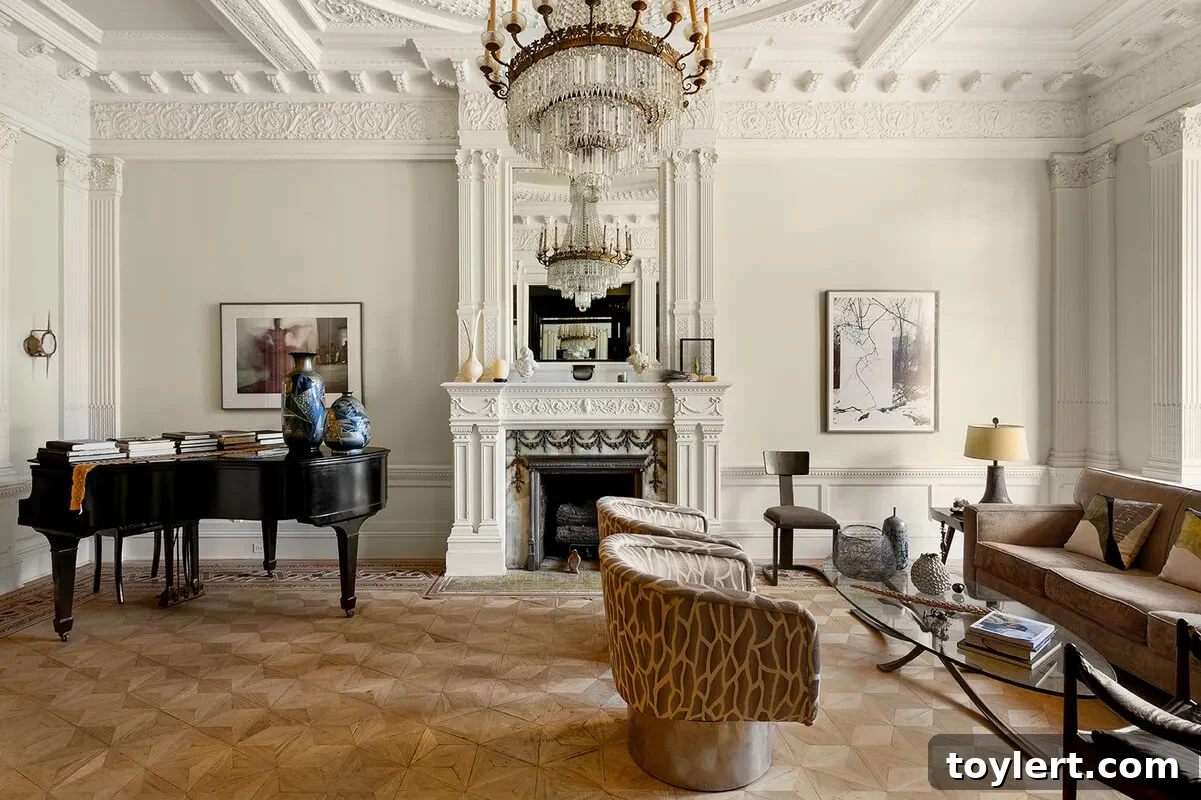
Marshall J. Morrill, whose architectural contributions grace many of Brooklyn’s finest streets, was known for his ability to infuse grand residences with both elegance and functionality. The Queen Anne style, prevalent during the late 19th century, is characterized by its asymmetrical facades, turrets, towers, varied wall textures—often combining brick, stone, and terra cotta—bay windows, and elaborately carved details. These distinctive elements contribute to a dynamic and visually engaging exterior, distinguishing 280 Washington Avenue as a true masterpiece of its era. Inside, one can expect to find soaring ceilings, ornate fireplaces, intricate woodwork, and spacious rooms that eloquently speak to the opulent lifestyles of its early inhabitants.
The mansion’s prime location in Clinton Hill offers more than just aesthetic appeal; it places residents in a vibrant community known for its rich cultural institutions, lush green parks, and thriving local businesses. The historic district designation not only protects its architectural integrity but also contributes to a stable and desirable living environment, making it a prime location for those seeking both authentic heritage and modern convenience in the heart of Brooklyn. Its proximity to diverse amenities and excellent transportation links further enhances its appeal as a quintessential Brooklyn address.

A Storied Lineage: From Pfizer Co-Founder to Public Institution
The moniker “Pfizer Mansion” is not merely a catchy nickname but a direct link to one of America’s most influential industrial pioneers. Charles Erhart, a co-founder of Charles Pfizer & Company alongside his cousin Charles Pfizer, commissioned this impressive residence. Erhart’s vision and business acumen were instrumental in establishing Pfizer as a dominant force in the pharmaceutical industry. The mansion served as a testament to his success and provided a grand home for his family, embodying the prosperity and architectural ambition of Brooklyn’s elite during the illustrious Gilded Age.
The Erhart Family Era: Gilded Age Grandeur
Upon its completion in 1887, the mansion was first occupied by Erhart’s daughter, who would have experienced the pinnacle of Brooklyn’s vibrant social scene from within its lavish walls. Life in such a residence during the late 19th century was characterized by lavish entertaining, elegant decor, and a dedicated household staff to manage its extensive needs. The meticulous craftsmanship and generous proportions of the home were designed not only to impress but also to provide unparalleled comfort for a family of considerable social and economic standing. This initial period firmly established the mansion’s reputation as a cornerstone of Clinton Hill’s affluent community, reflecting the ambitions and achievements of its original, distinguished owners.
A Community Hub: Brooklyn Public Library and Catholic Girls School
Over its long and eventful history, 280 Washington Avenue has undergone remarkable transformations, shifting gracefully from a private family residence to institutions serving the broader community. At one point, the stately brownstone proudly housed a branch of the Brooklyn Public Library. This transition marked a fascinating repurposing of a grand private estate into a public resource, offering knowledge and culture to the neighborhood’s residents. One can easily imagine the quiet reading rooms where grand parlors once stood, and the community finding solace and education within walls originally built for domestic splendor. This period highlights the remarkable adaptability of historic structures and their potential to evolve with the changing needs of a dynamic and growing city.
Following its tenure as a library, the mansion embraced another public-facing role, becoming home to a Catholic girls school. This era would have seen the grand halls bustling with students, classrooms occupying formal living spaces, and a new generation forging cherished memories within its historic confines. The transition to an educational institution speaks volumes about the robust and enduring qualities of the building, proving itself capable of accommodating diverse functions while retaining its inherent architectural integrity. Each transformation added new and distinct layers to the mansion’s already rich tapestry, weaving it further into the social and cultural fabric of Clinton Hill.
From Bohemian Enclave to Post-Punk Pedigree: The Mansion’s Modern Chapters
The turn of the 21st century brought a new, distinctly Brooklyn flavor to the Pfizer Mansion. Eventually, the property was acquired by a musician, ushering in an era that deeply connected the historic brownstone to the vibrant arts and counter-culture scene of contemporary Brooklyn. This move underscored the borough’s well-established reputation as a haven for creative individuals, seamlessly blending classic architecture with modern artistic expression. The spacious rooms, unique ambiance, and inspiring history of the mansion would have provided an ideal backdrop for musical endeavors, echoing the borough’s deep-rooted artistic spirit and bohemian charm.
Adding another intriguing layer to its already colorful history, one of the former members of the iconic post-punk group Killing Joke reportedly resided there as a roommate during this period. Killing Joke, known for its influential and experimental sound, left an indelible mark on music history, inspiring countless bands and artists. The captivating notion of a member of such a groundbreaking band living within the hallowed walls of the Pfizer Mansion further cements its status as a residence with an extraordinary and diverse past. This connection offers a unique blend of Gilded Age opulence and cutting-edge musical rebellion, making the mansion a truly one-of-a-kind property that appeals to both history buffs and music enthusiasts alike.
The Enduring Allure of Brooklyn’s Historic Real Estate Market
The recent contract signing for the Pfizer Mansion serves as a compelling case study in the dynamic forces at play within Brooklyn’s luxury and historic real estate market. Properties of this scale and historical significance often command considerable attention, yet their unique characteristics and the specialized care they require can also lead to an extended marketing period. Buyers for such homes are typically looking for more than just square footage; they are investing in a legacy, an architectural masterpiece, and a tangible piece of New York City history. The Clinton Hill Historic District, with its strict preservation guidelines, ensures that the integrity and charm of these grand homes remain intact, a crucial factor that deeply appeals to those who value authentic heritage and architectural excellence.
The demand for impeccably preserved brownstones and historic estates in prestigious neighborhoods like Clinton Hill remains robust, driven by a strong desire for unique character, spacious living, and a strong sense of community. While the initial price point for properties like the Pfizer Mansion can be substantial, reflecting their rarity, grandeur, and the cost of meticulous upkeep, the long-term value lies not only in their appreciation as investments but also in the unparalleled lifestyle and connection to history they offer. The market for these homes requires patience and a specific kind of discerning buyer—one who deeply appreciates the intricate details, the stories embedded in the walls, and the profound responsibility that comes with stewarding such a significant piece of local and national history.
As Brooklyn continues its remarkable evolution, its historic districts like Clinton Hill stand as proud and vital reminders of its rich and storied past. The sale of the Pfizer Mansion is a landmark event, signifying renewed interest and substantial investment in the borough’s most cherished architectural treasures. It speaks volumes about the vibrancy and resilience of the market and the timeless appeal of homes that transcend mere structures to become integral parts of the city’s narrative, attracting a new generation of custodians.
What Lies Ahead for 280 Washington Avenue?
With the Pfizer Mansion now officially under contract, the Clinton Hill community and preservationists alike eagerly anticipate its next chapter. While details of the new owner and their specific plans for this historic property currently remain private, the transition promises to bring fresh energy and a renewed sense of purpose to this venerable address. Whether it will be meticulously restored to its full Gilded Age glory, thoughtfully adapted for modern luxury living with profound respect for its heritage, or continue its tradition of surprising and fascinating transformations, one thing is certain: 280 Washington Avenue will undoubtedly remain a cherished landmark in Clinton Hill, continuing to tell its extraordinary story for many generations to come.