Gravesend’s Historic Ryder-Van Cleef House Faces Demolition Threat After LPC Declines Designation
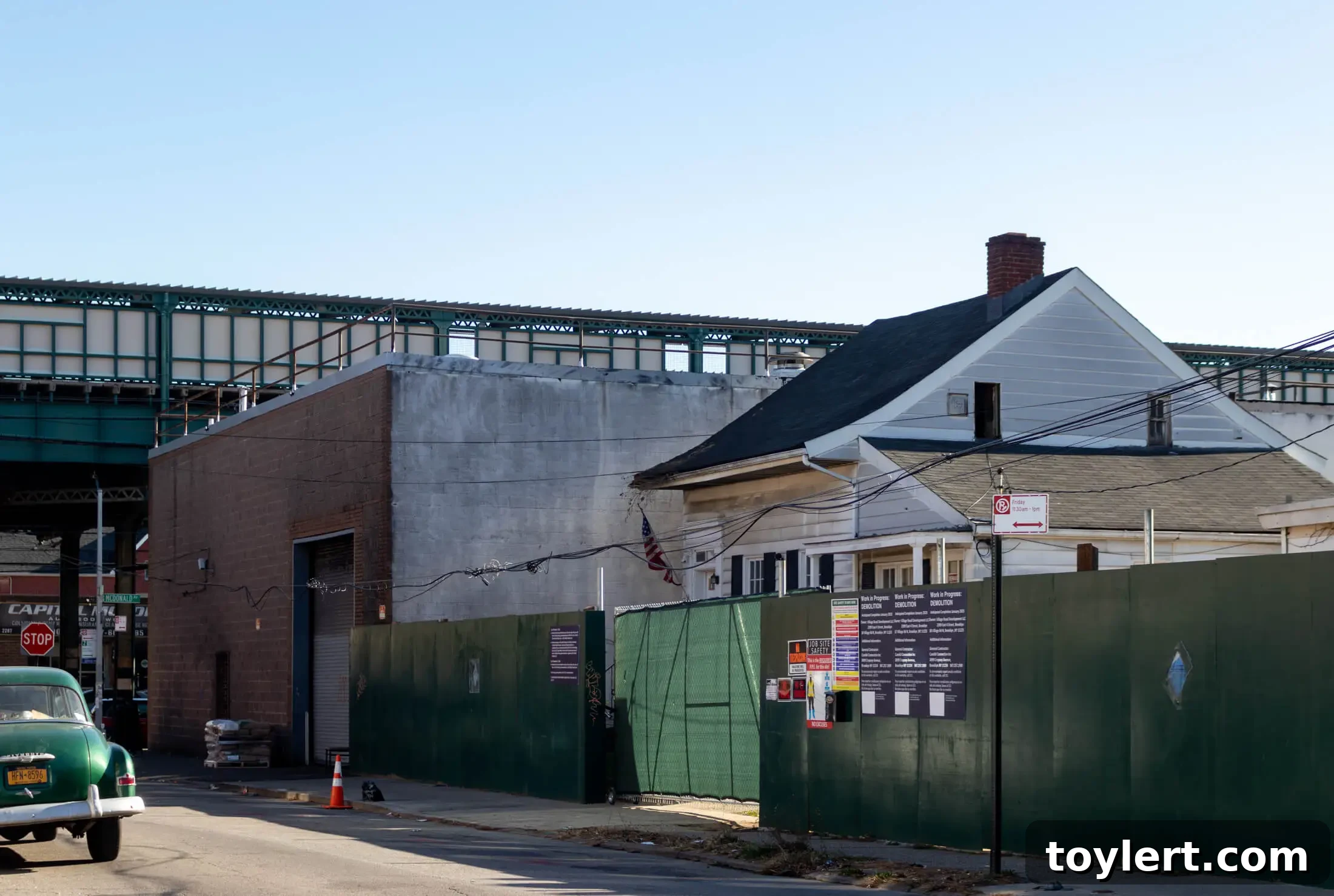
The community of Gravesend, Brooklyn, is bracing for the potential loss of a significant piece of its past: the Ryder-Van Cleef House. This early 19th-century dwelling, a rare and tangible link to Brooklyn’s foundational heritage, is now surrounded by a construction fence, signaling an imminent demolition. The alarm was sounded after the New York City Landmarks Preservation Commission (LPC) ultimately declined to consider the property for designation, a decision that has left preservationists and local historians deeply concerned. Its fate underscores a broader debate about what aspects of Brooklyn’s rich history we choose to protect for future generations, highlighting the ongoing tension between rapid urban development and the imperative to safeguard historic structures that define the unique character of our neighborhoods.
The Ryder-Van Cleef House: A Legacy in Wood and Time
Built around 1840 by the skilled hands of local builder and carpenter Lawrence Ryder, the Ryder-Van Cleef House at 38 Village Road North is far more than just an old building; it is a vital architectural artifact. It represents one of a dwindling number of modest yet profoundly significant Dutch-American frame dwellings that once dotted the landscape of Southern Brooklyn. These homes were erected by the descendants of the original Dutch and English settlers who courageously laid the groundwork for the community on what was historically Canarsee land. What truly sets the Ryder-Van Cleef House apart, and hints at its deep historical roots, is its distinctive side gable roof, characterized by elegantly curved, overhanging eaves.
This architectural feature is a tell-tale sign of its origins, marking it as a late, yet exemplary, manifestation of a building style that ingeniously merged Dutch and English construction methods. The result was a uniquely American architectural form that thrived particularly in the rural and burgeoning areas of Southern Brooklyn during the 19th century. This specific blend of influences tells a story not just of construction techniques, but of cultural synthesis – a physical embodiment of the diverse heritage that shaped New York City from its earliest days. Its unadorned beauty and robust construction speak to a practical elegance, a design philosophy rooted in function but imbued with a quiet grace that reflects the ingenuity and resourcefulness of its builders and original inhabitants. The house stands as a silent testament to the growth of Gravesend from a colonial settlement into the vibrant Brooklyn neighborhood it is today, offering irreplaceable insights into the evolution of local building traditions and the lives of its early residents.
A Change of Hands: Development Looms Large in Gravesend
For over five decades, since 1968, the Ryder-Van Cleef House had remained within the stewardship of the same family, a rare occurrence in a city known for its dynamic and ever-changing real estate market. This extended period of single-family ownership likely contributed significantly to its preservation over many years, allowing it to retain much of its original character. However, this stability came to an end in August of this year when the property was acquired by Village Road Development LLC for a substantial sum of $1.2 million. Property filings have subsequently identified Marc Jajati as the owner behind Village Road Development LLC, signaling a clear shift towards potential redevelopment.
The purchase price itself, while considerable, undoubtedly reflects the significant value placed on the underlying land in Gravesend, a neighborhood currently experiencing increasing development pressure and a demand for modern housing solutions. The immediate erection of a prominent construction fence around the perimeter of the house shortly after the sale leaves little doubt about the new owner’s intentions, casting a long shadow of uncertainty over the future of this historic gem. This scenario is, unfortunately, a familiar one across New York City’s boroughs, where the economic incentives for new, higher-density construction often outweigh the perceived value of preserving older, historically significant structures, especially when they lack official landmark protection. The acquisition by a development company strongly suggests that the property’s highest and best use, from a purely commercial perspective, is no longer as a single-family historic dwelling, but rather as a site for a new project, making the threat of demolition very real.
The LPC’s Decision: A Critical Turning Point for Preservation in Brooklyn
The New York City Landmarks Preservation Commission (LPC) serves as the primary municipal agency responsible for identifying and designating the city’s architecturally, historically, and culturally significant buildings and sites. Its vital mandate is to protect these irreplaceable assets, ensuring they endure for future generations as a testament to the city’s rich past. Therefore, the LPC’s decision to decline consideration for designation of the Ryder-Van Cleef House is a critical turning point and a source of profound disappointment for many preservation advocates, historians, and concerned community members.
Typically, a property considered for landmark designation must meet stringent criteria related to its age, distinctive architectural style, significant historical associations, and integrity of design and materials. While the specific reasons for the LPC’s decision regarding the Ryder-Van Cleef House have not been extensively publicized, a non-designation effectively removes a crucial layer of protection, leaving the building vulnerable to demolition and unchecked redevelopment. This outcome raises important questions about the criteria applied to modest, vernacular structures, which, though perhaps less grand or outwardly ornate than iconic mansions, often hold immense value in telling the complete, nuanced story of a neighborhood’s evolution and the everyday lives of its past residents. For many, the Ryder-Van Cleef House clearly embodies unique architectural characteristics and a deep historical narrative that merited protection, making the LPC’s stance a contentious one and a significant setback for Gravesend’s heritage. The lack of official landmark status often means a building’s fate rests solely in the hands of its private owners, leaving community wishes and historical value at a disadvantage.
The Broader Implications: Why Historic Preservation Matters in Gravesend and Beyond
The potential demolition of the Ryder-Van Cleef House extends far beyond the fate of a single structure; it resonates with the broader challenges facing historic preservation efforts across Brooklyn and, indeed, throughout New York City. Gravesend, as one of Brooklyn’s oldest neighborhoods, boasts a rich tapestry of history, much of which is subtly woven into its streetscapes and older buildings. Each historic home, like the Ryder-Van Cleef House, acts as a tangible link to the past, offering invaluable insights into the architectural styles, building practices, and social fabric of bygone eras. Preserving these structures isn’t merely about nostalgia or aesthetic appeal; it’s about safeguarding cultural heritage, maintaining neighborhood identity, and providing a continuous, unbroken narrative of urban development and societal change. They offer a unique educational resource, allowing current and future generations to physically connect with the past.
When such buildings are lost, a vital piece of that collective memory and unique character is irrevocably erased, often replaced by generic modern developments that, while perhaps functional, frequently lack the historical depth, architectural distinction, or connection to the local context. The economic pressures of a rapidly growing city, with increasing population density and demand for new housing, often put historic properties at severe risk, as developers seek to maximize land use and profit. This creates a constant tension with preservationists who advocate for a balanced approach, one that integrates thoughtful, context-sensitive development with the protection of irreplaceable historical assets. Community advocacy, public awareness campaigns, and robust landmarking processes are essential tools in navigating this complex landscape, ensuring that the stories embedded in our built environment continue to inspire, inform, and enrich future generations. The loss of a structure like the Ryder-Van Cleef House diminishes the authenticity and historical integrity of Gravesend, making it just one more neighborhood that sacrifices its unique past for a standardized future.
Community Response and The Path Forward for Brooklyn’s Heritage
The news of the Ryder-Van Cleef House’s impending demolition has undoubtedly stirred significant concern among Gravesend residents, local historians, and historic preservation groups. The loss of such a distinctive and historically rich structure represents a tangible blow to the neighborhood’s unique character and cultural heritage. While official landmark designation offers the strongest legal protection against demolition or inappropriate alteration, its absence in this case forces a reevaluation of other avenues for safeguarding historic assets within communities that are rapidly changing. This situation highlights the critical need for proactive community engagement and sustained advocacy, not just for individual buildings, but for a broader appreciation of vernacular architecture and the profound historical narratives it tells.
Without the protective umbrella of landmark status, the fate of the Ryder-Van Cleef House now rests heavily on the intentions of its new owners. While hope for a last-minute reprieve or a change of development plans may be slim, the conversation sparked by its threatened demolition serves as a powerful reminder of what is truly at stake when historic properties face the wrecking ball. It is a resounding call to action for communities to rally behind their historic treasures, to educate residents on their intrinsic value, and to pressure city agencies and developers to prioritize the preservation of diverse historical narratives – not just the grandest or most obvious monuments, but also the more modest, everyday structures that form the backbone of a neighborhood’s identity. The battle for the Ryder-Van Cleef House may be nearing its unfortunate conclusion, but the lessons learned from its struggle will undoubtedly fuel future preservation efforts in Gravesend and other historic Brooklyn neighborhoods, emphasizing the ongoing vigilance required to protect our collective past.
Conclusion: Balancing Progress with Preservation in Historic Brooklyn
The impending demolition of the Ryder-Van Cleef House stands as a poignant symbol of the ongoing challenges in urban preservation. This circa 1840 Dutch-American frame dwelling in Gravesend, Brooklyn, is undeniably more than just an old house; it is a tangible piece of the borough’s founding history, an architectural bridge between early European settlers and the unique building styles that emerged on American soil. Its vulnerability, amplified by the Landmarks Preservation Commission’s decision to not grant it designation, underscores the precarious position many historically significant but unprotected buildings find themselves in across New York City.
As Brooklyn continues its rapid transformation, driven by an ever-increasing demand for modern housing and commercial spaces, the story of the Ryder-Van Cleef House serves as a powerful reminder of the delicate balance required between progress and preservation. It compels us to consider the true cost of losing these irreplaceable links to our past and to redouble our efforts to ensure that the rich architectural and cultural tapestry of our communities remains intact for the enjoyment and education of generations to come. The loss of this particular house would be not just a local tragedy for Gravesend, but a significant void in the broader narrative of New York City’s built heritage, underscoring the urgent need for a more comprehensive and proactive approach to safeguarding our shared history.