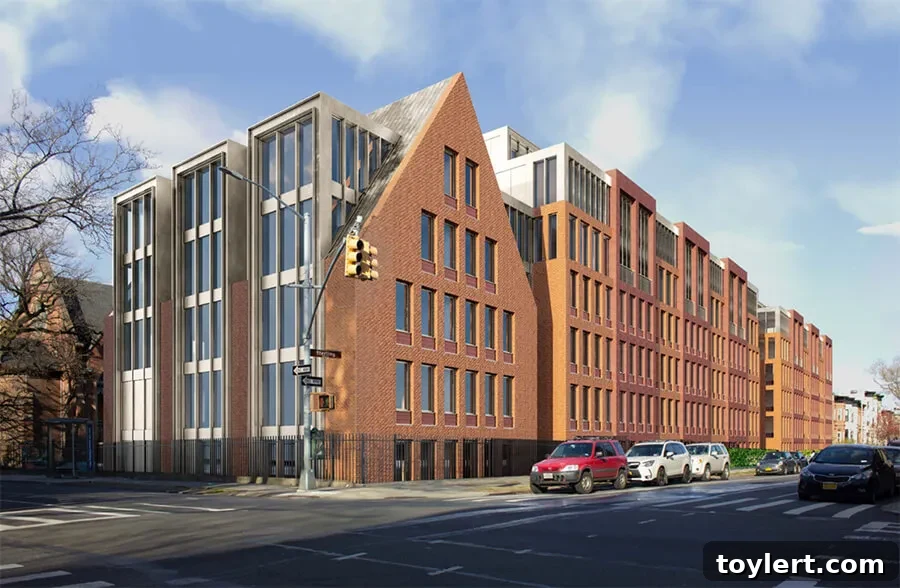
Landmarks Commission Halts Large-Scale Residential Development at Hebron School Site in Crown Heights
The highly anticipated and often contentious proposal for a significant residential development on the grounds of the Hebron Seventh Day Adventist School in Crown Heights has met a temporary roadblock. Commissioners at the esteemed Landmarks Preservation Commission (LPC) delivered a decisive message to the applicants, directing them to comprehensively revise their plans and present a more suitable design at a future hearing. This decision underscores the LPC’s unwavering commitment to preserving the unique architectural and historical integrity of New York City’s designated historic districts, particularly the vibrant Crown Heights neighborhood.
The deliberations among the commissioners were extensive and thorough, reflecting the gravity of the project and its potential impact on a historically rich area. A series of pronounced objections were raised, focusing on critical aspects that the proposed development failed to address adequately. These concerns primarily revolved around the building’s compatibility with the established neighborhood context, the selection of materials intended for its construction, and its overall massing – an architectural term referring to the perceived bulk and shape of a building. The LPC’s feedback signals a clear demand for a more nuanced and context-sensitive approach to development within such sensitive areas.
Commissioner Fred Bland, a key voice in the discussion, articulated the general sentiment regarding the design, stating, “I don’t think it’s quite working here, yet.” He further elaborated, describing the proposed aesthetic as “a little too architecturally suave,” a critique that suggests a design perhaps too modern, sleek, or assertive for the delicate historical tapestry of the Crown Heights historic district. This feedback highlights a fundamental disconnect between the developer’s vision and the preservation principles upheld by the LPC, emphasizing the need for designs that blend seamlessly rather than stand in stark contrast.
The Controversial Proposal: A Closer Look at 920 Park Place
The proposed development at 920 Park Place, the site currently occupied by the Hebron Seventh Day Adventist School, envisioned a large-scale residential complex in the heart of the Crown Heights historic district. While specific details of the initial plans were not fully disclosed in public records beyond their “large-scale” nature, such projects typically involve multi-story buildings with numerous residential units, aiming to capitalize on the area’s desirability and real estate value. The school, a long-standing fixture in the community and owned by the church, presents a valuable parcel of land, making it a prime target for developers seeking to introduce new housing into the bustling borough of Brooklyn.
The tension inherent in this proposal lies at the intersection of urban growth and historical reverence. Developers often seek to maximize density and utilize modern architectural styles, which can frequently clash with the aesthetics and scale of established historic neighborhoods. The LPC’s role is to mediate this tension, ensuring that any new construction or significant alteration within a historic district respects and enhances, rather than detracts from, the existing character. The rejected plans at 920 Park Place underscore the challenges faced by developers when proposing ambitious projects in such carefully protected zones.
Understanding the Mandate of the Landmarks Preservation Commission
The Landmarks Preservation Commission (LPC) is an independent agency of the New York City government responsible for protecting the city’s architecturally, historically, and culturally significant buildings and sites. Established in 1965, the LPC designates individual landmarks, scenic landmarks, and historic districts, and then regulates changes to these properties. For any development project or alteration within a designated historic district, like Crown Heights, proposals must undergo a rigorous review process by the LPC to ensure their appropriateness and compatibility with the district’s character.
The Commission’s review criteria are extensive, covering everything from building height and massing to materials, fenestration (window placement), and overall design philosophy. Their ultimate goal is to safeguard the visual continuity and historical narrative that define these special areas. The LPC’s decision regarding the Hebron School site is a testament to its commitment to upholding these standards, signaling to developers that projects in historic districts require exceptional sensitivity and adherence to established preservation guidelines, prioritizing contextual harmony over unbridled modern development.
The Core Objections: Why the Plans Were Rejected
The LPC’s detailed discussion revealed several key areas where the proposed residential development at 920 Park Place fell short of expectations. These objections serve as a vital guide for the applicants as they embark on the revision process, highlighting the specific elements that require significant rethinking to gain future approval. The commissioners meticulously dissected the plans, evaluating their impact on the surrounding urban fabric.
Preserving Neighborhood Context: The Fabric of Crown Heights
Crown Heights is renowned for its architectural diversity and cohesive streetscapes, particularly within its historic districts. The area boasts a rich collection of late 19th and early 20th-century residential architecture, including grand brownstones, elegant limestone-fronted row houses, and stately apartment buildings that embody various architectural styles like Romanesque Revival, Neo-Grec, and Beaux-Arts. These buildings often share common characteristics: similar heights, setback lines, material palettes, and intricate detailing that collectively create a harmonious visual rhythm along the streets.
The proposed development was seen by the LPC as failing to adequately respect or integrate into this established context. Commissioners likely found that its design elements, scale, or overall aesthetic would introduce a jarring note into the existing streetscape, disrupting the historical narrative and architectural unity that the district strives to protect. Preserving neighborhood context means more than just avoiding demolition; it requires new construction to engage in a respectful dialogue with its historic predecessors, drawing inspiration from their forms, materials, and scale rather than imposing an entirely new, alien vision.
Unsuitable Materials and Aesthetic Choices
Another significant point of contention was the choice of building materials. Historic districts like Crown Heights are typically characterized by traditional, durable materials such as brick, various types of stone (limestone, sandstone), terra cotta, and wood. These materials contribute significantly to the district’s texture, color palette, and sense of permanence. Modern developments, however, sometimes opt for contemporary materials like large expanses of glass, metal panels, or different types of composite materials that, while perhaps cost-effective or aesthetically pleasing in other settings, can clash dramatically with historic surroundings.
Commissioner Fred Bland’s comment about the design being “a little too architecturally suave” perfectly encapsulates this concern. It suggests a design that, while perhaps polished and contemporary in its own right, lacked the humble integration and material honesty expected in a historic context. “Suave” implies a slickness or sophistication that, when placed amidst historic brick and stone, could appear out of place or even arrogant. The LPC often advocates for materials that either match or complement the existing historic fabric in terms of color, texture, and reflectivity, ensuring that new additions feel like a natural extension rather than an intrusive imposition.
The Impact of Massing: Scale and Proportion
Architectural massing refers to the bulk, volume, and three-dimensional shape of a building. In historic districts, appropriate massing is crucial for maintaining the established scale and proportion of the streetscape. Many historic neighborhoods feature buildings of similar height and width, creating a consistent rhythm that defines their character. A development that is significantly taller, wider, or bulkier than its neighbors can overwhelm the existing structures, cast long shadows, and fundamentally alter the spatial experience of a street.
The LPC’s objections regarding massing indicate that the proposed Hebron School development was likely perceived as being too large or geometrically disruptive for its site within Crown Heights. This could mean it was too tall, too wide, or lacked appropriate setbacks, leading to a building that felt out of scale with the surrounding brownstones and pre-war apartments. Careful consideration of massing ensures that new construction respects the prevailing sky-line, preserves light and air, and maintains the pedestrian-friendly scale that is characteristic of many historic urban environments.
The Hebron Seventh Day Adventist School Site: A Balancing Act
The site of the Hebron Seventh Day Adventist School at 920 Park Place holds considerable significance. Religious institutions, particularly those with long histories in established neighborhoods, often find themselves custodians of valuable urban land. As congregations evolve and financial pressures mount, the temptation or necessity to monetize these assets through development can be immense. However, when these sites are located within historic districts, the path to development becomes considerably more complex, involving a delicate balance between institutional needs, developer ambitions, and the stringent demands of historic preservation.
The Hebron School has been a part of the Crown Heights community for decades, contributing to its social and educational fabric. Any development on its site inevitably carries emotional and historical weight for local residents and the wider community. The LPC’s intervention underscores the public’s interest in how such significant properties are redeveloped, ensuring that their transition respects the legacy of the site and the character of the neighborhood it inhabits. This situation exemplifies the ongoing challenge of finding sustainable solutions that allow institutions to thrive while safeguarding the cultural heritage of their surroundings.
The Path Forward: Revising the Vision for 920 Park Place
The directive to “revise their plans and come back at a future date” marks a critical juncture for the applicants behind the 920 Park Place development. It is not an outright rejection, but rather a clear mandate for significant re-evaluation and redesign. This iterative process is common in dealings with the LPC, where initial proposals often serve as a starting point for a dialogue between developers and preservationists.
The applicants are now tasked with incorporating the commissioners’ feedback directly into their architectural plans. This will likely involve reducing the building’s scale or massing, selecting materials that are more sympathetic to the historic context, and refining the overall design to achieve a more harmonious integration with the Crown Heights streetscape. The expectation is that the revised plans will demonstrate a deeper understanding of, and respect for, the architectural traditions and contextual nuances of the historic district. This rigorous process ultimately aims to yield a development that can contribute positively to the neighborhood while preserving its cherished heritage.
Community Engagement and the Future of Crown Heights
While not explicitly mentioned in the initial summary, large-scale developments in historic districts almost invariably spark considerable community interest and often, robust opposition. Local residents, block associations, and preservation advocacy groups play a crucial role in monitoring such proposals and voicing their concerns to the LPC. Their collective efforts often reinforce the Commission’s resolve to demand context-sensitive designs, reflecting a shared desire to protect the unique character that makes Crown Heights so special.
The ongoing dialogue between developers, preservationists, and the local community is fundamental to the future of historic areas like Crown Heights. It represents a continuous effort to strike a balance between the imperative for urban development and the equally vital goal of safeguarding architectural heritage. The LPC’s decision on the Hebron School site serves as a powerful reminder that historic districts are not merely static remnants of the past, but living environments whose evolution must be carefully managed to ensure their longevity and continued charm for future generations of New Yorkers. This case sets a precedent for how future developments in similar protected areas across the city will be scrutinized and shaped, emphasizing a deep commitment to preserving the fabric of New York’s storied neighborhoods.