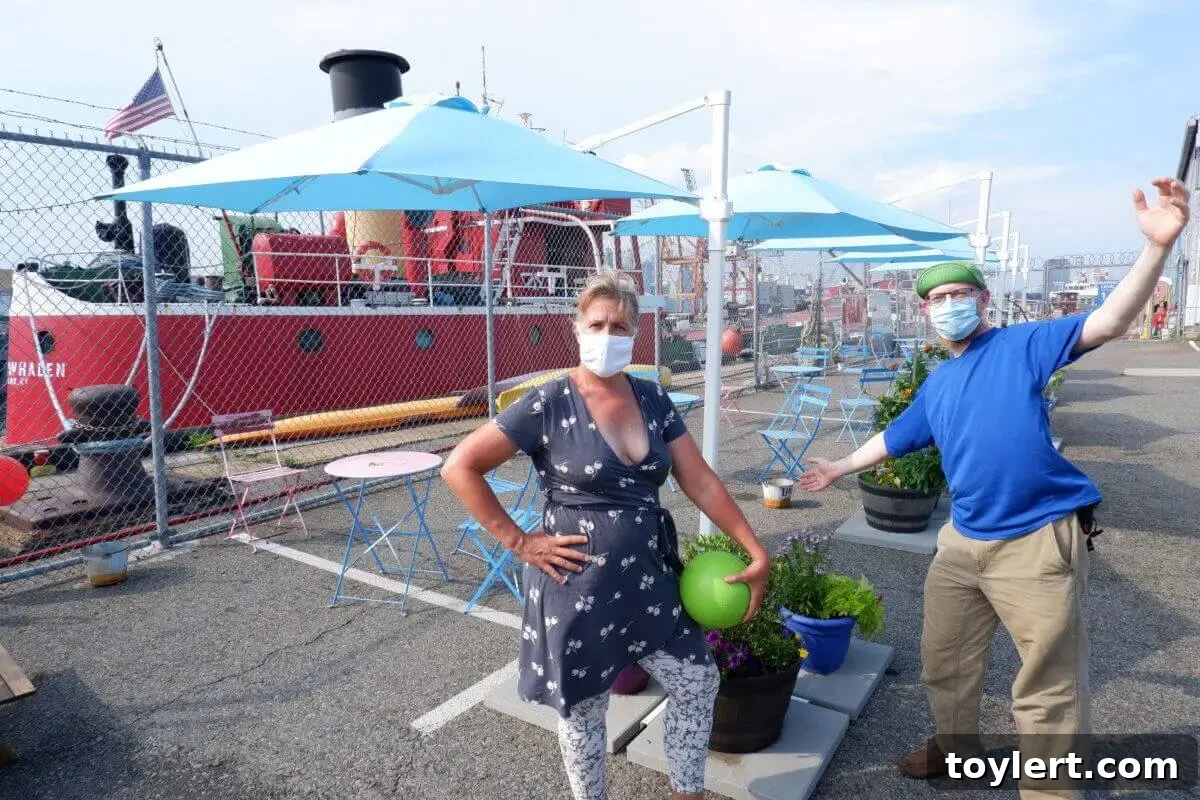
Red Hook’s Creative Solution: The Pandemic Pop-Up Park Transforms Pier 11 into a Community Haven
In the vibrant, waterfront neighborhood of Red Hook, Brooklyn, a remarkable transformation has taken place, demonstrating the power of community initiative and adaptive urban design. A dedicated group of local advocates, led by the maritime organization PortSide New York, successfully converted four ordinary parking spaces at Pier 11 on the Atlantic Basin into a dynamic and much-needed public green space. Dubbed the “Pandemic Pop-up Park,” this innovative project officially opened its gates on July 17, offering residents a crucial new outlet for recreation, relaxation, and social connection amidst the unprecedented challenges of the COVID-19 pandemic.
The creation of this temporary park underscores a vital response to a pressing urban dilemma: the scarcity of adequate public space during a health crisis that mandated social distancing and outdoor activity. As cities grappled with overcrowded parks and limited opportunities for safe outdoor engagement, PortSide New York stepped forward to reimagine existing infrastructure. Their initiative provided a creative and practical solution, offering Red Hook families and individuals a refreshing alternative to the confines of their homes and the concrete expanses of the city.
The Genesis of an Urban Oasis: Responding to a Pandemic Need
The concept for the Pandemic Pop-up Park was born from a keen observation of community behavior and an understanding of the profound impact of the pandemic on daily life. As PortSide New York’s executive director, Carolina Salguero, eloquently noted, “People are coming outside and just looking for space. You see people lying down, sitting, or picnicking on asphalt; they’re perching on Jersey Barriers.” This poignant description painted a clear picture of an urban populace yearning for accessible, comfortable, and safe outdoor environments. The sight of residents improvising recreation areas on hard surfaces and makeshift barriers highlighted an urgent, unmet need for dedicated public amenities.
The organization, known for its resourceful approach, realized it possessed the means to address this gap. Salguero explained, “We had all this extra furniture and toys, so we put it outside.” This simple yet ingenious act of repurposing available resources became the foundation of the pop-up park. By strategically deploying existing assets, PortSide New York rapidly transformed a utilitarian stretch of asphalt into a welcoming haven. This initiative perfectly encapsulated the spirit of community resilience, demonstrating how local organizations, armed with creativity and a deep understanding of their neighborhood’s needs, can initiate impactful change.
A Community’s Cry for Space
The COVID-19 pandemic dramatically altered urban living, emphasizing the critical importance of outdoor public spaces. With indoor gatherings restricted and a heightened awareness of airborne transmission, parks, plazas, and open areas became essential for physical and mental well-being. However, many urban neighborhoods, including parts of Red Hook, historically contend with limited green space. The existing parks, while cherished, often became congested, making social distancing difficult and diminishing the sense of spaciousness vital for comfort and safety.
The Pandemic Pop-up Park directly addressed this deficit by creating an entirely new zone for community gathering. It offered parents a safe place for their children to play, individuals a quiet spot to read or reflect, and neighbors an opportunity to connect from a safe distance. The park became a testament to the community’s adaptability and its collective desire to maintain a semblance of normalcy and joy amidst challenging times. Its very existence served as a beacon of hope and a practical solution, allowing residents to embrace the outdoors without venturing far from home.
PortSide New York: Stewards of the Waterfront and Community Spirit
At the heart of this innovative project is PortSide New York, a dedicated maritime advocacy organization with a deep commitment to preserving and promoting the city’s rich harbor heritage. More than just a local non-profit, PortSide New York serves as a powerful voice for New York City’s working waterfront, advocating for its ecological health, historical preservation, and public accessibility. Their work spans a wide range of activities, from educational programs and historical tours to environmental initiatives and community engagement projects, all centered around the unique cultural and economic significance of the harbor.
PortSide New York’s involvement in creating the pop-up park is a natural extension of its broader mission. By activating underutilized waterfront space and transforming it into a vibrant community asset, the organization not only provided immediate relief during a crisis but also subtly underscored the immense potential of Brooklyn’s waterfront. Their actions demonstrated that maritime advocacy isn’t just about ships and history; it’s also about fostering living, breathing communities that are connected to and benefit from their unique waterfront environment. Their ability to envision a park in parking spaces showcases a profound dedication to community well-being that goes beyond their traditional maritime focus.
The Mary A. Whalen: A Historic Headquarters
Adding another layer of character to PortSide New York’s operations and the pop-up park’s setting is its unique headquarters: the Depression-era oil tanker, the Mary A. Whalen. This historic vessel, moored at the wharf adjacent to Pier 11, is not merely a static museum piece but a dynamic hub of activity. From within its storied hull, Carolina Salguero and her team orchestrate their extensive advocacy and community programs. The tanker itself is a living artifact, providing a tangible link to New York’s industrial and maritime past, while simultaneously serving as a vibrant base for contemporary community initiatives.
The proximity of the Mary A. Whalen to the Pandemic Pop-up Park creates a powerful visual and thematic connection. Visitors to the park not only enjoy the new green space but are also immersed in a unique waterfront environment, complete with a tangible piece of maritime history. This seamless integration of past and present, industrial heritage and community recreation, is a hallmark of PortSide New York’s holistic approach. It reminds us that urban spaces are layers of history and possibility, where a historic vessel can inspire modern solutions for community needs.
Transforming Asphalt into Amenity: The Pop-Up Park Experience
The design and implementation of the Pandemic Pop-up Park exemplify the principles of tactical urbanism – low-cost, temporary changes to the built environment that aim to improve local neighborhoods and city gathering places. In this instance, four parking spaces, typically reserved for vehicles, were reimagined as a pedestrian-centric zone. The transformation was simple yet highly effective, prioritizing accessibility and immediate usability.
The park itself was outfitted with a collection of “extra furniture and toys,” as mentioned by Salguero. This included comfortable seating options – perhaps benches, chairs, or even repurposed pallets – designed to encourage lingering and social interaction. Children’s toys, such as buckets, shovels, or simple play structures, created an inviting atmosphere for young families, giving kids a much-needed outlet for play in a safe, open-air environment. The temporary nature of the park meant that its components were easily deployable and removable, offering flexibility while meeting an urgent public need. This adaptive reuse of space served as a powerful visual statement about urban priorities, shifting focus from vehicular storage to human well-being.
Design and Features: Simple Solutions, Big Impact
The beauty of the Pandemic Pop-up Park lay in its simplicity and functionality. It wasn’t about elaborate landscaping or permanent installations; it was about strategically placing elements that would maximize comfort and utility. Imagine colorful chairs inviting passersby to take a moment of respite, small tables perfect for a quick snack or a board game, and perhaps even some potted plants to bring a touch of green to the paved area. These elements collectively worked to soften the harshness of the asphalt, creating a more inviting and visually appealing environment.
The “extra toys” were particularly significant. In a time when playgrounds were often closed or considered high-risk, providing simple play opportunities for children was invaluable. This thoughtful inclusion highlighted PortSide New York’s understanding of the diverse needs within the Red Hook community, recognizing that families with young children were particularly impacted by the reduction of public play spaces. The park thus became a multi-generational hub, catering to adults seeking relaxation and children craving active play, all within a carefully designed, temporary setting.
The Broader Significance: Tactical Urbanism and Community Resilience
The Red Hook Pandemic Pop-up Park is more than just a local initiative; it’s a shining example of a global trend known as tactical urbanism. This approach involves short-term, low-cost, and scalable interventions designed to catalyze long-term change and improve public spaces. By temporarily reclaiming parking spaces for pedestrian use, PortSide New York demonstrated how even small interventions can have a profound impact on urban living, fostering community engagement and enhancing quality of life.
Such projects are crucial in dense urban environments, especially during times of crisis. They offer a flexible framework for testing new ideas, gathering community feedback, and showcasing the potential for more permanent transformations. The success of the Red Hook park could inspire other neighborhoods and city planners to look at underutilized spaces with fresh eyes, seeing potential parks, plazas, and community hubs where only asphalt once lay. It emphasizes that innovative solutions don’t always require massive budgets or years of planning; sometimes, they simply require vision, resourcefulness, and a commitment to community needs.
Red Hook’s Spirit: A Model for Urban Innovation
Red Hook itself, with its unique blend of industrial heritage, artistic community, and resilient spirit, provides the perfect backdrop for such an innovative project. Historically a working-class port, Red Hook has undergone significant transformation while retaining its distinct character. Its residents are known for their strong community bonds and proactive approach to local challenges. The pop-up park embodies this spirit of self-reliance and creative problem-solving.
This initiative serves as a model for how urban communities can adapt and thrive even in the face of adversity. It showcases how grassroots efforts, when championed by dedicated organizations like PortSide New York, can significantly enhance public life and foster a stronger sense of place. The success of the park reflects a broader understanding within Red Hook that community assets extend beyond traditional definitions, embracing every available space as an opportunity for collective benefit.
Looking Ahead: The Legacy of a Temporary Haven
While the Pandemic Pop-up Park was initially conceived as a temporary measure to address an immediate crisis, its impact has the potential to resonate far beyond its operational lifespan. Such successful tactical urbanism projects often serve as proofs of concept, demonstrating the demand for more permanent public spaces and influencing future urban planning decisions. The community’s positive reception and active utilization of the park send a clear message: there is a profound desire for more pedestrian-friendly zones, more accessible green spaces, and more opportunities for outdoor social interaction in Red Hook and across New York City.
The legacy of this small but mighty park might manifest in several ways. It could inspire the designation of permanent parklets in similar locations, encourage a re-evaluation of streetscape design to prioritize people over vehicles, or simply strengthen PortSide New York’s reputation as a vital community player. Ultimately, the park cultivated a sense of shared ownership and demonstrated that even amidst global challenges, local communities possess the ingenuity and determination to create spaces that uplift and connect their residents.
Conclusion: More Than Just Parking Spaces
The Pandemic Pop-up Park at Pier 11 in Red Hook stands as a testament to the remarkable ingenuity and profound community spirit that can emerge during times of crisis. What began as four mundane parking spaces was transformed into a vibrant, essential hub for a neighborhood in need, thanks to the vision and dedication of PortSide New York and its executive director, Carolina Salguero. By providing a safe, open, and welcoming environment for children to play and adults to relax, this initiative addressed an immediate public health need while simultaneously enriching the fabric of the community.
This pop-up park is more than just furniture and toys on asphalt; it is a powerful symbol of urban resilience, adaptive reuse, and the transformative potential of grassroots action. It reminds us that our cities are living organisms, constantly evolving, and that with a little creativity and a lot of heart, even the most overlooked spaces can be reimagined as vital centers of community life. The Red Hook Pandemic Pop-up Park will undoubtedly be remembered not just as a temporary haven, but as a shining example of how a community can come together to create joy and well-being, one parking spot at a time.