Greenpoint’s Future Takes Shape: Brooklyn Borough President Approves Massive Waterfront Developments
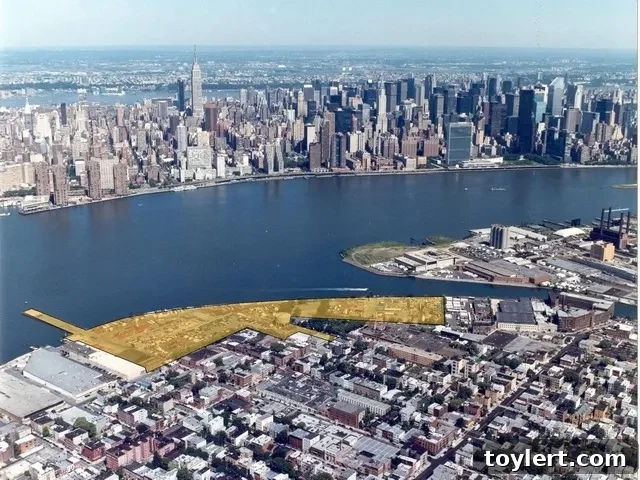
In a move that signals a significant step forward for North Brooklyn’s landscape, Brooklyn Borough President Marty Markowitz has officially approved two ambitious and contentious development projects: Greenpoint Landing and 77 Commercial Street. These massive undertakings, situated strategically near the mouth of Newtown Creek, promise to reshape the Greenpoint waterfront, bringing thousands of new residential units and significant infrastructure changes to the area. This decision, while celebrated by developers and some proponents of urban growth, has ignited further debate and solidified opposition from a vocal segment of the local community.
Markowitz’s endorsement arrives as a pivotal moment in the Uniform Land Use Review Procedure (ULURP), adding substantial weight to the projects’ progression. His approval, however, was not unconditional. Recognizing the considerable impact these developments would have on existing infrastructure and community resources, the Borough President stipulated several crucial requirements aimed at mitigating potential strains and enhancing local amenities.
The Controversial Green Light: Brooklyn Borough President’s Conditions
Brooklyn Borough President Marty Markowitz granted his approval for the Greenpoint Landing and 77 Commercial Street projects under specific, non-negotiable conditions. Paramount among these was the mandate for developers to construct a much-needed 640-seat middle school within the development footprint. This requirement directly addresses the projected influx of families and children that thousands of new apartments would bring, ensuring that the existing educational infrastructure is not overwhelmed and that new residents have access to quality public schooling. The addition of a state-of-the-art middle school is seen by many as a vital investment in the long-term sustainability and livability of the expanded Greenpoint community.
Furthermore, Markowitz emphasized the critical need for enhanced public transportation services to support the burgeoning population. His conditions explicitly called for an increase in both bus and G train service to the neighborhood. Greenpoint, while desirable for its waterfront views and proximity to Manhattan, has long faced challenges with its public transit capacity. The influx of an estimated 10,000 to 15,000 new residents from these developments would undoubtedly place immense pressure on the current transit network. By mandating improvements to bus routes and the G subway line, Markowitz aimed to proactively address potential congestion and ensure that residents have viable, efficient options for commuting and daily travel. These infrastructure demands underscore a commitment to holistic urban planning, attempting to balance growth with essential public services.
Unpacking the Greenpoint Landing and 77 Commercial Street Projects
The scope of the Greenpoint Landing and 77 Commercial Street developments is truly monumental, poised to transform a significant portion of the North Brooklyn waterfront into a vibrant, high-density residential and mixed-use district. These projects represent a bold vision for urban revitalization, aiming to unlock the potential of underutilized industrial land.
Greenpoint Landing: A Vision for Waterfront Transformation
Greenpoint Landing, the larger of the two initiatives, is envisioned as a sprawling 22-acre mixed-use community along the East River. This ambitious plan calls for the construction of ten towering buildings, which will collectively house an astounding 5,500 new apartments. Beyond residential units, Greenpoint Landing is designed to create a dynamic urban environment, featuring new parks, public waterfront access, retail spaces, and potentially office facilities. The promise of public esplanades and green spaces along the water’s edge is a significant draw, offering residents and visitors alike an opportunity to connect with the waterfront, which has historically been inaccessible due to industrial uses. This development aims to create a self-contained neighborhood complete with amenities, fostering a sense of community for its thousands of future inhabitants.
The sheer scale of Greenpoint Landing suggests a profound economic impact on the area. It is expected to generate numerous construction jobs, followed by permanent employment opportunities in retail and services. The arrival of thousands of new residents will undoubtedly stimulate the local economy, bringing new businesses and injecting vitality into existing establishments. However, this growth also presents challenges, including the need for careful integration with the existing Greenpoint fabric to prevent displacement and maintain the unique character of the neighborhood. The vision is to create a modern, sustainable waterfront district that serves as a benchmark for urban development in New York City.
77 Commercial Street: Adding to the Skyline
Complementing Greenpoint Landing, the development at 77 Commercial Street adds further density and architectural presence to the area. This project will feature two distinct towers, each rising an impressive 30 stories high. These structures are slated to contain 720 residential apartments, contributing significantly to the total housing stock being introduced to the Greenpoint waterfront. While smaller in scope than its sprawling neighbor, 77 Commercial Street shares the same goal of transforming industrial land into modern living spaces.
The design and integration of 77 Commercial Street with Greenpoint Landing are crucial. Together, these developments form a contiguous new urban fabric, creating a new gateway to the neighborhood from the north. The combined impact of these projects will fundamentally alter Greenpoint’s skyline and demographic profile. The architectural styles, public spaces, and retail offerings of both developments will contribute to the overall aesthetic and functionality of this revitalized waterfront district, aiming to create a cohesive and desirable place to live, work, and recreate.
Addressing the Housing Crisis: Affordable Units and Community Needs
A central component of both development plans, and a key factor in securing Borough President Markowitz’s approval, is the inclusion of affordable housing. Recognizing New York City’s ongoing housing crisis, these projects are poised to provide hundreds of much-needed income-restricted units, thereby contributing to the city’s broader goals of housing equity and accessibility. Specifically, Greenpoint Landing is mandated to include 431 affordable apartments, a substantial number that aims to address the diverse housing needs of the community.
Markowitz’s report further detailed a critical stipulation for the affordable housing component: 100 of these 431 units are to be specifically reserved for senior citizens and individuals with disabilities. Crucially, these units will be allocated to those earning no more than 30 percent of the Area Median Income (AMI). This highly targeted approach ensures that the most vulnerable populations, often those struggling the most with the city’s high cost of living, receive priority access to safe, stable, and affordable housing. Targeting such a low AMI tier is significant, as it reaches individuals and families who are typically priced out of even other ‘affordable’ housing options, which often cater to higher AMI brackets. This provision reflects a commitment to true affordability and social equity within the context of large-scale development.
The integration of hundreds of affordable units into these market-rate developments is a delicate balancing act. While providing essential housing for lower and middle-income residents, it also sparks discussions about gentrification and the changing demographics of Greenpoint. Proponents argue that such developments, with their mandatory affordable components, are vital for maintaining socio-economic diversity in rapidly gentrifying neighborhoods. Critics, however, often question whether the number of affordable units is truly sufficient to offset the market pressures created by thousands of new luxury apartments and whether existing residents will truly benefit from these inclusions. Nevertheless, the explicit commitment to affordable housing, particularly for seniors and the disabled at very low AMI levels, remains a critical aspect of these controversial projects.
A Community Divided: Opposition and Legal Threats
Despite the conditions set by Borough President Markowitz and the promise of affordable housing, the approval of Greenpoint Landing and 77 Commercial Street has been met with significant resistance from local residents and community groups. This opposition underscores the complex tension between urban development, economic growth, and the preservation of neighborhood character and quality of life. The community board, representing local interests, had previously voted down the development plan, signaling a clear rejection of the projects in their proposed form.
The reasons for community opposition are multifaceted. Many residents express deep concerns about the immense scale and density of the proposed towers. They fear that the influx of thousands of new residents will overwhelm existing infrastructure, including already strained public transportation, schools, and local services. Traffic congestion, increased noise pollution, and the loss of open space are frequently cited worries. There are also environmental concerns, particularly given the developments’ proximity to Newtown Creek, a Superfund site, raising questions about potential impacts on the delicate ecosystem and the health of future residents.
Furthermore, residents worry about the accelerating pace of gentrification. While affordable housing units are included, the vast majority of apartments will be market-rate, likely catering to high-income earners. This dynamic raises fears that the developments will further push up property values and rents in the surrounding areas, making it increasingly difficult for long-term residents and local businesses to remain in Greenpoint. The concern is that the unique, historic character of the neighborhood, once a working-class enclave, will be irrevocably altered by these towering glass and steel structures.
The discontent is so strong that a large group of Greenpoint residents has publicly pledged to sue the developers. Their legal challenge would likely focus on potential violations of environmental review processes, zoning regulations, or inadequate consideration of community impact. Such legal battles can significantly delay projects, increase costs, and potentially lead to further modifications. This determined stance highlights the deep-seated conviction within the community that these developments, as currently planned, do not adequately serve the best interests of existing Greenpoint residents. The conflict underscores a recurring theme in New York City’s urban planning: how to balance the need for new housing and economic development with the preservation of existing communities and their social fabric.
The Road Ahead: Navigating the ULURP Process
Borough President Markowitz’s approval, while a critical milestone, is by no means the final word on these monumental Greenpoint projects. The Uniform Land Use Review Procedure (ULURP) is a multi-layered process, designed to ensure comprehensive scrutiny and public input at various stages. The developments must now clear several more significant hurdles before construction can officially commence, each presenting an opportunity for further discussion, negotiation, or potential roadblocks.
The next critical step involves securing the approval of the New York City Planning Commission. This body, composed of mayoral appointees, evaluates land use proposals based on planning principles, zoning regulations, and the city’s overall development objectives. The Commission will review the projects in detail, considering the environmental impact statements, infrastructure plans, and the conditions laid out by the Borough President. Their decision often carries significant weight and can set the tone for subsequent approvals.
Following the City Planning Commission, the projects will move to the New York City Council for a binding vote. The City Council’s review is often the most politically charged stage of the ULURP process, as Council members are directly elected to represent specific districts and are highly responsive to community concerns. The local Council Member whose district encompasses Greenpoint will play a particularly influential role, often holding significant leverage to negotiate further modifications or secure additional community benefits. Given the strong opposition from the Greenpoint community board and residents, intense lobbying and public advocacy are expected during this phase. The Council has the power to approve, reject, or modify the proposals, and their decision is crucial for the projects’ ultimate fate.
Finally, should the projects successfully navigate the City Council, they will require the signature of the Mayor’s Office. While mayoral approval often follows City Council endorsement, the Mayor holds the ultimate authority to sign off on major land use decisions. The Mayor’s office will assess the projects within the context of broader city-wide policy goals, including housing affordability, economic development, and environmental sustainability. Each of these remaining stages offers a platform for proponents and opponents to advocate their positions, making the path forward for Greenpoint Landing and 77 Commercial Street potentially long and intricate, filled with opportunities for further debate and modification.
The Future of Greenpoint: A Balancing Act
The approval of the Greenpoint Landing and 77 Commercial Street developments by Brooklyn Borough President Marty Markowitz marks a watershed moment for Greenpoint and the wider North Brooklyn area. These projects encapsulate the ongoing urban transformation that New York City continually undergoes, balancing the pressures of population growth and the demand for housing with the imperative to preserve community identity and ensure equitable development. The vision articulated for these sites is one of a revitalized waterfront, bustling with new residents, public spaces, and economic activity.
However, this future is not without its complexities. The challenges of integrating thousands of new residents into an already dense neighborhood, upgrading essential infrastructure, and mitigating environmental impacts are substantial. The vociferous opposition from the community board and local residents underscores the deep-seated concerns about gentrification, strain on services, and the changing character of Greenpoint. Their fight highlights a universal urban dilemma: how to foster progress and accommodate growth without sacrificing the unique fabric and long-term well-being of existing communities.
As these projects proceed through the intricate ULURP process, the decisions made by the City Planning Commission, the City Council, and the Mayor’s Office will be critical. Each body will weigh the benefits of increased housing stock, economic investment, and waterfront access against the legitimate concerns of neighborhood preservation, infrastructure capacity, and social equity. The outcome will not only determine the future skyline of Greenpoint but also set a precedent for how large-scale developments are managed in New York City’s ever-evolving urban landscape. The coming months will be crucial in shaping whether these controversial projects can ultimately deliver on their promise of responsible, inclusive, and transformative urban development for one of Brooklyn’s most dynamic neighborhoods.