Crown Heights South Poised for Major Residential Transformation with New Development on Rogers Avenue
The dynamic real estate landscape of Brooklyn continues its rapid evolution, with the epicenter of development increasingly shifting beyond its traditional boundaries. For years, the Crown Heights development boom has primarily concentrated north of Eastern Parkway, transforming blocks with modern residential buildings and attracting a new wave of residents. Now, however, there’s clear evidence that this vigorous expansion is extending its reach southward, promising significant changes for the neighborhoods nestled below this iconic artery. A planned five-story residential building at 267 Rogers Avenue, strategically located between Carroll and Crown streets, serves as a beacon for this southward expansion, signaling a new era of growth and revitalization for Crown Heights South.
Project Deep Dive: 267 Rogers Avenue – A New Landmark for the Neighborhood
The proposed development at 267 Rogers Avenue is more than just another building; it represents a substantial investment in the area’s future and a significant addition to its housing stock. New building applications, formally submitted to the city last month, outline plans for an expansive 112,256-square-foot structure. This impressive footprint is designed to accommodate a remarkable 165 apartments, catering to a diverse range of residents seeking modern living spaces in an increasingly desirable Brooklyn locale. The sheer scale of this project suggests a confident outlook on the demand for housing in this emerging submarket of Crown Heights.
Architectural Vision and Design Principles
Tasked with bringing this ambitious vision to life are the esteemed architects at Think Architecture and Design PLLC. Known for their innovative and contextually sensitive designs, Think Architecture and Design PLLC is expected to craft a building that not only maximizes functionality and aesthetic appeal but also integrates thoughtfully into the existing urban fabric of Crown Heights South. While specific design details are still emerging, one can anticipate a contemporary aesthetic that incorporates sustainable practices and amenities designed to enhance urban living. Modern residential developments often feature elements such as communal outdoor spaces, fitness centers, co-working areas, and dedicated bicycle storage, all of which contribute to a vibrant and convenient lifestyle for its future residents. The five-story height will likely complement the surrounding architecture, offering a balance between new development and neighborhood character.
The comprehensive nature of the plans suggests a focus on creating not just housing units, but a community within the building itself. The considerable number of apartments, 165, indicates a project designed to offer a variety of layouts, from studios to multi-bedroom units, appealing to singles, couples, and families alike. This diversity in offerings is crucial for fostering a dynamic and inclusive residential environment, aligning with the diverse spirit of Brooklyn.
The Site: A Transformation of Institutional Land
One of the most intriguing aspects of this development lies in its location: it occupies a parcel that is part of the St. Ignatius Catholic Church complex. This arrangement places the new residential building directly adjacent to Medgar Evers High School, creating an interesting dynamic between residential, educational, and religious institutions. The repurposing of institutional land for residential use is a growing trend in densely populated urban centers, often providing opportunities for significant development while sometimes raising questions about historical preservation and community integration.
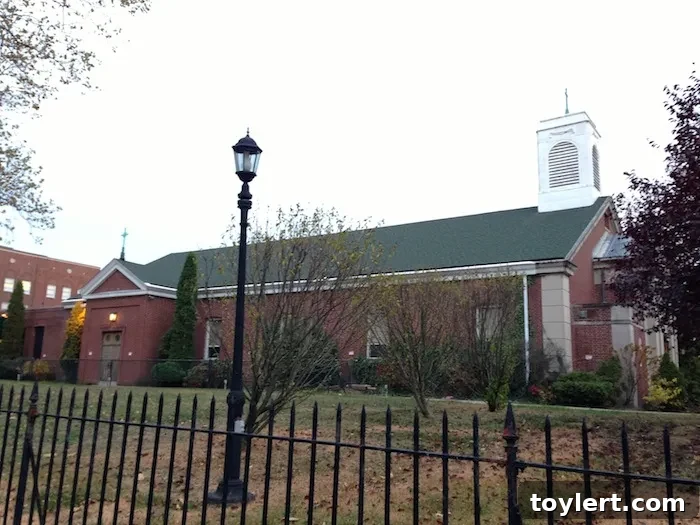
Indeed, demolition applications have already been formally submitted to facilitate the removal of the church’s community hall, the structure currently pictured on the site. This move clears the necessary space for the new residential complex while, as far as current information indicates, preserving the actual church building itself. This preservation is a crucial detail, as it suggests an effort to maintain a link to the site’s historical and spiritual roots even as it undergoes a significant commercial transformation. The community hall, while serving an important function, is often a more adaptable structure than the main sanctuary, making it a logical candidate for redevelopment.
Unraveling the Ownership Details
Public records associated with the property currently indicate that the St. Ignatius Catholic Church retains ownership of the land. However, an interesting detail emerges from the building permits, which list an LLC (Limited Liability Company) as the owners of record for the proposed development. This discrepancy often points to a recent transaction or a complex ownership arrangement, such as a long-term lease agreement or a sale that has not yet been fully reflected in all public databases. Such arrangements are common in large-scale real estate dealings, allowing for flexibility in financing and development while potentially providing long-term revenue streams for original landowners like religious institutions. Understanding the precise nature of this ownership will shed more light on the future stewardship of this historically significant parcel. Interested parties can review the public applications for further details: New Building Applications and GMAP Location.
The Evolving Landscape of Crown Heights and Beyond
The current development at 267 Rogers Avenue is not an isolated incident but rather a significant indicator of broader trends shaping Brooklyn’s real estate market. Crown Heights has, for well over a decade, experienced a dramatic resurgence, attracting new residents drawn by its historic brownstones, cultural institutions, vibrant community, and relatively accessible pricing compared to more established neighborhoods like Park Slope or Carroll Gardens. Initially, this growth was concentrated closer to the major transportation hubs and amenities north of Eastern Parkway. However, as demand intensifies and available land diminishes, developers are increasingly looking to areas previously overlooked.
Why Crown Heights South? Factors Driving the Shift
Several factors contribute to the escalating appeal of Crown Heights South:
- Affordability (Relative): While prices have risen, Crown Heights South still offers a more attainable entry point into the Brooklyn market compared to its northern counterpart or neighboring districts.
- Strategic Location: The area boasts excellent access to public transportation, including the 2, 3, 4, 5, and S subway lines, facilitating easy commutes to Manhattan and other parts of Brooklyn.
- Proximity to Green Spaces and Culture: Residents benefit from close proximity to world-class attractions such as Prospect Park, the Brooklyn Museum, and the Brooklyn Botanic Garden, offering unparalleled recreational and cultural opportunities.
- Educational Institutions: The presence of Medgar Evers College injects a youthful energy into the neighborhood and provides educational resources.
- Emerging Retail and Dining Scene: As new residents move in, so too do new businesses, from trendy cafes and restaurants to independent boutiques, enhancing the local amenity base.
- Community Character: Crown Heights South maintains a strong sense of community and boasts a rich architectural heritage, making it an attractive place to live for those seeking authentic Brooklyn charm with modern conveniences.
Impact and Outlook: What This Means for the Community
The development of 165 new apartments at 267 Rogers Avenue will undoubtedly have a multifaceted impact on Crown Heights South. On one hand, it represents progress and an infusion of new residents and economic activity. Construction jobs, followed by retail and service jobs, will boost the local economy. New housing stock can help alleviate the city’s overall housing crisis, offering more options for prospective tenants and homeowners.
On the other hand, large-scale developments often bring concerns about gentrification, displacement of long-term residents, and the strain on existing infrastructure. Increased population density can pressure local schools, public transportation, and other essential services. Community dialogues and responsible urban planning will be crucial to ensure that new developments benefit all residents and contribute to a balanced, equitable growth for the neighborhood.
This project on Rogers Avenue marks a significant milestone in the ongoing story of Crown Heights. It underscores the continued desirability of Brooklyn as a residential hub and highlights the dynamic nature of its neighborhoods. As Crown Heights South prepares to embrace this new chapter, the blending of historic charm with modern living spaces will define its evolving identity, setting a precedent for future developments in this exciting and transforming part of the borough.