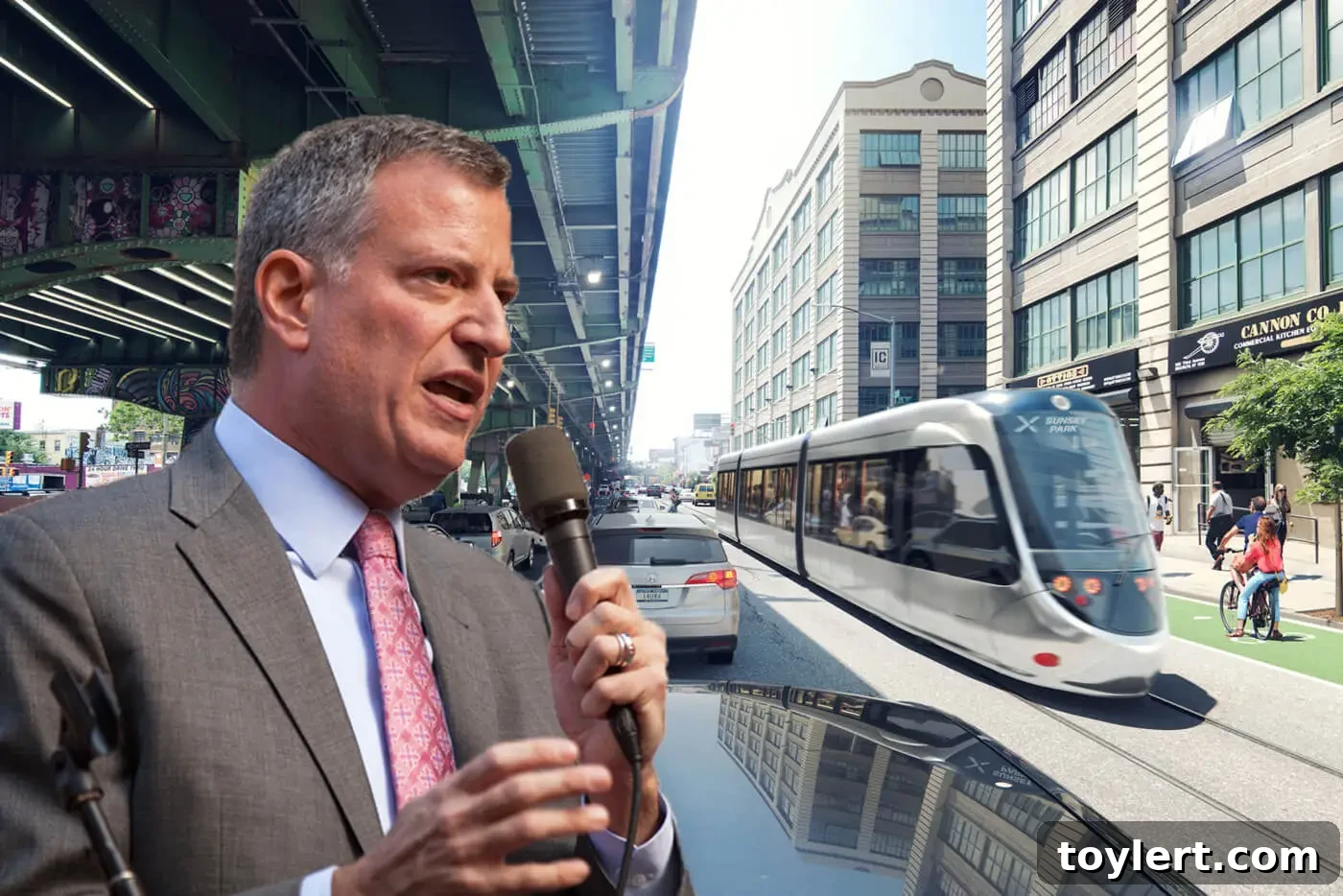
New Yorkers are all too familiar with the frustrations of an overburdened transit system. The L train’s notorious service disruptions and the G train’s often-criticized reliability frequently leave commuters searching for alternatives. However, a significant development promises to inject a much-needed dose of optimism into the city’s transportation dialogue: the official backing of the Brooklyn Queens Connector (BQC) by city leadership. This high-profile proposal outlines a visionary 16-mile waterfront streetcar line, poised to redefine travel between the bustling neighborhoods of Sunset Park in Brooklyn and Astoria in Queens.
The BQC is not just another transit project; it represents a potential transportation breakthrough, particularly for Brooklyn, and a vital link for the rapidly growing waterfront communities in both boroughs. While the promise of a streetcar utopia is compelling, the journey from concept to reality for such an ambitious undertaking will undoubtedly be complex and protracted. As New Yorkers await its potential fruition, the BQC sparks conversations about urban development, connectivity, and the future of mass transit in one of the world’s most dynamic cities.
The Genesis of a Vision: Why the BQC?
The BQC proposal emerges from a critical need to address several long-standing transportation challenges in New York City. The city’s waterfront areas in Brooklyn and Queens, once primarily industrial zones, have undergone a dramatic transformation. They are now vibrant hubs of residential living, innovation, culture, and commerce, experiencing exponential growth in population and economic activity. Despite this revitalization, direct public transit connections between these crucial areas remain severely limited. Existing subway lines are primarily geared towards Manhattan-centric commutes, offering circuitous and time-consuming routes for inter-borough travel.
For instance, navigating from Greenpoint to Dumbo, two thriving waterfront neighborhoods, often requires multiple transfers or a lengthy bus ride, effectively isolating these communities from each other. The BQC aims to bridge these geographical and infrastructural gaps, offering a direct, efficient, and scenic alternative. It’s a response to a rapidly changing urban landscape, designed to serve a burgeoning population that demands more localized and interconnected transit solutions beyond the traditional subway network.
Unveiling the Route: A Waterfront Lifeline
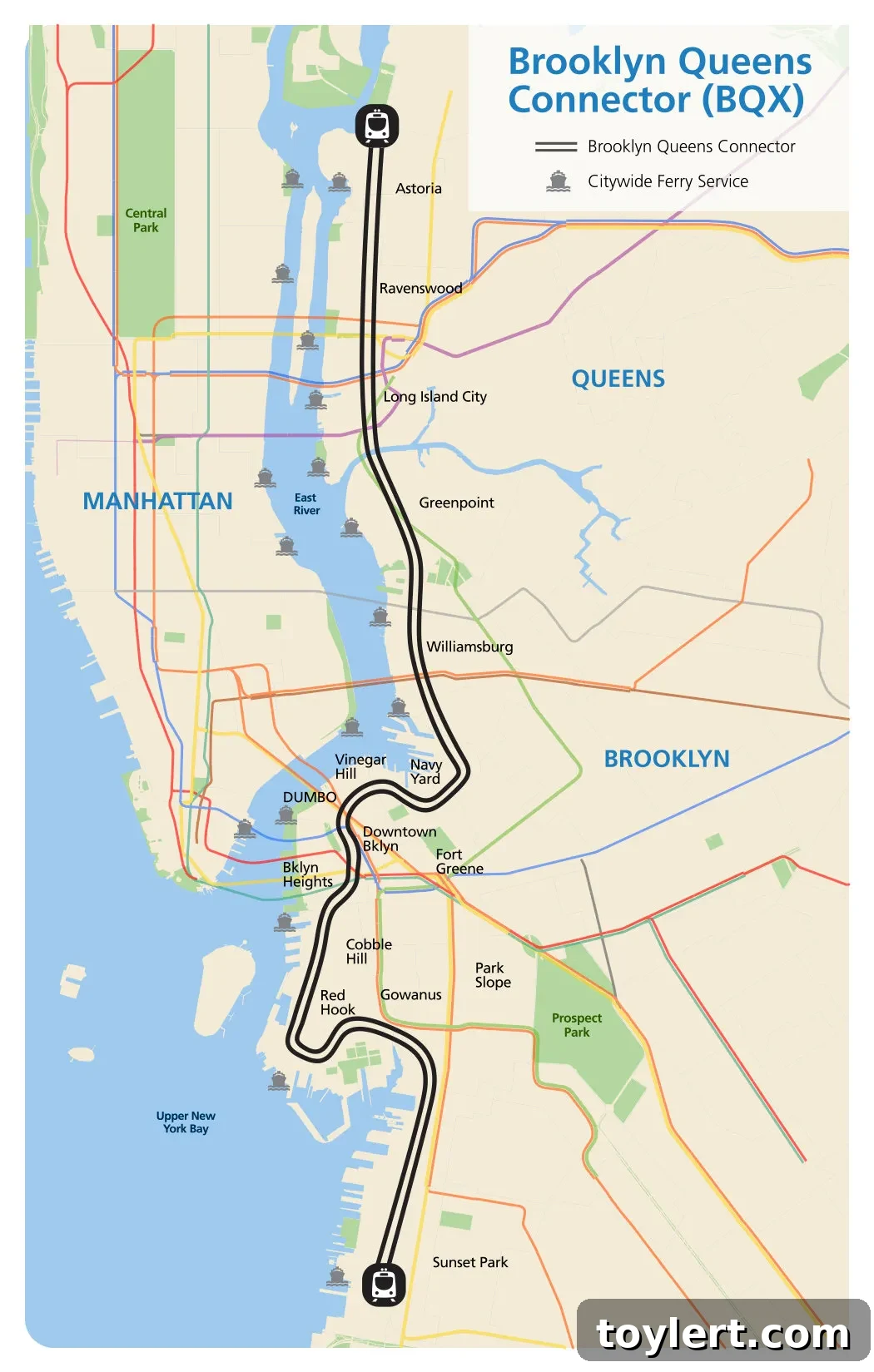
The planned BQC route is a testament to ambitious urban planning, tracing a picturesque 16-mile path along the Brooklyn-Queens waterfront. Beginning in the industrial-chic landscape of Sunset Park, Brooklyn, the streetcar would weave its way north, connecting a diverse array of neighborhoods that have become synonymous with Brooklyn’s renaissance and Queens’ dynamic growth. Key areas on its proposed trajectory include Red Hook, Gowanus, Brooklyn Heights, Downtown Brooklyn, Dumbo, the Brooklyn Navy Yard, Williamsburg, Greenpoint, Long Island City, and finally culminating in Astoria, Queens.
This strategic alignment is designed to link major employment centers, burgeoning tech hubs, cultural institutions, and residential clusters that currently lack seamless public transit access to each other. By running on tracks embedded along the waterfront, the BQC offers not just transportation, but also a unique perspective of the city’s iconic skyline and waterways, potentially transforming daily commutes into more enjoyable experiences. The integration of the streetcar into the urban fabric promises to enhance accessibility, foster community ties, and stimulate further economic development along this vital corridor.
Speed, Efficiency, and Modern Urban Mobility
The proposed streetcar route is designed to travel at an average speed of 12 miles per hour. While this might seem modest, especially when compared to subway speeds, it’s a significant improvement over current mass transit options for cross-borough waterfront travel. For context, the average bicycle speed in urban environments is often similar, highlighting the BQC’s role in providing a reliable, weather-independent, and capacity-rich alternative to cycling or walking for longer distances along the waterfront.
The New York Times points out that a journey from Greenpoint to Dumbo, which today can be a protracted affair involving multiple transfers or a lengthy bus ride, could be reduced to a mere 27 minutes via the BQC. This efficiency stems from its dedicated route, avoiding the unpredictable traffic congestion that plagues bus services. The streetcar’s consistent speed and frequency are key to its appeal, offering predictability and reducing overall travel times for commuters and residents alike. It’s not about being the fastest mode of transport over all distances, but about providing a highly efficient and convenient solution for a specific, underserved urban corridor, integrating seamlessly into the city’s multimodal transportation network.
Economic Catalyst and Community Connector
Beyond its primary function as a transit line, the Brooklyn Queens Connector is envisioned as a powerful engine for economic growth and a vital tool for social connectivity. Its introduction could unlock significant potential along the waterfront, benefiting businesses, residents, and the broader urban economy.
Economic Impact and Urban Revitalization
The construction and operation of the BQC are expected to generate thousands of jobs, from engineering and manufacturing to service and maintenance. More importantly, by improving accessibility to underserved areas, the streetcar could significantly boost local commerce. Businesses along the route, from small shops to large tech companies, would benefit from increased foot traffic and easier access for employees and customers. Real estate values in previously harder-to-reach neighborhoods could see appreciation, stimulating further development and investment. The BQC is poised to become a critical piece of infrastructure in the ongoing revitalization of the Brooklyn and Queens waterfront, transforming these areas into even more attractive places to live, work, and visit.
Fostering Social Cohesion and Accessibility
The BQC’s ability to link diverse communities is one of its most compelling aspects. By connecting disparate neighborhoods that currently lack direct transit ties, it facilitates easier access to jobs, educational institutions, cultural centers, and recreational spaces. A resident of Astoria could more easily visit a gallery in Dumbo, or an employee in the Brooklyn Navy Yard could commute smoothly from Williamsburg. This enhanced connectivity breaks down geographical barriers, fosters greater social cohesion, and broadens opportunities for residents across both boroughs. It encourages cross-pollination of ideas, cultures, and economic activity, weaving the vibrant tapestry of New York City even tighter.
Unlocking Tourism Potential
The waterfront route itself is a major asset. The BQC could transform into a unique tourist attraction, offering scenic views of the Manhattan skyline, historic industrial architecture, and emerging waterfront parks. This would not only enhance the visitor experience but also draw tourists away from traditional Manhattan hotspots, encouraging them to explore the rich cultural offerings and burgeoning attractions of Brooklyn and Queens, further stimulating local economies.
Addressing the Challenges: From Proposal to Reality
While the vision for the BQC is compelling, transforming it into a reality involves navigating a complex web of logistical, financial, and political challenges. Major infrastructure projects in New York City invariably face intense scrutiny and require meticulous planning.
Funding Mechanisms and Financial Viability
A project of this scale demands substantial investment. Proponents often suggest innovative financing models, such as “value capture,” where a portion of the increased property values along the route, directly attributable to the streetcar, helps fund its construction and operation. Public-private partnerships are also frequently explored to leverage private capital. However, securing sufficient and stable funding, along with demonstrating long-term financial viability, remains a critical hurdle that will require careful analysis and robust financial planning.
Environmental Review and Urban Planning Considerations
Integrating a 16-mile streetcar line into densely populated urban environments presents numerous environmental and urban planning considerations. Detailed environmental impact studies would be necessary to assess effects on air quality, noise levels, and local ecosystems. From an urban planning perspective, the project would necessitate careful consideration of existing street layouts, traffic patterns, and pedestrian flows. Questions regarding the impact on bike lanes, parking, and streetscape design would need comprehensive answers to ensure the BQC enhances, rather than detracts from, the urban experience.
Community Engagement and Public Debate
Like any large-scale urban development, the BQC proposal has sparked both enthusiastic support and vocal opposition. Community engagement will be paramount to address concerns ranging from construction disruption and potential gentrification pressures to the allocation of street space. Thoughtful public debate, transparent communication, and a willingness to adapt plans based on community feedback will be essential to build consensus and ensure the project truly serves the diverse needs of the affected neighborhoods.
A Glimpse into the Future: NYC’s Evolving Transit Landscape
The Brooklyn Queens Connector is more than just a streetcar; it represents a forward-thinking approach to urban mobility in a rapidly evolving metropolis. It symbolizes a shift towards more localized, sustainable, and interconnected transit solutions that complement the existing subway and bus networks. Should the BQC come to fruition, it would not only alleviate pressure on existing transit lines but also set a precedent for future urban planning initiatives across the city and beyond.
As New York City continues to grow and adapt to the demands of the 21st century, projects like the BQC are vital. They reflect a commitment to creating a more accessible, environmentally friendly, and economically vibrant urban landscape for all its residents. The journey to streetcar utopia may be long, but the destination promises a transformed Brooklyn and Queens, more seamlessly integrated and better equipped for the future.