Revitalizing Innovation: The Brooklyn Navy Yard’s Transformation, Fueled by Strategic Investment in Building 77
The Brooklyn Navy Yard, a historic industrial waterfront site, is a vibrant testament to New York City’s enduring spirit of innovation and economic rebirth. A significant boost to this ongoing transformation was recently announced by Mayor de Blasio, who committed an additional $76.8 million in new funding specifically earmarked for development initiatives within the Navy Yard, with a particular focus on the ambitious modernization of Building 77. This substantial investment, widely reported across various media outlets, marks a pivotal moment, further expanding on revitalization efforts initially launched by the Bloomberg administration.
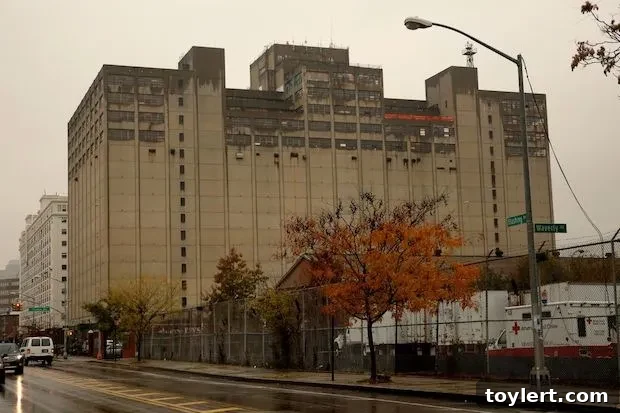
This latest infusion of capital elevates the city’s total financial commitment to the modernization of Building 77 to an impressive $140 million. Building 77, prominently featured in images of the complex, is more than just a structure; it is a colossal former ammunition depot, standing as the largest edifice within the entire Navy Yard complex. Boasting a remarkable 17 stories and encompassing an expansive 960,000 square feet, its sheer scale underscores the magnitude of its potential impact. The administration projects that the complete overhaul and repurposing of this iconic building will be a powerful engine for job creation, estimated to bring approximately 3,000 new employment opportunities to the area, breathing new life into local communities and bolstering the city’s economic diversification.
Building 77: A Historic Icon Reimagined for the 21st Century
Building 77’s journey from a munitions storage facility to a beacon of modern industry is a compelling narrative of adaptation and foresight. For decades, it served a crucial role in supporting naval operations, a silent witness to America’s industrial might. Today, it stands ready to embrace a new purpose, shedding its past to become a dynamic hub for contemporary manufacturing, technology, and creative industries. The $140 million investment is not merely for cosmetic upgrades; it represents a comprehensive strategic effort to equip Building 77 with state-of-the-art infrastructure designed to meet the demands of advanced production, cutting-edge research, and collaborative workspaces. This includes significant improvements in utilities, telecommunications, energy efficiency, and modern design principles that foster an open, collaborative environment.
The revitalization plan envisions Building 77 as a vertical manufacturing campus, a place where innovators, entrepreneurs, and skilled workers can converge. Its vast floor plates offer unparalleled flexibility, capable of housing a diverse ecosystem of businesses ranging from small startups to established companies. The ground floor, in particular, is being transformed into a vibrant public market and retail space, designed to engage the local community and provide amenities for the thousands of people who will work within its walls. This integration of public access with industrial activity is a hallmark of the Navy Yard’s broader development strategy, aiming to create a seamless connection between work, community, and commerce.
The Brooklyn Navy Yard: A Legacy of Innovation and Economic Resilience
To fully appreciate the significance of Building 77’s transformation, one must understand the rich historical tapestry and ongoing evolution of the Brooklyn Navy Yard itself. Established in 1801, the Navy Yard played a pivotal role in nearly every major American conflict, particularly during World War II, when it was a powerhouse of shipbuilding and naval repairs, employing tens of thousands of skilled workers. After its closure as an active naval facility in 1966, the Yard faced an uncertain future, a common fate for many industrial behemoths of its era. However, New York City had a different vision.
Instead of succumbing to decay or succumbing solely to residential development, the Brooklyn Navy Yard was strategically reimagined as an urban industrial park. This visionary approach aimed to preserve its manufacturing heritage while adapting it for new economic realities. Today, the Brooklyn Navy Yard Development Corporation (BNYDC), a not-for-profit organization, manages the 300-acre site. Its mission is clear: to create and preserve jobs, foster a diverse and inclusive business environment, and serve as a national model for sustainable urban industrial development. The Yard is now home to over 500 businesses employing more than 17,000 people, a remarkable resurgence that defies national trends of industrial decline.
The success of the Navy Yard extends beyond its sheer size and job numbers. It has cultivated a unique ecosystem where traditional manufacturing coexists with advanced technology, creative arts, and sustainable practices. Tenants range from film and television production studios to artisanal food producers, from innovative tech startups to cutting-edge clean energy companies. This deliberate diversification is what makes the Navy Yard a resilient economic engine, capable of weathering various economic shifts. Investments in buildings like Building 77 are critical to maintaining this momentum, providing the necessary infrastructure for current tenants to grow and for new businesses to find a home.
Economic and Social Impact: Beyond Bricks and Mortar
The estimated 3,000 jobs resulting from Building 77’s redevelopment are more than just statistics; they represent livelihoods, opportunities, and a tangible boost to the local economy. These jobs span a wide spectrum, from skilled manufacturing and technology roles to administrative, retail, and support services. The strategic location of the Brooklyn Navy Yard, nestled between diverse Brooklyn neighborhoods like Fort Greene, Clinton Hill, and Williamsburg, ensures that the economic benefits ripple outward, providing accessible employment opportunities for residents who might otherwise face long commutes or limited options.
Furthermore, the Navy Yard is deeply committed to workforce development and providing pathways to employment for local residents, including those from underserved communities. Programs focused on training and skill-building ensure that a significant portion of the new jobs created will be filled by Brooklynites. This commitment to equitable growth ensures that the Navy Yard’s success is shared broadly, fostering community empowerment and reducing economic disparities. By attracting a diverse array of businesses, the Navy Yard also acts as a magnet for innovation and talent, reinforcing New York City’s reputation as a global leader in various industries.
Sustainability and Future Vision: A Blueprint for Urban Industrial Parks
Sustainability is not an afterthought at the Brooklyn Navy Yard; it is a fundamental pillar of its development philosophy. The modernization of Building 77 incorporates numerous green building principles, aiming for energy efficiency, waste reduction, and the use of sustainable materials wherever possible. This commitment aligns with New York City’s broader environmental goals and positions the Navy Yard as a leader in sustainable urban industrial development. By retrofitting existing structures and investing in renewable energy solutions, the Yard demonstrates that industrial growth and environmental stewardship can go hand-in-hand.
Looking ahead, Building 77 is poised to be a cornerstone of the Navy Yard’s continued expansion and evolution. It will serve as a model for how historic industrial assets can be repurposed to meet the demands of a 21st-century economy, creating dynamic spaces that foster collaboration, creativity, and high-quality job growth. The vision for the Brooklyn Navy Yard is one of continuous innovation, adapting to new technologies and industries while honoring its rich legacy. The substantial investment in Building 77 underscores the city’s confidence in this vision, reinforcing the Navy Yard’s critical role as an economic engine and a vibrant community hub within New York City.
The transformation of Building 77 and the ongoing success of the Brooklyn Navy Yard stand as a powerful testament to the potential for revitalizing urban industrial landscapes. Through strategic investment, visionary planning, and a deep commitment to community and sustainability, this historic site continues to chart a course for future prosperity, proving that even the oldest structures can find new life and contribute significantly to a city’s vibrant future.