McGuinness Boulevard Redesign: A Crossroads for Greenpoint’s Future
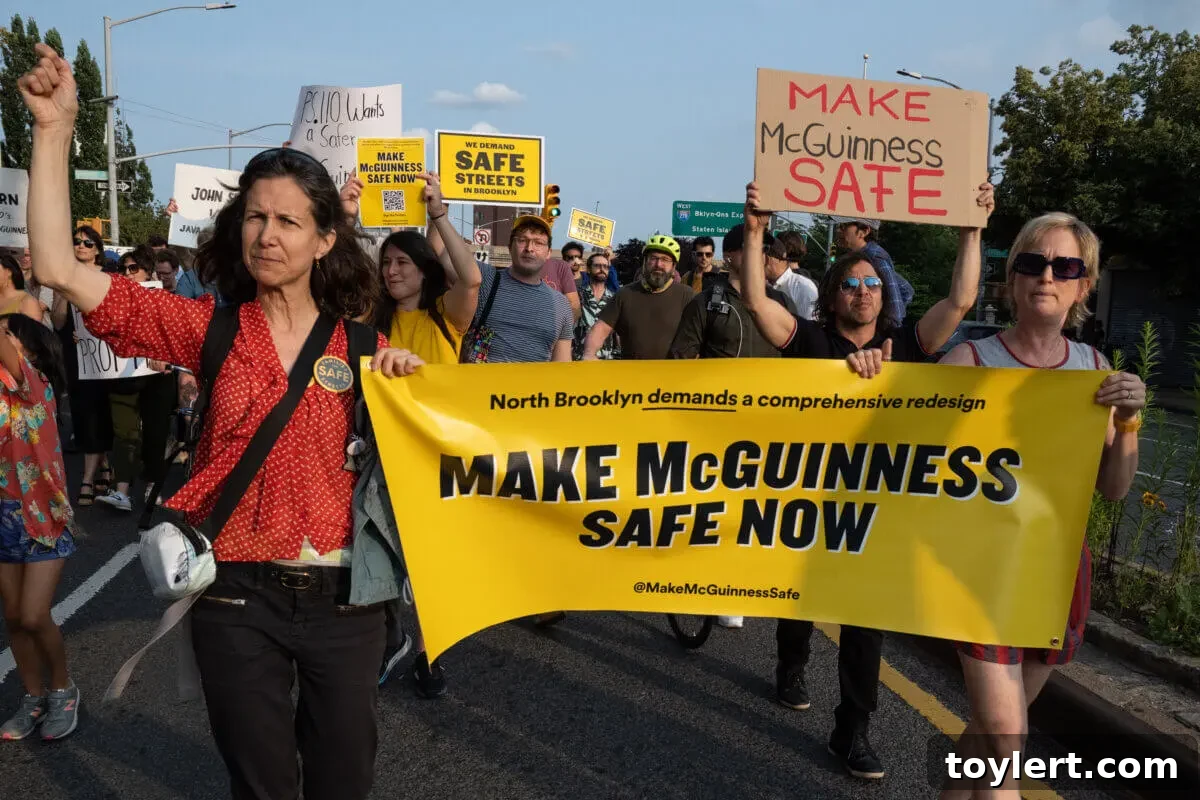
The proposed redesign of McGuinness Boulevard in Greenpoint, Brooklyn, a plan that seemed destined for approval just weeks ago, now finds its future uncertain. A vocal opposition has emerged, urging the Department of Transportation (DOT) to re-evaluate its comprehensive overhaul, sparking a critical debate over traffic safety, local economy, and community development.
At the heart of the contention is the city’s intention to implement a “road diet” on McGuinness Boulevard. This plan involves significantly reducing the number of vehicle lanes on what is currently a notoriously dangerous four-lane arterial and a designated truck route. While proponents champion the redesign as a vital step towards enhancing pedestrian and cyclist safety, a coalition of local businesses, operating under the banner “Keep McGuinness Moving,” fiercely argues that these changes will “destroy the local economy” by impeding commerce and disrupting crucial traffic flow.
The Genesis of a Redesign: A Call for Safer Streets
For decades, McGuinness Boulevard has been a subject of intense local concern. Known for its high speed limits, heavy truck traffic, and insufficient pedestrian infrastructure, it has unfortunately become synonymous with tragic accidents and perilous crossings. Residents, community organizations, and safety advocates have long pleaded with the city to address the inherent dangers of this vital thoroughfare that bisects the vibrant Greenpoint neighborhood.
The boulevard serves as a critical connector, linking the Brooklyn-Queens Expressway (BQE) to the thriving waterfront, making it a conduit for significant commercial and commuter traffic. However, its design has historically prioritized vehicle throughput over the safety and quality of life for those living and working along its edges. The absence of adequate pedestrian refuges, unprotected bike lanes, and insufficient crossing times has created a hazardous environment, prompting a sustained demand for fundamental change.
In response to these persistent calls, the DOT embarked on an extensive community engagement process. This multi-year initiative involved numerous public meetings, detailed surveys, interactive workshops, and collaborative planning sessions aimed at gathering input from a diverse array of stakeholders. After years of meticulous planning and community dialogue, the DOT unveiled its final proposal last month, a plan designed to transform McGuinness Boulevard from a dangerous artery into a safer, more accessible, and more livable street for all users.
Understanding the Proposed Road Diet for McGuinness Boulevard
The core of the DOT’s plan revolves around a “road diet,” a proven urban planning strategy implemented in cities worldwide to enhance safety and promote multimodal transportation. For McGuinness Boulevard, this typically involves:
- Lane Reduction: Converting some existing vehicle lanes into other uses, often reducing the number of through-lanes from four to two (one in each direction) or four to three (one in each direction with a center turn lane). This is intended to slow traffic and reduce potential conflict points.
- Dedicated Bike Lanes: Installing protected bicycle lanes to create a safe corridor for cyclists, connecting them to existing networks and encouraging sustainable transportation alternatives.
- Wider Sidewalks and Pedestrian Amenities: Expanding pedestrian areas, adding street furniture, trees, and landscaping to create a more inviting and comfortable environment for walkers.
- Improved Crossings: Enhancing intersections with new signal timings, highly visible crosswalks, and pedestrian islands to make crossing the boulevard safer and more efficient.
- Traffic Calming Measures: Incorporating design elements that naturally encourage lower vehicle speeds, such as curb extensions and narrower lanes.
The DOT’s vision for McGuinness Boulevard extends beyond merely reducing lanes; it seeks to rebalance the streetscape to better serve the needs of a diverse urban community, improving quality of life and fostering local commerce in a safer setting.
The Opposition Rises: “Keep McGuinness Moving”
While the redesign plan garnered significant support from safety advocates and many residents, it has also ignited a fierce backlash from a coalition representing local businesses. The group, “Keep McGuinness Moving,” argues vehemently that the proposed changes pose an existential threat to Greenpoint’s economic vitality.
Their primary concern centers on the reduction of vehicle lanes. McGuinness Boulevard serves as a critical truck route, facilitating the movement of goods to and from local businesses, industrial sites, and the broader Brooklyn area. Businesses fear that fewer lanes will inevitably lead to increased traffic congestion, longer delivery times, and decreased accessibility for customers arriving by car. They argue that this will translate into lost sales, higher operational costs, and ultimately, business closures, thereby “destroying the local economy.”
Furthermore, concerns have been raised regarding potential impacts on parking, which is already a premium in Greenpoint. Businesses worry that any loss of street parking or increased difficulty in accessing their establishments will deter customers, particularly those who rely on vehicles for their shopping or service needs. The coalition contends that while safety is important, the current proposal overlooks the practical economic realities of operating businesses in a bustling urban environment.
This opposition highlights a classic urban planning dilemma: balancing the desire for enhanced safety and livability with the needs of commerce and logistical efficiency. “Keep McGuinness Moving” has called upon the DOT to reconsider its plans, suggesting that alternative solutions or modifications could be explored that address safety concerns without imposing what they view as crippling economic consequences.
Voices of Support: Prioritizing Safety and Livability
On the other side of the debate are the numerous residents, families, pedestrian groups, and cycling advocates who have tirelessly campaigned for the McGuinness Boulevard redesign. For them, the current state of the boulevard is an unacceptable public safety hazard, and the proposed changes are a long-overdue necessity.
Proponents point to a sobering history of pedestrian fatalities and severe injuries on McGuinness Boulevard as irrefutable evidence of the need for change. They emphasize that a street should not only facilitate vehicle movement but also serve as a safe public space for all users, regardless of their mode of transportation. Enhanced sidewalks and dedicated bike lanes are not just amenities, they argue, but essential infrastructure that encourages healthier lifestyles and reduces the environmental impact of vehicle reliance.
Beyond safety, advocates also highlight the potential for improved quality of life. A calmer, greener McGuinness Boulevard with less noise and pollution could transform the street into a more attractive and walkable area, fostering stronger community ties and enhancing the overall appeal of Greenpoint. They argue that a more pedestrian-friendly street could also lead to new economic opportunities, attracting residents and visitors who prefer to walk or bike, thereby supporting local businesses in a different, more sustainable way.
The debate thus frames two distinct visions for McGuinness Boulevard: one that prioritizes the efficient flow of vehicular traffic, particularly commercial vehicles, and another that prioritizes the safety and livability for the people who live, work, and recreate in the surrounding community. The challenge for the city is to reconcile these differing perspectives to forge a path forward that genuinely benefits Greenpoint.
Economic Impacts: A Deeper Dive into the Debate
The economic impact of the McGuinness Boulevard redesign is perhaps the most contentious point of the entire discussion. Both sides present compelling arguments, painting very different pictures of Greenpoint’s future under the proposed changes.
Arguments Against: Economic Detriment
- Delivery Logistics: For businesses reliant on truck deliveries, reduced lanes could mean increased transit times, potential fines for double-parking if loading zones are insufficient, and higher operational costs. This affects everything from local restaurants receiving fresh produce to industrial businesses moving heavy machinery.
- Customer Accessibility: Many local businesses cater to customers who drive from within Greenpoint or from neighboring areas. Concerns are raised that increased traffic and perceived difficulty in navigating or parking could deter these customers, leading to a decline in sales.
- Business Viability: For small businesses operating on thin margins, even a slight downturn in customer traffic or an increase in operational expenses could threaten their viability, potentially leading to closures and job losses.
Arguments For: Economic Growth and Resilience
- Increased Foot Traffic: Studies from other cities show that “road diets” often lead to increased pedestrian and cycling activity. This can translate into more foot traffic for local businesses, particularly retail and food establishments, as people feel safer and more comfortable lingering and exploring.
- Enhanced Property Values: Streets that are safer, greener, and more pedestrian-friendly often experience an increase in property values, benefiting both residential and commercial property owners.
- New Business Attraction: A more appealing and livable streetscape can attract new businesses and investments, particularly those that thrive in vibrant, community-oriented environments.
- Improved Local Spending: When people feel safer and more connected to their local environment, they are more likely to spend time and money within their community rather than traveling to other areas.
The economic reality likely lies somewhere in the middle, with a complex interplay of both positive and negative effects that may vary depending on the specific type of business and its location along the boulevard. The success of the redesign, from an economic standpoint, will largely depend on the city’s ability to mitigate negative impacts through thoughtful planning, such as efficient loading zones, clear communication, and support programs for affected businesses.
Traffic Flow and Future Logistics
A significant concern raised by “Keep McGuinness Moving” and some commuters is the potential for severe traffic congestion resulting from lane reductions. McGuinness Boulevard is a critical north-south artery, and any disruption to its flow could have ripple effects throughout Greenpoint and beyond.
The DOT’s plans typically include various strategies to manage traffic flow during and after a road diet:
- Traffic Signal Optimization: Adjusting traffic light timings at intersections to optimize vehicle progression and minimize queuing.
- Rerouting Strategies: Identifying and promoting alternative routes for certain types of traffic, particularly non-local vehicles, to reduce pressure on the redesigned boulevard.
- Public Transit Integration: Encouraging greater use of public transportation by improving bus stop accessibility and promoting existing subway and ferry services.
- Loading Zone Management: Designating specific, well-managed loading and unloading zones for commercial vehicles to ensure efficient deliveries without obstructing traffic.
The unique status of McGuinness Boulevard as a designated truck route adds another layer of complexity. The city must ensure that essential freight movement continues unimpeded, exploring solutions like dedicated off-peak delivery windows or working with businesses to adapt their logistics. This challenge underscores the need for continuous dialogue and adaptive planning to ensure that the redesign achieves its safety goals without paralyzing local commerce.
The Path Forward: Engagement, Compromise, and Vision
The current state of affairs highlights the delicate balance inherent in urban planning, where competing interests and diverse community needs must be carefully weighed. The Greenpoint community, the Department of Transportation, and local businesses face a critical juncture in shaping the future of McGuinness Boulevard.
The immediate next steps will likely involve further public discourse. The DOT will need to thoughtfully address the concerns raised by “Keep McGuinness Moving,” potentially offering clarifications, exploring minor modifications, or presenting data that substantiates the long-term benefits of the proposed changes. Open and transparent communication will be crucial to bridge the divide and build consensus.
Ultimately, the redesign of McGuinness Boulevard is more than just a transportation project; it is a foundational urban planning decision that will profoundly impact Greenpoint’s identity, safety, and economic trajectory for decades to come. The outcome will reflect the city’s commitment to prioritizing pedestrian safety, fostering sustainable urban environments, and responding effectively to the complex demands of a dynamic and evolving community.
Whether Greenpoint moves forward with the current road diet proposal, a modified version, or a completely different approach, the intense debate surrounding McGuinness Boulevard underscores the importance of community engagement and the shared responsibility to create streets that serve all who call this vibrant Brooklyn neighborhood home.