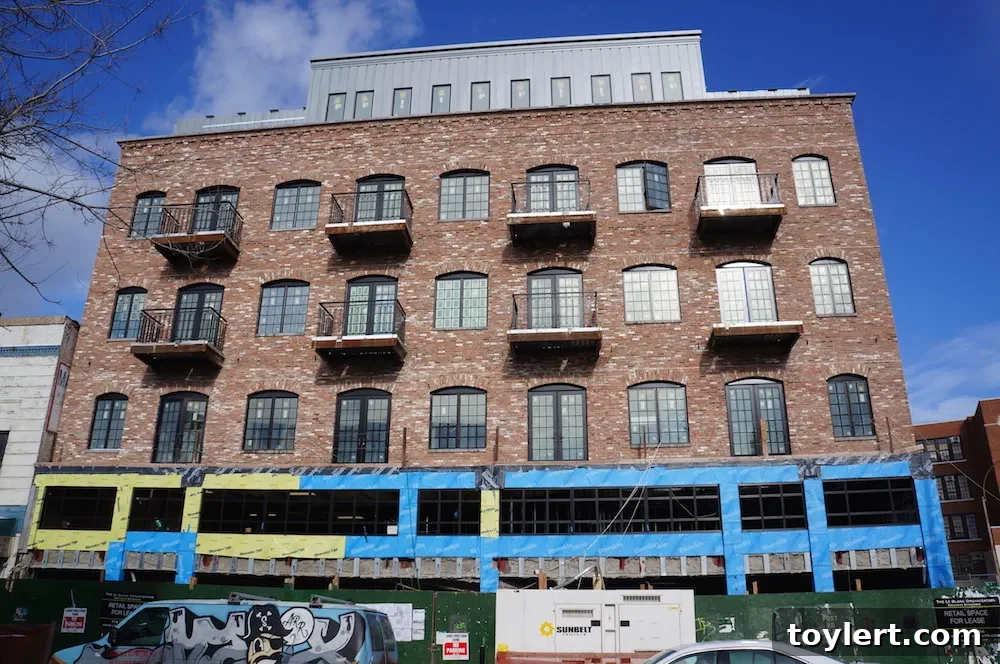
291 Metropolitan Avenue: A Masterpiece of Industrial Chic in Williamsburg
Nestled on a prominent corner in the dynamic heart of Williamsburg, Brooklyn, 291 Metropolitan Avenue stands as a striking testament to thoughtful architectural design. Conceived by the renowned Meshberg Group, this brick apartment building has garnered significant attention, not least for its distinctive aesthetic that deliberately harks back to an earlier era. While many contemporary developments in Williamsburg opt for sleek, often glass-clad structures, 291 Metropolitan Avenue carves out its own identity with a robust, brick facade reminiscent of 19th-century warehouses and the iconic cast-iron buildings of SoHo. This bold design choice ensures that the building doesn’t just blend into the urban fabric but rather enriches it, offering a refreshing counterpoint to the more ubiquitous glassy boxes that dot the Brooklyn skyline.
The Meshberg Group, celebrated for their ability to infuse historic character with modern functionality, has once again showcased their expertise. Their vision for 291 Metropolitan Avenue was clearly rooted in a desire to honor Brooklyn’s rich industrial past while catering to the demands of contemporary urban living. The building’s exterior, now nearing completion, exudes a timeless elegance that belies its modern construction. Its design philosophy is an intricate dance between preservation and innovation, creating a residential edifice that feels both deeply rooted in history and vibrantly forward-looking.
Architectural Inspirations and Design Elements
The inspiration drawn from 19th-century warehouses and SoHo’s legendary cast-iron buildings is palpable throughout 291 Metropolitan Avenue. These historical references are not merely superficial but are integrated into the very essence of the building’s structure and aesthetic. The extensive use of brick, a material synonymous with New York City’s architectural heritage, provides a sense of solidity, warmth, and permanence that modern materials often struggle to replicate. The brickwork itself is a feature, with careful attention paid to its color, texture, and pattern, contributing to a facade that tells a story of craftsmanship and durability.
A closer look at the facade reveals a series of meticulously chosen elements that further enhance its industrial-chic appeal. Among these are the beautifully proportioned arched windows, a classic architectural detail that not only provides an abundance of natural light to the interiors but also adds a layer of historical authenticity. These arches, often found in older factory buildings, are a nod to the area’s manufacturing legacy, subtly bridging the past with the present. Complementing these windows are elegant French doors, which not only serve as a stylish entry point to the building’s exterior spaces but also amplify the sense of openness and light, connecting residents with the vibrant streetscape below.
The building’s balconies, while initially a point of discussion among architectural critics and community members, have been thoughtfully integrated into the design. When renderings were first published in February, some Curbed commenters expressed concerns about the balconies and brick veneer, fearing they might detract from the intended historical homage. However, with the building’s exterior now largely complete, it’s evident that these elements, including the balconies, arched windows, and French doors, are firmly in place, appearing cohesive and complementary to the overall design. They offer private outdoor retreats for residents, a highly sought-after amenity in urban environments, without compromising the building’s distinctive character.
Williamsburg’s Evolving Landscape and Contextual Design
Williamsburg has undergone a dramatic transformation over the past few decades, evolving from a gritty industrial enclave into one of Brooklyn’s most coveted residential and cultural epicenters. This rapid development has brought with it a diverse array of architectural styles, from converted warehouses to gleaming new high-rises. In this dynamic landscape, 291 Metropolitan Avenue makes a powerful statement about the importance of contextual design. By drawing inspiration from the very structures that defined the neighborhood’s past, The Meshberg Group has created a building that feels intrinsically tied to Williamsburg, rather than being an alien imposition.
The decision to utilize a full brick facade, including the rear of the building which is completely bricked up with windows on the top three floors, reinforces this commitment to an authentic, enduring aesthetic. This comprehensive approach to materials ensures visual consistency and contributes to the building’s substantial presence. While the first floor was still under construction at the time of initial observations, the completed exterior promises ground-level spaces that will likely maintain the high design standards set by the upper floors, potentially housing retail or commercial spaces that further integrate the building into the street-level activity of Metropolitan Avenue.
The “flak” received during the rendering stage highlights a common tension in urban development: the balance between new construction and preserving neighborhood character. Architectural discourse is a vital part of shaping our cities, and the initial criticisms served as a reminder of the community’s vested interest in how Williamsburg evolves. However, the completion of 291 Metropolitan Avenue demonstrates how modern design, when executed with sensitivity and a deep understanding of historical context, can address these concerns, delivering a building that satisfies both contemporary needs and a desire for enduring charm.
Inside the Vision: Lifestyle at 291 Metropolitan Avenue
While the initial focus has primarily been on the striking exterior, the architectural choices made for 291 Metropolitan Avenue strongly suggest a particular vision for the interiors and the lifestyle it offers. The arched windows and French doors are not merely decorative; they promise sun-drenched living spaces, fostering an airy and open ambiance. Residents can expect high ceilings and potentially exposed architectural elements that echo the industrial loft aesthetic, offering spacious layouts that are highly adaptable to various contemporary living styles.
Given The Meshberg Group’s reputation for luxury and thoughtful amenity provision, it is reasonable to anticipate that the internal spaces will marry high-end finishes with practical design. Imagine modern kitchens featuring state-of-the-art appliances, elegant bathrooms, and living areas that leverage the abundant natural light and city views. The integration of balconies further extends the living space, providing private outdoor sanctuaries where residents can relax, entertain, and take in the vibrant energy of Williamsburg. Common amenities in such a development often include a rooftop terrace offering panoramic city views, a fitness center, resident lounges, and potentially co-working spaces, all designed to enhance the urban living experience and foster a sense of community.
This attention to both exterior grandeur and interior comfort makes 291 Metropolitan Avenue more than just a building; it is a meticulously crafted living environment designed for those who appreciate design integrity, historical resonance, and modern convenience. It caters to a demographic that values character over conformity, seeking a home that stands out in a crowded market.
The Meshberg Group’s Legacy in Brooklyn
The Meshberg Group has consistently demonstrated a unique ability to bridge the gap between Brooklyn’s rich architectural past and its aspirational future. Projects like 291 Metropolitan Avenue exemplify their philosophy: to create buildings that are not only functional and aesthetically pleasing but also deeply respectful of their surroundings and historical lineage. Their work often involves repurposing existing structures or designing new ones that draw heavily on historical precedents, transforming old industrial sites into coveted residential and commercial spaces.
This approach has allowed The Meshberg Group to leave an indelible mark on Brooklyn’s urban landscape, contributing to the borough’s reputation as a hub for innovative and contextually sensitive design. 291 Metropolitan Avenue, with its distinct factory-style brick and homage to 19th-century aesthetics, is a shining example of this commitment. It reinforces the idea that new construction doesn’t have to erase the past but can instead draw strength and character from it, creating buildings that possess a soul and a story.
A Landmark for Metropolitan Avenue
As 291 Metropolitan Avenue reaches its final stages, its presence on this bustling thoroughfare is undeniable. It stands as a significant architectural landmark, contributing a distinct texture and visual interest to a street that is constantly evolving. The building doesn’t just provide housing; it offers a piece of living history, reinterpreted for the 21st century. It speaks to a growing demand for authenticity in urban environments, a desire for homes that feel unique and rooted, rather than generic.
In a city perpetually reinventing itself, 291 Metropolitan Avenue serves as a powerful reminder of the enduring appeal of quality craftsmanship, timeless design, and a respectful nod to the past. It is a testament to the fact that even in the midst of rapid modernization, there is still ample room for architecture that honors heritage, stands out with dignity, and ultimately, enriches the vibrant tapestry of Williamsburg, Brooklyn.