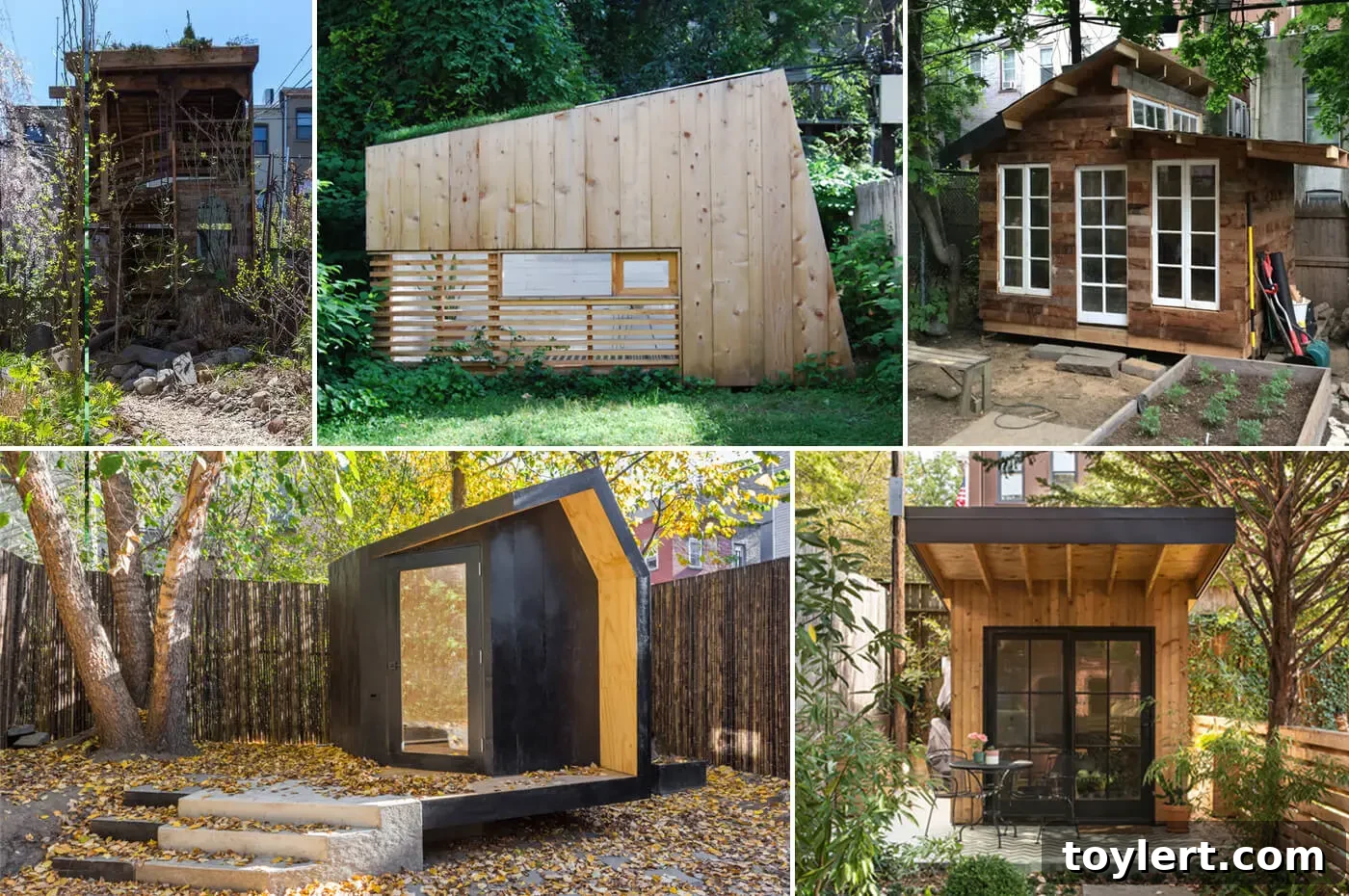
In the relentless pulse of urban life, finding a sanctuary where peace and quiet prevail can feel like an elusive dream. Yet, an inspiring trend is taking root in the heart of Brooklyn, as a growing number of homeowners are reclaiming their backyards to craft personalized havens. These aren’t grand extensions but rather modest, often diminutive structures—typically designed without plumbing or electricity—that serve as private retreats amidst the city’s ceaseless energy. From rustic charm to sleek modernism, these compact buildings offer a dedicated space for reflection, creativity, and escape, proving that even in a bustling borough, a personal oasis is within reach.
The Allure of the Backyard Oasis: Why Brooklyn Homeowners Are Building Small
The motivation behind this burgeoning movement is multifaceted, reflecting a universal desire for dedicated personal space in an increasingly crowded world. Brooklyn, known for its vibrant community and tight-knit neighborhoods, also presents the challenge of limited square footage and the incessant backdrop of city sounds. For many, a backyard studio or garden retreat provides the perfect antidote, a private realm carved out of their existing property without the complexities or costs associated with a full home renovation or expansion.
The rise of remote work has undeniably accelerated this trend. What was once a luxury is now a necessity for many professionals seeking a quiet, distraction-free zone away from the main house. But beyond productivity, these small structures fulfill a deeper human need: the yearning for a peaceful escape. They represent a tangible commitment to mental well-being, offering a physical demarcation between the demands of daily life and moments of personal restoration.
A Sanctuary from the Urban Hustle: Crafting Your Private Retreat
Imagine stepping out your back door, leaving behind the cacophony of street noise and household chores, and entering a dedicated space designed purely for your individual pursuits. This is the promise of the backyard oasis. It functions as a ‘third space’ – distinct from both the primary living area and the outside world – where one can fully immerse themselves in work, art, meditation, or simply quiet contemplation. The simple act of traversing a garden path to reach this sanctuary can be transformative, fostering a sense of transition and intentionality.
These structures allow homeowners to cultivate a profound connection with nature, even within a compact urban garden. Surrounded by greenery and natural light, the studios offer a grounding experience that is often lost in multi-story city dwellings. It’s an opportunity to embrace the elements, to observe the changing seasons, and to find inspiration in the immediate environment, all from the comfort of one’s private retreat. The aesthetic appeal of these small buildings, often designed to complement the existing landscape, further enhances the overall beauty and functionality of the backyard space.
Design & Functionality: Crafting Your Perfect Backyard Haven
The architectural styles and functional applications of these backyard havens are as diverse as the homeowners themselves. While the emphasis remains on simplicity and minimal intervention, design ingenuity shines through in every unique creation. From rustic timber cabins that evoke a sense of rugged charm to sleek, minimalist cubes that blend seamlessly with modern aesthetics, each studio is a testament to personalized design.
The deliberate choice to construct these structures “usually without plumbing or electricity” is a defining characteristic, often driven by a desire for simplicity, reduced cost, and simplified permitting processes. This approach encourages a focus on natural light, ventilation, and sustainable materials, fostering a low-impact, environmentally conscious design. It’s about creating a space that feels elemental and connected to its surroundings, rather than a miniature version of the main house.
More Than Just a Shed: Diverse Uses for Tiny Structures
Despite their compact size and often basic amenities, these backyard studios serve an impressive array of purposes:
- Home Office or Writer’s Studio: Providing an invaluable separation between work and home life, fostering concentration and creativity. The specific example of the Architensions studio for a Brooklyn writer perfectly illustrates this popular application.
- Art Studio: A dedicated space for painters, sculptors, or crafters to unleash their creativity without fear of cluttering the main living areas.
- Meditation or Yoga Space: A serene environment conducive to mindfulness practices, offering a quiet escape from daily distractions.
- Reading Nook: A cozy haven where one can curl up with a book, surrounded by peace and natural beauty.
- Hobby Room: Whether it’s potting plants, building models, or practicing a musical instrument, these studios offer a dedicated space for beloved pastimes.
- Guest Overflow (with caveats): While typically lacking full amenities, some homeowners adapt these spaces for occasional guest use, offering a unique and memorable stay.
Key Design Considerations for Your Backyard Studio
Crafting a successful backyard retreat involves thoughtful planning and design. Key considerations include:
- Integration with the Landscape: How the structure sits within the garden, its orientation for optimal natural light, and its visual harmony with existing trees and plants.
- Natural Light and Ventilation: Maximizing windows and strategic openings to create a bright, airy environment and minimize the need for artificial lighting or air conditioning.
- Material Choices: Selecting durable, sustainable, and aesthetically pleasing materials that reflect personal style and withstand the elements. Wood, recycled materials, and low-VOC finishes are often favored.
- Size and Footprint: Carefully determining the dimensions to meet specific needs without overwhelming the backyard space or infringing on local zoning regulations. Every inch counts in these compact designs.
- Privacy: Thoughtful placement and landscaping can ensure the studio feels secluded and private, even in an urban setting.
- Accessibility: Considering ease of access, especially if the studio is intended for frequent use or has specific ergonomic requirements.
A Glimpse into Modern Serenity: The Architensions Writer’s Pavilion
Among the many inspiring examples emerging across Brooklyn, one particular small modern studio stands out as a testament to innovative design and functional simplicity. Nestled in a writer’s backyard, this captivating structure embodies the essence of the urban backyard retreat. Designed by the visionary Greenpoint-based firm Architensions, it measures a modest less than 6 feet wide and 6 feet long, yet delivers an outsized impact on its owner’s daily life.
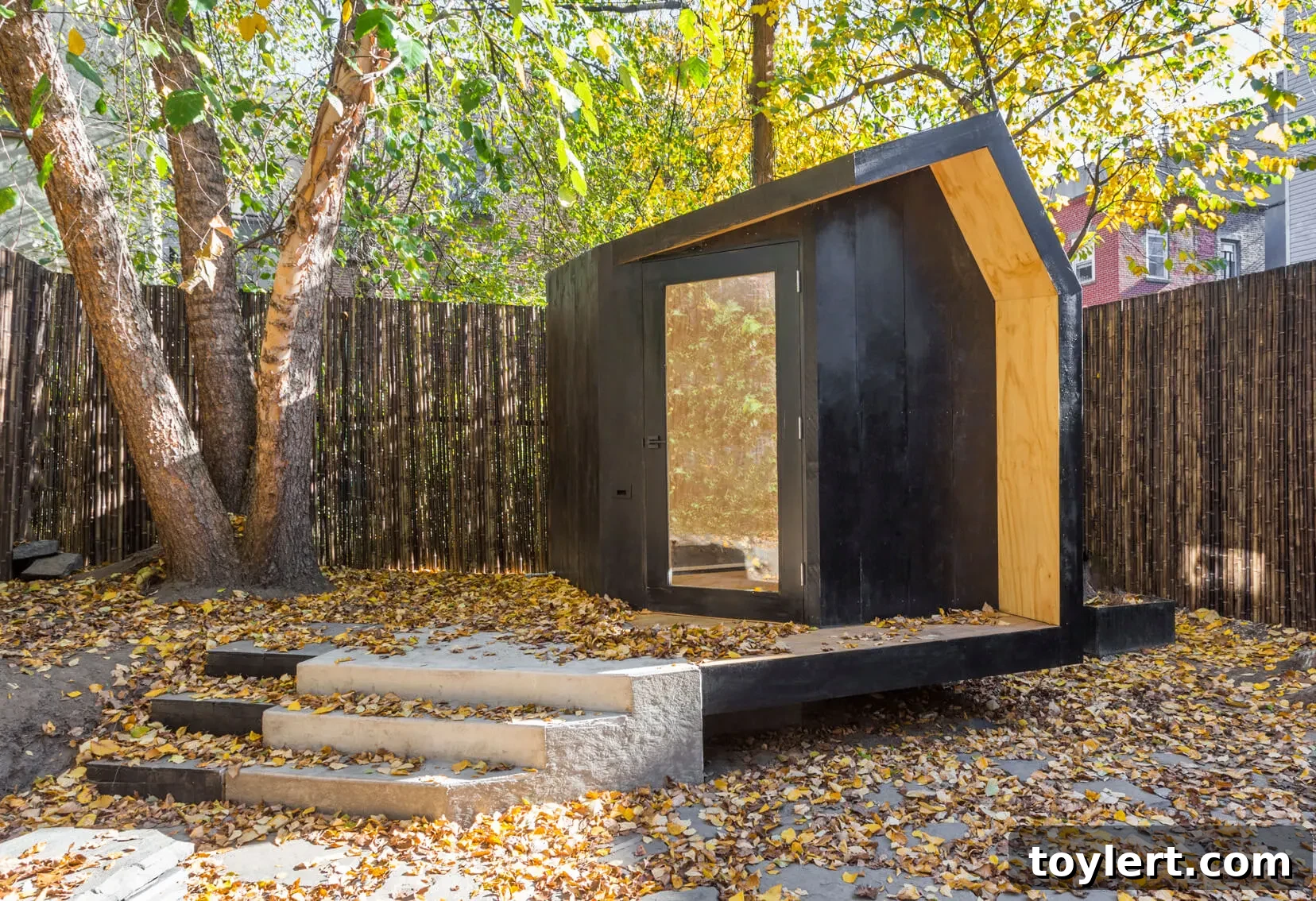
The studio’s distinctive aesthetic is immediately apparent. Its plywood-lined interior offers a warm, inviting, and naturally textured environment, creating a cozy cocoon for focused work. Architensions’ design brilliance is further showcased by the building’s foundation: it rests upon an angled concrete plinth, ingeniously creating the illusion that the entire structure is gracefully floating above the ground. This architectural detail not only adds a touch of modern sophistication but also cleverly addresses potential drainage issues and provides a visually lighter footprint on the landscape.
For its owner, a writer, this studio is more than just an office; it’s a muse. The deliberate separation from the main house fosters unparalleled concentration, allowing creative thoughts to flow unimpeded. The simple, uncluttered interior minimizes distractions, while carefully placed openings connect the occupant to the garden’s tranquility without overwhelming the intimate space. It exemplifies how thoughtful, minimalist design can profoundly enhance productivity and creative output, proving that sometimes, less truly is more. This Architensions studio seamlessly blends modern aesthetics with the essential functionality of a dedicated creative sanctuary, making it a stellar example of Brooklyn’s backyard retreat movement.
Navigating the Practicalities: Permits, Costs, and Construction
Embarking on a backyard studio project, even a small one, requires a practical understanding of local regulations. While many tiny structures without utilities may fall under simplified permitting categories or even be exempt, it is absolutely crucial for homeowners to consult with their local Brooklyn building department or a qualified architect. Zoning laws, setbacks, and maximum height restrictions vary by neighborhood and can significantly impact the feasibility and design of a backyard studio.
In terms of cost, backyard studios often present a far more economical alternative to a full home addition. Prices can range widely depending on size, materials, and whether the homeowner opts for a DIY approach, a pre-fabricated kit, or a custom-designed and built structure. The absence of complex plumbing and electrical work generally keeps costs lower, making these retreats accessible to a broader range of budgets. Many homeowners also consider the potential increase in property value and the enhanced quality of life as significant returns on their investment.
Sustainability is another key consideration. Many designers and homeowners are choosing eco-friendly materials, such as reclaimed wood, recycled steel, and sustainable insulation. Passive design principles, which maximize natural light and ventilation, further reduce the environmental footprint, aligning with a growing desire for responsible and conscious living within urban environments.
The Future of Urban Green Spaces: Beyond Brooklyn
The trend of creating backyard studios and garden retreats is not confined to Brooklyn alone; it’s a burgeoning phenomenon echoing in urban centers worldwide. As city populations continue to grow and living spaces become more compact, the demand for adaptable, functional, and personal outdoor structures will only intensify. These tiny buildings represent a larger shift towards more intentional living, valuing efficiency, sustainability, and mental well-being over sheer size.
They offer a powerful solution for those seeking to expand their living space, embrace remote work, or simply cultivate a deeper connection with nature, without the need for extensive land or prohibitive costs. As architects and designers continue to innovate, we can expect to see even more creative and sustainable solutions for these backyard havens, transforming urban green spaces into vibrant, productive, and peaceful extensions of our homes.
Ultimately, the rise of the backyard studio in Brooklyn and beyond is a testament to human ingenuity and resilience. It’s about finding quiet corners in a noisy world, carving out personal sanctuaries, and proving that even in the densest urban landscapes, a little bit of design magic can create an abundance of peace and possibility.