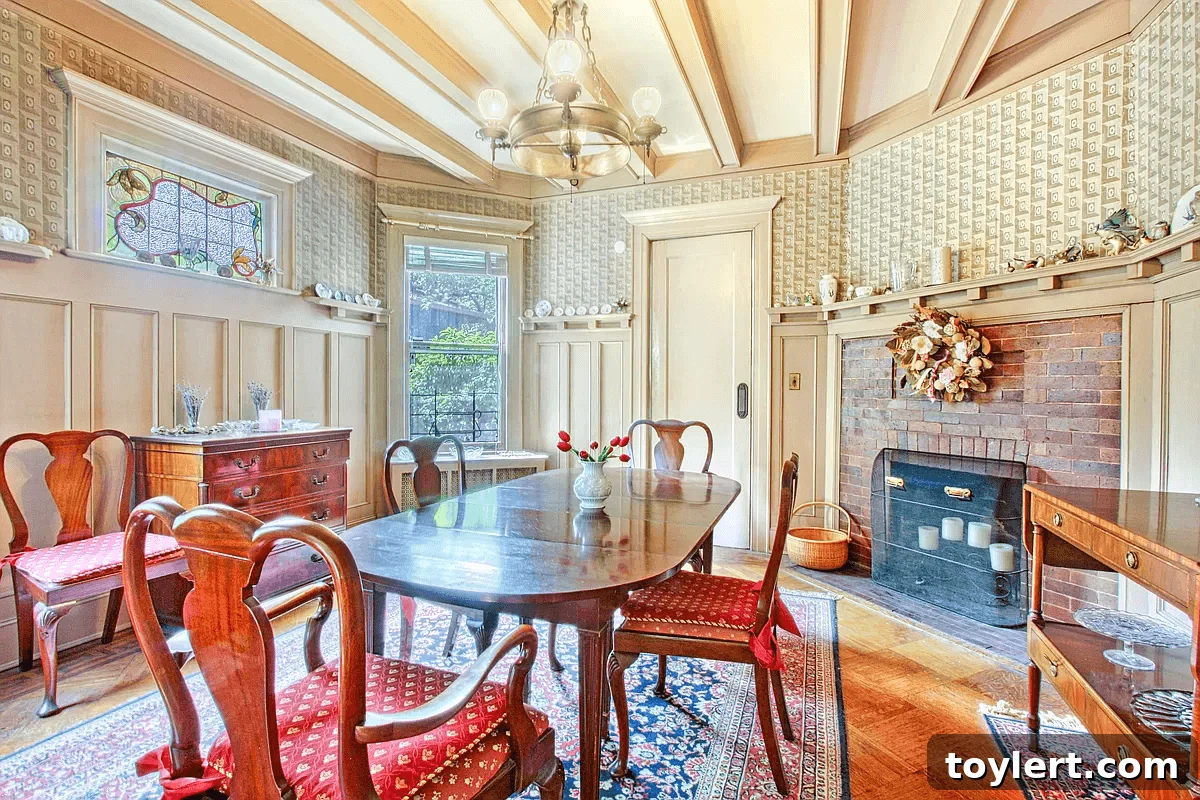
In the heart of Midwood, Brooklyn, a stunning testament to early 20th-century architectural grandeur awaits discovery. Nestled on a tranquil, tree-lined street, this captivating Dutch Colonial Revival standalone residence at 952 East 18th Street offers more than just a home; it presents a rare opportunity to own a piece of Brooklyn’s rich history. Every detail within this meticulously preserved property speaks volumes of a bygone era, promising an enchanting blend of vintage charm and spacious, comfortable living perfect for the discerning old-house lover.
Discover Timeless Elegance: A Dutch Colonial Revival Gem in Historic Midwood, Brooklyn
From the moment one approaches 952 East 18th Street, its stately presence is undeniable. The classic Dutch Colonial Revival silhouette, characterized by its distinctive gambrel roof and charming dormers, immediately captures attention. This architectural style, popular in the early 20th century, evokes a sense of timeless appeal and sturdy craftsmanship. The home’s fine shingled facade, combined with a welcoming Doric-columned porch, invites residents and guests alike to step back in time, while a graceful Juliet balcony above adds an touch of romanticism to the exterior.
A Glimpse Inside: Where Original Charm Meets Spacious Living
Stepping through the front door, the interior unfolds with an array of original features that are both meticulously preserved and wonderfully functional. The residence boasts six generously sized bedrooms, providing ample space for family living, guest accommodation, or dedicated home offices. Beyond the sheer volume, it’s the period details that truly set this home apart, weaving a narrative of its storied past.
Period-Specific Charm: Interior Highlights That Endure
For those who cherish authentic historical elements, this Midwood marvel is a true treasure trove. The discerning eye will immediately appreciate the:
- Butler’s Pantry: A charming and practical space that harks back to an era of formal dining and meticulous household management. This original butler’s pantry, often a coveted feature in grander homes of the period, provides convenient storage and staging for entertaining, effortlessly connecting the kitchen and dining areas. It speaks to a time when domestic design emphasized both elegance and efficiency, a principle that continues to resonate today.
- Stained Glass: Throughout the home, intricate stained-glass windows filter natural light into vibrant hues, creating a warm and inviting ambiance. These artistic details, often depicting floral motifs or geometric patterns, are not merely decorative; they are handcrafted elements that reflect the sophisticated tastes and artisanal skill prevalent in early 20th-century architecture. Each panel tells a story, adding unique character and a touch of luminous beauty to the living spaces.
- Wood Floors: Beneathfoot, the original wood floors extend throughout much of the residence, showcasing the enduring beauty and quality craftsmanship of materials chosen over a century ago. These rich, warm surfaces, likely hardwood varieties such as oak or pine, have stood the test of time, offering both durability and an unparalleled aesthetic appeal that modern flooring often struggles to replicate. Their subtle patina adds depth and history to every room.
- Original Bath Tile: The bathrooms retain their original period-specific tiling, a rare find that speaks to the home’s exceptional preservation. These tiles, often in classic patterns or simple, elegant arrangements, offer a window into the design sensibilities of the early 1900s. They provide not just functionality but also an authentic connection to the home’s original design intent, offering a unique charm that contrasts with contemporary styles.
- Vintage Kitchenette and Stove: While perhaps inviting modern updates, the vintage kitchenette, complete with an antique stove, offers a delightful glimpse into the culinary heart of the home as it once was. This functional and charming setup, possibly a range from an iconic brand of the era, serves as a focal point, reminding us of simpler times while also offering a quirky and unique cooking experience for those who appreciate retro aesthetics. It presents an opportunity to blend historical elements with modern appliances, creating a truly unique kitchen space.
With its six bedrooms, the layout is ideal for growing families, multi-generational living, or those who simply desire ample space for various pursuits, from a home library to a dedicated fitness room. The generous yard, a cherished amenity in Brooklyn, further enhances the property’s appeal, providing outdoor space for relaxation, gardening, and play, complete with the convenience of a two-car garage—a significant bonus in this bustling urban environment.
Manhattan Terrace: A Vision of Early 20th Century Brooklyn Development
While firmly situated within the vibrant community of Midwood today, this particular stretch of East 18th Street has a fascinating historical identity rooted in a more specialized development. Around 1902, anticipating profound improvements in transit infrastructure both within Brooklyn and between the burgeoning boroughs, enterprising developers launched a distinctive residential project. They envisioned and began advertising the area between Avenues I and M, extending from Ocean Avenue to East 16th Street, as “Manhattan Terrace.” This strategic naming choice aimed to evoke a sense of suburban tranquility combined with convenient access to Manhattan, capitalizing on the forthcoming subway expansions that would dramatically reshape Brooklyn’s residential landscape.
The vision for Manhattan Terrace was ambitious and forward-thinking. In 1903, in a full-page advertisement published in the esteemed Brooklyn Daily Eagle, the Manhattan Terrace Improvement Company proudly proclaimed the area’s superior convenience and their steadfast commitment to constructing homes of “the best of home architecture.” This was not merely a promise of shelter but a pledge to create a desirable community built upon principles of quality design, spacious layouts, and a refined suburban lifestyle within the city’s expanding footprint. Such advertising campaigns were instrumental in attracting a new generation of homeowners seeking a balance between urban amenities and a more tranquil domestic environment.
The Builders Behind Brooklyn’s Enduring Architecture
Among the prominent players in the development of Manhattan Terrace was the Ascutney Realty Company. This prolific firm played a significant role in shaping the architectural character of the neighborhood, reportedly constructing an impressive 53 houses within the development by 1911. At the helm of Ascutney Realty was President Seth H. Cutting, who also served as the architect for many of their projects. The company’s business model was particularly appealing, focusing on delivering what they termed “high-grade houses at medium-grade prices.” This philosophy allowed them to offer well-designed, quality-built homes that were accessible to a broader segment of the middle class, contributing to the rapid and successful urbanization of areas like Midwood.
While historical records do not definitively confirm whether No. 952 East 18th Street was one of Ascutney Realty Company’s specific builds, newspaper accounts from the period indicate that the house was constructed at least by 1907. This timing aligns perfectly with the peak development period of Manhattan Terrace and the broader Midwood area. Regardless of the precise identity of its original architect or builder, the designer responsible for 952 East 18th Street clearly possessed a keen eye for aesthetics and quality construction. The enduring result is a house that beautifully blends the robust character of Dutch Colonial Revival architecture with elegant details such as its distinctive shingled facade, the classic Doric-columned porch, and the charming Juliet balcony, all of which contribute to its enduring curb appeal and historical significance.
Architectural Legacy and Modern Living in Midwood
The appeal of homes like 952 East 18th Street lies not just in their historical elements but also in their adaptability to contemporary lifestyles. The spacious rooms, solid construction, and classic layouts of early 20th-century homes offer a robust foundation for modern living, allowing for seamless integration of amenities while preserving the irreplaceable character. The enduring Dutch Colonial Revival style, with its blend of practicality and picturesque charm, continues to be highly sought after, offering a refreshing alternative to more modern, often less characterful, constructions.
Midwood itself has evolved into one of Brooklyn’s most desirable residential neighborhoods. Known for its picturesque, tree-lined streets, strong community spirit, and a diverse array of amenities, it provides an ideal setting for families and individuals alike. Excellent public transportation options, including subway lines and bus routes, connect residents to Manhattan and other parts of Brooklyn with ease, echoing the very transit improvements that spurred Manhattan Terrace’s initial development. The neighborhood boasts a rich cultural tapestry, with an abundance of local shops, restaurants, parks, and highly-rated schools, all contributing to a high quality of life.
A Home Where History Meets Comfort: Your Midwood Opportunity
In conclusion, 952 East 18th Street represents a rare and remarkable opportunity to own a piece of Brooklyn’s architectural heritage. It is more than just a house; it is a repository of stories, a canvas for new memories, and a tangible link to a pivotal era in the city’s development. With its generous proportions, wealth of original details, and prime location within the historic Manhattan Terrace section of Midwood, this Dutch Colonial Revival gem offers an unparalleled living experience. It embodies the best of both worlds: the timeless elegance and craftsmanship of an early 20th-century home, combined with the convenience and vibrancy of modern Brooklyn living. For those seeking a residence that offers character, space, and a deep sense of place, this Midwood standalone home is truly an irreplaceable find.