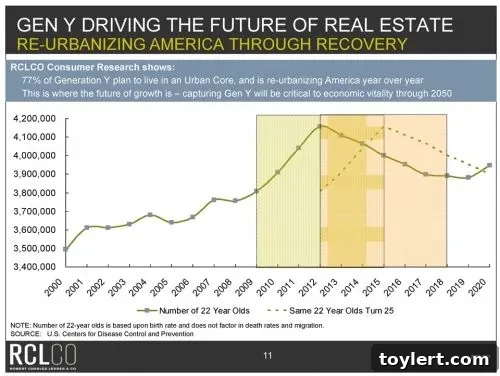
For those astute real estate investors and homeowners who have already secured their slice of the urban dream, particularly within coveted locales like Brooklyn, a promising forecast emerges: robust demand for your apartment or house is likely to persist and strengthen for many years to come. Imagine your children embarking on their college journeys in the next five, ten, or fifteen years; the most probable prospective buyer for your cherished brownstone or condominium will likely be a member of Generation Y, often referred to as Millennials. These dynamic young adults, currently navigating the initial stages of their professional careers, are catalyzing a profound shift in residential preferences across the nation.
The Millennial Urban Exodus: A New Paradigm for Living
Generation Y, typically encompassing individuals born between the early 1980s and the mid-1990s, is increasingly rejecting the traditional suburban lifestyles that many of them experienced during their formative years. This demographic cohort exhibits a distinct set of values and priorities that are fundamentally reshaping the housing market. As highlighted in a compelling analysis on the Better Cities blog, penned by Nathan Norris, “Generation Y wants to be more connected and less isolated than previous generations.” This inherent desire for connectivity is not merely an abstract preference; it manifests tangibly in their daily choices and long-term aspirations. Their full-throttle embrace of social media platforms and digital communication tools underscores a deep-seated need to remain engaged and integrated within vibrant communities. Consequently, these young professionals are actively seeking out residential environments where they can readily interact with others, gravitating towards the densest, most active, and culturally rich areas of cities.
This demographic-driven shift toward urban centers is a powerful force, but it’s not the sole determinant of this secular trend. A confluence of other significant factors is also contributing to the resurgence of city living, ensuring sustained demand for urban properties. These include an increasingly aging population, the ever-escalating costs of energy, and evolving dynamics within public education systems. The implications for real estate development and urban planning over the next two decades are nothing short of transformative.
Understanding Generation Y: Drivers of Urban Demand
To truly grasp the magnitude of this trend, it’s essential to delve deeper into the psyche and motivations of Generation Y. Unlike previous generations, Millennials grew up in an era defined by rapid technological advancement, globalization, and often, economic uncertainty. These experiences have cultivated a distinct set of priorities:
- Connectivity and Community: Far from seeking isolation, Millennials thrive on interaction. They desire neighborhoods that foster spontaneous encounters, offer communal spaces, and provide a sense of belonging. Urban environments, with their bustling streets, cafes, parks, and co-working spaces, naturally cater to this need for social integration.
- Experience Over Possessions: Many Millennials prioritize experiences, cultural enrichment, and personal growth over the accumulation of material possessions. City living offers unparalleled access to diverse culinary scenes, arts, entertainment, educational opportunities, and a constant influx of new ideas and trends.
- Walkability and Transit-Oriented Living: The allure of being able to walk or bike to work, shops, restaurants, and entertainment venues is a major draw. Furthermore, access to efficient public transportation systems reduces reliance on personal vehicles, offering both financial savings and a smaller environmental footprint – values deeply resonant with this generation.
- Professional Opportunities: Urban centers remain hubs for innovation, technology, and diverse industries. For young professionals, cities offer a concentration of job opportunities, networking prospects, and a dynamic career landscape that is often more robust than what suburban areas can provide.
- Sustainability and Environmental Consciousness: Millennials are generally more environmentally aware and seek lifestyles that align with their values. Living in a denser urban setting often translates to lower per capita energy consumption, reduced carbon emissions from transportation, and greater access to green initiatives.
Beyond Millennials: A Multifaceted Urban Resurgence
While Generation Y is undeniably a pivotal force, the growing appeal of urban living is reinforced by several other demographic and economic shifts:
The Aging Population’s Urban Embrace
The Baby Boomer generation, now entering or well into retirement, represents another significant demographic contributing to urban demand. Many “empty nesters” are seeking to downsize from large suburban homes, eager to shed the burdens of extensive property maintenance. They are drawn to the convenience, amenities, and vibrancy of city life, desiring walkability, easy access to healthcare, cultural institutions, and social activities without the need for constant driving. This cohort often possesses substantial equity from their previous homes, allowing them to invest in prime urban real estate, further bolstering demand.
The Impact of Rising Energy Costs
Fluctuating and generally increasing energy costs make suburban living, often synonymous with longer commutes and greater reliance on personal vehicles, less economically attractive. Urban dwellers, by contrast, benefit from shorter commutes, extensive public transportation options, and the ability to walk or bike to most destinations. This economic advantage, coupled with a desire for more sustainable living, makes cities a more financially prudent choice for a growing number of individuals and families.
Evolving Public School Dynamics
While historically a primary driver for families moving to the suburbs, the landscape of urban public education is also undergoing transformation. Many cities are seeing improvements in their public school systems, the growth of high-quality charter schools, and a greater diversity of private school options. Moreover, for many urban-centric families, the benefits of city living—such as cultural exposure, diverse communities, and reduced commute times for parents—now outweigh traditional concerns about suburban school districts. This allows more families to remain in or move to urban areas, contributing to the demand for family-friendly urban housing.
The Economic and Social Ripple Effects on Real Estate
This powerful confluence of demographic and economic factors is creating a “great migration of the 21st century,” as the Better Cities article aptly describes. The implications for the real estate market are profound and far-reaching:
- Increased Urban Property Values: The sustained and growing demand from diverse demographic groups will continue to drive up property values in desirable urban areas. For current owners, this translates to significant appreciation and a strong investment outlook.
- Shift in Development Priorities: Real estate developers are responding by focusing on mixed-use projects, transit-oriented developments, and the revitalization of urban cores. Adaptive reuse of older buildings, creating vibrant residential and commercial spaces, is also becoming increasingly common. The emphasis is on creating dense, livable, and amenity-rich communities.
- Gentrification and Affordability Challenges: While positive for property owners, this surge in demand also presents challenges, notably gentrification and increasing affordability issues for lower-income residents and even for some mid-income families. Cities are grappling with how to balance growth with equitable access to housing.
- The Evolving Suburbs: The article concludes, “Just as cities were not completely abandoned in the 20th century, suburbs will not be abandoned in the 21st century.” This is a crucial nuance. Suburbs are not dying, but they are evolving. Many are densifying, creating their own “downtown” areas, and integrating more mixed-use developments to attract those who desire some urban amenities without fully committing to the core city. However, the fundamental “shift in preferences is clearly underway,” indicating a rebalancing of the urban-suburban dynamic.
A Vision for the Future: Sustainable Urban Growth
The radical change in real estate development over the next two decades will reflect these enduring trends. Cities will continue to be vibrant centers of innovation, culture, and community. The appeal of urban living, driven by the desire for connection, convenience, and a more sustainable lifestyle, is not a fleeting fad but a fundamental recalibration of societal preferences. For those who own a piece of Brooklyn or any other thriving urban center, the future looks bright, promising sustained demand and continued vitality for their property investments.
Gen Y Causing the Great Migration of the 21st Century [Better Cities]