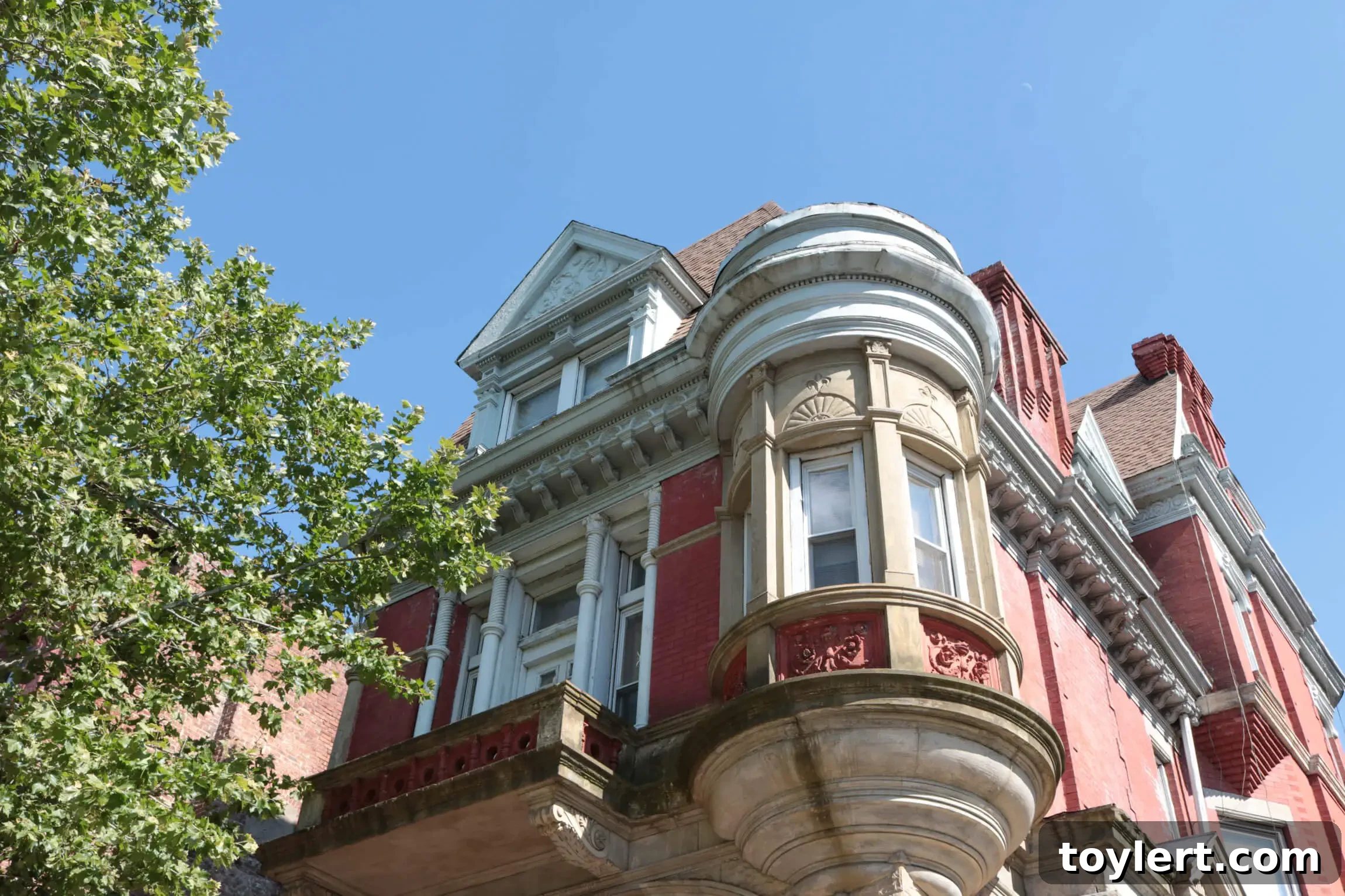
Editor’s Note: This article, originally published in 2011, has been thoroughly revised and expanded to offer a comprehensive exploration of 232 Hancock Street and its connection to architect Montrose Morris.
Unraveling the Truth: Montrose Morris and the Architectural Gem at 232 Hancock Street
For many enthusiasts of Brooklyn’s rich architectural tapestry, the address 232 Hancock Street in Bedford-Stuyvesant holds a special, albeit often misunderstood, significance. It is frequently, and erroneously, cited as the personal residence of the renowned architect Montrose Morris, where he supposedly lived with his family. While it is undeniably one of his masterpieces, contributing significantly to the urban aesthetic of Bed-Stuy, the popular belief that Morris called this particular house home is, unfortunately, a misconception that warrants clarification and a deeper dive into the true story behind this magnificent building.
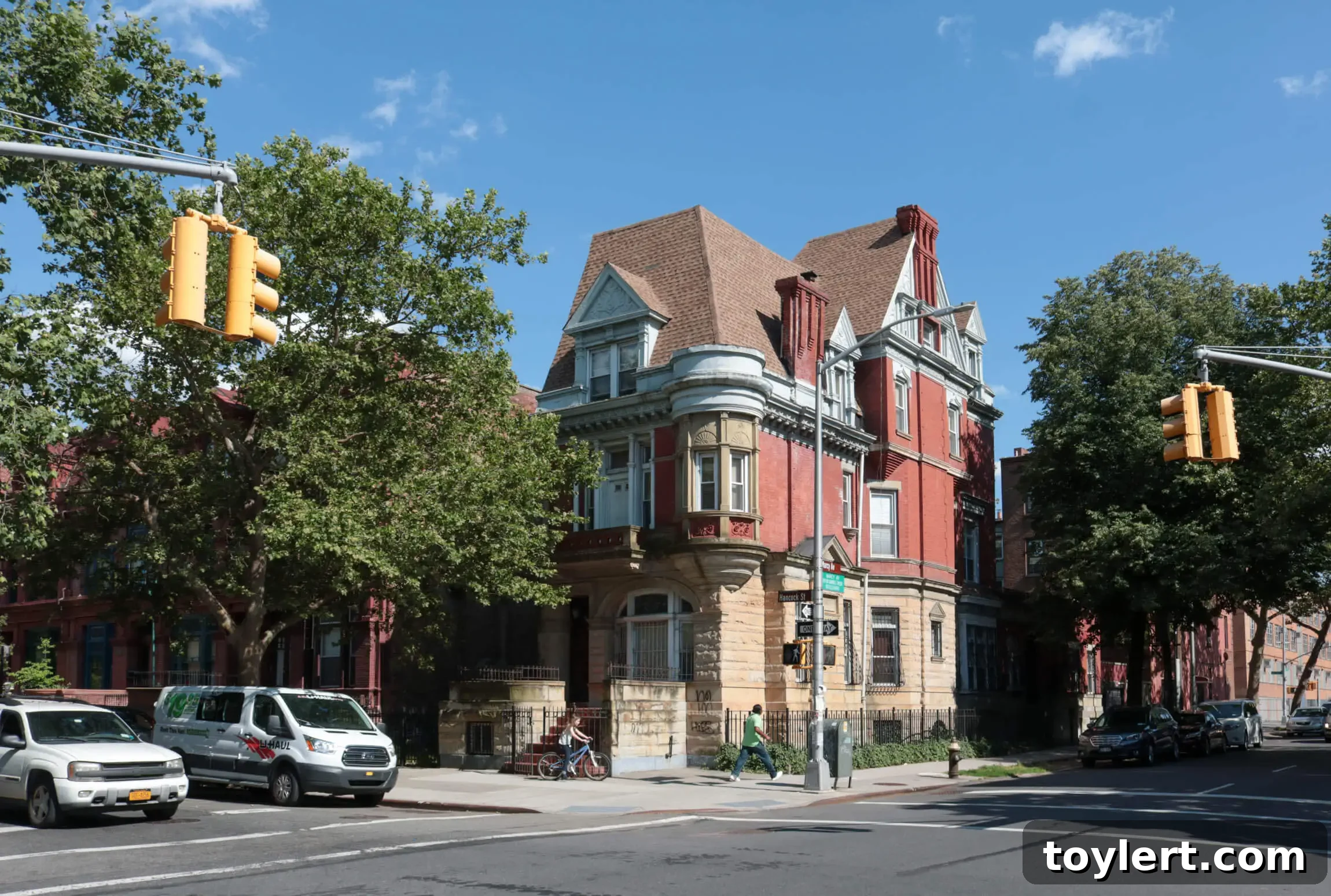
Montrose Morris: A Visionary Architect Who Shaped Brooklyn
To truly appreciate the architectural prowess behind 232 Hancock Street, one must first understand the man himself: Montrose Morris. Born in 1861, Morris emerged as a prolific and highly influential architect during a golden age of building in Brooklyn, particularly throughout the late 19th and early 20th centuries. His extensive body of work largely defined the streetscapes of burgeoning neighborhoods like Bedford-Stuyvesant, Park Slope, and Prospect Heights, leaving an indelible mark that continues to captivate residents and historians alike. Morris was celebrated for his distinctive interpretations of the Romanesque Revival and Queen Anne styles, often blending these influences with a unique flair that made his buildings instantly recognizable among the sea of Brooklyn brownstones.
His designs were characterized by a robust sense of form, intricate detailing, and a masterful use of varied materials such as rough-faced stone, warm-toned brick, elaborate terra cotta, and elegant decorative ironwork. He possessed a particular talent for creating visually striking facades, incorporating signature elements like turrets, rounded arches, projecting bays, and deeply carved ornamentation that spoke volumes of his craftsmanship and artistic ambition. Unlike many of his contemporaries, Morris often imbued his structures with an organic quality, where each architectural element seemed to grow naturally from the next, contributing to a harmonious yet dynamic whole. His residential projects, primarily townhouses and apartment buildings, were designed not just for aesthetic appeal but also for modern comfort and functionality, catering to the rising middle and upper classes of a rapidly expanding and prosperous city. His ability to combine grandeur with liveability made his work highly sought after.
The Architectural Splendor of 232 Hancock Street
The house at 232 Hancock Street stands as a quintessential example of Montrose Morris’s mature work and his mastery of the Romanesque Revival style, albeit interpreted with his unique signature. Completed around 1888-1889, this impressive brownstone immediately commands attention with its commanding presence and intricate details that set it apart. It features a striking facade composed of rich, deep brownstone, expertly carved and articulated to create a profound sense of depth and texture. The design likely incorporates many of Morris’s signature elements: a dramatic stoop leading to an inviting, arched entrance, often adorned with ornamental carvings; decorative lintels above windows; and projecting bay windows that break the planar surface, allowing abundant natural light to flood the interiors while adding significant visual interest to the exterior.
Each detail on the facade of 232 Hancock Street tells a story of late Victorian opulence and architectural innovation. From the patterned brickwork often interspersed with stone, to the robust masonry arches, and potentially the inclusion of carved grotesque figures or intricate floral motifs, the building is a testament to Morris’s commitment to aesthetic excellence. While the exact interior layout remains unique to this individual residence, Morris’s typical approach would have involved well-proportioned rooms designed for gracious living, soaring high ceilings, intricate custom millwork, and grand, sweeping staircases. All these elements were meticulously planned to reflect the taste, status, and lifestyle of its original inhabitants. The choice of materials, particularly the high-quality brownstone, speaks not only to the architectural aspirations of the period but also to the enduring solidity and timeless beauty Morris sought in his designs. This house, like many of his creations, wasn’t just a dwelling; it was a statement piece, an architectural jewel meticulously crafted to elevate the streetscape and provide a dignified, elegant home for a prominent Brooklyn family.
Debunking the Myth: Where Did Montrose Morris Really Live?
The persistent myth that Montrose Morris resided at 232 Hancock Street likely stems from a combination of understandable factors. Firstly, the house is undoubtedly one of his most prominent, beautifully preserved, and architecturally significant works in Bedford-Stuyvesant, making it an obvious candidate for association with the architect himself. When a building so perfectly embodies an architect’s distinctive style and artistic vision, it is natural for people to assume a deeper, personal connection, perhaps even believing it to be his own residence. Secondly, Morris was incredibly active and prolific in the Bed-Stuy neighborhood, designing numerous structures that collectively form a significant portion of its architectural heritage, which further cemented his name within the local architectural narrative and created a strong, pervasive link between him and the area.
However, historical records and diligent research indicate that Morris, while deeply invested in shaping Brooklyn’s urban landscape through his professional endeavors, maintained residences elsewhere during his lifetime. For a significant portion of his career, Montrose Morris lived in different, albeit nearby, parts of Brooklyn. Notably, historical documents confirm his residence at 264 Hancock Street – a mere few doors down from the very building often mistakenly attributed as his home. Later in his life, he also resided at 1045 Bergen Street, further illustrating that 232 Hancock Street was a client commission rather than his personal dwelling.
This distinction is crucial for maintaining historical accuracy and allows us to appreciate the architect’s extensive body of work while understanding the true scope of his personal life. It highlights an important nuance in architectural history: an architect’s most celebrated and iconic works are not necessarily their personal abodes. More often, these grand and distinctive designs were commissions for wealthy clients, speculative ventures intended to attract the burgeoning middle class to new, upscale developments, or contributions to cohesive streetscapes that elevated an entire neighborhood. Understanding this distinction allows for a more accurate and profound appreciation of Morris’s professional dedication. He wasn’t just building a house for himself; he was designing aspirational homes for others, shaping entire blocks, and contributing profoundly to the collective identity and architectural character of Brooklyn neighborhoods. His actual residences, while perhaps less grand or outwardly distinctive than some of his commissioned projects, served as private sanctuaries rather than public declarations of his immense architectural prowess. It is, nevertheless, a testament to the evocative power and undeniable beauty of 232 Hancock Street that such a persistent myth could take root – a house so perfectly Montrose Morris that it almost *feels* like his own.
Bedford-Stuyvesant: A Canvas for Architectural Brilliance
232 Hancock Street is not an isolated masterpiece but rather an integral thread within the rich tapestry of Bedford-Stuyvesant’s architectural heritage. Bed-Stuy, as it is affectionately known to residents and admirers, boasts one of the most extensive and historically significant collections of 19th-century residential architecture in all of New York City. Strolling through its meticulously preserved, tree-lined streets is akin to walking through an open-air museum, showcasing an eclectic and stunning mix of styles from the ornate Italianate and robust Neo-Grec to the whimsical Queen Anne and, most prominently, the powerful Romanesque Revival brownstones. Montrose Morris played a truly pivotal role in shaping this distinctive character, contributing numerous buildings that collectively form a significant portion of the neighborhood’s enduring charm, historical value, and architectural identity.
The rapid development of Bedford-Stuyvesant in the late 19th century was driven by Brooklyn’s phenomenal growth, spurred by improved transportation links to Manhattan and the increasing desire for more spacious, elegant homes away from the crowded urban core. Architects like Morris were instrumental in meeting this burgeoning demand, creating cohesive streetscapes that exuded sophistication, stability, and a sense of community pride. The prevalence of brownstone, a durable and aesthetically pleasing material quarried primarily from New Jersey and Connecticut, became synonymous with Brooklyn’s aspirational neighborhoods. These homes were built with an extraordinary attention to detail and a commitment to quality craftsmanship that ensured their longevity, allowing them to stand today as timeless testaments to an era of prosperity and civic ambition. The dedicated preservation efforts in Bed-Stuy today are a vital recognition of this invaluable legacy, ensuring that future generations can continue to admire, learn from, and cherish its unique architectural landscape.
The Enduring Legacy of Montrose Morris
While the myth surrounding 232 Hancock Street might be a charming misconception, it ultimately underscores the profound and lasting impact Montrose Morris had on Brooklyn’s built environment. His designs, characterized by their robust forms, rich textures, and intricate ornamentation, continue to define the elegance and distinctive character of many of the borough’s most beloved historic districts. Morris was more than just a designer of individual buildings; he was a true city shaper, whose collective body of work created coherent, aesthetically pleasing, and highly desirable urban environments that remain revered and highly sought after today. His vision helped to transform Brooklyn into the architecturally rich borough we know and admire.
Morris’s legacy extends far beyond mere aesthetics; it speaks to a period of immense growth, innovation, and transformation in Brooklyn, capturing the very spirit of an era when architectural ambition met burgeoning prosperity and a desire for beautiful urban living. Today, homes designed by Montrose Morris are often cherished by their owners and are highly valued in the real estate market, a testament to their timeless appeal, superior construction, and enduring architectural significance. The fact that a building like 232 Hancock Street can spark such widespread interest and even myth-making about its architect speaks volumes about the enduring power of exceptional design and the lasting impression of a true architectural master. Exploring the works of Montrose Morris, whether it’s 232 Hancock Street or any of his other numerous contributions across the borough, offers a fascinating window into Brooklyn’s vibrant past and cultivates a deeper appreciation for the artistry that shaped its present.
By understanding the true history behind these architectural treasures, we can better appreciate the intricate layers of Brooklyn’s heritage and celebrate the visionary individuals like Montrose Morris who helped craft its unique and unforgettable identity.