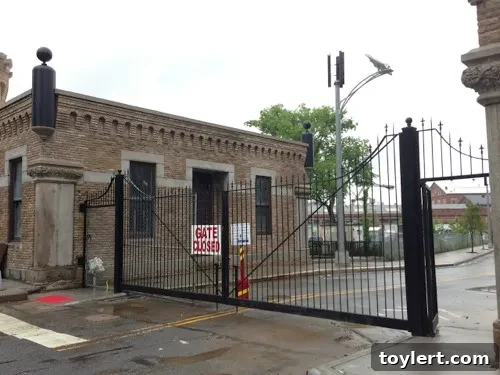
The Grand Revival: Unveiling the Magnificently Restored Sand Street Gate at Brooklyn Navy Yard
The Brooklyn Navy Yard, a cornerstone of American history and a vibrant hub of modern industry, proudly showcases the culmination of a years-long, meticulous restoration project: the magnificent Sand Street entrance. This pivotal gateway, once a mere shadow of its former glory, now stands revitalized, presenting a truly stellar appearance that seamlessly blends historical integrity with contemporary elegance. From the meticulously reconstructed turrets atop its historic brick and marble gatehouses to the imposing, custom-crafted black metal gate, every detail reflects a commitment to preserving the past while inviting the future. This restoration is more than just a facelift; it’s a profound statement about the enduring legacy of the Navy Yard and its role in Brooklyn’s rich tapestry.
A Portal Through Time: The Brooklyn Navy Yard’s Illustrious History
The Brooklyn Navy Yard, originally known as the New York Naval Shipyard, boasts a history spanning over two centuries. Established in 1801, it rapidly grew to become one of the nation’s most prolific and technologically advanced shipbuilding facilities. For over 160 years, it was at the forefront of maritime innovation, constructing some of the most iconic vessels in American naval history, including battleships, aircraft carriers, and destroyers. This sprawling industrial complex played a critical role in every major American conflict, from the War of 1812 to World War II, employing hundreds of thousands of New Yorkers and shaping the economic and social landscape of Brooklyn.
Beyond its military contributions, the Navy Yard was a melting pot of cultures and skills, a place where engineers, shipwrights, welders, and countless other tradespeople collaborated on monumental projects. Its legacy is one of unparalleled ingenuity, resilience, and patriotism. After its decommissioning in 1966, the Yard faced an uncertain future, but thanks to visionary leadership and strategic planning, it has been reborn as a thriving industrial park. Today, it stands as a testament to adaptive reuse, home to over 500 businesses ranging from tech startups and sustainable manufacturing to film production studios and artisanal workshops, continuing its tradition of innovation and job creation.
The Sand Street Gate: A Historic Landmark Reimagined
Historical Significance and Architectural Grandeur
Among the numerous entry points to the vast Brooklyn Navy Yard, the Sand Street Gate holds a particularly significant place. Historically, it served as a primary entrance, not only for the thousands of workers who streamed in daily but also for dignitaries and crucial supplies. The gatehouses themselves are more than mere guard posts; they are architectural statements, reflecting the gravitas and authority of the institution they guarded. Built with robust brickwork and adorned with elegant marble detailing, these structures embody the classical military architecture prevalent during their original construction period. Their design, often featuring distinctive turrets, was intended to project strength, security, and a timeless sense of permanence, mirroring the enduring mission of the Navy Yard itself.
Over the decades, like many historical structures, the Sand Street Gate endured the ravages of time, weather, and the continuous ebb and flow of urban development. While its historical importance remained undiminished, its physical condition gradually deteriorated, dimming the luster of its original design. The vision for its restoration was not merely to repair but to resurrect its original grandeur, ensuring that this iconic entrance would once again serve as a proud symbol of the Brooklyn Navy Yard’s rich heritage and vibrant future. The project aimed to address structural integrity, preserve original materials, and restore the architectural details that had been lost or obscured over time.
The Journey of Renewal: A Meticulous Restoration Effort
The restoration of the Sand Street Gate has been a testament to dedication and meticulous craftsmanship, spanning several years to achieve its current splendor. This complex undertaking involved a multidisciplinary team of preservationists, architects, masons, and metalworkers, all committed to a shared vision of historical accuracy and structural integrity. The initial phases involved extensive historical research and detailed architectural assessments to understand the original construction techniques and materials used. This forensic approach allowed restorers to precisely identify deteriorated elements and plan for their sensitive repair or replacement, ensuring that every intervention was respectful of the gate’s original character.
One of the most impressive aspects of the project involved the careful repair and cleaning of the intricate brickwork and marble facades. Decades of exposure to environmental elements had caused erosion, staining, and mortar degradation. Expert masons painstakingly removed damaged bricks, replaced them with historically accurate matches, and repointed the mortar joints, employing traditional methods to maintain the authentic look and feel. The marble elements, which provide elegant accents to the gatehouses, underwent gentle cleaning and repair, bringing back their subtle sheen and intricate patterns. The turrets, which crown the gatehouses and are signature features of the design, received particular attention, with structural reinforcements and material repairs that guarantee their stability and visual impact for generations to come. This careful attention to detail ensures that visitors and tenants alike can appreciate the beauty and history embedded in every stone and brick.
The New Gate: A Masterpiece of Metalwork
Perhaps the most immediately striking improvement to the Sand Street entrance is the installation of a custom-made black metal gate. This bespoke creation represents a dramatic upgrade from the utilitarian chain-link fence that previously guarded the entrance. The old chain-link barrier, while functional, detracted from the historical gravitas of the gatehouses, presenting a rather unwelcoming and temporary aesthetic. The new custom gate, by contrast, is a work of art in itself. Crafted with precision and robust materials, its design likely incorporates elements that subtly echo the architectural style of the gatehouses, creating a cohesive and harmonious entry point.
The choice of a custom black metal gate is not merely aesthetic; it also enhances security and projects a sense of permanence and prestige. Its intricate design details, often featuring decorative scrollwork or robust vertical bars, serve as a visual complement to the brick and marble structures, reinstating the formal grandeur befitting such a historic entrance. This new gate not only secures the perimeter effectively but also significantly elevates the overall curb appeal, welcoming visitors and staff with an entrance that truly reflects the innovation and historical reverence of the Brooklyn Navy Yard. It symbolizes the careful thought and investment poured into every aspect of this landmark restoration.
Beyond Aesthetics: The Impact of Restoration
Preserving Heritage for Future Generations
The comprehensive restoration of the Sand Street Gate transcends mere aesthetic enhancement; it is a profound act of historical preservation. By meticulously restoring this vital entrance, the Brooklyn Navy Yard has ensured that a tangible piece of its storied past will endure for future generations. This commitment to heritage safeguards not only the physical structures but also the narratives and memories associated with them. It allows visitors, historians, and the community to connect with the industrial and military legacy of New York City in a meaningful way, fostering a deeper appreciation for the architectural and cultural contributions of the Navy Yard. Preserving such landmarks is crucial for maintaining a sense of place and continuity in an ever-evolving urban landscape.
Enhancing Public Access and Community Connection
The improved Sand Street Gate also plays a crucial role in enhancing public access and fostering a stronger connection with the surrounding community. As the Navy Yard continues its transformation into a dynamic urban industrial park, accessible and aesthetically pleasing entry points become increasingly important. A beautifully restored gate invites engagement, making the Yard feel more welcoming to the thousands of people who work there daily, as well as to visitors attending events, tours, or accessing public amenities. This inviting gateway symbolizes the Yard’s openness and its integration into the fabric of Brooklyn, reinforcing its role as a vibrant civic and economic asset.
A Symbol of the Navy Yard’s Ongoing Transformation
The completion of the Sand Street Gate restoration stands as a powerful symbol of the Brooklyn Navy Yard’s ongoing renaissance. It is a tangible demonstration of how historical preservation can coexist, and indeed thrive, alongside modern innovation and economic development. The Yard itself is a remarkable example of adaptive reuse, where historic buildings are repurposed for 21st-century industries, and new, sustainable structures rise in harmony with the old. The restored gate, serving as a prominent threshold, eloquently communicates this philosophy, showcasing how respect for the past can pave the way for a dynamic and prosperous future. It is an invitation to explore a unique ecosystem where history and progress are inextricably linked.
Exploring the Modern Brooklyn Navy Yard
Today, the Brooklyn Navy Yard is a bustling ecosystem, a testament to its successful pivot from naval might to modern ingenuity. Beyond the impressive Sand Street Gate, visitors can discover a wealth of attractions and innovations. The Yard hosts numerous businesses, from advanced manufacturers leveraging robotics and AI to design firms, film studios, and food producers. Public programming, including guided tours, offers insights into the Yard’s layered history and its current role as a driver of Brooklyn’s economy. The revitalized waterfront provides stunning views of the Manhattan skyline and opportunities for recreation. The restoration of key historic features like the Sand Street Gate ensures that as the Navy Yard continues to evolve, its rich history remains visible, celebrated, and integral to its identity.
For those interested in the intricate history of how such large-scale renovations unfold, it’s worth noting the long-term planning involved. Articles from earlier stages provide valuable context to the dedication required for these projects. For example, Work Restarted at Navy Yard’s Sands Street Gate [Brownstoner] details some of the earlier phases and challenges faced, highlighting the extensive commitment required to bring such ambitious visions to fruition.
Conclusion: A Testament to Enduring Vision
The restoration of the Sand Street Gate at the Brooklyn Navy Yard is a triumph of historical preservation and urban renewal. It stands as a beacon, welcoming all to a place where history is honored, innovation flourishes, and community thrives. This magnificent entrance is more than just a passage; it’s a narrative in brick, marble, and steel, telling the story of a landmark that has faced the future by first looking to its past. Its stellar appearance not only beautifies the Yard but also reinforces its identity as a vital historical asset and a dynamic engine for progress, solidifying its place as one of Brooklyn’s most remarkable transformations.