Lafayette Avenue’s Transformative Bike Lane: A Model of Community-Driven Urban Planning
In the vibrant heart of Brooklyn, Lafayette Avenue stands as a testament to the power of community advocacy and thoughtful urban planning. What began as a passionate plea from local residents for safer streets and improved cycling infrastructure culminated in the successful implementation of new bike lanes, transforming a crucial thoroughfare. This initiative, championed by community members and brought to fruition by the Department of Transportation (DOT), represents a significant step forward for sustainable mobility in New York City.
The journey to enhanced cycling infrastructure on Lafayette Avenue was a collaborative one, rooted in a strong desire for safer and more accessible urban spaces. For years, residents and cycling enthusiasts voiced concerns about the lack of dedicated space for bicyclists, leading to potential hazards for both cyclists and motorists. Recognizing the growing demand for sustainable transportation options and the inherent benefits of a bike-friendly city, local groups mobilized. Through petitions, community board meetings, and persistent advocacy, they built a compelling case for the necessity of bike lanes. This robust community support proved instrumental in moving the project forward, showcasing how grassroots efforts can profoundly influence urban development decisions.
DOT’s Strategic Vision for Lafayette Avenue
Following extensive community engagement and detailed planning, the New York City Department of Transportation officially approved bike lanes for Lafayette Avenue. The proposal was not merely about painting lines on the asphalt; it was a comprehensive redesign aimed at optimizing street use for all stakeholders. The plan meticulously divided Lafayette Avenue into several distinct zones to enhance safety and efficiency. Specifically, the street was reconfigured to include two nine-foot parking lanes, ensuring that vehicle storage remained adequately accommodated without impinging on active travel lanes. Adjacent to these, an 11-foot moving lane was designated for general vehicular traffic, designed to facilitate smooth flow.
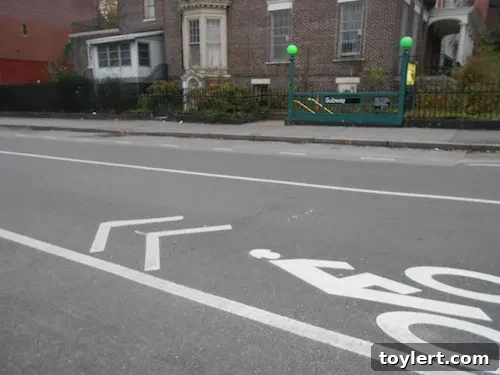
A pivotal element of this redesign was the introduction of a 10-foot “shared moving lane” positioned on the left side of the street, intended for use by both bicyclists and cars. This innovative approach to urban space allocation aimed to integrate cycling into the existing traffic framework, particularly in areas where fully protected bike lanes might be spatially challenging. The concept behind a shared lane is to foster a greater awareness among drivers of the presence of cyclists, encouraging cautious driving and shared responsibility. While some cycling advocates often prefer fully separated and protected bike lanes for maximum safety, shared lanes like the one on Lafayette Avenue are frequently implemented as pragmatic solutions in dense urban environments, balancing competing demands for street space.
Traffic Calming and Enhanced Safety Measures
Beyond the lane reconfigurations, the DOT’s plan for Lafayette Avenue included another crucial safety enhancement: retiming traffic lights. This strategic adjustment was designed to encourage drivers to maintain a consistent speed of 20 miles per hour, effectively acting as a traffic-calming measure. Lowering average speeds on urban streets has a profound impact on safety. Research consistently shows that a reduction in vehicle speed significantly decreases both the likelihood and severity of collisions, particularly those involving vulnerable road users like pedestrians and cyclists. By making Lafayette Avenue a 20 mph zone through signal timing, the DOT aimed to create a more predictable and safer environment, reducing the risk of high-impact crashes and promoting a calmer, more pedestrian- and cyclist-friendly atmosphere.
The implementation of these measures on Lafayette Avenue underscores a broader trend in urban planning: prioritizing safety and multi-modal transportation. The integration of bike lanes, even shared ones, alongside traffic-calming strategies, reflects a commitment to Vision Zero principles – the goal of eliminating all traffic fatalities and severe injuries. Such initiatives not only protect lives but also contribute to the overall quality of life in urban neighborhoods, making streets more inviting for walking, cycling, and community interaction.
Realization and Future Aspirations
The transformation of Lafayette Avenue has become a tangible reality, with the shared moving lane now actively serving the community. While the exact installation date might have slipped past public notice for some, the presence of the new lane is a visible improvement for countless daily commuters and local residents. The immediate visual and functional impact has been positive, contributing to a sense of progress and enhanced urban functionality.
During the planning phases, community residents, always striving for the highest standards of safety and utility, had advocated for additional enhancements to the bike lane. These suggestions included the use of distinctive colors or dotted lines to further delineate the cycling space and increase visibility. Such features are commonly employed in other urban settings to provide clearer guidance for both cyclists and drivers, thereby enhancing perceived and actual safety. However, due to inherent space restrictions on Lafayette Avenue – a common challenge in the tightly packed urban landscape of Brooklyn – these particular enhancements could not be accommodated at the time of implementation. This limitation highlights the complex trade-offs urban planners often face when balancing ideal designs with practical constraints in dense metropolitan areas. Despite these spatial challenges, the fundamental goal of providing a designated and safer pathway for cyclists was achieved.
The Lafayette Avenue bike lane project serves as an inspiring example of how dedicated community involvement, coupled with responsive governmental action, can lead to meaningful improvements in urban infrastructure. It reflects New York City’s ongoing commitment to expanding its cycling network and promoting sustainable transportation alternatives. As urban environments continue to evolve, projects like this pave the way for a future where streets are not just for cars but are equitably shared spaces that cater to the diverse needs of all citizens, fostering healthier, safer, and more connected communities.
The success on Lafayette Avenue also encourages further dialogue and planning for future enhancements across the city. As technologies and urban planning methodologies advance, and as the cycling culture in NYC continues to grow, there will undoubtedly be opportunities to revisit and refine existing infrastructure, potentially incorporating more innovative and protective designs. For now, Lafayette Avenue stands as a proud testament to the collective effort to make Brooklyn’s streets safer and more accessible for everyone.
Bike Lanes Approved for Lafayette, Bike Corral for Court [Brownstoner]