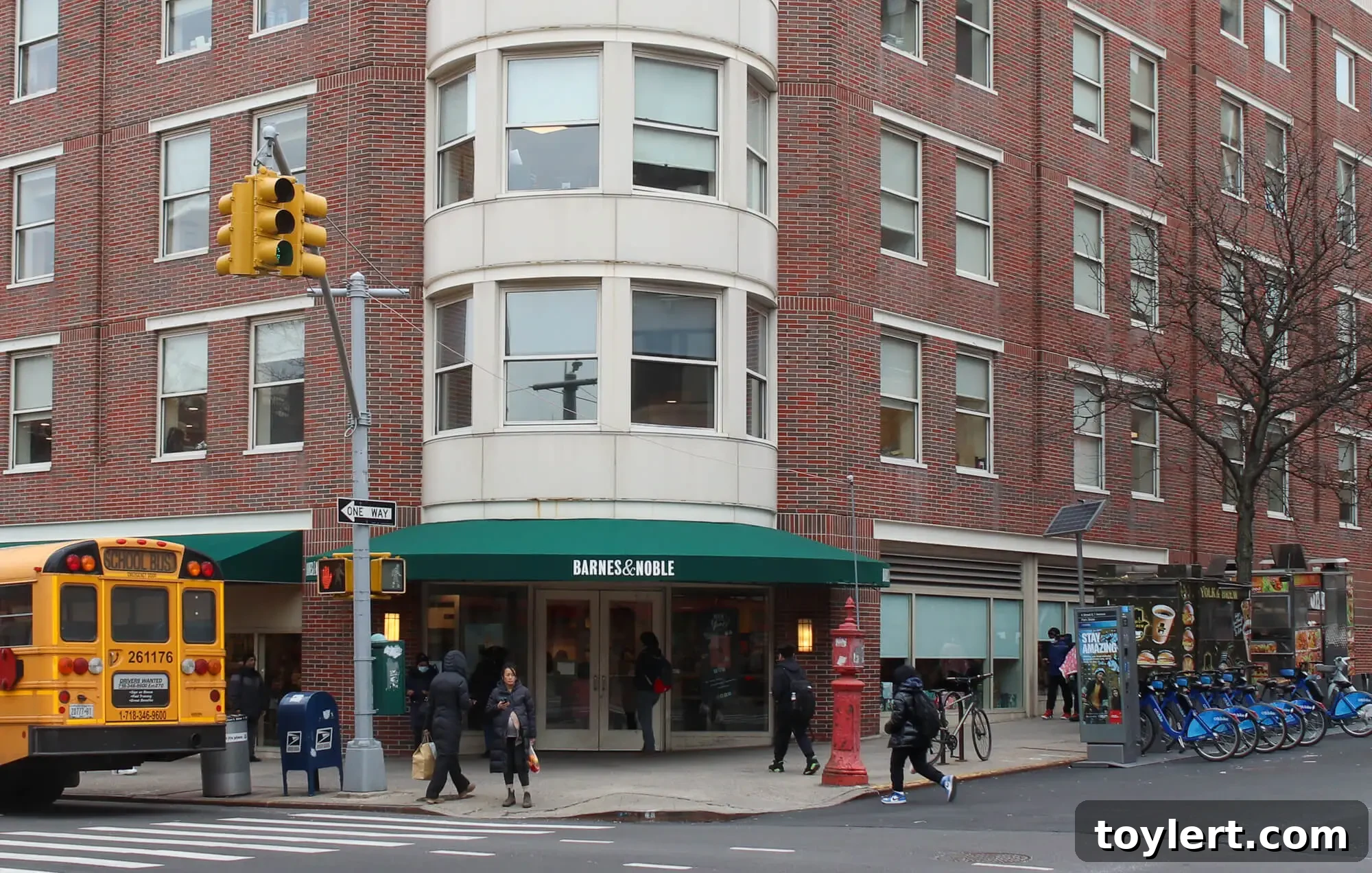
Barnes & Noble Park Slope Employees Seek Unionization: A Growing Trend in Retail Labor
In a significant development for labor organizing within the retail bookselling sector, employees at the Barnes & Noble bookstore in Park Slope, Brooklyn, have formally announced their intention to unionize. This move marks the second New York City branch of the prominent book retailer to pursue collective bargaining, signaling a potential shift in the landscape of worker representation across the company’s vast network.
The organizing effort, publicly confirmed on a recent Thursday, sees approximately 30 dedicated workers from the 7th Avenue store, located near 6th Street, taking decisive steps towards forming a union. These employees have already demonstrated strong solidarity by signing authorization cards, a crucial initial step indicating their desire to join the Retail, Wholesale and Department Store Union (RWDSU).
The Spark in Park Slope: A Detailed Look at the Unionization Drive
The momentum for unionization at the Park Slope Barnes & Noble has been building, culminating in a formal notification to management of their intent to organize on May 25. This direct communication underscores the workers’ commitment to securing better working conditions, fair wages, and a stronger voice in their workplace. The decision to align with the RWDSU positions these employees within a union that boasts a rich history of advocating for retail workers’ rights and interests across various industries.
While awaiting an official response from Barnes & Noble’s corporate hierarchy, the organizing committee has proactively filed an election petition with the National Labor Relations Board (NLRB). This filing is a standard, yet critical, procedural step that initiates the formal process for a union election, compelling the employer to recognize the union or participate in a supervised election. The NLRB, an independent federal agency, is responsible for enforcing U.S. labor law in relation to collective bargaining and unfair labor practices.
Why Workers Are Organizing: A Quest for Equity and Respect
The drive to unionize at Barnes & Noble Park Slope reflects a broader trend seen across the retail sector, where employees are increasingly seeking collective power to address long-standing issues. Common motivations behind such movements include the pursuit of living wages that keep pace with the rising cost of living, comprehensive benefits packages, improved scheduling practices that offer stability, and enhanced job security. Furthermore, many workers express a desire for greater respect in the workplace, a more transparent decision-making process, and a genuine voice in the policies that directly affect their daily work lives.
For bookstore employees, these concerns are often amplified by a deep passion for their work and a commitment to the cultural significance of books. However, this passion can sometimes be exploited, leading to situations where workers feel undervalued despite their contributions to a beloved community institution. Unionization offers a structured mechanism for employees to negotiate collectively, ensuring that their dedication is met with equitable compensation and humane working conditions.
A Growing Trend: Unionization Efforts Across Retail and Bookstores
The Park Slope initiative is not an isolated incident but rather part of a burgeoning wave of labor organizing within the retail industry, and specifically within the bookselling world. Following in the footsteps of another Barnes & Noble location in New York City, this latest effort underscores a growing awareness among retail employees of their collective power. Across the country, workers at major chains and independent establishments alike are reconsidering traditional power dynamics and demanding a seat at the table.
This resurgence in labor activism is fueled by a combination of factors, including economic pressures, the impact of the pandemic on essential workers, and a heightened sense of solidarity among employees. The success of unionization efforts at companies like Starbucks and Amazon has provided inspiration and a tangible roadmap for workers in other sectors, demonstrating that challenging corporate norms is not only possible but increasingly effective.
The Role of the RWDSU: Advocating for Retail Workers
The Retail, Wholesale and Department Store Union (RWDSU) plays a pivotal role in these organizing efforts. With a long and distinguished history of representing workers in various retail and service industries, the RWDSU provides critical support, legal expertise, and collective bargaining strength to its members. By joining forces with such an established union, Barnes & Noble employees gain access to resources and advocacy that would be difficult to achieve individually.
The RWDSU’s mission extends beyond just securing better pay; it encompasses fighting for safe workplaces, fair disciplinary procedures, and a dignified treatment for all workers. Their involvement with the Park Slope branch signifies a strategic partnership aimed at empowering bookstore employees to shape their professional futures and secure lasting improvements in their working conditions.
The Road Ahead: Navigating the Unionization Process
The path to a fully recognized union is multifaceted and can sometimes be challenging. After filing the election petition with the NLRB, several steps typically follow. The NLRB will investigate the petition, determine the appropriate bargaining unit, and, if necessary, conduct a secret-ballot election. For the union to be certified, a majority of the workers who vote must choose union representation.
Should the workers vote to unionize, the next crucial phase involves collective bargaining. This is where elected employee representatives, with the guidance of the RWDSU, will negotiate directly with Barnes & Noble management to establish a collective bargaining agreement (CBA). A CBA outlines wages, benefits, working hours, grievance procedures, and other terms and conditions of employment, legally binding both the employer and the union members.
Potential Challenges and Management’s Response
Unionization drives can often face resistance from employers, who may employ various tactics to discourage organizing. While the National Labor Relations Act protects employees’ right to organize, companies sometimes engage in lawful, and sometimes unlawful, anti-union campaigns. These can range from presenting the company’s perspective on unions to mandatory meetings designed to sway employee opinions. The NLRB plays a vital role in ensuring that both parties adhere to labor laws throughout this process.
The Barnes & Noble corporate office will undoubtedly be watching the situation in Park Slope closely, as the outcome could have significant implications for other locations. Their response will be a key factor in how smoothly or contentiously the process unfolds, and it will be scrutinized by both labor advocates and the wider public.
Broader Implications for Barnes & Noble and the Bookstore Industry
The successful unionization of the Park Slope Barnes & Noble would send a powerful message throughout the company and across the retail bookselling industry. For Barnes & Noble, it could signal the beginning of a larger movement, potentially inspiring employees at other branches to explore union representation. This ripple effect could lead to a significant transformation in how the company manages its workforce and engages with its employees.
Beyond Barnes & Noble, this effort contributes to a broader shift in the retail landscape. It challenges the long-held perception that retail jobs are inherently temporary or low-wage, instead advocating for them as stable, respected careers that deserve fair treatment and strong worker protections. This movement can influence labor practices, wages, and benefits across the entire sector, encouraging other businesses to proactively improve conditions to avoid union disputes or to compete for labor in an evolving market.
The Community Perspective: Park Slope’s Embrace of Labor Rights
Park Slope is a community known for its strong progressive values and active engagement in local and social issues. The unionization effort at its Barnes & Noble branch is likely to garner significant support from local residents and customers who value fair labor practices. Community backing can be a crucial element in the success of such campaigns, providing moral support, advocating on behalf of the workers, and potentially influencing public perception of the company.
Customers who cherish their local bookstore often also care about the people who make it run. Demonstrations of solidarity from the community, whether through public statements or direct action, can add considerable weight to the employees’ demands and encourage a more favorable response from management.
A Look Ahead: Paving the Way for a New Era of Retail Labor
As the Barnes & Noble Park Slope employees move forward with their unionization drive, their efforts represent more than just a local dispute; they are a microcosm of a larger national conversation about worker rights, corporate responsibility, and the future of labor in America. The outcome of their petition with the NLRB and the subsequent negotiations will undoubtedly set a precedent and provide valuable insights into the evolving dynamics between labor and management in the modern retail environment.
The dedication of these 30 workers in Park Slope is a testament to the enduring spirit of collective action. Their pursuit of union representation is a clear signal that employees are increasingly empowered and united in their quest for equitable workplaces, fostering hope for a new era where all workers, including those in the cherished world of bookselling, can thrive.