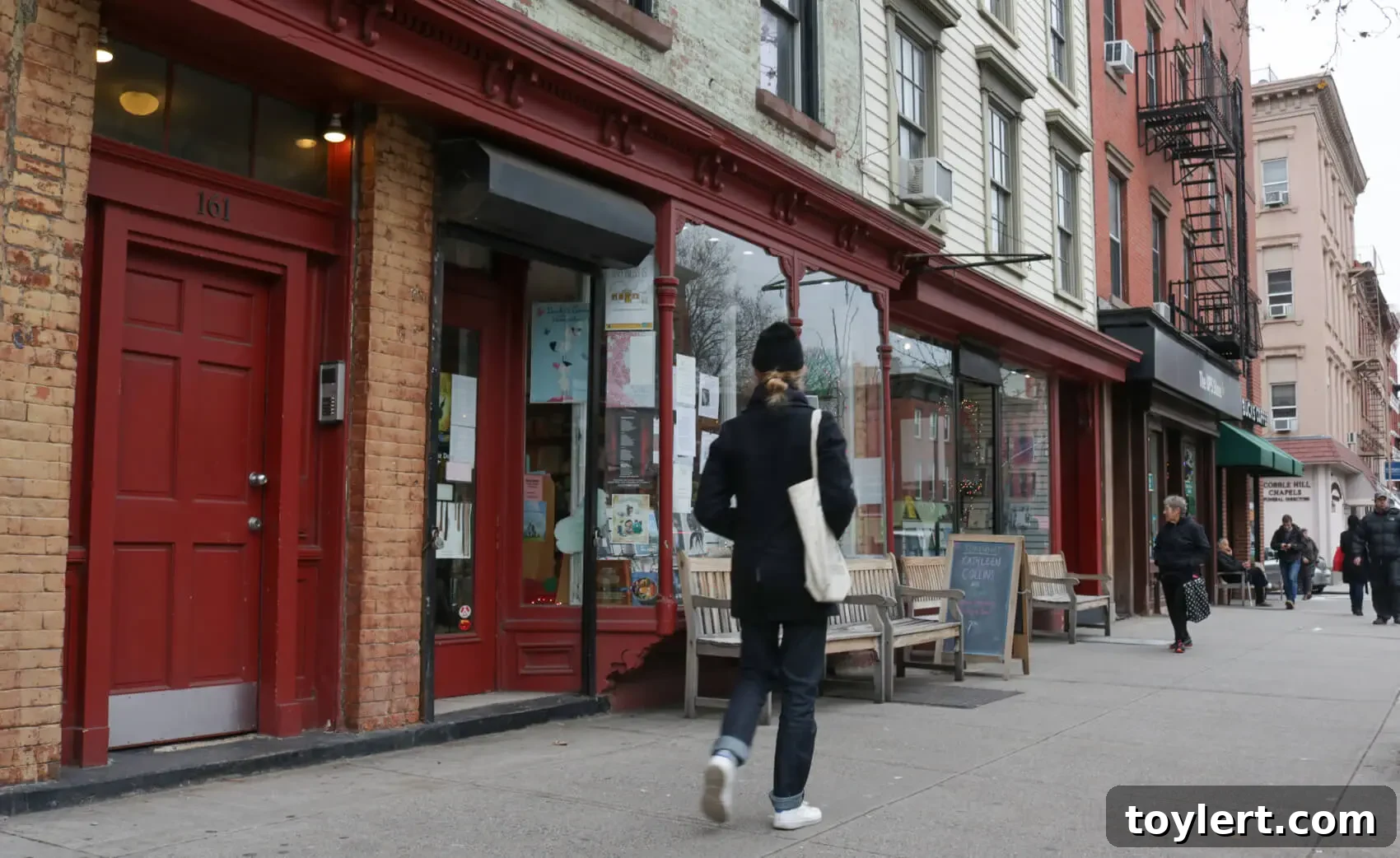
The venerable structures that once housed BookCourt, a cherished independent bookstore located at 161 and 163 Court Street in the heart of Cobble Hill, are poised for a significant transformation. These two charming 19th-century buildings, deeply ingrained in the neighborhood’s history and cultural fabric, are at the center of new development plans that hint at a modern repurposing while respecting their historic shell. The initial steps toward this future were taken by architect Charles Mallea, who submitted applications for building permits last December. While these initial applications were met with disapproval, they signal the beginning of a potentially long but ultimately impactful process for these iconic addresses.
The Enduring Legacy of BookCourt: A Cobble Hill Institution
For decades, BookCourt was more than just a bookstore; it was a vibrant community hub, a literary sanctuary, and an integral part of Cobble Hill’s unique identity. Opened in 1981 by siblings Henry and Mary B. Zook, the independent bookstore quickly became a beloved fixture, known for its extensive collection, intimate author events, and cozy atmosphere that encouraged lingering and discovery. Its closure in 2016, a decision the owners attributed to a desire for retirement rather than rising rents, left a palpable void in the neighborhood. The news sent ripples through the literary community and among local residents who had grown accustomed to its presence, seeing it as a symbol of Cobble Hill’s intellectual charm and fierce independence. The buildings at 161 and 163 Court Street thus carry a rich narrative, not merely as architectural constructs but as vessels of collective memory and cultural significance. Any new development here is inherently viewed through the lens of this profound legacy, with community members often hoping that future iterations will honor the spirit of what once was.
Cobble Hill’s Historic Charm and Evolving Landscape
Cobble Hill, a picturesque neighborhood in Brooklyn, is renowned for its tree-lined streets, brownstone architecture, and a strong sense of community. Designated as a historic district in 1969, the area boasts a collection of beautifully preserved 19th-century buildings, each telling a story of Brooklyn’s past. The properties at 161 and 163 Court Street fit perfectly within this historical context, characterized by their classic facades and enduring appeal. Court Street itself is a bustling commercial thoroughfare, a vital artery connecting residents to local businesses, eateries, and services. The dynamic interplay between historic preservation and contemporary development is a constant balancing act in such neighborhoods. As Brooklyn continues to evolve and its real estate market remains robust, properties like these represent prime opportunities for investors and developers. However, the development process in historic districts is often more complex, involving rigorous reviews to ensure that any new construction or renovation respects the existing architectural character and conforms to stringent preservation guidelines. This often leads to careful, phased development plans, where preliminary steps like permit applications and site investigations become crucial indicators of future direction.
Unpacking the Development Process: From Permits to Planning
The initial filing of building permit applications by architect Charles Mallea in December marks the official commencement of the development journey for 161 and 163 Court Street. While the initial disapproval might seem like a setback, it is often a common part of the bureaucratic process, providing an opportunity for revisions, clarifications, and alignment with zoning regulations and building codes. Architects like Mallea play a pivotal role in translating a developer’s vision into tangible plans, navigating the intricate web of city regulations, and ensuring structural integrity and aesthetic harmony. The process typically involves submitting detailed architectural drawings, engineering specifications, and environmental impact assessments. For properties within historic districts, additional layers of review by preservation commissions are usually required, focusing on facade changes, material choices, and overall design compatibility. This ensures that new constructions or significant alterations do not detract from the neighborhood’s distinctive historic character. The eventual approval of permits is a critical milestone, paving the way for construction to commence and transforming architectural blueprints into physical realities.
The Critical Role of Soil Borings in Property Development
Last week, a significant development occurred on Court Street when geotechnical consultants were observed conducting soil borings through the sidewalk in front of 161 and 163 Court Street. This activity, while seemingly routine, is a fundamental and often mandatory precursor to any major construction project. Soil borings involve drilling into the ground to extract soil samples from various depths. These samples are then meticulously analyzed in laboratories to determine the composition, stratification, and engineering properties of the subsurface soil. Key factors assessed include bearing capacity – the maximum load the soil can support – as well as the presence of groundwater, rock layers, or any potential contaminants. This critical data informs the structural design of foundations, ensuring they are adequately engineered to support the proposed building’s weight and withstand environmental forces. Without a thorough understanding of the subsurface conditions, a building’s stability and longevity could be compromised. While soil borings are typically associated with entirely new constructions, their presence at this site suggests an investigation into the ground’s capacity to support significant structural changes, particularly for the anticipated rear additions. This step underscores a serious commitment to the development, moving beyond conceptual planning to practical site assessment.
Deciphering “Rear Additions”: A Glimpse into the Future
Initially, the presence of soil borings might lead one to speculate about the demolition of the existing 19th-century buildings and the construction of an entirely new structure. However, in this particular instance, it is more likely that these tests are being conducted to assess the foundations for proposed rear additions. This distinction is crucial, especially in historic districts like Cobble Hill, where preserving the street-facing facades is often a priority. “Rear additions” can encompass a wide range of possibilities, from expanding the footprint of the existing structures to introducing new vertical elements at the back of the property, hidden from the primary street view. Such additions could be designed to accommodate additional residential units, expand commercial space, or create mixed-use opportunities, blending retail or office space on the lower levels with residential units above. For a property with such a strong legacy as the former BookCourt site, rear additions represent a strategic way to increase usable square footage and maximize the property’s potential while maintaining the historic integrity of the original facade. This approach can be a delicate balance, requiring thoughtful design that integrates modern functionality with historical respect, ensuring that any new elements complement rather than detract from the existing architecture.
Community Engagement and Historic Preservation
The prospect of new development at such a significant location inevitably sparks interest and discussion within the Cobble Hill community. Residents and local advocacy groups are often keen observers of changes to beloved landmarks, particularly those within historic districts. The balance between progress and preservation is a recurring theme in urban development. While new projects can bring economic benefits, revitalize underutilized spaces, and introduce modern amenities, there is also a strong desire to protect the neighborhood’s unique character and architectural heritage. The development of 161 and 163 Court Street will undoubtedly be watched closely by those who cherish BookCourt’s memory and the distinctive charm of Cobble Hill. Transparent communication from developers and architects, coupled with opportunities for community input, can help foster a sense of collaboration and ensure that the final outcome reflects a thoughtful consideration of both commercial viability and community values. As plans progress, the details of the proposed rear additions and their impact on the existing structures, neighboring properties, and the overall streetscape will become central points of discussion, shaping the future narrative of this iconic Cobble Hill address.
Looking Ahead: The Next Chapter for Court Street
As the development process unfolds for 161 and 163 Court Street, the former home of BookCourt, the initial disapproved permits and recent soil boring investigations signal that significant changes are on the horizon. The engagement of architect Charles Mallea and the meticulous geotechnical surveys underscore a professional and deliberate approach to transforming these historic 19th-century buildings. While the specific nature of the proposed rear additions remains to be fully revealed, this development signifies a new chapter for a site deeply embedded in Cobble Hill’s history. The community, developers, and preservationists will all play a role in shaping the final outcome, ensuring that whatever emerges next will contribute positively to the rich tapestry of this beloved Brooklyn neighborhood, honoring its past while embracing its future. The journey from initial concept to completed construction is often long and complex, but the groundwork being laid now promises an exciting evolution for these prominent Court Street properties.
% | % | % | % Single Page