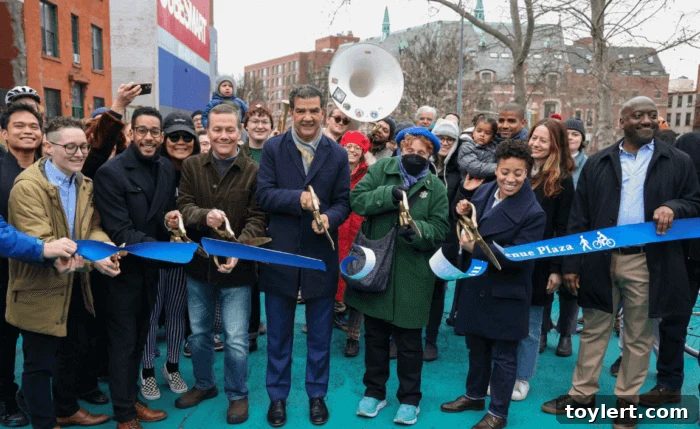
Underhill Avenue Transformed: Prospect Heights Celebrates Brooklyn’s New Permanent Pedestrian Plaza
In a landmark development for urban planning and community life in Brooklyn, officials recently celebrated the grand opening of a new, permanent pedestrian plaza on Underhill Avenue in Prospect Heights. This significant event marks what the city proudly calls “the first step in the evolution of Prospect Heights’ Open Streets to permanent public spaces,” signaling a profound commitment to creating more pedestrian-friendly and vibrant neighborhoods across New York City. The inauguration of this plaza is more than just a ribbon-cutting; it represents a tangible shift towards prioritizing people over vehicles, fostering stronger communities, and enhancing the overall quality of urban living.
The Vision for Permanent Public Spaces: A New Era for Urban Living
The transition of Open Streets from temporary pandemic-era measures to enduring public spaces is a testament to their overwhelming success and the growing demand for more accessible, enjoyable urban environments. For years, city planners and residents alike have advocated for reclaiming street space for public use, transforming once car-dominated thoroughfares into havens for pedestrians, cyclists, and community gatherings. The permanent pedestrian plaza on Underhill Avenue epitomizes this vision, setting a powerful precedent for future urban development projects in Brooklyn and beyond. It highlights a proactive approach to urban design that not only addresses immediate community needs but also lays the groundwork for sustainable, livable cities in the long term.
Underhill Avenue’s Vibrant Transformation: A Hub for Community Life
The heart of this transformative project lies in a specific one-block stretch of Underhill Avenue, nestled between Atlantic Avenue and Pacific Street. Strategically located adjacent to the charming Lowry Triangle Park in Prospect Heights, this section has undergone a remarkable metamorphosis. The asphalt, once a dull gray, has been painted a brilliant, inviting turquoise, instantly signaling a change in its intended use and creating a visually striking public realm. Beyond the aesthetic upgrade, the plaza has been meticulously outfitted with a variety of urban furniture, including comfortable seating, tables, and innovative play elements, encouraging residents to linger, socialize, and engage with their surroundings. To ensure its permanence and safety, robust planters and carefully placed granite blocks at each end of the block effectively halt automobile traffic, creating a serene and secure environment. These deliberate design choices allow the space to truly flourish as a vibrant gathering spot, a place where neighbors can connect, children can play, and local culture can thrive.
Integrating with Prospect Heights: Enhancing Local Character
The choice of Underhill Avenue for this pioneering project is no coincidence. Prospect Heights is a dynamic Brooklyn neighborhood known for its historic brownstones, diverse community, and proximity to cultural landmarks like Prospect Park and the Brooklyn Museum. The new pedestrian plaza seamlessly integrates into this rich urban fabric, providing a much-needed public amenity that complements the existing character of the area. The adjacency to Lowry Triangle Park further enhances the plaza’s appeal, creating a larger contiguous area for passive recreation and community events. This integration demonstrates a thoughtful approach to urban revitalization, ensuring that new developments enhance rather than detract from the unique identity of Brooklyn neighborhoods.
From Pandemic Response to Permanent Fixture: The Genesis of Open Streets
The story of Underhill Avenue’s transformation is deeply intertwined with the emergence of the Open Streets program during the height of the COVID-19 pandemic in 2020. As cities grappled with the need for social distancing and safe outdoor spaces, initiatives like Open Streets quickly gained traction. Underhill Avenue, along with its popular neighbor Vanderbilt Avenue, was among the very first streets in New York City to be closed to through traffic and opened predominantly to pedestrians and cyclists. These temporary measures proved incredibly successful, providing vital space for outdoor dining, exercise, and community interaction during a challenging time. The overwhelming positive response from residents and businesses alike underscored the profound need for more accessible public spaces and paved the way for the conversation about making these initiatives permanent.
The Enduring Popularity and Success of Brooklyn’s Open Streets
The initial success of Open Streets like Underhill and Vanderbilt Avenues was remarkable. Residents embraced these car-free zones, transforming them into lively extensions of their homes and communities. The increased foot traffic brought a much-needed boost to local businesses, while the reduced noise and pollution contributed to a more peaceful urban environment. These streets quickly became some of the most popular in the entire Open Streets program, demonstrating the undeniable demand for pedestrian-focused infrastructure. Their popularity highlighted a fundamental desire among urban dwellers for more communal spaces, safer routes for active transportation, and a greater connection to their neighborhoods. This sustained popularity provided the impetus and justification for city officials to explore permanent solutions, culminating in projects like the Underhill Avenue plaza.
Benefits of Permanent Pedestrian Plazas: A Multifaceted Impact
The establishment of permanent pedestrian plazas offers a myriad of benefits that extend far beyond simply closing a street to cars. These spaces are catalysts for positive change, impacting community life, local economies, environmental sustainability, and overall urban livability.
- Fostering Community and Social Interaction: Permanent plazas provide dedicated spaces for neighbors to gather, socialize, and build stronger bonds. They become natural venues for community events, markets, outdoor performances, and casual encounters, enriching the social fabric of Prospect Heights.
- Boosting Local Economies: By increasing foot traffic and creating a more pleasant shopping and dining experience, pedestrian plazas can significantly benefit local businesses. People are more likely to stop, browse, and spend time in areas that feel safe, welcoming, and vibrant.
- Enhancing Environmental Sustainability: Reducing vehicle traffic directly contributes to lower carbon emissions and improved air quality. The addition of planters and green infrastructure also helps manage stormwater, reduce urban heat island effects, and introduce biodiversity into the urban landscape.
- Improving Safety and Accessibility: Removing cars from these zones creates a much safer environment for pedestrians, cyclists, and children. It also makes public spaces more accessible for people of all ages and abilities, promoting active transportation and healthier lifestyles.
- Elevating Urban Aesthetics and Quality of Life: Thoughtfully designed plazas with artistic elements, comfortable seating, and green spaces enhance the beauty and visual appeal of a neighborhood. This investment in public realm improvements directly translates into a higher quality of life for residents, making Prospect Heights an even more desirable place to live.
Thoughtful Traffic Management and Neighborhood Integration
The transformation of Underhill Avenue also involves a nuanced approach to traffic management, demonstrating a commitment to balancing pedestrian safety with the practical needs of local access. While the new plaza section is completely car-free, a broader section of Underhill Avenue, specifically between Atlantic Avenue and St. John’s Place, maintains restricted auto traffic. During weekdays, from 8 a.m. to 4 p.m., this stretch is limited strictly to local access vehicles, effectively banning through traffic. This strategic restriction ensures that residents can still access their homes and businesses, while preventing the street from becoming a busy cut-through. This hybrid model allows for a more peaceful and pedestrian-friendly environment during peak hours without entirely severing vehicular access for those who truly need it, representing a well-considered integration into the existing urban fabric of Prospect Heights.
The Future of Open Streets: A Model for Brooklyn and Beyond
The permanent pedestrian plaza on Underhill Avenue is not an isolated project; it serves as a powerful model and a first step for the broader Open Streets program across Brooklyn and New York City. Its success will undoubtedly inform and inspire similar transformations in other neighborhoods eager to reclaim their streets for public use. This initiative reflects a long-term commitment from the city to reimagine its public spaces, fostering a network of pedestrian-friendly zones that enhance livability and promote sustainable urban development. The crucial role of community engagement in this process cannot be overstated; the persistent advocacy and feedback from Prospect Heights residents and local organizations were instrumental in bringing this vision to fruition. As more Open Streets consider transitioning to permanent status, the collaborative effort between city planners, community groups, and local residents will remain paramount in shaping a more equitable, vibrant, and sustainable urban future for all New Yorkers.
A Benchmark for Urban Revitalization in Brooklyn
The opening of the permanent pedestrian plaza on Underhill Avenue in Prospect Heights is a significant milestone, representing a forward-thinking approach to urban design and community development in Brooklyn. By converting a temporary pandemic solution into a lasting public asset, the city has demonstrated its dedication to creating more livable, sustainable, and people-centered spaces. This vibrant new plaza, with its striking turquoise surface, comfortable furnishings, and strategic traffic calming measures, is set to become a cherished gathering spot and a powerful example of how urban streets can be reimagined for the benefit of everyone. As the first of many such transformations, Underhill Avenue stands as a benchmark for urban revitalization, promising a brighter, more pedestrian-friendly future for Prospect Heights and countless other neighborhoods across New York City.