Unveiling Newburgh’s Architectural Legacy: The Enduring Charm of Thornton M. Niven’s Italianate Villa
While the names of architectural luminaries like Andrew Jackson Downing, Alexander Jackson Davis, and Calvert Vaux often dominate discussions about 19th-century Newburgh, N.Y., the significant contributions of architects such as Thornton M. Niven deserve closer examination. Niven, though perhaps not as widely celebrated as some of his contemporaries, left an indelible mark on the city’s built environment, crafting numerous structures that are essential chapters in Newburgh’s rich architectural narrative. His designs encapsulate the prevailing styles and sophisticated tastes of the era, reflecting a period when Newburgh was a vibrant hub of innovation and design excellence in the Hudson Valley.
A Masterpiece on Montgomery Street: The Historic Niven Residence
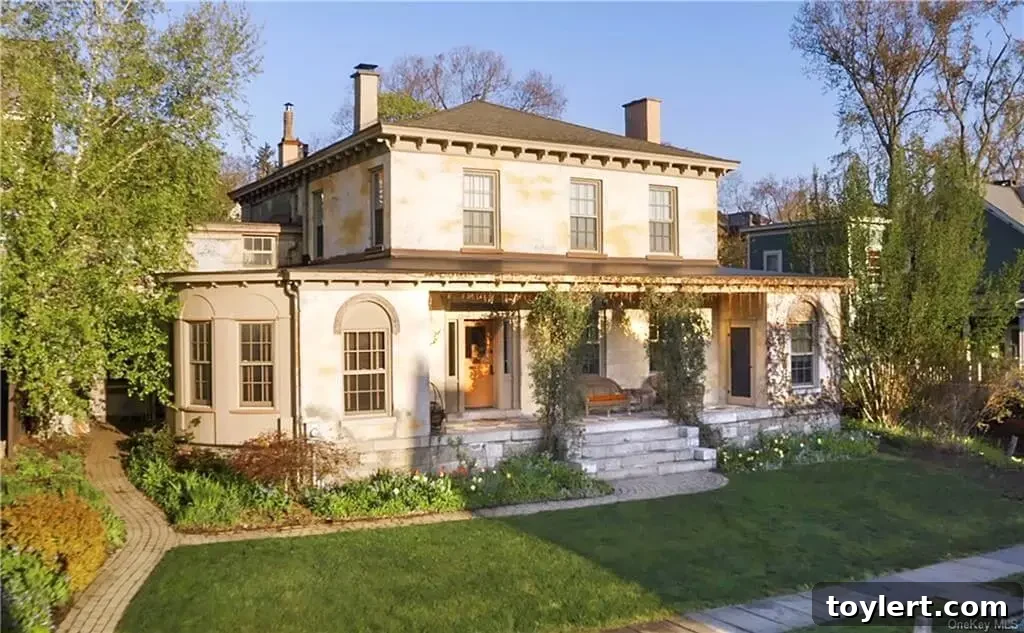
Among Thornton M. Niven’s notable works stands his own residence, a truly picturesque Italianate villa, strategically positioned on one of Newburgh’s most captivating architectural stretches. This magnificent property, located at 201 Montgomery Street, is currently on the market, presenting a rare opportunity to own a piece of American architectural history. The house is more than just a dwelling; it is a tangible connection to the architectural movements that defined the 19th century and a testament to Niven’s design sensibilities.
The Italianate style, which gained immense popularity in the United States from the 1840s to the 1880s, draws inspiration from 16th-century Italian Renaissance villas. Niven’s villa beautifully exemplifies many characteristic features of this style. One would typically observe a low-pitched roof with widely overhanging eaves, often supported by decorative brackets, creating a distinct silhouette. Tall, narrow windows, frequently arched and sometimes grouped in pairs or threes, allow natural light to flood the interiors while adding to the facade’s elegance. A prominent, often elaborately detailed, main entrance serves as a focal point, inviting visitors into spaces designed with both grandeur and comfort in mind. The Niven house, with its inherent grace and stylistic integrity, stands as a prime example of how these elements coalesced to create homes of enduring beauty and presence.
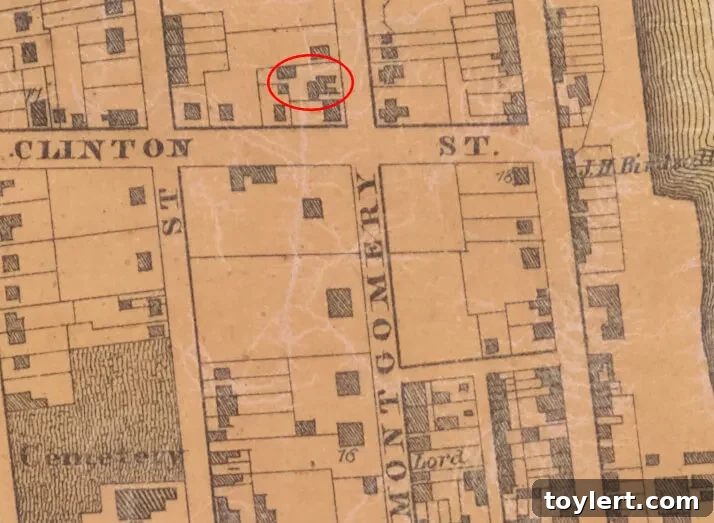
Its esteemed location on Montgomery Street further enhances its appeal. This street is renowned for its concentration of architecturally significant 19th-century homes, making it a living museum of design. Just a short distance down the street is the venerable Captain David Crawford House, which serves as the headquarters for the Historical Society of Newburgh Bay and the Highlands. This proximity underscores the Niven villa’s place within a distinguished architectural neighborhood, where every block tells a story of artistic vision and historical significance. Owning this property means becoming a custodian of a critical part of Newburgh’s heritage, situated amidst the striking creations of other influential 19th-century architectural figures.
Newburgh, A Crucible of American Architectural Innovation
The 19th century was a golden age for Newburgh, establishing it as a dynamic center for architectural and design excellence in the United States. Its strategic location on the Hudson River, combined with its picturesque natural scenery, attracted a confluence of wealthy patrons, visionary designers, and skilled craftsmen. This unique environment fostered a vibrant intellectual and creative community, leading to an explosion of innovative domestic and public architecture. Newburgh became a proving ground for new styles and ideas that would profoundly influence the American home and landscape design for generations.
The city’s architectural narrative is deeply intertwined with the Hudson River School art movement and the broader Picturesque movement, which emphasized harmony between human-made structures and the natural landscape. Architects and designers drawn to Newburgh sought to create homes and gardens that responded to and enhanced the region’s stunning vistas. This period saw the development of various revival styles—Gothic Revival, Italianate, and Second Empire—each adapted and refined by the talented individuals who made Newburgh their home or canvas. The presence of these architectural giants in such close proximity created a unique collaborative and competitive environment, pushing the boundaries of design and setting new standards for elegance and functionality.
Influential Visionaries Shaping the American Home
At the heart of Newburgh’s flourishing architectural scene were individuals whose ingenuity would leave an enduring legacy on American design. These innovators were not merely building structures; they were shaping a national aesthetic, influencing how Americans lived, perceived their surroundings, and integrated nature into their domestic lives.
Andrew Jackson Downing: Pioneer of American Landscape and Domestic Design
Perhaps the most influential figure associated with Newburgh’s design ethos was native son Andrew Jackson Downing. A pioneering horticulturalist and landscape designer, Downing advocated for the Picturesque style, believing that homes should be harmoniously integrated with their natural settings. His prolific writings, including “A Treatise on the Theory and Practice of Landscape Gardening” and “Cottage Residences,” became essential guides for homeowners and architects across America. Downing championed a blend of aesthetics and practicality, promoting designs that were both beautiful and suited to the American climate and lifestyle. His vision transformed the concept of the American country house and garden, making him a monumental figure in the history of American design, with his ideas radiating from his Newburgh base.
Alexander Jackson Davis: Master of Revival Styles
Working closely with Downing was Alexander Jackson Davis, one of the most celebrated architects of the 19th century. Davis was renowned for his masterful execution of various revival styles, including Gothic Revival, Greek Revival, and Italianate. His designs, often characterized by their grandeur and meticulous detail, graced many of America’s most prominent estates. Davis’s collaboration with Downing on projects like the iconic “Montgomery Place” further solidified his reputation for creating homes that were not only structurally sound but also deeply evocative of historical architectural traditions. His work defined an era of architectural elegance and contributed significantly to the vocabulary of American domestic architecture, much of which can be observed or traced to designs prevalent in Newburgh.
Calvert Vaux: Co-Creator of Iconic Landscapes
Another pivotal figure in Newburgh’s architectural story is Calvert Vaux. A brilliant English-American architect and landscape designer, Vaux is most famously known for his groundbreaking partnership with Frederick Law Olmsted, with whom he co-designed New York City’s Central Park, a landmark achievement in urban planning and landscape architecture. Vaux also played a critical role in carrying forward Downing’s legacy after his untimely death. His move to Newburgh allowed him to contribute significantly to the local architectural landscape, designing homes and public spaces that embodied a sophisticated understanding of form, function, and natural integration. Vaux’s work is characterized by its elegance, attention to detail, and a profound respect for the surrounding environment, qualities that resonated deeply with the aesthetic ideals prevalent in Newburgh.
Frederick Clarke Withers: The Eclectic Innovator
Completing this quartet of influential architects is Frederick Clarke Withers. Another English-born architect who immigrated to the United States, Withers worked alongside Calvert Vaux and was also deeply influenced by Downing. Withers developed a distinctive and eclectic style, often incorporating elements of Gothic Revival, Victorian, and Queen Anne styles into his designs. He was particularly noted for his churches, public buildings, and country houses, which displayed a keen sense of craftsmanship and an innovative approach to materials and ornamentation. His contributions to Newburgh’s architectural fabric further enriched its diverse collection of 19th-century structures, adding layers of complexity and artistic flair to the city’s built heritage.
The Enduring Legacy of Montgomery Street: A Historic Architectural Tapestry
Revisiting Montgomery Street, one fully appreciates its status as a testament to Newburgh’s glorious architectural past. The street isn’t merely a thoroughfare; it’s an open-air gallery showcasing the genius of 19th-century design. The Niven house, with its stately Italianate form, is perfectly situated within this remarkable context. The proximity to the Captain David Crawford House, a Federal-style masterpiece and a cornerstone of local preservation efforts, reinforces the profound historical significance of the entire area. The Captain David Crawford House, serving as the official headquarters of the Historical Society of Newburgh Bay and the Highlands, stands as a beacon for the preservation and celebration of the region’s rich history and architectural grandeur.
The collective presence of homes by Niven and his more famous contemporaries—Downing, Davis, Vaux, and Withers—transforms Montgomery Street into a vibrant historical document. It offers unparalleled insight into the architectural trends, social aspirations, and creative synergies that defined Newburgh during its most influential period. Each structure, from grand villas to more modest yet equally significant homes, contributes to a cohesive and breathtaking streetscape that continues to captivate residents and visitors alike. This tapestry of architectural styles and historical narratives makes Montgomery Street not just a place to live, but a place to experience history firsthand.
Preserving Newburgh’s Architectural Heritage for Future Generations
The continued existence and appreciation of homes like Thornton M. Niven’s Italianate villa are crucial for preserving Newburgh’s unique character and rich historical legacy. These historic structures are not just buildings; they are tangible links to the past, offering invaluable insights into the lives, aspirations, and artistic achievements of previous generations. The efforts of local historical societies, dedicated preservationists, and homeowners who meticulously maintain and restore these properties are vital in safeguarding this irreplaceable heritage.
Newburgh is currently experiencing a revitalization, with a renewed focus on celebrating and leveraging its profound historical assets. This renewed interest brings both opportunities and challenges, highlighting the importance of balancing modernization with respectful preservation. By valuing and investing in its architectural treasures, Newburgh ensures that its story continues to be told, inspiring future generations with the beauty and ingenuity of its past. The Niven house, now available on the market, represents not only a piece of that past but also a potential cornerstone for Newburgh’s vibrant future, inviting new custodians to contribute to its ongoing architectural saga.
In conclusion, while Thornton M. Niven’s name may not echo with the same immediate recognition as some of his more prominent peers, his architectural legacy, particularly evident in his exquisite Italianate villa on Montgomery Street, remains an integral part of Newburgh’s illustrious 19th-century architectural story. His contributions, alongside those of celebrated figures like Andrew Jackson Downing, Alexander Jackson Davis, Calvert Vaux, and Frederick Clarke Withers, collectively establish Newburgh, N.Y., as an unparalleled destination for those who appreciate the enduring beauty and historical significance of American architecture.