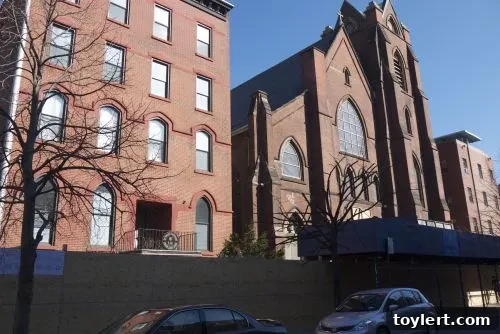
The historic facade of the former St. Vincent De Paul Church at 167 North 6th Street, Williamsburg, Brooklyn.
Historic St. Vincent De Paul Church in Williamsburg Transforms into Luxury Residences
Williamsburg, Brooklyn, a neighborhood renowned for its vibrant culture, historic charm, and relentless evolution, is once again at the forefront of adaptive reuse with the transformative plans for the former St. Vincent De Paul Church. Located prominently at 167 North 6th Street, this architectural gem, which once served as a spiritual beacon for the community, is now poised to embrace a new chapter as a collection of high-end residential units. The conversion project, spearheaded by the development entity known as The North Flats, represents a significant moment in Brooklyn’s dynamic real estate landscape, blending the reverence for historical structures with the demands of contemporary urban living.
The story began to unfold just before Christmas, when initial reports hinted at the sale of the revered St. Vincent De Paul Church. At the time, specific details regarding the buyer and the exact transaction price remained shrouded in confidentiality, awaiting the official entry into public records. However, the veil has since been lifted, revealing a substantial investment and ambitious development plans that promise to redefine a corner of North Williamsburg, showcasing the area’s ongoing transformation.
A Landmark Sale: The North Flats Acquires a Piece of Williamsburg History
Public records now confirm that the esteemed property, comprising both the sprawling church building and its adjacent parish house, was acquired by The North Flats in December. The combined sale price for these two valuable assets reached an impressive $13,700,000. This substantial investment underscores the premium value placed on prime real estate in Williamsburg, particularly for properties offering unique architectural character and significant development potential. The acquisition includes a substantial 33,000-square-foot church structure and a 6,300-square-foot parish house, offering a total footprint ripe for innovative residential conversion in a highly sought-after locale.
The involvement of The North Flats signals a clear intention to embark on a sophisticated redevelopment project. While their specific portfolio and previous projects might not be widely detailed in initial reports, such a significant acquisition in a coveted neighborhood suggests a developer with a keen eye for valuable opportunities and the capability to execute complex adaptive reuse projects. Their vision for 167 North 6th Street aims to transform these historic ecclesiastical buildings into highly sought-after living spaces, catering to a burgeoning demand for unique, character-rich homes in one of Brooklyn’s most desirable locales, thereby adding a distinctive offering to the luxury real estate market.
Phased Conversion: Parish House Leads the Way to New Residences
The transformation journey is already underway, with concrete steps being taken for the parish house. On January 30th, the New York City Department of Buildings (DOB) granted approval for a permit to convert the five-story side building into 10 distinct apartments. This marks an exciting preliminary stage, as future residents can anticipate modern, thoughtfully designed units within a building that retains its historical facade and neighborhood context, offering a harmonious blend of old and new.
The conversion of the parish house is often a more straightforward process compared to the intricate challenges posed by the main church structure. With its more conventional floor plans, the five-story building lends itself readily to residential division, allowing The North Flats to bring new housing stock to market potentially sooner. These 10 apartments are expected to feature contemporary finishes, efficient layouts, and amenities tailored to the urban professional or family seeking a vibrant Williamsburg lifestyle. This initial phase sets the stage for the larger, more complex undertaking of converting the main church building.
The Main Church Building: A Grand Transformation Awaits
While the parish house conversion proceeds, the more ambitious and architecturally complex task of transforming the main church building remains in progress. Plans for converting the church itself to residential use have not yet received full approval from the DOB. However, a significant green light has been given: the developers have secured the go-ahead for interior demolition. This crucial step paves the way for the extensive structural and design work necessary to reimagine the sacred space as luxury residences, acknowledging its past while embracing its future.
The conversion of a large, historically significant church presents both unique challenges and unparalleled opportunities. Developers must navigate intricate zoning regulations, preserve elements of historical importance, and ingeniously adapt soaring ceilings, vast open spaces, and distinctive architectural features like stained-glass windows or ornate altars into functional, appealing living environments. The approval of interior demolition suggests that the structural groundwork can commence, allowing architects and designers to finalize plans that will honor the building’s heritage while introducing state-of-the-art residential amenities. The careful planning involved ensures that the new residences will be both luxurious and respectful of the original architecture.
Visioning the Future: Luxury Lofts and Unique Living Spaces
Imagine grand loft apartments carved out of the church’s nave, featuring multi-level layouts, dramatic ceiling heights, and perhaps even retained Gothic architectural details. The potential for truly unique residences is immense: units that could incorporate original stone work, repurposed materials, or offer unparalleled views through redesigned fenestration. These conversions often become some of the most sought-after properties in a city, attracting buyers who desire a home with a story, a distinctive character that cannot be replicated in modern new builds, offering a blend of historical grandeur and contemporary comfort.
Such projects embody the concept of adaptive reuse at its finest, breathing new life into structures that might otherwise fall into disrepair or be subject to less sympathetic redevelopment. The careful integration of modern luxury with historic charm will undoubtedly be a hallmark of the St. Vincent De Paul Church residential project, creating a new benchmark for upscale living in Williamsburg and setting a precedent for future conversions in the area.
Williamsburg’s Evolving Landscape: A Trend of Adaptive Reuse
The conversion of St. Vincent De Paul Church is not an isolated incident but rather a prominent example of a broader trend sweeping through Williamsburg and other historic neighborhoods across Brooklyn. As land becomes increasingly scarce and development pressure mounts, developers are turning to existing structures, especially disused religious buildings, warehouses, and industrial sites, for innovative residential and commercial projects. This trend reflects a commitment to sustainable development and urban revitalization.
Williamsburg, in particular, has witnessed a dramatic transformation over the past few decades. Once an industrial hub and a haven for artists, it has matured into one of New York City’s most desirable residential enclaves. This evolution is driven by several compelling factors, making it an attractive location for such ambitious projects:
- Prime Location: Easy access to Manhattan via the L train, coupled with a vibrant local scene and waterfront parks.
- Cultural Richness: A diverse array of critically acclaimed restaurants, trendy boutiques, cutting-edge art galleries, and lively entertainment venues.
- Architectural Heritage: A wealth of historic buildings, from elegant brownstones to impressive industrial structures and grand churches, offering unique conversion opportunities that preserve the neighborhood’s character.
- Strong Demand: Continuous high demand for housing, especially for properties that offer character, luxury, and a distinctive lifestyle.
These adaptive reuse projects contribute significantly to the neighborhood’s character, preserving architectural legacies while simultaneously addressing the city’s urgent need for more housing. They offer an appealing alternative to entirely new construction, often resulting in residences that boast higher ceilings, more robust construction, and a sense of history that new developments struggle to replicate, providing a unique value proposition to residents.
The Impact on the Community and Real Estate Market
The sale and conversion of St. Vincent De Paul Church undoubtedly mark a transition for the immediate community. While the loss of a religious institution can evoke nostalgia and sadness for long-standing residents, its transformation into housing injects new vitality and economic activity into the area. New residents will support local businesses, and the preservation of the building’s exterior prevents potential demolition and replacement with a less distinguished structure, maintaining the architectural integrity of the streetscape.
From a real estate perspective, projects like 167 North 6th Street are critical drivers of market value and desirability. They demonstrate the enduring appeal of Williamsburg and its ability to attract significant investment. The blend of historic charm with modern amenities creates a niche market for discerning buyers willing to pay a premium for unique living experiences. These developments often set new benchmarks for property values in the surrounding blocks, further solidifying Williamsburg’s status as a premier residential destination in Brooklyn.
Looking Ahead: A New Chapter for 167 North 6th Street
As The North Flats moves forward with its comprehensive plans, the former St. Vincent De Paul Church and its parish house are set to become a testament to thoughtful urban development. The project embodies the spirit of Williamsburg itself – a constant state of reinvention, where history is not erased but reinterpreted for a new generation. The eventual completion of these luxury apartments will not only add a distinctive collection of homes to Brooklyn’s market but will also stand as a shining example of how grand old structures can find a glorious new purpose in the 21st century, blending past and present seamlessly.
Stay tuned for further updates on this exciting development as St. Vincent De Paul Church embarks on its journey from a sacred space to a coveted residential address, enriching the tapestry of Williamsburg’s architectural and social fabric. For more historical context on this sale, you can refer to our previous report: Williamsburg Church Sells, New Owner Plans Conversion.