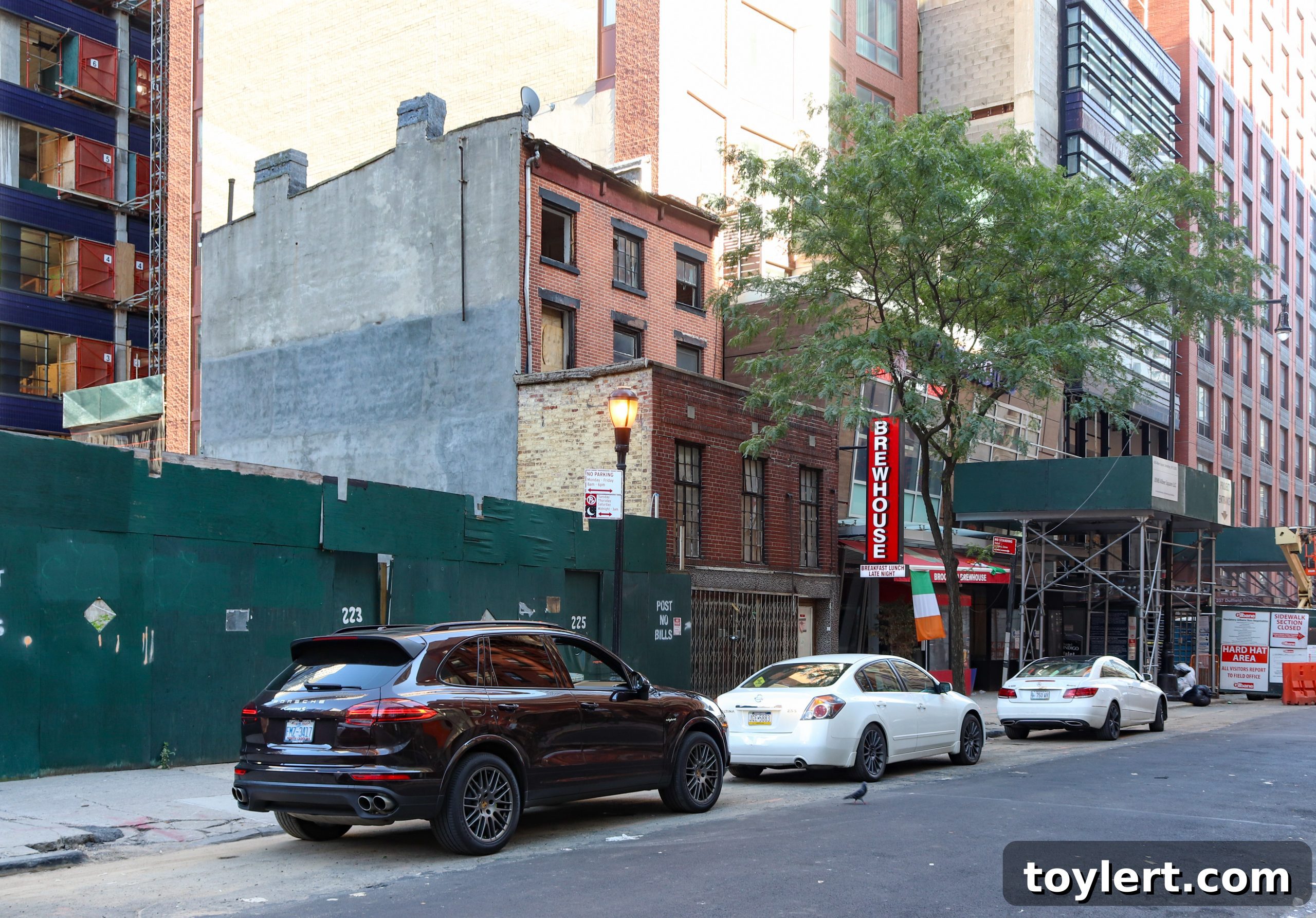
The Future Secured: Downtown Brooklyn’s 227 Duffield Street, An Abolitionist Landmark, Acquired by NYC
In a move that solidifies the preservation of a crucial piece of American history, the storied abolitionist home at 227 Duffield Street in Downtown Brooklyn has officially been sold to the City of New York. This significant transaction follows a period of intense public discourse and legal negotiation, sparked by the property’s historical designation which, according to legal counsel for the previous developer-owner, dramatically diminished its market value. The acquisition by the city marks a pivotal victory for preservationists and a testament to the enduring power of community advocacy in safeguarding cultural heritage against the pressures of urban development.
For years, 227 Duffield Street has stood as a silent, yet powerful, witness to a pivotal era in American history. Recognized for its deep ties to the Underground Railroad and the fervent abolitionist movement that flourished in Brooklyn, the property had been a flashpoint in the ongoing debate between protecting historical sites and facilitating modern development. Its recent landmarking was a hard-won battle for activists, ensuring its physical and historical integrity for future generations. However, this designation also introduced a complex financial dilemma for the private owner, leading to the eventual sale to the city.
The Impact of Landmarking: A Developer’s Dilemma
The decision to landmark 227 Duffield Street, while celebrated by many, created a challenging situation for its owner, Samiel Hasanab, a developer with plans for the site. According to his attorney, Garfield Heslop, the historical designation had a profound and immediate negative impact on the property’s financial viability. Heslop told Brooklyn Paper, “After much wrangling and consideration and considering that the value of the property automatically plummeted after landmarking, we had no choice but to sell the property.” This statement encapsulates the core conflict often faced by private property owners when their assets are granted historic status.
Landmarking, while crucial for preserving architectural and historical legacies, often comes with stringent restrictions on alteration, demolition, and new construction. These regulations can significantly reduce a property’s development potential, thereby impacting its market value. For a developer like Hasanab, who likely acquired the property with a vision for modern redevelopment, the landmark designation fundamentally altered the economic calculus. The “plummeting” value meant that the property could no longer be developed in a manner that would yield the expected return on investment, leaving the owner in a precarious position where selling to the city became the most pragmatic, if not the only, viable option.
This situation highlights a recurring tension in rapidly evolving urban landscapes like Downtown Brooklyn. As neighborhoods undergo revitalization and densification, properties with historical significance often become targets for redevelopment due to their prime locations. The clash between profit motives and the public interest in preserving tangible links to the past is a perennial struggle, and the case of 227 Duffield Street serves as a vivid illustration of this dynamic. It underscores the need for equitable solutions that acknowledge both the societal value of preservation and the economic rights of private property owners.
Abolitionist Roots: Unearthing 227 Duffield Street’s Legacy
The significance of 227 Duffield Street extends far beyond its market value; it is deeply embedded in the narrative of freedom and resistance. Long before its recent acquisition, the house was widely recognized as a pivotal site within Brooklyn’s vibrant 19th-century abolitionist community. Oral histories and historical research suggest that the home served as a stop on the Underground Railroad, providing refuge and safe passage for enslaved people seeking freedom in the North. It is believed to have been a home to abolitionists like Harriet and Thomas Truesdell, who were prominent figures in the local anti-slavery movement.
Brooklyn, and particularly the area now known as Downtown Brooklyn, was a hotbed of abolitionist activity. Its proximity to New York Harbor made it a strategic location for the Underground Railroad, a clandestine network of safe houses and routes that helped thousands escape slavery. Homes like 227 Duffield Street were not merely residences; they were centers of resistance, where individuals risked their lives and livelihoods to uphold the principles of human dignity and freedom. These houses represent courage, sacrifice, and the collective efforts of a diverse community united against injustice.
The preservation of such sites is vital for several reasons. Firstly, they offer tangible connections to a past that, though uncomfortable at times, shaped the very fabric of American society. They provide physical spaces where the stories of bravery and resilience can be told, allowing future generations to learn directly from history. Secondly, these landmarks serve as educational tools, fostering a deeper understanding of the struggles and triumphs of the abolitionist movement, and reminding us of the ongoing fight for civil rights and social justice. Protecting 227 Duffield Street ensures that its silent stories can continue to resonate, educating and inspiring all who encounter it.
The City Steps In: Details of the Acquisition
The formal acquisition of 227 Duffield Street was finalized by the City of New York’s Department of Citywide Administrative Services (DCAS), an agency responsible for overseeing the acquisition and management of city-owned properties. According to DCAS spokesman Nick Benson, the sale of the building was closed on a Wednesday for $3.2 million. This significant investment by the city underscores its commitment to preserving invaluable historical assets and ensuring they remain public resources.
DCAS plays a critical role in the urban landscape of New York City, managing a vast portfolio of properties and facilitating various municipal operations. Its involvement in this transaction highlights a strategic decision by the city to intervene and secure a property deemed too important to be lost to private redevelopment. The $3.2 million price tag reflects a negotiated sum, likely factoring in the reduced market value post-landmarking, as well as the city’s recognition of the property’s unique historical and cultural capital. While the precise details of the negotiation remain confidential, the outcome represents a compromise that ultimately serves the greater public good.
This acquisition sets a significant precedent, demonstrating that New York City is willing to take direct action to protect its most vulnerable historical landmarks, especially when private ownership becomes untenable due to preservation constraints. It sends a clear message to both developers and preservationists about the city’s evolving stance on balancing growth with heritage. The involvement of a municipal agency like DCAS ensures that the future use of 227 Duffield Street will align with public interest, focusing on education, accessibility, and the enduring legacy of the abolitionist movement.
Beyond Bricks and Mortar: The Broader Significance of Historic Preservation
The sale of 227 Duffield Street transcends a simple real estate transaction; it embodies the broader philosophical and practical arguments for historic preservation. In an era of rapid urbanization and relentless development, the relentless march of progress often threatens to erase the physical markers of our collective past. Historic buildings are not just old structures; they are repositories of memory, tangible links to the lives, struggles, and triumphs of those who came before us. They offer context, identity, and a sense of continuity in an ever-changing world.
Preserving sites like 227 Duffield Street is essential for fostering a rich cultural identity and for ensuring that historical narratives are not lost or forgotten. These places become living classrooms, offering immersive experiences that textbooks alone cannot provide. They allow visitors to step into history, to understand the physical spaces where pivotal events unfolded, and to connect with the human stories behind those events. For the abolitionist home, this means providing a space where the courage of freedom seekers and the dedication of their allies can be felt and commemorated.
Furthermore, historic preservation often contributes to local economies through heritage tourism, creates unique neighborhood character, and promotes sustainable practices by reusing existing structures. While the financial impact on individual owners can be challenging, as seen in this case, the long-term societal benefits of preservation – cultural enrichment, educational opportunities, and community pride – are invaluable. The city’s acquisition of 227 Duffield Street reaffirms the idea that certain properties possess a value that cannot be measured solely in monetary terms, but rather in their profound contribution to our shared human legacy.
What Lies Ahead: A Future for Public Engagement
With 227 Duffield Street now under city ownership, attention turns to its future use and how this vital piece of history will be made accessible to the public. While specific plans are yet to be fully articulated, it is widely anticipated that the property will be transformed into a public resource, likely a museum, educational center, or cultural institution dedicated to the abolitionist movement and the Underground Railroad. This would fulfill the long-held dreams of preservationists and community advocates who fought tirelessly to save the house from demolition and ensure its stories are told.
The transition to public ownership opens up exciting possibilities for engaging diverse audiences. Imagine educational programs for students, interactive exhibits detailing the lives of abolitionists and freedom seekers, and public forums that delve into the complex history of slavery and resistance. The house could become a powerful symbol of resilience, a place for dialogue on civil rights, and a beacon of hope in the ongoing pursuit of justice. It could serve as a central point for understanding Brooklyn’s unique role in American history, connecting local narratives to broader national and international movements for freedom.
The acquisition of 227 Duffield Street is more than just the rescue of an old building; it is an investment in the collective memory of New York City and the nation. It represents a commitment to acknowledging and learning from all facets of history, ensuring that the sacrifices made for freedom are never forgotten. As the city embarks on the next phase of this landmark’s journey, the promise of a vibrant, publicly accessible space dedicated to its abolitionist legacy shines brightly, offering an invaluable gift to current and future generations.