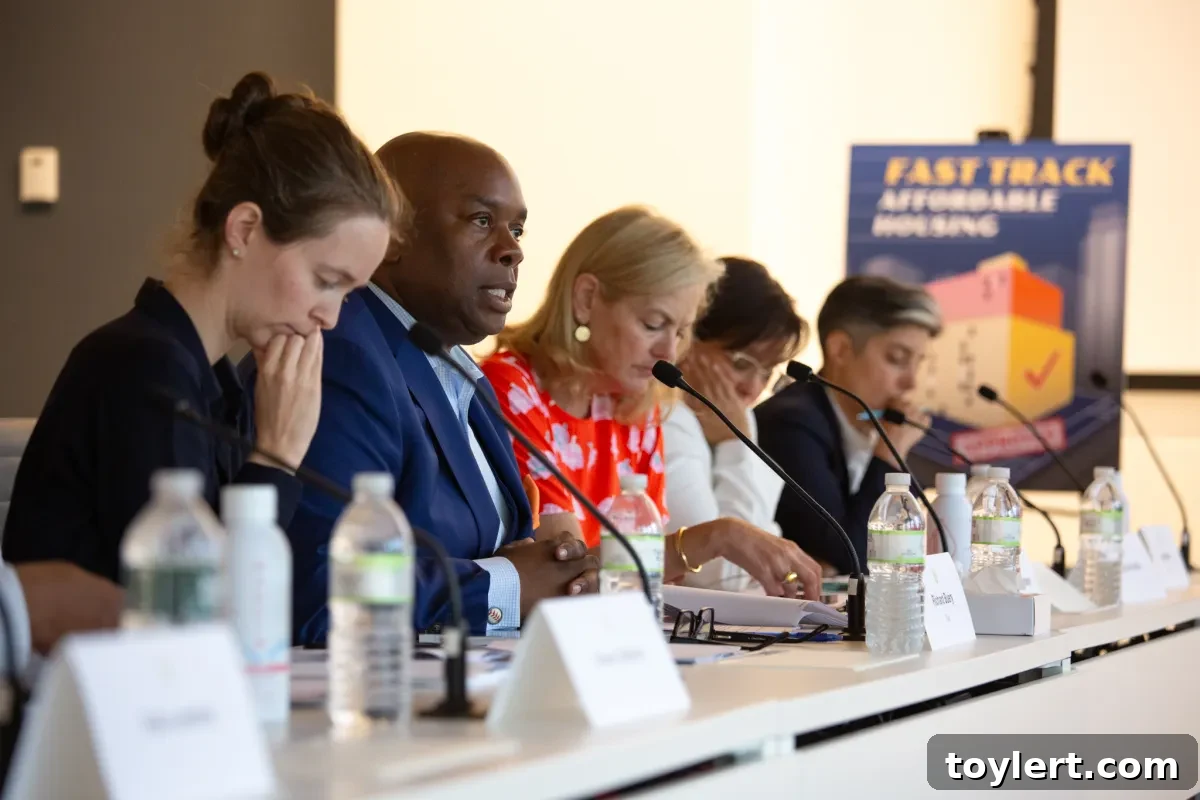
Transforming New York: Understanding the November Ballot Proposals on Housing and Elections
by Marina Samuel
New York City stands at a critical juncture, facing persistent challenges in housing affordability and civic engagement. In a significant move to address these pressing issues, the Charter Revision Commission recently finalized its proposals, voting to place five crucial measures on the upcoming November ballot. These initiatives represent a concerted effort to reshape the city’s future, with four proposals specifically designed to simplify and accelerate the approval process for affordable housing developments, and a fifth aiming to realign local elections with state and federal races for potentially increased voter participation. Originally reported on July 21, these developments have ignited conversations across the five boroughs about the future of urban planning and democratic participation.
The Charter Revision Commission’s Pivotal Decisions
The Charter Revision Commission plays a vital role in New York City’s governance, periodically reviewing and proposing amendments to the city’s foundational document – its charter. This charter outlines the structure of city government, the powers of its various agencies, and the rights and responsibilities of its residents. The Commission’s recent decisions underscore a recognition of systemic challenges, particularly within the housing sector, and an ambition to foster a more efficient and responsive municipal framework. By identifying bottlenecks and opportunities for improvement, the Commission has put forth a set of proposals that, if approved by voters, could have far-reaching implications for how New York City grows and operates.
Addressing New York City’s Urgent Housing Crisis
New York City’s housing crisis is a multifaceted challenge, characterized by skyrocketing rents, limited supply, and an ever-growing demand for affordable living spaces. For decades, the process of developing new housing, especially affordable units, has been plagued by complex bureaucratic hurdles, extensive review periods, and often unpredictable outcomes. This intricate web of regulations and approvals has not only driven up construction costs but also significantly prolonged the timeline for projects, contributing to the city’s housing shortage and exacerbating inequality. The four housing-related proposals on the November ballot aim to directly confront these systemic inefficiencies, promising a more streamlined path for critically needed affordable housing.
Streamlining Affordable Housing Development: The Four Proposals
The core objective behind these four measures is to inject efficiency and predictability into the housing development pipeline. Currently, even well-intentioned affordable housing projects can get mired in years of administrative review, requiring navigation through multiple city agencies, public hearings, and sometimes overlapping regulatory frameworks. This often discourages developers, adds substantial costs, and ultimately slows down the delivery of homes that New Yorkers desperately need. The proposed changes seek to create a more direct, transparent, and expedited process, ensuring that projects aligned with the city’s affordable housing goals can move from conception to construction with greater speed.
Untangling Bureaucracy: A Closer Look at Proposed Reforms
While the specific mechanisms of each proposal will be detailed in the ballot language, their overarching intent is clear: to dismantle the bureaucratic obstacles that impede affordable housing development. This could involve several key areas:
- Reforming the Uniform Land Use Review Procedure (ULURP): ULURP is notoriously long and complex. Proposals may seek to shorten its duration for qualifying affordable housing projects, or establish clear benchmarks and deadlines for various stages of the review process.
- Enhancing Inter-Agency Coordination: Often, projects require approvals from numerous city departments (e.g., Department of Buildings, City Planning, Environmental Protection). The reforms could mandate better coordination, establishing a lead agency for affordable housing projects or creating a single point of contact to navigate approvals.
- Expediting Environmental Reviews (CEQR): The City Environmental Quality Review (CEQR) process, while crucial, can be lengthy. Measures might introduce fast-track options or simplified review pathways for projects primarily focused on affordable housing, especially on underutilized public land.
- Codifying Development Incentives: The proposals may enshrine specific incentives or automatic approvals for projects that meet certain thresholds for affordability, thereby reducing discretion and speeding up decisions for qualifying developments.
- Digital Transformation: Integrating digital platforms for submissions, tracking, and communication could be a component, reducing paper processes and increasing transparency for all stakeholders.
The potential benefits of these reforms are substantial. By reducing the time and cost associated with approvals, developers of affordable housing will face fewer deterrents, potentially leading to an increase in the overall supply of units. This could translate into more stable housing options for low and middle-income families, helping to alleviate homelessness and improve quality of life across the city. Furthermore, a more predictable development environment could attract greater investment in affordable housing initiatives, fostering economic growth and job creation within the construction sector.
However, proponents also acknowledge the need for careful implementation to ensure that community input remains valued and environmental standards are upheld. The aim is not to bypass essential reviews but to make them more efficient and focused, particularly when the public benefit of affordable housing is clear.
Aligning Elections for Enhanced Civic Engagement
Beyond housing, the Charter Revision Commission also addressed the mechanics of New York City’s democratic process. The fifth proposal on the November ballot seeks to move local elections, including those for Mayor, City Council, Borough Presidents, and other citywide offices, to align with state and federal election cycles. Currently, many local elections in New York occur in odd-numbered years, separate from the major gubernatorial and presidential contests.
The rationale behind this proposed change is primarily to boost voter turnout. Historically, local elections held in off-years often suffer from significantly lower participation rates compared to federal and state elections, which tend to draw a larger and more diverse electorate. By consolidating election dates, the Commission hopes to:
- Increase Voter Participation: A single, high-profile election day could encourage more citizens to cast their ballots, ensuring that local leadership is chosen by a broader segment of the population.
- Reduce Voter Fatigue: Spreading out elections across multiple years can lead to “voter fatigue,” where citizens become disengaged due to the constant demands of political campaigns and voting.
- Potential Cost Savings: Consolidating elections could lead to operational cost savings for the city, reducing the expenses associated with staffing polling places, printing ballots, and administering separate election cycles.
- Greater Focus on Local Issues: While there’s a risk of local issues being overshadowed, a larger voter base might also lead to greater public discourse and engagement on city-specific policies when more people are actively participating in the democratic process.
Critics, however, sometimes voice concerns that aligning local elections with higher-profile state and federal races might cause local issues to be overlooked amidst the broader political narratives. There’s a delicate balance to strike between maximizing voter turnout and ensuring that the unique concerns of city residents receive adequate attention during campaign cycles.
The Significance of Charter Revisions in Modern Governance
The process of charter revision is a cornerstone of democratic governance, allowing cities to adapt and evolve in response to changing societal needs and challenges. It empowers citizens to directly influence the fundamental rules that govern their urban environment. Commissions, like the one in New York City, serve as a mechanism for thoughtful, deliberative review, bringing together experts and community leaders to identify areas where the city’s foundational document can be improved to better serve its residents. The proposals presented to voters are the culmination of extensive research, public hearings, and expert testimony, reflecting a broad effort to modernize and optimize city operations.
For New Yorkers, the November ballot will represent more than just a series of questions; it will be an opportunity to directly shape the administrative efficiency of their city and the accessibility of its democracy. Understanding the nuances of each proposal is paramount for informed decision-making, as the outcome will directly influence everything from housing availability to the representativeness of local government.
What New Yorkers Need to Know for the November Election
As the November election approaches, it becomes increasingly important for New York City residents to engage with these proposals. Official information campaigns, public forums, and detailed analyses will be crucial in informing the electorate about the specifics of each measure. Voters will need to consider how these changes could impact their daily lives, their neighborhoods, and the broader urban landscape. From easing the path for new affordable homes to potentially transforming how local leaders are chosen, the decisions made at the ballot box will have lasting effects on the fabric of New York City.
Conclusion: A Vision for a More Accessible and Responsive City
The five proposals placed on the November ballot by the Charter Revision Commission represent a bold vision for a more efficient, equitable, and democratically vibrant New York City. The four housing measures aim to unlock critical supply by dismantling bureaucratic impediments, promising a future where affordable homes are built faster and more economically. Simultaneously, the proposal to align election cycles seeks to reinvigorate local democracy by encouraging greater civic participation. Together, these initiatives reflect a proactive approach to addressing some of the city’s most enduring challenges, offering New Yorkers a direct say in shaping a more accessible, responsive, and ultimately, a better-governed metropolis.