Navigating Negative Equity: A Deep Dive into the NYC Housing Market in Early 2012
In the challenging economic landscape following the 2008 financial crisis, the concept of negative equity, often referred to as being “underwater” on a mortgage, became a stark reality for millions of homeowners across the United States. This occurs when the market value of a home falls below the outstanding balance of the mortgage loan secured by that home. For property owners, this situation can present significant financial hurdles, making it difficult to sell their property without incurring a loss or to refinance their existing loans.
As the first quarter of 2012 drew to a close, a critical analysis of the New York City housing market and its surrounding metropolitan areas revealed a nuanced picture of recovery and ongoing struggle. According to comprehensive data compiled by Zillow, a leading online real estate marketplace, the percentage of mortgage holders facing negative equity in this vibrant region experienced a slight but notable uptick. From 20.1 percent in the fourth quarter of 2011, this figure climbed to 21.3 percent by the end of the first quarter of 2012. This modest increase, though seemingly small, underscored the persistent challenges within the housing sector, even as broader economic indicators showed signs of improvement.
Regional Disparities: Queens, New Jersey, and Brooklyn’s Resilience
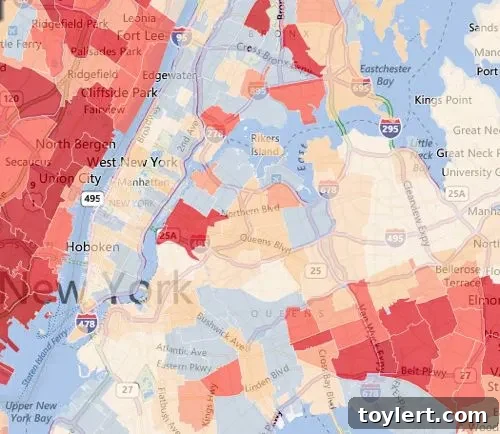
A closer examination of the geographic distribution of negative equity, as visually represented by the Zillow mortgage map (sourced via The Real Deal), unveiled striking disparities across different areas. While the overall regional average saw an increase, the burden of negative equity was not evenly distributed. Instead, much of the financial distress was concentrated in specific sub-markets, particularly within parts of New Jersey and the borough of Queens. These areas, characterized by various housing types and economic demographics, often experienced different trajectories during and after the housing market downturn.
Why Queens and New Jersey Felt More Pain
Queens, a diverse borough of New York City, and various locales within New Jersey, often feature a mix of single-family homes, multi-family dwellings, and condominiums. During the boom years leading up to 2008, many of these markets saw significant price appreciation, fueled by speculative buying, lax lending standards, and the allure of homeownership within commuting distance of Manhattan. When the market corrected, these areas, especially those with newer developments or higher concentrations of subprime mortgages, were particularly vulnerable. Homebuyers who purchased at the peak with minimal down payments found themselves with mortgages exceeding their home’s depreciated value, leading to higher rates of negative equity. Economic factors such as local employment rates, population shifts, and the prevalence of foreclosures in surrounding communities also played a significant role in determining the pace and strength of recovery in these areas.
The Unscathed Haven: Brownstone Brooklyn’s Strength
In stark contrast, the housing market in Brooklyn, and specifically the highly coveted enclave of Brownstone Brooklyn, appeared largely unscathed by the rising tide of negative equity. Brownstone Brooklyn, encompassing neighborhoods like Park Slope, Cobble Hill, Brooklyn Heights, and Carroll Gardens, is renowned for its historic brownstone architecture, tree-lined streets, strong community ties, and proximity to Manhattan. This area typically attracts a different demographic of homebuyers—often affluent professionals seeking long-term residences and possessing robust financial profiles. Properties in these neighborhoods have historically held their value due to limited supply, high demand, architectural significance, and superior amenities. Even during economic downturns, the unique appeal and intrinsic value of Brownstone Brooklyn properties tend to buffer them against significant price depreciation, leading to a much lower incidence of negative equity among its homeowners. This resilience underscores a fundamental principle of real estate: location, quality, and intrinsic demand are powerful determinants of market stability.
Comparing New York to the National Landscape
Placing New York City’s negative equity situation into a national context further illuminates its relative strength. At the time, nearly one-third of homeowners across the entire United States were still grappling with negative equity. This staggering national figure reflected the widespread and lingering impact of the housing bubble burst, which had sent property values plummeting in many regions, particularly those that experienced the most aggressive boom-and-bust cycles in states like Florida, Arizona, Nevada, and parts of California. The economic fallout, marked by foreclosures, tight credit markets, and a struggling job market, created a protracted period of stagnation for millions of American families.
Against this backdrop, New York City’s 21.3 percent negative equity rate, while concerning, positioned the region in a relatively better light compared to the national average. This difference can be attributed to several factors unique to the New York metropolitan area. NYC’s diverse and resilient economy, which is a global financial and cultural hub, often provides a more stable employment base. The perpetual demand for housing, driven by a continually growing population and strong international interest, also acts as a significant stabilizing force. Furthermore, the stringent zoning laws and limited land availability in many parts of the city restrict new construction, thus maintaining scarcity and supporting property values even during downturns.
The Broader Implications of Negative Equity for Homeowners and the Market
Negative equity is more than just a statistical anomaly; it carries profound implications for individual homeowners and the broader housing market. For individuals, being underwater on a mortgage can severely restrict financial mobility. It prevents homeowners from selling their property without either bringing cash to the closing table to cover the deficit or resorting to a short sale, which can negatively impact their credit. It also makes refinancing difficult, hindering their ability to take advantage of lower interest rates or extract equity for other financial needs, such as home improvements or debt consolidation.
On a macro level, a high prevalence of negative equity can stifle economic growth. It can contribute to a stagnation in housing transactions, as fewer people are able or willing to sell. This lack of inventory can artificially inflate prices in some segments while depressing activity in others. It also increases the risk of foreclosures, especially if homeowners face job loss or other financial hardships, further destabilizing communities and placing strain on local economies. Moreover, homeowners trapped in negative equity are less likely to spend on home improvements or other consumer goods, thereby impacting local businesses and overall economic activity.
Factors Contributing to Market Resilience and Future Outlook
The resilience observed in areas like Brownstone Brooklyn offers valuable insights into the fundamental drivers of a stable housing market. Strong local economies, high demand coupled with limited supply, a concentration of high-income earners, and properties with intrinsic historical or architectural value are critical factors. These elements create a robust foundation that can withstand economic shocks far better than markets built on speculative growth or readily available land for new development. Investors and homebuyers alike often seek out these “flight to quality” markets during uncertain times, further bolstering their stability.
Looking ahead from the vantage point of 2012, the slight increase in negative equity, particularly concentrated in Queens and New Jersey, signaled that while the worst of the housing crisis might have passed, the path to full recovery was still uneven and ongoing. For New York City, its unique market dynamics and persistent demand continued to serve as a buffer against the more severe downturns seen elsewhere. The data from Zillow and insights from The Real Deal served as crucial barometers, helping homeowners, potential buyers, and policymakers understand the evolving landscape of the New York metropolitan area’s real estate market as it navigated the complex journey towards sustained health and equity growth.
Understanding these regional variations is vital for anyone involved in the real estate market. Whether an individual homeowner assessing their personal financial situation, a prospective buyer researching resilient neighborhoods, or a policy-maker aiming to foster economic stability, the data from early 2012 underscored the importance of localized analysis. The narrative of the New York City housing market, with its pockets of vulnerability and resilience, remains a compelling case study in post-crisis recovery, highlighting the enduring appeal and complexity of one of the world’s most dynamic real estate landscapes.
One-fifth of NYC-area Borrowers Are Underwater [The Real Deal]