Williamsburg’s Evolving Canvas: The Story of 238 Bedford Avenue, 193 Berry Street, and 118 North 4th Street
Unraveling the intricate journey of a prominent, multi-faceted construction project poised to reshape a vital corner of North Brooklyn, a testament to the area’s continuous transformation.
The Enduring Mystery and Vibrant Potential of a Key Williamsburg Site
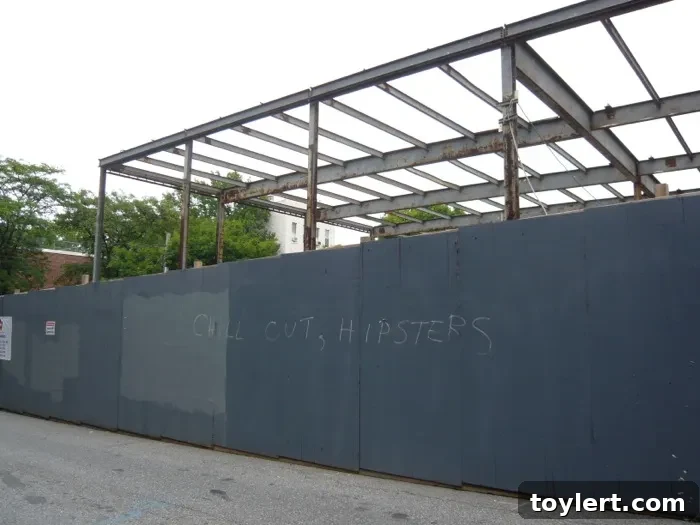
In the heart of Williamsburg, Brooklyn, a neighborhood renowned for its dynamic fusion of historic charm and cutting-edge modernity, stands a development whose story is as layered as the community it aims to serve. Known by various addresses—238 Bedford Avenue, 193 Berry Street, and officially filed with the Department of Buildings (DOB) under 118 North 4th Street—this block-through project represents a significant piece of North Brooklyn’s evolving urban fabric. For years, the visual narrative has been one of a building stripped bare, a skeletal structure at 193 Berry Street, hinting at a prolonged and complex development journey.
The sight of a roofless edifice, with minimal visible progress beyond the occasional fresh coat of paint on construction fences to obscure graffiti, has long fueled speculation and curiosity among local residents and urban observers. This article aims to demystify the multi-faceted history of this pivotal Williamsburg property, exploring its regulatory challenges, its moments of stagnation, and the renewed vision that promises to bring it to fruition. It serves as a compelling case study into the often arduous yet ultimately rewarding process of urban development in one of New York City’s most sought-after neighborhoods.
Williamsburg: A Hotbed of Transformation and Real Estate Opportunity
Williamsburg’s transformation from a predominantly industrial zone to a vibrant cultural, residential, and commercial powerhouse is a narrative frequently told, yet perpetually fascinating. This Brooklyn enclave now stands as a beacon of urban revitalization, attracting a diverse populace, innovative businesses, and significant investment. The demand for premium living spaces and diverse retail options continues to soar, making every parcel of land a prized commodity for developers looking to contribute to its unique character.
Streets like Bedford Avenue, Berry Street, and North 4th Street are more than just geographical markers; they are the pulsating arteries of a neighborhood that seamlessly blends its industrial past with a chic, contemporary present. The strategic positioning of the 238 Bedford Avenue development, linking these critical thoroughfares, grants it unparalleled visibility and accessibility, underscoring its potential to profoundly impact the local economy and urban landscape. As Brooklyn’s real estate market remains robust, projects of this scale are not merely construction ventures; they are vital indicators of broader market confidence and the ongoing commitment to shaping the borough’s future.
The trend of converting former manufacturing buildings into modern residential or mixed-use properties is a defining feature of Williamsburg’s growth. This shift reflects a progressive urban planning philosophy that favors integrated, livable communities over single-purpose industrial zones. This particular development, with its complex past, stands as a testament to both the inherent challenges and the immense rewards that come with contributing to such a dynamic and desirable urban environment.
Unraveling the Site’s Complex Identity: A Tale of Multiple Addresses
One of the more intriguing—and at times perplexing—aspects of this Williamsburg development is its designation under several distinct addresses. While prominent signage at the construction site proudly proclaims “238 Bedford Avenue” as the overarching development and indicates “193 Berry Street” for a specific segment, official city records, particularly those from the Department of Buildings (DOB), often consolidate filings under a single, primary address. In this case, that umbrella address is 118 North 4th Street. This multi-address phenomenon is characteristic of block-through properties, which span an entire city block, affording frontages and access points on multiple streets.
Understanding this intricate nomenclature is fundamental to tracking the project’s historical trajectory and future potential. The inherent advantages of a block-through site are manifold: enhanced visibility from different angles, diverse access points, and the flexibility for varied programming across its expansive footprint. For developers, this translates into maximized exposure and utility; for the surrounding community, it promises a significant and integrated transformation impacting several streetscapes simultaneously. The meticulous coordination of permits and plans across these distinct official and marketing addresses highlights the profound complexity and detailed planning indispensable for ambitious urban undertakings within New York City’s dense and highly regulated environment.
A Chronology of Development: Approvals, Disapprovals, and Strategic Pivots
The journey to transform the property at 118 North 4th Street—the primary DOB filing address for the larger project—into its envisioned form has been a protracted saga marked by regulatory submissions, strategic adjustments, and periods of both progress and pause. This reflects the dynamic and often challenging nature of New York City’s complex zoning and development approval processes.
Initial Residential Vision: The Ambitious 2005 Conversion Application
The first significant milestone for the property dates back to 2005, a period when Williamsburg was rapidly shedding its industrial skin. An application was successfully approved to convert the existing manufacturing building into modern residential units. This type of adaptive reuse was, and remains, a highly sought-after development strategy in the neighborhood, capitalizing on the robust demand for urban living spaces. However, a critical notation within the DOB file indicates that this job was subsequently placed “on hold.” This status can stem from a multitude of factors, including unforeseen financing complications, shifts in real estate market conditions, legal impediments, or a developer’s strategic re-evaluation of the project’s viability. This pivotal pause, unfortunately, initiated a period of extended inactivity and uncertainty surrounding the site’s immediate future.
Navigating Expansion: The 2007 Disapproval for Additional Stories
Further illustrating the rigorous oversight applied to urban developments in NYC, a subsequent proposal in 2007 to add two stories to the existing structure was met with disapproval. Such rejections are not uncommon in the highly regulated New York City environment and can be attributed to various factors, including non-compliance with stringent zoning regulations, exceeding established height limits, concerns regarding light and air access for adjacent properties, or even aesthetic objections voiced by influential community boards. This significant setback necessitated a fundamental re-evaluation of the project’s architectural scope and design, leading to further delays and contributing to the prolonged stalled appearance of the construction site.
Renewed Momentum: October’s Approved Modifications and a Fresh Architectural Vision
Despite the historical hurdles and protracted timelines, recent developments signaled a welcome resurgence of momentum for the project. In October (of the year the original article was written), unspecified modifications to the existing plan received official approval. This critical approval marks a breakthrough, suggesting that the development team has successfully navigated previous regulatory impasses and forged a viable path forward. Concurrently, a significant change appears to have occurred on the architectural front, with the esteemed firm Berzak Associates Architects now seemingly at the helm. The involvement of a new architectural practice often signifies a fresh perspective, an updated design philosophy, and a robust commitment to bringing the project to successful completion, potentially with a revised vision that is more attuned to current market demands and evolving regulatory frameworks.
The Future Unveiled: A Dedicated Retail Presence at 193 Berry Street
While the larger residential conversion component at 118 North 4th Street has experienced its share of delays and design revisions, a clearer and more immediate vision has materialized for the segment of the development that fronts Berry Street. According to official signage prominently displayed at the construction site, the address identified by PropertyShark as 193 Berry Street—currently characterized by the ‘skeleton’ of a building—is earmarked to become a new two-story building exclusively dedicated to retail purposes. This strategic allocation of space is a testament to the thoughtful planning behind this block-through property, optimizing its various frontages for distinct commercial and residential functions.
The introduction of new retail space on Berry Street is particularly exciting for Williamsburg. This vibrant commercial corridor thrives on a rich tapestry of independent boutiques, artisan cafes, and established brand presences, all contributing to its unique character and economic dynamism. A two-story retail establishment offers substantial potential, capable of housing either a prominent flagship store or a curated collection of smaller commercial enterprises. Such an addition would provide essential services and coveted shopping experiences for Williamsburg’s rapidly expanding local population, as well as the countless visitors drawn to the neighborhood’s allure. This development further solidifies the area’s reputation as a premier destination for both living and leisure in Brooklyn.
The projected completion date for this vital retail component was initially set for winter 2014. While this timeline reflects the ambitious aspirations of the developers at the time the original information was released, it undeniably underscores the critical role this retail space was intended to play in the immediate future of the overall development. Its eventual opening would represent a tangible and significant step forward in the site’s comprehensive transformation, injecting new commercial vitality and activity into what was once a stalled corner of one of Brooklyn’s most sought-after neighborhoods.
For those interested in visualizing the precise geographical context of this multifaceted development and its pivotal placement within the dynamic Brooklyn urban fabric, a Google Maps link is provided for further exploration of 193 Berry Street and its vibrant surroundings.
The Broader Implications: Reshaping North Brooklyn’s Real Estate Landscape
The ongoing evolution of the 238 Bedford Avenue / 193 Berry Street / 118 North 4th Street project is far more than just the narrative of a single construction site; it serves as a compelling microcosm of the broader trends, formidable challenges, and immense opportunities inherent in North Brooklyn’s highly competitive real estate market. The significant capital investment, the multi-year development cycle, and the critical adaptations made in response to both market demands and intricate regulatory frameworks collectively underscore the high stakes involved in urban development within a coveted area like Williamsburg.
The successful completion of this sophisticated mixed-use development promises to yield not only a new array of residential units and dynamic retail spaces but also to substantially contribute to the overall economic vitality and aesthetic appeal of the neighborhood. It powerfully signifies an enduring confidence from both developers and investors in the long-term appreciation and inherent value of Brooklyn property. Moreover, projects of this magnitude play an indispensable role in generating diverse employment opportunities, both during the intensive construction phases and subsequently with the establishment of new businesses within its vibrant retail component.
The strategic transformation of former industrial buildings into modern, functional residential and commercial hubs represents a sustainable and forward-thinking approach to urban growth. This method intelligently preserves the architectural character of existing structures while expertly adapting them to meet contemporary needs and lifestyles. This particular development, with its visible progress despite past delays, is undoubtedly poised to become another distinctive landmark in Williamsburg’s compelling and ongoing narrative of reinvention, prosperity, and continuous urban enhancement. It emphatically reiterates the perpetual demand for meticulously designed, strategically located properties that adeptly cater to the diverse and evolving needs of one of New York City’s most iconic and sought-after communities.