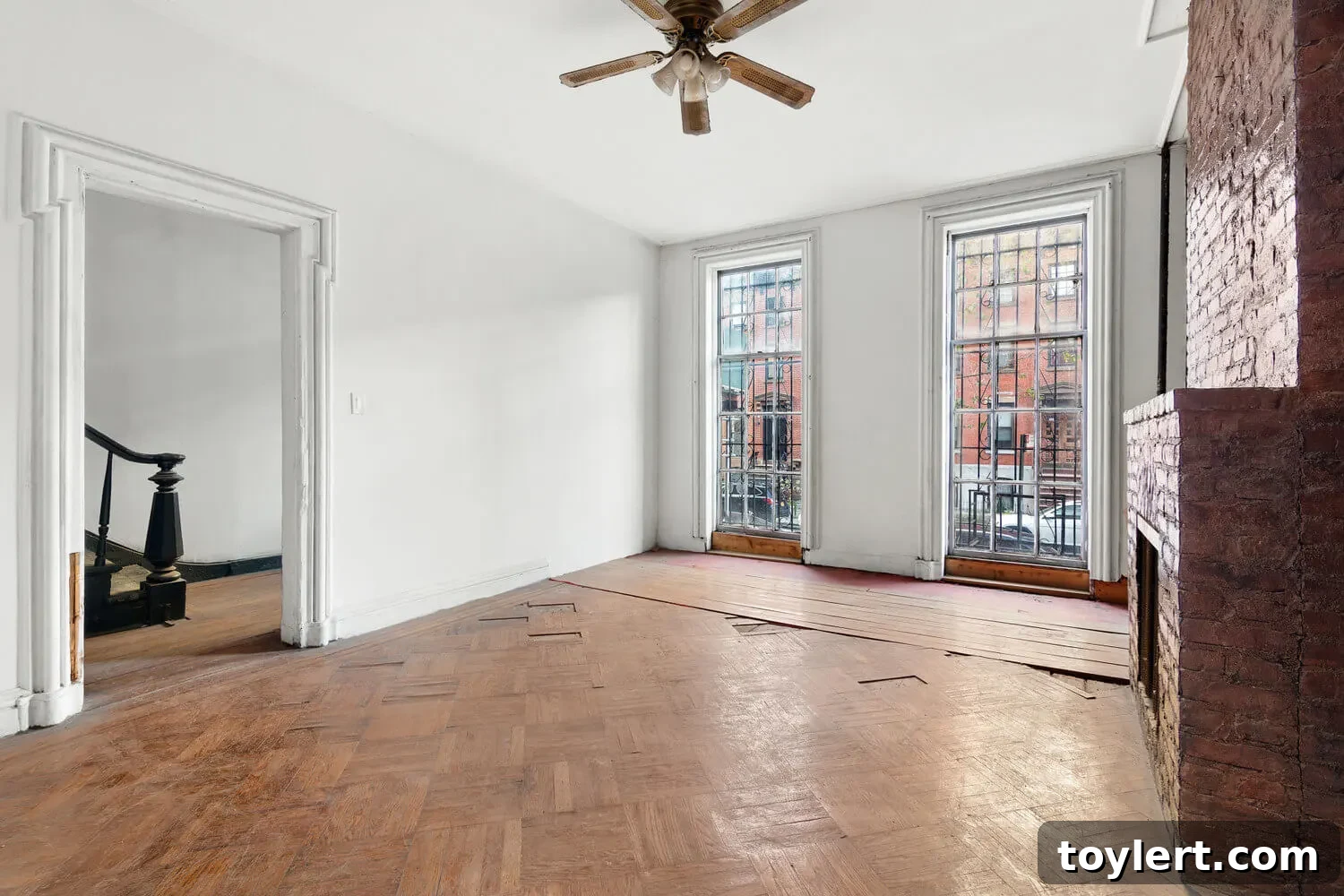
The Enduring Legacy of 135 Fort Greene Place: A Jazz Icon’s Brooklyn Sanctuary
Nestled within the historic, tree-lined streets of Fort Greene, Brooklyn, stands a distinguished 1850s row house at 135 Fort Greene Place. While its charming period facade, a testament to mid-19th-century architecture, instantly captivates the eye, it’s the profound 20th-century history imbued within its walls that truly sparks interest and ignites the imagination. For decades, this remarkable residence served as the home and creative crucible for one of the most influential and groundbreaking figures in jazz history: the avant-garde pianist and composer, Cecil Taylor.
Far more than just a house, 135 Fort Greene Place became synonymous with Taylor’s innovative spirit and relentless pursuit of musical originality. This wasn’t merely a place of residence; it was a sanctuary where complex compositions were conceived, intricate improvisations were honed, and the very boundaries of jazz were constantly redefined. The echoes of his revolutionary sound, characterized by its percussive attack, dense harmonies, and extended improvisational forms, undoubtedly resonated through its rooms, making it a sacred site for admirers of experimental music.
A Home for Innovation: Cecil Taylor’s Fort Greene Years
The acclaimed artist, Cecil Taylor, had already established himself as a formidable presence in the global music scene when he took up residence at this address. His deep connection to the vibrant artistic community of Brooklyn, particularly within the Brooklyn Academy of Music (BAM) Historic District, made Fort Greene an ideal haven. He officially purchased the house in 1984, solidifying his roots in a neighborhood that shared his independent and culturally rich ethos. This stately home remained his primary residence and creative hub until his passing in 2018, at the venerable age of 89. His nearly four decades at 135 Fort Greene Place represent a significant chapter in both his personal narrative and the broader history of American music.
Taylor’s choice of Fort Greene was no accident. The neighborhood has long been a crucible for artists, writers, and musicians, drawn by its historic charm, diverse community, and proximity to major cultural institutions like BAM. For an artist as fiercely independent and uncompromising as Taylor, a home in such a district offered not just a physical space, but an environment that fostered intellectual curiosity and artistic freedom. It was within these walls that he continued to push the boundaries of jazz, developing a unique language that defied categorization and challenged listeners to engage with music on a deeper, more visceral level. His performances, often marathon explorations of sound and rhythm, were legendary, and the preparatory work, the silent hours of contemplation and practice, undoubtedly took place in the quiet solitude of his Fort Greene home.
Architectural Elegance: A Glimpse into 19th-Century Brooklyn
Beyond its recent historical association with a jazz icon, the house itself is a magnificent example of 19th-century Brooklyn architecture. The 21-foot wide brick house is part of a distinguished row of nine homes, collectively built circa 1857. These structures represent a fascinating transitional period in American architectural design, blending elements of both the Greek Revival and Italianate styles.
The Greek Revival style, popular in the mid-19th century, drew inspiration from ancient Greek temples, emphasizing symmetry, proportion, and classical motifs. Characteristics often included low-pitched roofs, prominent cornices, and elegant, often restrained ornamentation. In contrast, the Italianate style, which gained favor slightly later, was characterized by its more ornate and picturesque qualities, including elaborate cornices supported by decorative brackets, tall narrow windows, often with arched tops, and a general emphasis on verticality and decorative flair. The “transitional” nature of 135 Fort Greene Place means it beautifully marries the stately dignity of Greek Revival with the charming decorative exuberance of Italianate design, creating a unique and appealing aesthetic.
This particular residence has been remarkably well-preserved, retaining many of its original, character-defining features. One of its most iconic elements is its high stoop, a quintessential Brooklyn feature that provides an elegant entry and a commanding view of the street. The stoop, along with the basement and window lintels, is crafted from brownstone, a reddish-brown sandstone quarried extensively in the region and a hallmark material for many of Brooklyn’s historic row houses. The use of brownstone not only adds to the building’s aesthetic appeal but also grounds it firmly in the local architectural tradition.
Further enhancing its charm are the simple door hood, a subtle yet refined covering above the entrance, and the elaborately ornamented, bracketed cornice that crowns the building. This cornice, with its intricate detailing and supportive brackets, is a prime example of Italianate influence, adding a touch of sophisticated grandeur to the building’s profile. These details, meticulously maintained over the centuries, offer a tangible connection to Brooklyn’s rich past and the craftsmanship of a bygone era, making the house not just a home, but a living piece of history.
Fort Greene: A Cultural Tapestry of History and Art
The appeal of 135 Fort Greene Place extends beyond its individual architectural merits and the legacy of its most famous resident. It is deeply embedded in the rich cultural tapestry of Fort Greene, a neighborhood renowned for its vibrant arts scene, historic character, and diverse community. The Brooklyn Academy of Music Historic District, where the house is situated, is a testament to the area’s commitment to preserving its architectural heritage and fostering a thriving cultural environment.
Fort Greene boasts a storied history, dating back to the Revolutionary War, and its streets are lined with beautifully preserved 19th-century row houses, majestic brownstones, and leafy parks. The neighborhood’s enduring charm lies in its ability to blend historical elegance with contemporary vitality. Residents and visitors alike are drawn to its independent boutiques, acclaimed restaurants, and, of course, its world-class cultural institutions. The Brooklyn Academy of Music (BAM) itself is a beacon for performing arts, presenting innovative dance, theater, music, and film programs that attract audiences from around the globe. This proximity to such a dynamic artistic hub undoubtedly resonated with Cecil Taylor, providing inspiration and a sense of belonging among fellow creatives.
Beyond BAM, Fort Greene is home to Fort Greene Park, one of Brooklyn’s first parks, designed by Frederick Law Olmsted and Calvert Vaux (the landscape architects behind Central Park). This verdant oasis offers residents a peaceful retreat and a focal point for community life. The neighborhood’s rich history, coupled with its forward-thinking artistic spirit, creates an environment that has long attracted intellectuals, artists, and activists, contributing to its unique character and enduring appeal. It’s a place where history is honored, creativity is celebrated, and community thrives – qualities that would have made it an ideal home for an artist of Taylor’s stature and vision.
Cecil Taylor: A Maverick of Modern Jazz
To fully appreciate the significance of 135 Fort Greene Place, one must delve deeper into the life and monumental contributions of Cecil Taylor himself. Born in Queens, New York, in 1929, Taylor emerged as one of jazz’s most radical and uncompromising innovators. His musical journey began with classical training, including studies at the New England Conservatory of Music, which provided him with a profound understanding of music theory and piano technique. However, it was his rejection of conventional jazz structures and his embrace of free improvisation that set him apart.
Taylor developed a unique and highly personal approach to the piano, often treating it as a percussive instrument, unleashing torrents of notes, complex clusters, and intricate rhythmic patterns that challenged the very definition of harmony and melody. His music was often described as “unit structures,” a term he used to describe his method of organizing musical ideas into complex, evolving forms rather than adhering to traditional song structures. His performances were often marathon, immersive experiences, characterized by an astonishing physical and intellectual intensity that demanded full engagement from both the performer and the audience.
Throughout his prolific career, Cecil Taylor influenced generations of musicians across various genres, earning numerous accolades, including a MacArthur Fellowship, often dubbed the “genius grant.” His discography, which includes seminal albums like “Unit Structures,” “Conquistador!,” and “Silent Tongues,” stands as a testament to his boundless creativity and unyielding commitment to artistic exploration. He collaborated with a wide array of musicians, constantly seeking new forms of expression and pushing the boundaries of what jazz could be. His legacy is not just in the notes he played, but in the doors he opened for future artists to explore uncharted musical territories, solidifying his place as a true pioneer of avant-garde jazz.
The House as a Cultural Landmark
Today, 135 Fort Greene Place stands as more than just a beautiful piece of historic architecture or a former residence. It is a cultural landmark, a silent testament to the genius of Cecil Taylor and the vibrant artistic spirit of Fort Greene. The house embodies the intersection of personal space and profound artistic creation, reminding us how physical environments can shape and inspire the most extraordinary human endeavors.
The preservation of such homes, especially within historic districts like the Brooklyn Academy of Music Historic District, is crucial. These properties offer invaluable insights into the past, not only through their architectural styles but also through the lives of the individuals who inhabited them. They connect us to the stories of innovation, creativity, and the relentless pursuit of excellence that define our cultural heritage. For jazz enthusiasts, historians, and lovers of Brooklyn’s unique character, 135 Fort Greene Place remains a site of quiet reverence, a place where the echoes of avant-garde brilliance continue to resonate.
Preserving History: The Future of Fort Greene’s Iconic Homes
The importance of preserving historic homes like 135 Fort Greene Place cannot be overstated. In an ever-evolving urban landscape, these buildings serve as tangible links to our collective past, offering insights into architectural trends, social histories, and the lives of notable figures. Historic districts, such as the Brooklyn Academy of Music Historic District, play a crucial role in safeguarding these treasures, ensuring that their unique character and cultural significance are maintained for future generations.
The value of properties like Cecil Taylor’s former residence extends far beyond their market price; they are cultural assets that enrich the entire community. They inspire an appreciation for craftsmanship, encourage historical understanding, and contribute to the distinct identity of a neighborhood. As Fort Greene continues to thrive, the stories held within these historic walls, particularly those of artists like Cecil Taylor, will continue to inspire and remind us of the enduring power of creativity and the profound connection between art, history, and the places we call home.
Conclusion: A Harmonious Blend of History and Innovation
The captivating row house at 135 Fort Greene Place is a remarkable synthesis of architectural beauty, historical significance, and profound cultural legacy. From its stately 19th-century facade, blending Greek Revival and Italianate influences, to its enduring association with the revolutionary avant-garde jazz pianist Cecil Taylor, the house offers a unique narrative that spans centuries and resonates with artistic brilliance. It stands as a powerful symbol of Fort Greene’s rich heritage and its continuing role as a haven for creative minds.
As we reflect on the life and work of Cecil Taylor, and the architectural elegance of his beloved Brooklyn home, we are reminded of the profound impact that individuals and their chosen environments can have on the world. 135 Fort Greene Place is not merely a structure of bricks and brownstone; it is a monument to innovation, a testament to a legendary musician’s dedication, and an enduring beacon of cultural significance within the vibrant heart of Brooklyn. Its story continues to inspire, inviting us to appreciate the harmonious blend of history, art, and the spirit of a neighborhood that once fostered the genius of a jazz icon.
For those interested in exploring the incredible talent of Cecil Taylor, you can find a live performance here. To learn more about his life and legacy, a detailed obituary is available from The New York Times here.