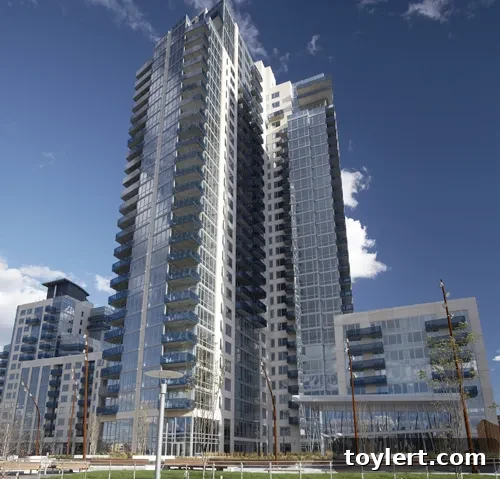
The Rise of the Owner/Resident/Landlord: A New Real Estate Investment Strategy
The landscape of urban real estate investment is constantly evolving, driven by shifting economic factors and innovative buyer strategies. Recently, a compelling trend has captured the attention of real estate enthusiasts and market analysts alike: individuals purchasing two or even three condominiums within the same building. This unique approach transforms an ordinary homeowner into what can best be described as an “owner/resident/landlord.” This burgeoning investor class is strategically positioned to capitalize on two powerful, intertwined market forces currently shaping urban environments: persistently low mortgage rates and unprecedented record-breaking rental prices in highly sought-after neighborhoods.
This article delves into this intriguing real estate phenomenon, exploring the motivations behind it, the financial mechanics that make it appealing, and the broader implications for the housing market. We will examine how these astute buyers are viewing their property acquisitions not just as homes, but as integrated investment vehicles, generating both long-term equity growth and immediate rental income. By living within their investment “portfolio,” they gain an unparalleled understanding of market dynamics, community nuances, and management efficiencies that can be leveraged for greater returns.
Understanding the Investor Next Door: Motivations and Mechanics
The “owner/resident/landlord” strategy is born out of a shrewd calculation, balancing personal housing needs with ambitious investment goals. These buyers are typically motivated by a dual vision: securing their primary residence while simultaneously generating substantial profit. For some, the primary driver is a long-term view, reminiscent of real estate “warehousers” on a smaller scale, aiming to accumulate assets that will appreciate significantly over time. They are betting on the continued desirability and growth of specific urban areas, trusting that their multi-unit holdings will become increasingly valuable. For others, the immediate financial gains are paramount, leveraging the current exorbitant rental market to create a robust stream of passive income that can often cover or even exceed the carrying costs of their properties.
The economic conditions underpinning this trend are undeniable. Historically low mortgage rates have drastically reduced the cost of borrowing, making it more affordable to finance multiple properties. This reduction in overhead directly translates to higher potential profits, as a smaller portion of rental income is allocated to interest payments. Concurrently, major urban centers, particularly those experiencing a resurgence in popularity and limited new housing stock, are witnessing rental prices soar to record highs. This supply-demand imbalance creates a fertile ground for landlords, allowing them to command premium rents that attract eager tenants.
The allure of this strategy is particularly strong in vibrant, dynamic neighborhoods where desirability outstrips supply. These areas often boast robust job markets, cultural attractions, and excellent infrastructure, attracting a steady influx of residents and renters. By investing in such a location, an owner/resident/landlord benefits from both the appreciation of their primary home and the consistent, high demand for rental units, creating a symbiotic financial ecosystem.
A Case Study: The Edge in Williamsburg, Brooklyn
To illustrate this trend, we turn to a compelling real-life example from the heart of Brooklyn’s thriving real estate market. The New York Times recently featured an article highlighting Fabrizio Uberti Bona, an agent at MNS, whose actions perfectly embody the owner/resident/landlord model. His experience at The Edge, a prominent 565-unit waterfront development in Williamsburg, Brooklyn, provides an insightful look into the viability and profitability of this investment approach.
The Edge itself has a fascinating story. During the economic recession, when the real estate market faltered, sales at this ambitious development slowed considerably. The building, once envisioned as a pinnacle of luxury living, momentarily appeared to be a “white elephant” – a costly and underperforming asset. However, as the market began its recovery and new development inventory remained scarce, sales at The Edge picked up dramatically. The building is now more than 90 percent sold, a testament to its prime location and the enduring appeal of Williamsburg.
Fabrizio Bona’s Strategic Acquisitions
Mr. Bona, who has played a significant role in selling and renting numerous units within The Edge, exemplifies the strategic insight that underpins the owner/resident/landlord trend. His journey began in early 2008, while the building was still under construction, when he went into contract for his two-bedroom apartment. He eventually moved into this unit last spring, establishing himself as a resident within the very community he was investing in.
Observing the escalating property values and the skyrocketing rental rates from his unique vantage point as both an agent and a resident, Mr. Bona recognized a golden opportunity. He had helped several clients navigate the process of buying and subsequently renting out second apartments in the building. Armed with this first-hand knowledge and a keen understanding of the market, he decided to apply the strategy to his own portfolio. “As an agent and a resident, I saw the value going up with price increases and rentals being so high,” he remarked. “I thought, since this is what I do for a living, let’s see if I can do it, too.”
His second acquisition is a studio apartment, for which he is now in contract. This unit will cost him $495,000. Mr. Bona estimates that this price is approximately 15 percent higher than what the same unit would have sold for in 2008, highlighting the significant appreciation the property has experienced. Despite the higher entry cost compared to pre-recession prices, he remains confident in the investment. “It’s still a great value for what it is,” he states, “because of the return on investment by renting it.”
The Financial Upside: A Compelling Return on Investment
Mr. Bona anticipates that the studio apartment should rent for approximately $2,750 per month. This robust rental income is a cornerstone of his investment strategy. After meticulously accounting for his mortgage payments and other monthly costs, which notably include a mere $4 per month in taxes (a figure that likely reflects specific abatements or a prorated share within common charges), he expects to clear an impressive profit of almost $1,000 per month. This substantial cash flow not only contributes to his personal wealth but also acts as a powerful hedge against potential market fluctuations.
This example underscores the power of the owner/resident/landlord model. By living in the same building, Mr. Bona gains an intimate knowledge of the property, its amenities, and the resident experience, which can be invaluable for attracting and retaining tenants. He understands the local market in unparalleled depth, allowing him to make informed decisions about pricing and property management. His proximity also means he can respond quickly to any tenant needs or property issues, streamlining the landlord experience.
The Broader Implications and Future Outlook
The emergence of the owner/resident/landlord suggests a significant shift in how individuals perceive and utilize real estate. It’s no longer just about owning a home; it’s about optimizing that ownership for maximum financial leverage. However, this trend also prompts critical questions about its prevalence and sustainability.
Firstly, how widespread is this strategy? While compelling, it likely remains a niche trend, predominantly adopted by financially savvy individuals in particularly hot real estate markets. The capital required for multiple condo purchases, even with low interest rates, is substantial. This strategy is more accessible to those with significant financial resources or access to favorable lending terms.
Secondly, are those pursuing short-term gains adequately protected? The current environment of low mortgage rates acts as a significant buffer, making the monthly carrying costs of these properties manageable and enhancing profit margins. However, if interest rates were to rise sharply, the financial calculus could change dramatically, potentially eroding profitability and making it harder to sustain multiple mortgages. Similarly, a downturn in the rental market could reduce income streams, putting pressure on investors who rely heavily on immediate cash flow.
Nevertheless, for the foreseeable future, as long as mortgage rates remain attractive and rental demand in prime urban locations continues to outpace supply, the owner/resident/landlord trend is likely to persist. It represents an innovative response to current market dynamics, offering a compelling pathway for individuals to not only own their homes but also to build substantial wealth through strategic real estate investment. As urban centers continue to draw populations and resources, the confluence of low borrowing costs and high rental yields will continue to inspire creative investment strategies, redefining the boundaries between homeowner, resident, and shrewd real estate entrepreneur.