


Revitalizing Brooklyn Bridge Park’s Gateway: Major Pedestrian Safety Upgrades Unveiled for Pier 6 Area
The New York City Department of Transportation (DOT) has announced an ambitious and much-anticipated plan to significantly enhance pedestrian safety and traffic efficiency in the vibrant area surrounding Brooklyn Bridge Park’s Pier 6. These critical improvements, slated for implementation this summer, target key intersections and thoroughfares, including Columbia Street and Atlantic Avenue, promising a more accessible and enjoyable experience for Brooklyn residents, park-goers, and commuters alike. The comprehensive initiative reflects a deep commitment to modernizing urban infrastructure, prioritizing the safety of vulnerable road users, and improving the overall quality of life in this bustling waterfront neighborhood.
A Comprehensive Vision for Pedestrian-Friendly Streets
The upgrades encompass a range of strategic interventions designed to address long-standing challenges related to pedestrian movement, vehicle flow, and the integration of various transportation modes. By focusing on critical choke points and areas of high pedestrian volume, the DOT aims to create a more harmonious environment where safety is paramount and navigation is intuitive. These planned enhancements are not merely cosmetic; they represent a thoughtful reimagining of urban space to better serve the diverse needs of the community.
Key Improvements at the Atlantic Avenue / Furman Street Intersection
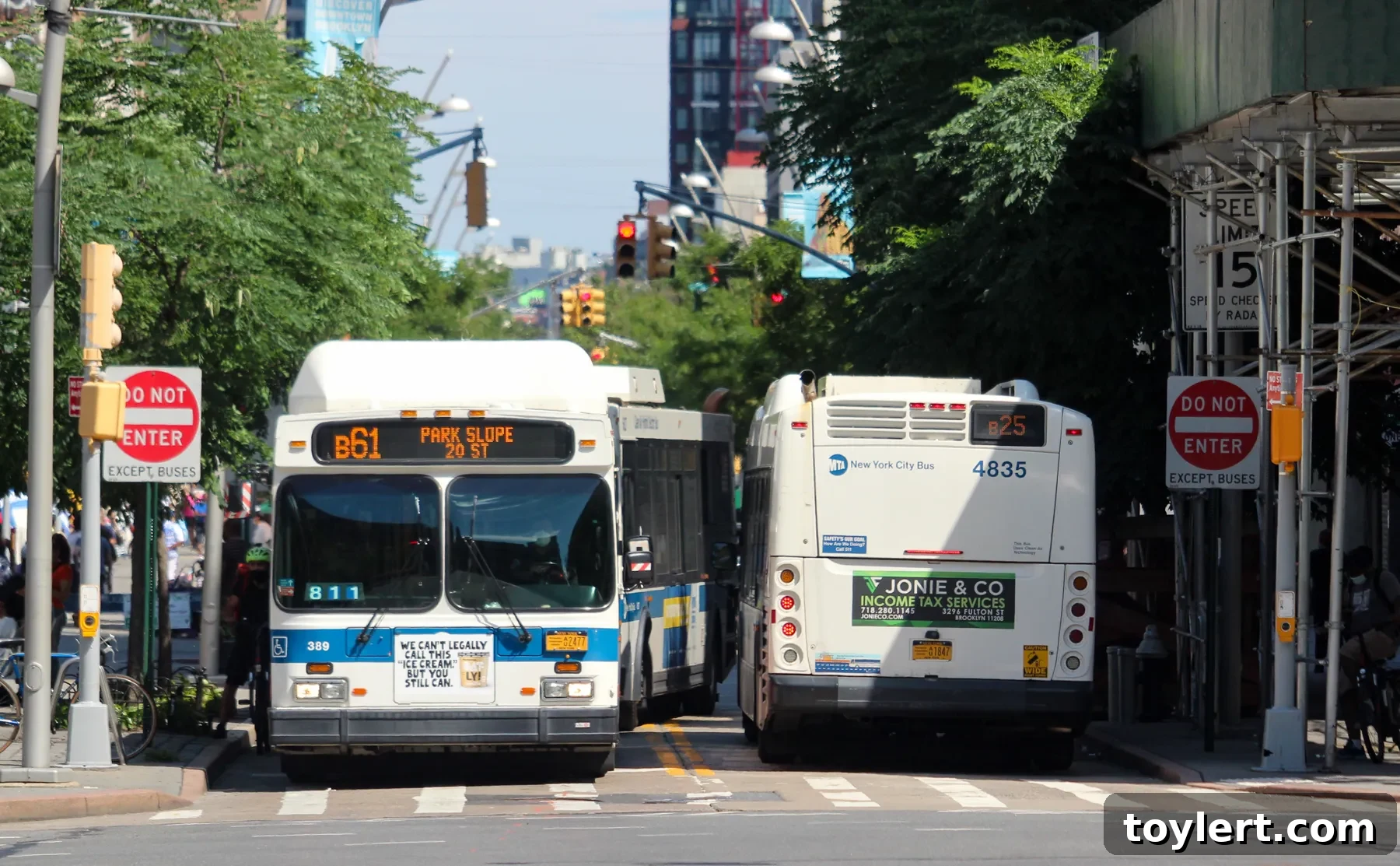
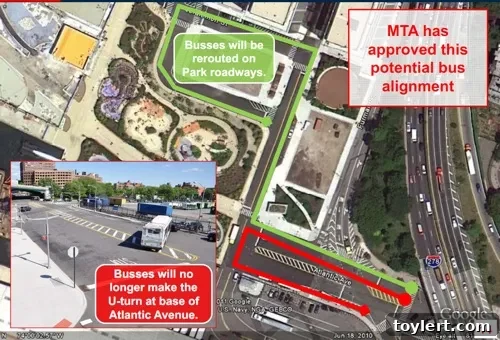
One of the cornerstone elements of this plan involves a major overhaul of the Atlantic Avenue and Furman Street intersection, a notoriously busy nexus that serves as a gateway to Brooklyn Bridge Park and the BQE. The current layout often presents challenges for pedestrians and creates congestion, particularly due to bus operations. To mitigate these issues, the DOT proposes rerouting the bus turnaround, a move expected to significantly reduce vehicle conflict points and free up valuable street space. This strategic alteration will enable the addition of crucial pedestrian zones and new, clearly marked crosswalks, fundamentally transforming how people navigate this intersection. The creation of dedicated pedestrian areas will provide safer waiting spaces and shorter crossing distances, reducing exposure to traffic and enhancing the overall pedestrian experience. These changes are crucial for an area that sees substantial foot traffic, especially during peak park usage times and as a commuter corridor.
Enhancing Safety Near the BQE Entrance on Atlantic Avenue
Further west along Atlantic Avenue, near the entrance to the Brooklyn-Queens Expressway (BQE), the DOT plans to implement vital safety measures targeting signal timing and enforcement. This stretch is another high-traffic zone where vehicles frequently merge onto the highway, often creating hazardous conditions for pedestrians attempting to cross. The plan includes optimizing signal timing to provide pedestrians with more generous and protected crossing intervals, reducing the hurried dashes often observed at busy intersections. Additionally, the enforcement and visibility of the “no right on red” sign will be significantly improved. This particular regulation is critical in preventing vehicle-pedestrian collisions, as right-turning vehicles often pose a threat to walkers who may have a walk signal. By making these signals more effective and drivers more aware, the DOT aims to create a much safer and more predictable environment for pedestrians navigating this complex interchange, fostering greater confidence and reducing accident risks.
Transforming Columbia Street: A Safer Passage for All
Columbia Street, a significant north-south artery running parallel to the waterfront, is also slated for substantial upgrades under the DOT’s new plan. A notable change involves the removal of the existing greenway/bike path from the sidewalk on the west side of Columbia Street. While greenways are essential, their placement directly on sidewalks can sometimes lead to conflicts between cyclists and pedestrians, particularly in high-density areas. Relocating or redesigning this path will create a clearer separation, ensuring dedicated space for both modes of travel and significantly improving safety for everyone. Furthermore, a new crosswalk will be installed across Columbia Street at the stop-light near the BQE entrance. This addition directly addresses a gap in pedestrian infrastructure, providing a much-needed safe crossing point in an area where direct access to the park and waterfront is crucial. Finally, the plan aims to simplify southbound traffic flow on Columbia Street. Streamlining traffic patterns can reduce driver confusion, minimize sudden lane changes, and ultimately contribute to a calmer, safer street environment for both vehicles and pedestrians.
For those interested in the full scope of these transformative plans, the Department of Transportation has made the complete proposal available for public review. You can view the entire detailed plan here [PDF]. This document offers an in-depth look at the proposed changes, including specific design schematics and traffic flow adjustments.
Visualizing the Proposed Changes for Atlantic Avenue and Furman Street