Mastering the Art of Interior Design: Crafting Cohesive Paint and Wallpaper Schemes for Historic Homes
The journey of restoring a historic home is often a tapestry woven with exciting discoveries and intricate design dilemmas. One of the most captivating, yet challenging, aspects of this process is selecting the ideal paint and wallpaper schemes, especially when dealing with a series of interconnected rooms. We’re currently deep into this fascinating phase, meticulously narrowing down choices for three central rooms that define the aesthetic heart of our home. While many other design elements have seamlessly fallen into place, the harmonious interplay of color and pattern within these particular spaces demands careful consideration and strategic planning.
The Enfilade Dilemma: Balancing Individual Charm with Seamless Flow
These three pivotal rooms are elegantly connected by pocket doors, a hallmark of classic architectural design. This arrangement creates what is known as an ‘enfilade’ – a stunning vista that allows a clear, linear view through multiple rooms when the doors are open. While breathtaking, this architectural feature presents a unique challenge: the rooms must not only look exquisite in isolation but also blend harmoniously when viewed together. Our primary sticking point has emerged around color choice. Green, in various shades and textures, consistently proves to be the most appealing and suitable option for both rooms positioned at either end of this sequence. However, a monochromatic green enfilade, while individually pleasing, risks appearing monotonous and lacking the visual dynamism necessary to truly celebrate the architectural grandeur of the connected spaces.
Navigating Color Theory for Interconnected Spaces
Achieving visual coherence in an enfilade requires a nuanced understanding of color theory and spatial design. A single color, no matter how beautiful, can flatten the perspective and diminish the individual character of each room when repeated without variation. Our challenge is to find a way to incorporate our preferred green palette while introducing sufficient contrast and depth to ensure a captivating flow. This involves exploring analogous colors that sit next to green on the color wheel, or perhaps subtle tonal variations that create a sophisticated ombre effect. Alternatively, we might consider introducing a complementary color in the central room to provide a dramatic yet balanced break, or integrating patterns that carry a common thread without being identical. The goal is to guide the eye smoothly from one space to the next, offering new points of interest while maintaining an overarching sense of unity.
A Strategic Approach: Charting Combinations and Curating Samples
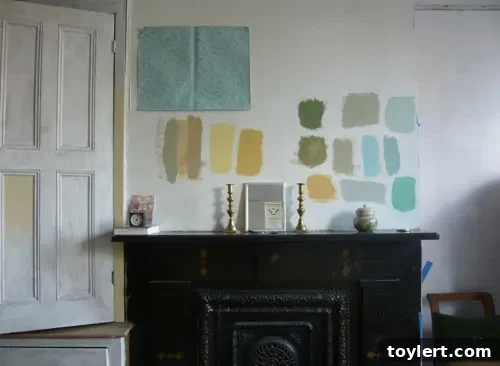
To navigate this complex design puzzle, we’ve adopted a highly systematic approach. We’ve developed a detailed chart mapping out various possible combinations of paint and wallpaper, carefully considering how each option would perform both within its individual room context and as part of the broader enfilade. This matrix allows us to visualize potential outcomes and identify promising synergies. The next crucial step involves ordering additional samples of both paint and wallpaper in the colors and patterns that align with our evolving vision. Viewing samples in situ, under different lighting conditions throughout the day, is absolutely essential. Colors can shift dramatically depending on natural light, artificial illumination, and the presence of other architectural elements or furnishings. This hands-on evaluation process helps us move beyond theoretical considerations to practical, real-world application.
The Phased Transformation: Paint Today, Wallpaper Tomorrow
Our long-term plan involves a phased approach to decoration. We are currently creating schemes that encompass both paint-only options and those that integrate wallpaper. This dual strategy is driven by practical considerations of both time and budget. Our intention is to apply a foundational coat of paint first, establishing a clean, fresh canvas. Subsequently, we plan to introduce wallpaper gradually over the years, as resources and inspiration align. This allows us to enjoy beautifully painted rooms immediately while reserving the more intricate and often costlier wallpaper installations for a slower, more deliberate evolution of the space. As an immediate measure, we’ll likely apply a quick, temporary coat of paint in the bedroom to ensure it’s functional and aesthetically pleasing for the coming months, providing a sense of completion while we tackle more intensive renovation tasks.
The Foundation: Meticulous Preparation for a Lasting Finish
Before any final painting or wallpapering can commence, there’s significant preparatory work to be done. As the weather warms and spring approaches, our focus will shift to more intensive tasks, beginning with additional wood stripping. This laborious but vital process removes layers of old paint and varnish, revealing the natural beauty of the underlying timber. Following this, the walls will require meticulous skim coating. This involves applying thin layers of plaster to achieve a perfectly smooth, even surface – an absolute prerequisite for both a flawless paint finish and seamless wallpaper adhesion. Skipping these crucial steps would compromise the longevity and aesthetic quality of the final decoration. It’s a testament to the fact that true beauty in historic restoration lies not just in the finish, but in the painstaking preparation that precedes it.
Whispers from the Past: Unearthing Vintage Treasures
The renovation process often yields unexpected treasures, offering fascinating glimpses into the home’s past lives. During the skim coating process two years ago, a delightful discovery was made in what is now our main bedroom, prominently featuring a striking black fireplace. Hidden beneath layers of more recent coverings, we unearthed a delicate fragment of original wallpaper. This exquisite piece revealed a watercolor print depicting sprays of vibrant flowers in shades of red, pink, and yellow, beautifully accented by lush green leaves. The background showcased a sophisticated interplay of beige and mica stripes, which would have caught the light and shimmered subtly, adding depth and luxury to the room. Papers of this style, characterized by their detailed botanical motifs and often featuring metallic accents, were highly fashionable and commonly used during the period spanning approximately 1890 to 1910, reflecting the opulent aesthetic of the late Victorian and early Edwardian eras. This historical find not only enriches our understanding of the home’s heritage but also serves as a poignant reminder of the enduring beauty of period design, subtly influencing our contemporary choices and inspiring a respectful blend of old and new.
Showcasing Our Current Contenders: Paint and Wallpaper Selections
Our current selection process involves a careful curation of potential contenders that could bring our vision to life. Among the standout wallpaper samples is the elegant Billings Acanthus Wall wallpaper in Blue from Carter & Co. This classic pattern, with its intricate acanthus leaf motif, offers a timeless appeal and a sophisticated color palette that can introduce both pattern and serenity into a space. The rich blue hue would provide a calming yet distinctive anchor, particularly if contrasted with a thoughtful paint choice in an adjacent room. Complementing these patterns, all our paint samples are sourced from Farrow & Ball, a brand renowned for its exceptional depth of color, rich pigments, and historical authenticity. Their paints react beautifully to changing light, creating nuanced effects throughout the day. Among these, a particularly intriguing shade is ‘Arsenic,’ which, despite its provocative name, is a captivating, vibrant green with a slight blue undertone, as seen in the lower right corner of our sample collection. This striking color exemplifies the kind of bold yet refined choice that could define one of our end rooms, setting a distinctive tone while still allowing for a graceful transition through the enfilade.
The Journey Continues: Blending History with Modern Living
The process of selecting paint and wallpaper for a historic home is far more than a simple aesthetic decision; it’s an immersive journey that bridges past and present. It demands respect for the building’s heritage, a keen eye for modern design principles, and a healthy dose of strategic planning. From the initial dilemma of the enfilade to the painstaking preparation of surfaces, and from unearthing historical fragments to meticulously curating contemporary samples, every step is a deliberate move towards creating spaces that are both beautiful and resonant. We are closer than ever to finalizing these crucial design elements, confident that our methodical approach will result in rooms that not only fulfill our aesthetic desires but also honor the unique character and history of our cherished home. The transformation, though gradual, promises to be a deeply rewarding experience, culminating in an environment that is truly a reflection of thoughtful design and enduring beauty.