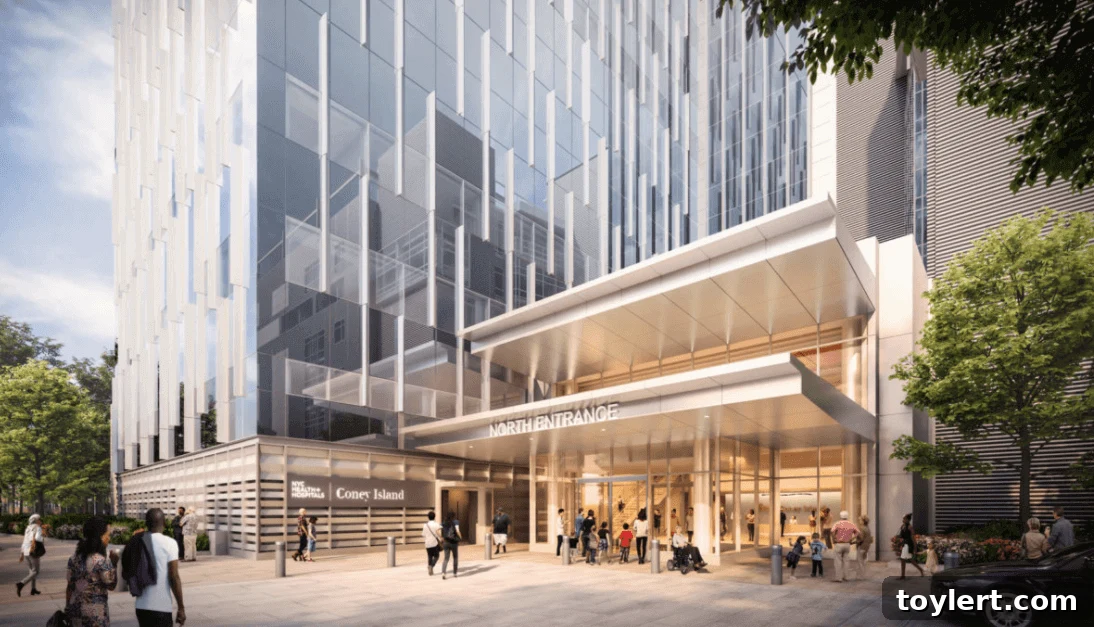
Coney Island Hospital Undergoes Transformative Expansion: Building Resilience and Modern Care
Coney Island Hospital, a vital healthcare institution serving the diverse communities of southern Brooklyn, is currently undergoing a monumental expansion. This ambitious project, designed to enhance both patient care capabilities and structural resilience, includes the construction of robust flood barriers and a cutting-edge new tower. Despite facing unforeseen challenges, notably slight delays attributed to the global coronavirus pandemic which temporarily halted work in spring 2020, the project is steadily progressing towards its transformative goals. This significant investment underscores a profound commitment to future-proofing critical healthcare infrastructure against the backdrop of an evolving climate and increasing community needs.
The Shadow of Superstorm Sandy: A Catalyst for Change
The impetus for this extensive redevelopment program stems directly from the devastating impact of Superstorm Sandy in October 2012. The historic storm wreaked havoc across coastal communities, and Coney Island Hospital, situated precariously close to the ocean, was no exception. Floodwaters inundated critical areas of the medical center, compromising its operational capacity and underscoring a dire need for comprehensive disaster preparedness and resilient infrastructure. The damage inflicted by Sandy highlighted fundamental vulnerabilities in the existing structure, particularly concerning its ability to withstand extreme weather events. This experience served as a powerful catalyst, galvanizing officials and stakeholders to initiate a strategic vision for a hospital that could not only provide exceptional care but also endure the harshest environmental challenges. The lessons learned from Sandy became the cornerstone of the expansion project, transforming a crisis into an opportunity for unprecedented improvement.
A Beacon of Resilience: The New Medical Tower’s Vision
At the heart of the expansion lies the construction of a brand-new, state-of-the-art medical tower. This multi-story facility is meticulously designed to elevate the standard of patient care, offering modern amenities and advanced medical technologies. The new tower is envisioned as a central hub for various specialized services, including an expanded emergency department, advanced diagnostic imaging, and modernized inpatient units featuring private and semi-private rooms that prioritize patient comfort and privacy. Architectural plans reveal a layout optimized for efficient workflow, integrating the latest in healthcare design principles to improve patient flow and staff productivity. Furthermore, the tower is being constructed with resilient materials and elevated infrastructure to protect critical systems from future flooding, ensuring continuous operation even during adverse conditions. This forward-thinking design aims to create a healing environment that is not only technologically advanced but also inherently safe and sustainable for generations to come.
Fortifying the Future: The Advanced Flood Protection System
Integral to the hospital’s resilience strategy is the development of a sophisticated network of flood barriers. These barriers are not merely a cosmetic addition but a critical engineering marvel, meticulously designed to safeguard the entire medical complex from potential storm surges and rising sea levels. The protection system incorporates a combination of permanent and deployable elements, strategically placed to create an impervious perimeter around the hospital campus. Engineers have focused on integrating these barriers seamlessly with the existing landscape and new construction, ensuring maximum effectiveness without compromising accessibility. This advanced flood protection is a direct response to the vulnerabilities exposed by Superstorm Sandy, promising a future where critical healthcare services can remain operational and accessible to the community, even in the face of increasingly severe weather patterns. The implementation of such a robust system sets a new benchmark for coastal healthcare infrastructure, demonstrating a proactive approach to climate change adaptation and disaster mitigation.
Navigating Unprecedented Challenges: The Pandemic’s Impact
While the Coney Island Hospital expansion project was well underway, the onset of the global COVID-19 pandemic presented an unprecedented set of challenges. In the spring of 2020, as New York City became the epicenter of the crisis, officials were compelled to temporarily halt non-essential construction work to prioritize public health and safety, as well as divert resources to immediate patient care needs. This necessary pause introduced delays to the construction timeline. Beyond the initial shutdown, the pandemic subsequently impacted supply chains, labor availability, and the implementation of new safety protocols on site, further complicating progress. Construction managers and hospital representatives had to adapt swiftly, implementing stringent health measures to protect workers and mitigate risks while striving to regain momentum. Despite these significant hurdles, the determination to complete the project remained unwavering, underscoring the vital importance of this infrastructure upgrade for the community’s long-term well-being and healthcare security.
Funding the Future: A Landmark Federal Investment
The ambitious scope of the Coney Island Hospital expansion would not have been possible without substantial financial backing. A cornerstone of this redevelopment is a generous $922-million emergency grant awarded by the federal government back in 2014. This landmark funding allocation, secured in the aftermath of Superstorm Sandy, was specifically designated to rebuild and fortify critical infrastructure that had been severely damaged by the storm. The grant represents one of the largest federal investments in healthcare resilience for a single institution, reflecting a national recognition of the need to protect essential services in vulnerable coastal regions. Administered through the Federal Emergency Management Agency (FEMA) and other relevant agencies, this significant capital has enabled the hospital to embark on a comprehensive transformation, ensuring that it emerges from the tragedy of Sandy stronger, more resilient, and better equipped to serve its community for decades to come. The proper management and strategic allocation of these funds have been paramount to the project’s success.
Beyond Bricks and Mortar: Impact on Community and Care
The transformation of Coney Island Hospital extends far beyond the physical structures being erected; it represents a profound investment in the health and well-being of the southern Brooklyn community. The enhanced facilities will significantly increase the hospital’s capacity to deliver high-quality, accessible healthcare services to a population that relies heavily on its offerings. With modernized patient rooms, advanced medical equipment, and improved operational efficiency, patients can expect a more comfortable and effective care experience. Furthermore, the expanded and resilient infrastructure provides immense peace of mind, assuring residents that their vital hospital will remain operational during future emergencies. This project also serves as a significant economic driver, creating numerous construction jobs and supporting local businesses throughout its development phase. Ultimately, the expansion reinforces Coney Island Hospital’s role as a steadfast pillar of the community, committed to providing compassionate care and ensuring public health security.
Looking Ahead: A Model for Urban Healthcare Resilience
As the project nears its significant milestones, Coney Island Hospital anticipates the partial construction of its flood wall to be ready and the new tower slated for completion in the summer of 2022. This revised timeline, though a few months later than originally planned due to pandemic-related disruptions, reflects the diligent efforts of all involved parties to overcome obstacles and deliver on this critical promise. The hospital’s representatives have continuously provided updates, emphasizing their commitment to transparency and community engagement throughout the process. Once fully operational, the transformed Coney Island Hospital is poised to become a national model for urban healthcare resilience, demonstrating how strategic planning, innovative engineering, and significant investment can create robust medical infrastructure capable of withstanding the challenges of the 21st century. Its enduring legacy will be one of preparedness, advanced care, and an unwavering dedication to the health of its vibrant community.