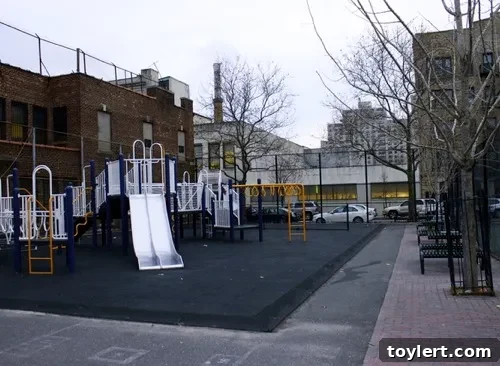
Ensuring Child Safety: Community Advocacy for Safer Playgrounds in Boerum Hill
Playgrounds are vital havens for children, offering spaces for physical activity, social interaction, and imaginative play. They are essential components of urban communities, fostering healthy development and providing much-needed recreational outlets for families. However, when these cherished spaces fall into disrepair or become targets for neglect and vandalism, they transform from centers of joy into zones of potential danger. This critical issue recently galvanized a group of concerned parents at P.S. 38 in Boerum Hill, Brooklyn, who are actively seeking solutions to enhance the safety and functionality of their school’s playground. Their proactive efforts highlight the significant role community advocacy plays in addressing local challenges and securing better environments for future generations.
The Urgent Need for Safer Playgrounds: A Case Study in Boerum Hill
The playground at P.S. 38, like many public amenities in bustling urban settings, has faced a series of challenges that have compromised its safety and usability. Parents and community members have observed a worrying decline in its condition, leading to direct risks for the children who use it daily. The specific incidents and recurring problems underscore a broader issue concerning the maintenance and security of public recreational facilities in dense urban neighborhoods like Boerum Hill and its adjacent areas, including Cobble Hill.
Unseen Dangers and Lingering Threats
One of the most concerning incidents involved a six-year-old child who sustained a head injury after colliding with an exposed metal rivet on the underside of the jungle gym. This unfortunate event, which left the child with blood streaming down his face, served as a stark and painful reminder of the hidden hazards lurking within seemingly benign play structures. Such exposed elements are not just minor imperfections; they represent critical failures in playground maintenance and design, posing significant risks of lacerations, concussions, or other severe injuries to active children.
Beyond structural safety, the playground faces severe security and hygiene issues. Despite being officially closed after dark, intruders frequently gain access by cutting through the metal fencing. This not only compromises the perimeter but also leaves behind jagged edges, creating additional, unforeseen hazards for children during daylight hours. The consequences of these intrusions are further exacerbated by what is left behind: the area is routinely found strewn with an alarming array of trash, broken glass, used condoms, and dog droppings. This accumulation of debris creates an unsanitary environment, exposing children to pathogens, sharp objects, and other health risks, effectively turning a space meant for play into a hazardous wasteland. The sight of such refuse is not only an eyesore but a clear indication of a deeper systemic problem requiring immediate attention.
The Human Cost of Neglect: Impact on Children and Community
The implications of an unsafe playground extend far beyond immediate physical injuries. A neglected and dangerous play area instills fear and anxiety in parents, limiting their willingness to allow their children to use the facility. This, in turn, deprives children of crucial opportunities for physical activity, which is essential for combating childhood obesity and promoting overall health. Furthermore, the presence of litter, broken glass, and other hazardous materials sends a disheartening message to the community about the value placed on its public spaces and, by extension, its children.
Such conditions can erode community morale, foster a sense of powerlessness, and detract from the quality of life in the neighborhood. Children need safe, clean, and inspiring environments to thrive, to explore, and to develop their social skills. When these basic needs are unmet, the entire community suffers, highlighting the urgent need for intervention and revitalization efforts.
Empowering Communities Through Participatory Budgeting
In response to these pressing concerns, the parents at P.S. 38 have chosen a proactive and democratic path to seek improvements: leveraging the City Council’s participatory budgeting program. This innovative approach empowers local residents to have a direct say in how public funds are allocated within their districts, offering a grassroots solution to neighborhood challenges.
What is Participatory Budgeting?
Participatory budgeting is a democratic process in which community members directly decide how to spend a portion of a public budget. Originating in Brazil, this model has gained traction worldwide, including in numerous cities across the United States. It typically involves several stages:
- Idea Generation: Residents propose ideas for projects they believe would benefit their community.
- Volunteer Committee Development: Community volunteers work with city agencies to refine these ideas into feasible project proposals.
- Voting: Eligible residents in the district vote on which projects should receive funding.
- Implementation: The winning projects are funded and implemented by city agencies.
This process fosters civic engagement, increases transparency in government spending, and ensures that public funds are directed towards projects that genuinely reflect the needs and priorities of the local population. It transforms residents from passive recipients of public services into active participants in local governance, giving them a tangible stake in the development of their neighborhoods.
P.S. 38 Parents Lead the Charge
The parents at P.S. 38 have embraced participatory budgeting as a viable pathway to secure the necessary funds for essential playground upgrades. By engaging with this program, they are not merely asking for help; they are actively proposing solutions and mobilizing community support to ensure their children have a safe place to play. Their initiative serves as a powerful example of how grassroots efforts, when channeled through established democratic mechanisms, can bring about meaningful change. Their proposed project would likely include funding for the repair of damaged equipment, the installation of more robust and secure fencing, the implementation of regular professional cleaning services, and potentially the addition of new, safer play structures that meet modern safety standards. This collective endeavor showcases the power of parental involvement and community advocacy in transforming public spaces and prioritizing child safety.
Reimagining Playground Safety: Solutions and Strategies
Addressing the multi-faceted problems at the P.S. 38 playground requires a comprehensive approach that targets equipment safety, perimeter security, and general cleanliness. The funds sought through participatory budgeting could be strategically allocated to implement lasting solutions.
Structural Integrity and Equipment Checks
The incident involving the exposed metal rivet highlights the critical need for regular, thorough inspections of all playground equipment. Professional playground safety audits should be conducted periodically to identify and rectify potential hazards such as sharp edges, loose bolts, decaying materials, and inadequate surfacing. Funds could be used to:
- Repair or replace damaged components, ensuring all parts are secure and smooth.
- Install protective caps or coverings on exposed rivets and sharp edges.
- Upgrade playground surfaces to impact-absorbing materials, reducing injury severity from falls.
- Ensure all equipment meets current safety standards set by organizations like the ASTM International and the U.S. Consumer Product Safety Commission (CPSC).
Proactive maintenance is far more cost-effective and, more importantly, life-saving than reactive repairs after an injury has occurred.
Bolstering Security and Deterring Vandalism
The issue of intruders cutting through fences necessitates an upgrade in the playground’s security infrastructure. Investing in more durable and higher-quality fencing material, potentially with anti-climb features, could significantly deter unauthorized access. Additionally, solutions might include:
- Improved lighting systems around the playground perimeter to enhance visibility at night, deterring illicit activities.
- Installation of security cameras, clearly marked, to monitor the area and provide evidence for law enforcement.
- Collaborating with local police precincts to increase patrol frequency around the school property during off-hours.
- Establishing a neighborhood watch program involving parents and community members to monitor the playground and report suspicious activities.
A multi-layered security approach can help restore the integrity of the playground and ensure it remains a safe space after dark.
Maintaining Cleanliness and Hygiene
The deplorable state of the playground, strewn with trash and hazardous waste, demands a robust and consistent cleaning regimen. Funds could be utilized for:
- Hiring dedicated cleaning staff or contracting professional services for regular daily or weekly cleanups.
- Installing more waste receptacles, including separate bins for recycling, and ensuring they are regularly emptied.
- Implementing educational campaigns within the school and community about responsible waste disposal and the importance of keeping public spaces clean.
- Addressing the issue of dog droppings through clear signage, enforcement of leash laws, and the provision of pet waste stations.
A clean environment is fundamental to both physical health and the overall sense of community pride and well-being.
A Blueprint for Better Urban Play Spaces
The challenges faced by the P.S. 38 playground are not isolated incidents but reflect broader issues common in urban areas regarding the upkeep of public infrastructure. The efforts of the Boerum Hill parents offer a valuable blueprint for how communities can actively participate in creating safer, more vibrant public spaces for their children.
Collaborative Efforts for Lasting Change
True and lasting change often requires a collaborative ecosystem involving multiple stakeholders. Beyond the participatory budgeting funds, sustained improvement for the P.S. 38 playground, and others like it, would benefit from:
- Partnerships with City Agencies: Ongoing dialogue and collaboration with the New York City Department of Education, Parks and Recreation Department, and local City Council members are crucial for maintenance, policy setting, and resource allocation.
- School Administration Support: The school administration plays a vital role in overseeing the daily use and immediate care of the playground, and integrating safety protocols into school operations.
- Community Volunteer Programs: Organizing regular volunteer cleanup days or forming a “Friends of the Playground” group can instill a sense of ownership and shared responsibility among residents.
These partnerships ensure that initial improvements are not just one-off fixes but part of a sustainable strategy for playground upkeep and security.
The Broader Impact on Community Well-being
Investing in a safe and well-maintained playground yields benefits that ripple throughout the entire community. A high-quality play space signals that a neighborhood cares for its youngest residents, enhancing its appeal to families and contributing to property values. It fosters a stronger sense of community pride and belonging, encouraging residents to interact and engage more with their local environment. Moreover, by providing a safe outlet for children’s energy, it can indirectly contribute to reduced street mischief and promote a more harmonious neighborhood atmosphere. Ultimately, a revitalized playground at P.S. 38 would serve as a testament to the power of collective action and a beacon of hope for what urban communities can achieve when they unite for a common, vital cause.
Conclusion: Investing in Our Children’s Future
The situation at P.S. 38 in Boerum Hill underscores a fundamental truth: the safety and well-being of our children should always be a top priority. The proactive efforts of the parents, channeling their concerns into tangible action through the participatory budgeting program, exemplify the strength of community advocacy. By identifying critical hazards and seeking direct funding solutions, they are not only working to secure immediate improvements for their school’s playground but also setting a precedent for how neighborhoods can reclaim and revitalize their public spaces.
A safe, clean, and well-maintained playground is more than just a place to play; it is an investment in the health, happiness, and future of our children. It represents a commitment to fostering vibrant communities where every child has the opportunity to learn, grow, and thrive without fear. The story of P.S. 38’s parents is a powerful reminder that when communities come together, armed with determination and democratic tools, they can transform challenges into opportunities for lasting, positive change.
Source: Boerum Hill School Playground Dangerous to Kids, Parents Say [DNAinfo]
Photo by Heather Holland for DNAinfo