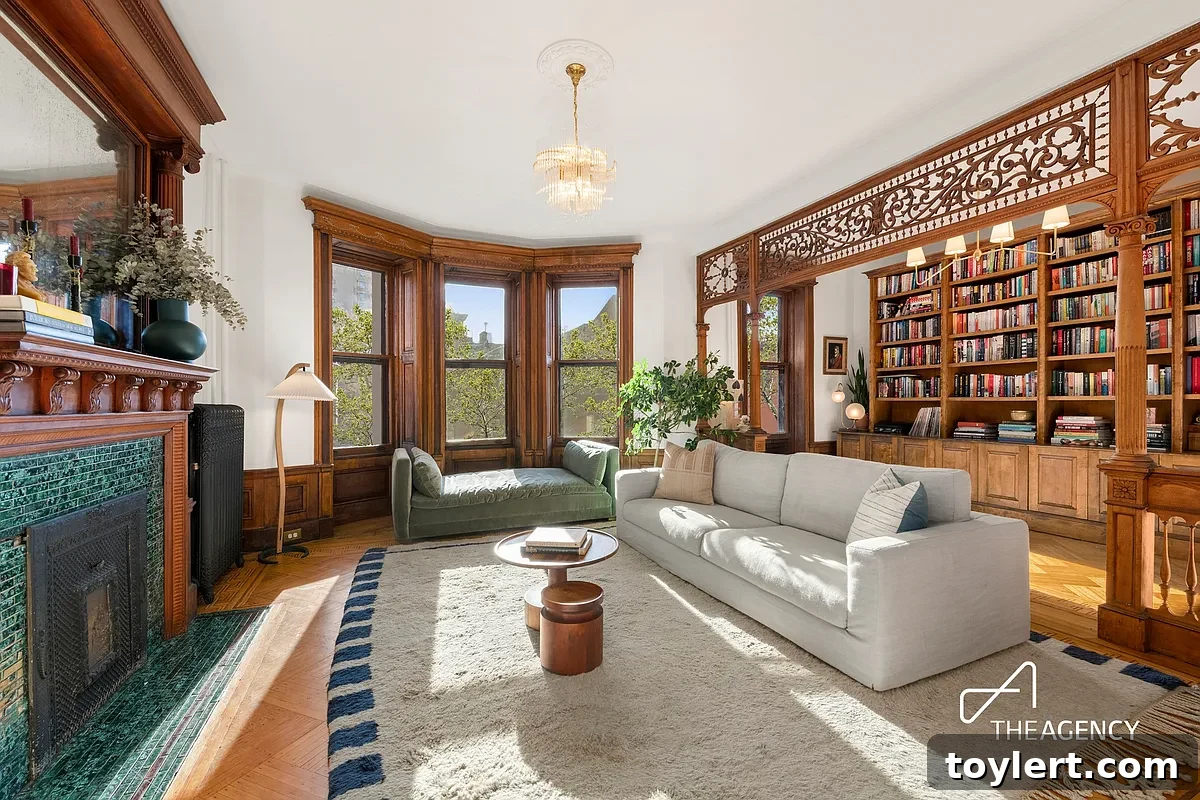
The Enduring Grandeur: A Glimpse into a Historic Park Slope French Flat at 953 President Street
Nestled within the prestigious Park Slope Historic District, mere moments from the iconic Grand Army Plaza, stands a testament to early 20th-century elegance and architectural foresight: the exquisite apartment at 953 President Street. Located on the third floor of what was historically known as a “French flat,” this residence captivates with its sprawling layout, a symphony of gleaming woodwork, and an abundance of meticulously preserved period details that transport inhabitants to a bygone era of sophisticated urban living. More than just an address, this apartment offers a unique opportunity to experience the grandeur and refined craftsmanship characteristic of a pivotal period in Brooklyn’s development, embodying a lifestyle coveted by discerning families over a century ago.
The concept of a “French flat,” popular in burgeoning American cities like New York at the turn of the 20th century, represented a departure from traditional brownstone living. Unlike multi-family dwellings created by subdividing existing townhouses, French flats were purpose-built apartment houses, designed from the ground up to offer spacious, self-contained residences on a single floor. This innovative design provided tenants with the privacy and expansive rooms typically found in single-family homes, combined with the convenience of shared building services and state-of-the-art amenities. For affluent families seeking both modern comfort and a distinguished address, properties like 953 President Street quickly became the epitome of urban luxury, perfectly blending the charm of European apartment living with American opulence.
Architectural Heritage and Visionary Development in Park Slope
The distinguished limestone façade of 953 President Street stands proudly in a row of neighboring flats, a hallmark of enduring quality and aesthetic appeal. Limestone, prized for its durability and elegant appearance, was a preferred material for high-status buildings during this period, lending an air of classicism and permanence to the streetscape. Its use not only conveyed luxury but also ensured the buildings would withstand the test of time, a characteristic evident in their immaculate condition today. The construction of this notable row commenced in 1900, spearheaded by the exceptionally active developer Louis Bonert.
Bonert’s influence on Park Slope’s architectural landscape cannot be overstated; his prolific work shaped numerous blocks across the neighborhood, establishing a reputation for constructing residences that combined robust construction with fashionable design. He was known for identifying prime locations and executing projects with a keen eye for detail and market demand. For this particular project, Bonert collaborated with the skilled architect William Higginson, a partnership that had already proven successful in earlier ventures. Their shared vision brought forth a consistent aesthetic and quality to these residential developments. In fact, their collaboration on a similar row of flats further west on President Street had already begun in 1899, demonstrating their cohesive design philosophy and a clear understanding of the evolving demands of Brooklyn’s elite residents. The synergy between Bonert’s development acumen and Higginson’s architectural prowess resulted in buildings that were not only structurally sound but also exquisitely detailed, designed to appeal to the discerning tastes of the era.
Life in a Turn-of-the-Century Luxury Apartment
By 1902, only two years after construction began, apartments within this esteemed row were being actively advertised to “small, select families.” This targeted marketing underscored the exclusive nature of these residences, catering to a clientele who valued spaciousness, privacy, and modern conveniences. The advertisements highlighted key features that were highly desirable at the time: remarkably large rooms that could accommodate grand furnishings and serve as elegant spaces for entertaining, along with dedicated accommodations for live-in servants. The inclusion of servant quarters or discreet service entrances was a critical marker of luxury, reflecting the social norms and expectations of the affluent households of the early 20th century, where domestic staff were integral to maintaining a comfortable lifestyle and managing large residences.
Beyond the impressive scale of the rooms and the provision for domestic help, these flats boasted cutting-edge amenities that positioned them at the forefront of modern living. Perhaps most notably, telephone service was a significant draw. In an age when personal communication was largely limited to letters or face-to-face interactions, the ability to connect instantly via telephone was a revolutionary convenience, offering unparalleled access and connectivity, making these homes highly desirable for professionals and socialites alike. Other modern features, though perhaps not explicitly mentioned in every advertisement, would have included advancements like electric lighting, which replaced gas lamps; central heating systems, providing a consistent and comfortable indoor climate throughout the colder months; and updated plumbing, ensuring reliable access to hot and cold running water and modern sanitation facilities with multiple bathrooms. These innovations collectively transformed daily life, making these apartments highly sought-after residences that offered a superior quality of life compared to older housing options.
The Enduring Appeal of Park Slope and Grand Army Plaza
The location of 953 President Street within the Park Slope Historic District significantly enhances its allure. Recognized for its stunning Victorian architecture, beautifully preserved tree-lined streets, and vibrant community, Park Slope has consistently ranked among New York City’s most desirable neighborhoods. The establishment of the Historic District helps preserve the unique character and architectural integrity of the area, ensuring that its turn-of-the-century charm remains intact for generations. Residents benefit from living amidst beautifully maintained brownstones and limestone buildings, contributing to a cohesive and aesthetically pleasing environment that fosters a strong sense of community and pride.
Furthermore, the apartment’s proximity to Grand Army Plaza is a major advantage that adds immeasurable value. This iconic landmark serves as the grand entrance to Prospect Park, Brooklyn’s majestic urban oasis designed by the visionary Frederick Law Olmsted and Calvert Vaux, the same landscape architects behind Central Park. The Plaza itself is a hub of activity and culture, featuring the triumphant Soldiers’ and Sailors’ Arch, the picturesque Bailey Fountain, and the monumental main branch of the Brooklyn Public Library, a treasure trove of knowledge and cultural events. Living near Grand Army Plaza means immediate access to sprawling green spaces for recreation, leisurely strolls, and outdoor activities; cultural institutions offering endless enrichment; and convenient public transportation options that connect residents swiftly to Manhattan and beyond. This strategic location offers a perfect blend of urban sophistication, historical gravitas, and natural tranquility, making it ideal for families and individuals who appreciate both city life and serene escapes.
A Deep Dive into Interior Elegance: Woodwork and Period Details
Stepping inside the apartment at 953 President Street is like entering a meticulously preserved time capsule, where every detail speaks to a rich past. The “gleaming woodwork” that defines its interior is more than just decorative; it is a testament to the unparalleled craftsmanship of the early 1900s. Imagine rich, dark hardwoods such as quarter-sawn oak or lustrous mahogany, meticulously crafted into ornate fireplace mantels that serve as magnificent focal points in key rooms, elegant wainscoting that lines hallways and formal dining areas, and intricate built-in cabinetry that seamlessly combines beauty with practical storage solutions. Each doorway and window frame is often adorned with finely carved moldings, adding layers of architectural depth and character. The original parquet flooring, if preserved, would shimmer under natural light, showcasing complex geometric patterns that were a hallmark of luxury homes, requiring skilled artisans to lay and maintain.
Beyond the impressive woodwork, the apartment is replete with a myriad of “period details” that contribute to its distinctive charm and authenticity. These might include original brass or bronze hardware on doors and windows, leaded or stained-glass transoms that cast colorful, ambient light, decorative plaster moldings and ceiling medallions that highlight the grand scale of the rooms, and perhaps even original light fixtures that have been carefully maintained to retain their historical integrity. Functional and elegant pocket doors, a popular feature of the era, would allow for seamless transitions between rooms, creating open entertaining spaces or offering the option of privacy when desired. High ceilings contribute to an expansive feel, enhancing the sense of grandeur and allowing natural light to flood the interiors, creating an airy and inviting atmosphere. These details, far from being mere embellishments, tell a story of a time when every element of a home was designed with both aesthetic beauty and lasting quality in mind, ensuring an unparalleled living experience that continues to captivate today.
A Timeless Investment in Brooklyn’s Heritage
The apartment at 953 President Street represents more than just a place to live; it is a tangible piece of Brooklyn’s rich architectural heritage. Its sprawling layout, resplendent with gleaming woodwork and authentic period details, combined with its prime location in the revered Park Slope Historic District near Grand Army Plaza, makes it an exceptionally rare and desirable property. It stands as a vibrant example of a “French flat,” a building type that revolutionized urban living over a century ago by offering modern comforts within a grand, elegant framework that continues to impress.
From the visionary collaboration of developer Louis Bonert and architect William Higginson to the meticulous attention to detail evident in every corner, this residence embodies a timeless appeal that transcends changing trends. It continues to offer the spacious rooms, sophisticated ambiance, and access to premium amenities that attracted “small, select families” in 1902, now updated for 21st-century living while preserving its historical essence. For those seeking a home that seamlessly blends historical grandeur with the conveniences of contemporary urban life, 953 President Street presents an unparalleled opportunity to own a significant piece of Brooklyn history, a truly unique sanctuary in one of New York City’s most cherished and enduring neighborhoods. Its enduring elegance and architectural significance assure its place as a coveted address for generations to come, offering a lifestyle rich in history, beauty, and modern convenience.