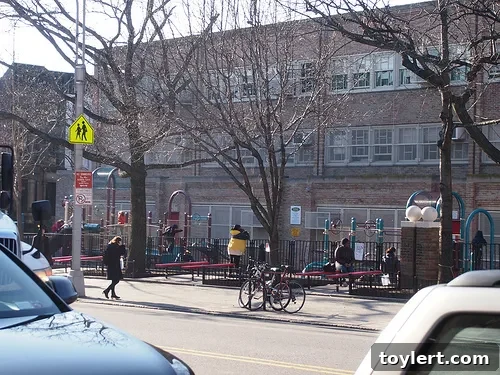
Park Slope School Rezoning Approved: A Landmark Decision for Brooklyn’s Educational Landscape
In a long-anticipated move, the District 15 Community Education Council has formally approved the Park Slope school rezoning proposal, a plan widely acknowledged as “imperfect but necessary” to alleviate severe overcrowding in one of Brooklyn’s most desirable neighborhoods. This pivotal decision, reported by The New York Times, concludes years of intensive debate and sets a new course for local education.
Addressing the Overcrowding Crisis in Beloved Brooklyn Schools
For a considerable period, Public Schools 321 and 107 have stood as symbols of educational excellence within Park Slope. Their stellar academic reputations and vibrant community engagement made them highly sought-after, leading to a unique market phenomenon: homebuyers were often willing to pay a significant premium on property values to ensure their children resided within these schools’ attendance zones. This intense demand, coupled with rapid population growth in the area, led to persistent and debilitating overcrowding, straining resources, physical space, and the overall quality of instruction. The issue became a central point of contention for families, educators, and local officials alike, prompting years of “hand-wringing” and calls for a sustainable solution.
The District 15 council’s 7-to-0 vote in favor of rezoning ends several years of hand-wringing over Public Schools 321 and 107, both so desirable in Park Slope circles that home buyers in the area pay a premium to live within the schools’ attendance zones. The decision followed months of acrimonious debate.
The unanimous 7-to-0 vote by the District 15 Council signifies a collective acknowledgment of the pressing need for change, despite the inherent complexities and emotional attachments involved in such decisions. As Council Secretary Valerie Price Ervin succinctly put it, “I think it’s the best solution for now,” echoing a sentiment that balanced immediate necessity with long-term aspirations for the district.
Unpacking the Approved Rezoning Proposal: Key Changes and Implications
The newly approved proposal, slated to take effect in the upcoming academic year, introduces several significant adjustments to school attendance zones across Park Slope and its surrounding areas. These changes are designed to redistribute student populations more evenly and efficiently, leveraging existing infrastructure and a new educational facility.
New School for West of Fifth Avenue
One of the cornerstone elements of the plan is the establishment of a new school designated for children residing in the blocks west of Fifth Avenue. This strategic move aims to directly address the demographic shifts and rising student numbers in this specific corridor, providing a much-needed increase in capacity and easing the burden on existing overcrowded institutions.
Shifts from P.S. 107 to P.S. 10
Under the new rezoning framework, certain blocks previously zoned for Public School 107 will now be reassigned to Public School 10. This adjustment is anticipated to help balance enrollment figures between the two schools, allowing P.S. 107 to reduce its student body to a more manageable size while P.S. 10 gains new students, potentially enhancing its community ties and resource utilization. This particular shift was a point of considerable discussion during the planning stages, impacting numerous families who had chosen their homes specifically for P.S. 107’s zone.
P.S. 39 Remains Untouched
Notably, Public School 39 will retain its current attendance zone, remaining untouched by the rezoning efforts. This aspect of the plan offers a degree of stability amidst the changes and likely reflects an assessment of P.S. 39’s current capacity and demographic balance, indicating it is not facing the same level of overcrowding pressures as its neighboring schools.
Sibling Priority: Keeping Families Together
Recognizing the importance of family cohesion and minimizing disruption, the proposal includes a crucial provision for sibling priority. This means that children who already have siblings attending a particular school will be given preference to remain at that institution, even if their residential zone is technically shifting. This measure aims to mitigate some of the stress and logistical challenges that rezoning can impose on families, ensuring that siblings can continue to attend school together whenever possible.
The PS 133 Compromise: A Step Towards Educational Equity
Beyond simply addressing overcrowding, the rezoning plan also incorporates a significant initiative aimed at fostering greater socio-economic and racial diversity across District 15 schools. This aspect, championed by Council President Jim Devor, involved a critical compromise with the Education Department and representatives from Sunset Park, a neighboring community facing its own set of educational challenges.
Under this agreement, 30 percent of the available spots at Public School 133 will be specifically reserved for “low income and minority students in overcrowded Sunset Park,” as articulated by The New York Times. This provision is more than just an enrollment adjustment; it represents a deliberate effort to address systemic disparities in educational access and opportunity. Sunset Park, a vibrant and diverse community, has long grappled with its own issues of school overcrowding and resource allocation, often serving a predominantly low-income and minority student population.
The inclusion of PS 133 in this plan introduces an innovative model for cross-district collaboration and resource sharing. It aims to provide students from overcrowded and under-resourced schools in Sunset Park with access to a broader range of educational environments, potentially enriching the learning experience for all students involved. This move highlights a growing recognition that school rezoning is not just about drawing lines on a map, but also about cultivating equitable educational outcomes for all children within a district, transcending neighborhood boundaries and socio-economic divisions.
Navigating Acrimonious Debates and Community Concerns
The journey to this approval was anything but smooth. The “months of acrimonious debate” mentioned in the report underscore the deep passions and conflicting interests at play. Parents who had invested heavily in homes within specific school zones felt betrayed by potential changes that could move their children to a different, perceived “lesser” school. Concerns ranged from diminished property values to the disruption of established community networks and the fear of diluting the academic excellence associated with schools like PS 321.
Conversely, advocates for the rezoning emphasized the moral imperative to address overcrowding and ensure a quality education for all students, not just those in the most affluent pockets. They pointed to the detrimental effects of packed classrooms, limited resources, and the need for a more balanced student body reflecting the diversity of Brooklyn. The Community Education Council, in its role as a representative body, faced the formidable task of mediating these intense discussions, listening to countless testimonies, and ultimately making a decision that, while perhaps not satisfying everyone, aimed to serve the greater good of the district’s children.
The Ripple Effect: Impact on Real Estate and Neighborhood Dynamics
School attendance zones have long been a powerful driver in the Park Slope real estate market. The allure of highly-rated schools has consistently commanded premium prices for homes within their boundaries, making school districts a de facto socio-economic determinant for residential choices. The approval of this rezoning plan is expected to have a tangible impact on these dynamics. While the full extent will unfold over time, some areas may see adjustments in property values as zones shift, potentially leveling the playing field for homebuyers in previously “less desirable” zones and easing pressure in the most exclusive ones.
Beyond property values, the rezoning is likely to reshape neighborhood dynamics, integrating communities in new ways. The introduction of students from Sunset Park into PS 133, for instance, could foster a more diverse and inclusive school environment, challenging traditional perceptions of what a “neighborhood school” entails and encouraging broader community engagement.
Looking Ahead: Implementation and Long-Term Impact
With the proposal set to take effect next year, the focus now shifts to its meticulous implementation. The Department of Education will face the challenge of clearly communicating the changes to affected families, managing new enrollments, and ensuring a smooth transition for students moving to different schools. This process will require careful planning, transparent communication, and robust support systems for both students and parents.
In the long term, the Park Slope school rezoning represents a critical step in adapting urban educational infrastructure to evolving demographics and community needs. It underscores the ongoing struggle to balance localized community desires with district-wide equity goals. While labeled “imperfect,” the necessity of this decision highlights the profound challenges faced by rapidly growing urban centers and offers a potential blueprint for how other districts might approach similar dilemmas. The success of this plan will ultimately be measured not just by its ability to alleviate overcrowding, but by its capacity to foster a more equitable, diverse, and high-quality educational experience for all students in District 15 for years to come.