825 Carroll Street: A Timeless Romanesque Revival Gem in Park Slope, Brooklyn
Nestled just a short, picturesque stroll from the verdant expanse of Prospect Park, along the tree-lined elegance of Carroll Street, stands an exceptional row of Romanesque Revival brick and brownstone townhouses. Constructed in the thriving 1890s, these architectural masterpieces define a quintessential Brooklyn aesthetic, and among them, No. 825 Carroll Street distinguishes itself as a truly remarkable offering. For the first time in several decades, this magnificent two-family residence is available on the market, presenting an extraordinary opportunity for discerning buyers to own a piece of Park Slope’s rich history.
The exterior of 825 Carroll Street immediately captivates with its distinctive, original details, a testament to the enduring craftsmanship of the era. Its robust Roman brick façade, harmoniously combined with rich brownstone elements, speaks volumes of its pedigree. Inside, the home unfolds into a world where history has been lovingly preserved, boasting an abundance of unpainted woodwork, including intricate mantels, elegant fretwork, and rich moldings that exude an unparalleled sense of warmth and character. This is more than a house; it’s a living museum, thoughtfully maintained for over a century.
The architectural genius behind this striking row of eight houses within the esteemed Park Slope Historic District belongs to Thomas McMahon. Renowned for his contributions to Brooklyn’s architectural landscape, McMahon’s design philosophy emphasized robust construction and ornate detailing, characteristics that are vividly present in 825 Carroll Street. These grand four-story residences, complete with basements, were meticulously built in 1896 by the respected developer G. B. Dearing. Each house in the row proudly showcases brownstone garden and parlor levels, crowned by the signature Roman brick facades on the upper stories. The streetscape is further animated by the delightful rhythm of alternating angled and bowed bays, adding dynamic visual interest and individual charm to each home.
No. 825 Carroll Street, specifically, was completed and made available to the public in 1898. Contemporary advertisements of the time heralded it as a “new, modern, ready to occupy” house, offered at what was then considered a discounted price of $18,000. This snapshot from history underscores its initial appeal and its status as a state-of-the-art dwelling for its time. Today, while its value has understandably appreciated exponentially, its inherent qualities of modernity (for the 1890s) and readiness for occupancy remain, albeit through the lens of modern comforts seamlessly integrated into its historic fabric.
Currently configured as a generous two-family dwelling, the residence offers an impressive abundance of versatile living space. The garden level features a self-contained apartment, ideal for rental income, guest accommodations, or a private family suite. Above, the owner’s unit spans a sprawling four floors, providing an expansive and flexible layout perfect for grand entertaining and comfortable family living. This multi-level arrangement ensures both privacy and functional separation, a highly sought-after feature in today’s urban living. The architectural integrity and flexibility make it an ideal choice for a variety of lifestyles.
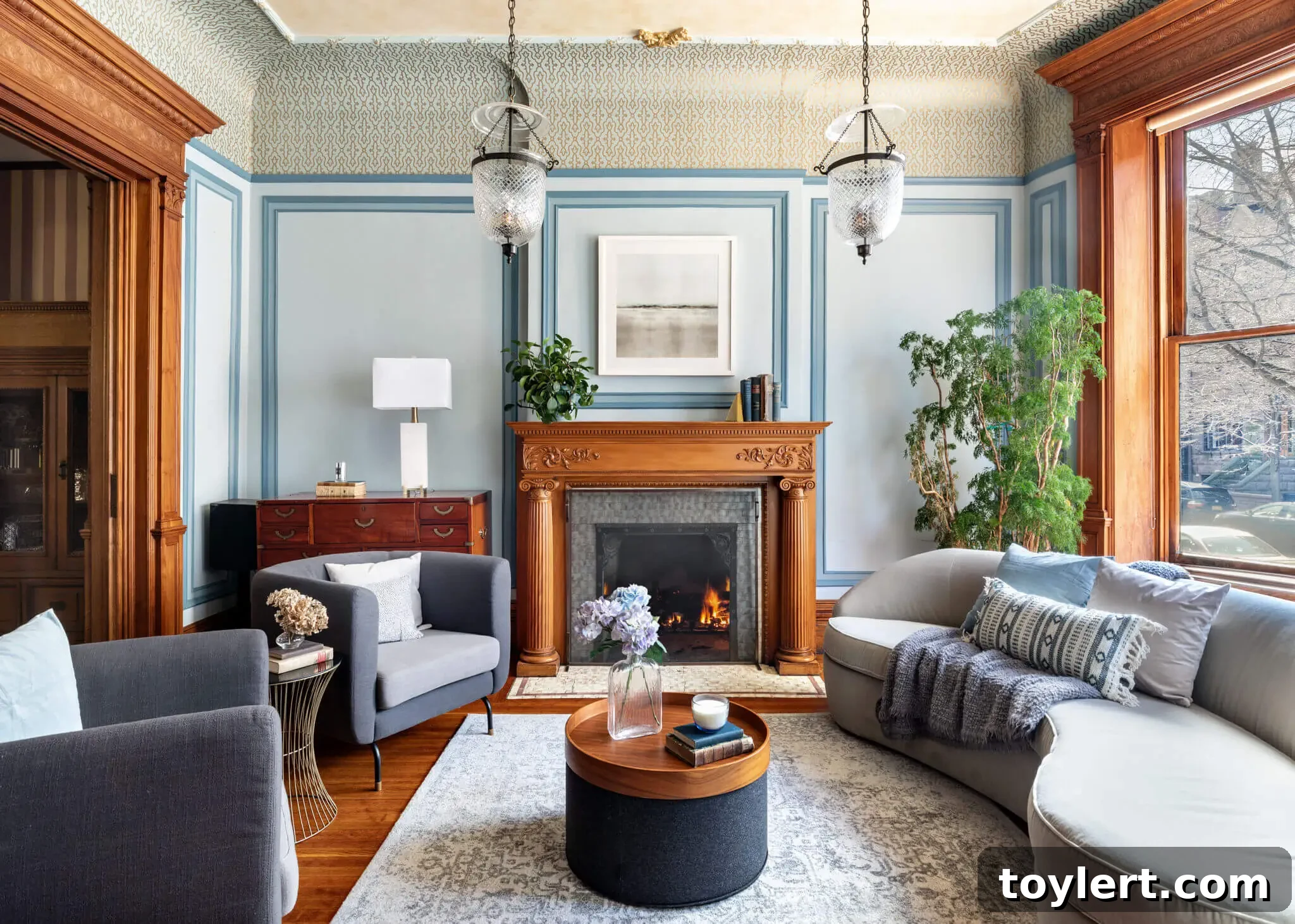
Upon entering the owner’s unit, one is immediately greeted by the breathtaking triple parlors, which exemplify the grandeur of Gilded Age Brooklyn. These magnificent spaces boast the expected hallmarks of historic luxury: soaring high ceilings that create an airy and expansive feel, exquisite pocket doors that allow for seamless transitions or intimate separations, and intricate wood moldings that trace the story of master craftsmanship. Each detail contributes to an atmosphere of refined elegance that transports residents and guests alike to a bygone era of sophistication.
The front parlor, the first of the three, is a true showstopper. It features an Ionic-columned mantelpiece, a neoclassical detail that exudes stately charm, beautifully framing a working wood-burning fireplace. This hearth serves as the focal point of the room, promising cozy evenings and a warm, inviting ambiance, particularly during the cooler months. The middle parlor offers its own distinct character, enhanced by thoughtfully integrated built-ins on either side of its mantel. These custom features provide both functional storage and display opportunities, adding to the room’s bespoke appeal. Furthermore, this parlor boasts an exquisite fretwork screen, an intricate wooden divider that adds a layer of decorative artistry and subtle separation, alongside a charming built-in bench, perfect for quiet contemplation or intimate conversations.
Beyond these immediate impressions, the home’s dedication to preserving its authentic character is evident throughout. The unpainted woodwork, a rarity in homes of this age, is not merely decorative; it is a structural and aesthetic testament to the original design and materials. Imagine the rich grain of oak or mahogany, meticulously carved and preserved, adorning every corner, from the grand staircases to the delicate window frames. This dedication to authenticity creates an unparalleled sense of place and connection to history, offering a unique canvas for the new owners to imprint their personal style while honoring the past.
The Romanesque Revival style, prevalent in the late 19th century, drew inspiration from medieval European architecture, characterized by its robust forms, round arches, and emphasis on texture through varied materials. Thomas McMahon, a skilled architect of his time, expertly applied these principles to his Park Slope designs, creating a harmonious blend of strength and intricate detailing. The use of brownstone, a popular material in Brooklyn, adds to the quintessential charm, while the Roman brick facades provide a sophisticated contrast. The alternating bays, a playful yet deliberate design choice, ensure that while the houses are part of a cohesive row, each maintains a distinct personality.
The Park Slope Historic District itself is a treasure trove of architectural marvels and a highly desirable neighborhood. Living in this district means being part of a community deeply committed to preserving its heritage and enhancing its vibrant character. The tree-lined streets, a hallmark of Park Slope, create a serene urban oasis, while the proximity to Prospect Park offers unparalleled access to nature, recreation, and cultural events. Designed by Frederick Law Olmsted and Calvert Vaux, the same landscape architects behind Central Park, Prospect Park provides acres of green space, walking trails, sports facilities, and botanical gardens, acting as Brooklyn’s premier backyard.
The allure of 825 Carroll Street extends beyond its physical attributes to the lifestyle it promises. Imagine waking up to the quiet elegance of your historic home, stepping out onto Carroll Street for a morning stroll to Prospect Park, perhaps grabbing a coffee from a local artisan café along the way. Evenings could involve entertaining guests in the grand parlors, the crackle of the wood-burning fireplace providing a cozy backdrop, or enjoying a meal in one of Park Slope’s many acclaimed restaurants. The neighborhood also boasts excellent schools, independent boutiques, and a strong sense of community, making it ideal for families and individuals alike.
The advantages of a two-family dwelling are numerous and compelling. For an owner-occupant, the garden level apartment offers significant income potential, helping to offset mortgage costs and making luxury living more accessible. Alternatively, it can serve as a private sanctuary for extended family members, a sophisticated home office, or a dedicated creative studio, providing flexibility often absent in single-family homes. This dual functionality is a practical benefit that enhances the property’s long-term value and adaptability to changing needs.
Owning a home like 825 Carroll Street is not merely a real estate transaction; it’s an investment in history, architectural heritage, and an unparalleled lifestyle. It’s an opportunity to become a custodian of a property that has gracefully withstood the test of time, bearing witness to over a century of Brooklyn’s evolution. Its rare availability marks a significant moment for those seeking not just a house, but a home with a soul, a story, and a profound connection to one of New York City’s most cherished neighborhoods. This Park Slope brownstone represents the pinnacle of historic Brooklyn living, ready for its next chapter with a new owner who cherishes its legacy.
The opportunity to acquire a property of this caliber, with its distinct Romanesque Revival features, meticulous preservation of interior details, and prime location within the Park Slope Historic District, is exceptionally rare. From the intricate fretwork and the stately Ionic-columned mantel to the functional elegance of pocket doors and built-in amenities, every element of 825 Carroll Street speaks to a standard of craftsmanship and design that is seldom replicated today. It stands as a testament to the vision of Thomas McMahon and the enduring appeal of quality construction from the late 19th century. A viewing of this magnificent residence promises to unveil even more layers of its charm and historical significance, solidifying its status as an iconic Brooklyn home. The chance to own this piece of history, available for the first time in decades, is an invitation to secure a truly unique and distinguished residence in the heart of Park Slope.
For a glimpse into its storied past, the original 1898 advertisement offers a fascinating historical context: View the 1898 Advertisement Here.