Park Slope’s Architectural Renaissance: A Neo-Grec Brownstone Rises at 28 7th Avenue
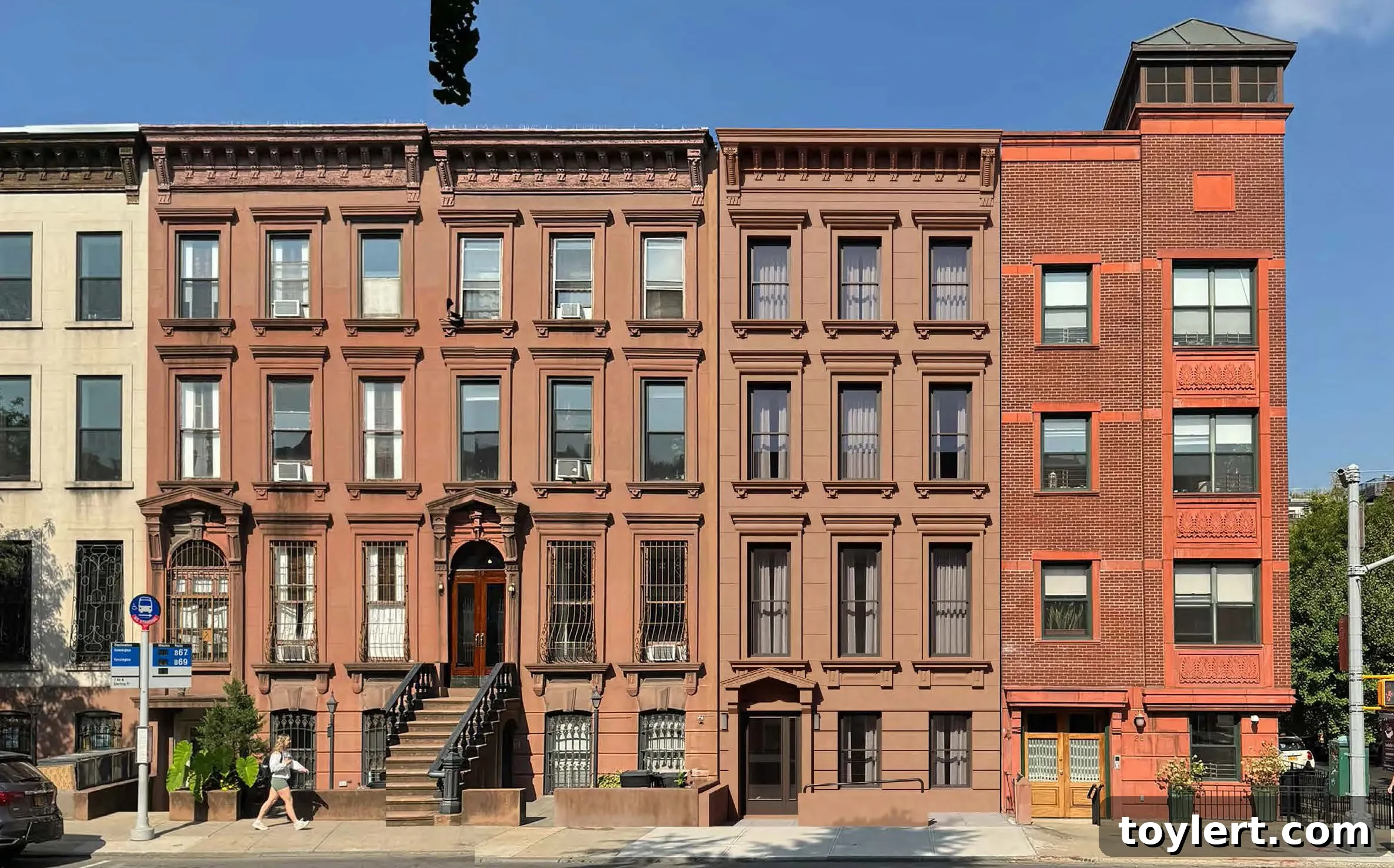
In the vibrant, historically rich neighborhood of Park Slope, Brooklyn, a new chapter in architectural preservation and innovation is set to begin. A four-story brownstone, meticulously designed to complement its distinguished Neo-Grec neighbors, has received crucial endorsement from the city’s esteemed Landmarks Preservation Commission (LPC). This exciting development at 28 7th Avenue promises to fill a long-standing vacant lot, seamlessly integrating a modern structure into one of Brooklyn’s most cherished historic streetscapes. While the initial rendering might prompt a second glance, the planned new building isn’t the prominent corner edifice, but rather the adjacent property, subtly blending into the row with its distinct ground-floor entrance. This approval signifies not just a new building, but a thoughtful commitment to maintaining the unique character and architectural legacy of the Park Slope Historic District.
The decision came after a compelling presentation by architect John Field, representing the renowned Building Studio Architects, on Tuesday, March 25. The commission, recognizing the design’s adherence to the district’s aesthetic guidelines and its respectful nod to the past, cast a favorable vote for the project. The proposed structure is not merely a modern interpretation but an earnest attempt to recreate and pay homage to the classic Neo-Grec style that defines much of this iconic row. This careful approach ensures that the new addition will feel like it has always been a part of 7th Avenue, rather than an intrusive element.
Understanding the Site’s Historical Tapestry: 28 7th Avenue
The lot at 28 7th Avenue has long presented both a challenge and an opportunity within the Park Slope Historic District. Once home to a distinguished row house, the site became vacant, leaving a noticeable gap in the otherwise continuous and architecturally harmonious street frontage. Architect John Field conveyed to the commissioners the profound historical significance of this specific stretch of 7th Avenue. He highlighted that the original row house on this particular lot was part of a groundbreaking series of five houses constructed in 1873. These structures were pivotal, marking the very introduction of the distinctive Neo-Grec architectural style to the burgeoning Park Slope area. This historical context underscores the importance of the new design, which aims not just to fill a void, but to re-establish a piece of the neighborhood’s original architectural narrative.
The Enduring Legacy of Neo-Grec in Park Slope
The Neo-Grec style, prevalent in New York City’s brownstones and row houses of the late 19th century, drew inspiration from ancient Greek and Roman architecture, but with a characteristically American interpretation. It often features flat facades, deeply incised ornament, and a preference for geometric patterns over more florid Victorian embellishments. Field specifically pointed to the enduring examples at 30, 32, and 34 7th Avenue, which stand as testament to this elegant style. These neighboring buildings have admirably retained their original “ornamental treatment of the doorways, roof cornices, and smaller details, such as the corbel blocks under the windows and faceted keystones at the basement windows and original stoops.” These intricate details are not just decorative; they are key identifiers of the Neo-Grec period and represent a significant part of Park Slope’s architectural identity. The challenge for Building Studio Architects was to capture the essence of these features, translating them into a contemporary design that respects history without merely replicating it.
The Vision: Building Studio Architects’ Design Philosophy
Building Studio Architects, under the guidance of John Field, approached the project at 28 7th Avenue with a deep understanding of historical context and a commitment to meticulous design. Their philosophy centered on creating a new structure that would not only be functional and beautiful but would also be a respectful, authentic addition to its historic surroundings. The firm’s expertise in navigating the complexities of historic district regulations and their ability to interpret traditional styles through a modern lens were critical to the project’s success. Their work demonstrates a thoughtful balance between honoring architectural heritage and meeting contemporary living needs, making them a prime choice for such a sensitive urban development.
Blending Past and Present: Design Elements of the New Brownstone
The proposed four-story brownstone at 28 7th Avenue is a thoughtful study in architectural harmony. Its design will closely echo the scale, massing, and stylistic nuances of its well-preserved Neo-Grec neighbors, ensuring a cohesive streetscape. Key design elements include a ground-floor entrance, a common feature in many historic brownstones, which helps to maintain the pedestrian-friendly character of 7th Avenue. The facade, envisioned in stucco, is a deliberate choice. While traditional brownstones are typically clad in brownstone or brick, stucco, when artfully applied and detailed, can mimic historical textures and finishes, offering a durable and aesthetically pleasing surface that integrates well with its surroundings. The goal is to capture the understated elegance and robust character of the Neo-Grec style, incorporating details like pronounced cornices, carefully proportioned windows, and subtle decorative elements that resonate with the existing architectural language.
The architects’ commitment extends to the finer points of the design, which are often the most telling indicators of a building’s success in a historic district. This includes the articulation of window openings, the choice of materials for the stoop, and the subtle variations in masonry or facade detailing that give each historic brownstone its unique identity. The design seeks to ensure that these elements are not merely appended but are integral to the overall aesthetic, reflecting the craftsmanship and design principles of the late 19th century while meeting contemporary building codes and living standards. The interior spaces are expected to blend modern amenities with classic layouts, offering residents a unique living experience that respects the past while embracing the present.
The Landmarks Preservation Commission’s Role and Conditions
The Landmarks Preservation Commission (LPC) plays an indispensable role in safeguarding New York City’s architectural and cultural heritage. Established in 1965, the LPC is responsible for designating historic districts and individual landmarks, and for reviewing proposed changes to these properties. Their mandate is to ensure that new construction or alterations within historic districts are appropriate and do not detract from the character of the area. The approval for 28 7th Avenue underscores the LPC’s rigorous review process, which balances the need for new development with the imperative of preservation. This process often involves multiple hearings, detailed presentations, and meticulous review of proposed materials and design specifics, ensuring that every project meets stringent criteria.
Finessing the Details: Collaboration for Perfection
The LPC’s approval, while enthusiastic, came with a crucial stipulation: the architects must collaborate closely with the commission’s staff to “finesse details on the stucco facade and entry.” This condition is a standard practice and highlights the LPC’s commitment to ensuring every aspect of a new building in a historic district is perfected. It allows for a dynamic dialogue between the designers and preservation experts, ensuring that materials, textures, and specific architectural elements are meticulously chosen and executed. For the stucco facade, this might involve refining the color palette, the texture, or the way it interacts with trim and other decorative elements. For the entry, it could mean adjusting the design of the stoop, the doorway’s proportions, or the selection of historical hardware to ensure an authentic and harmonious appearance. This collaborative fine-tuning is vital for achieving the subtle authenticity that makes a new building feel truly at home in a historic setting, distinguishing it from mere imitation.
Park Slope Historic District: A Model of Preservation
The Park Slope Historic District, designated in multiple phases beginning in 1973, is one of New York City’s most iconic and well-preserved neighborhoods. Its tree-lined streets are adorned with a breathtaking array of brownstones, limestones, and Queen Anne residences, reflecting a rich tapestry of late 19th and early 20th-century architectural styles. The district’s success is a testament to the community’s dedication to historic preservation and the LPC’s diligent oversight. Projects like 28 7th Avenue demonstrate that historic districts are not static museums but living, evolving communities where new construction can, and should, contribute positively to the existing fabric, enhancing its appeal and functionality without compromising its historical integrity.
Community Impact and Future Prospects
The addition of a thoughtfully designed brownstone at 28 7th Avenue will undoubtedly have a positive impact on the Park Slope community. It removes a long-standing vacant lot, which can often be an eyesore or a source of concern, and replaces it with a structure that enhances the streetscape. Furthermore, it adds to the housing stock in a desirable area, doing so in a way that respects and celebrates the neighborhood’s unique heritage. This project serves as an excellent example of how urban development can proceed in harmony with historic preservation, providing a blueprint for other cities grappling with similar challenges. It showcases how careful planning and respect for context can lead to truly beneficial outcomes for both residents and the urban environment.
Balancing Modernity and History in Urban Development
The approval of the 28 7th Avenue project beautifully illustrates the delicate balance required when introducing new construction into deeply historic urban environments. It’s a testament to the principle that modernity does not have to come at the expense of history, but can, in fact, enrich it. By engaging skilled architects like John Field of Building Studio Architects and adhering to the rigorous standards of the Landmarks Preservation Commission, cities can ensure that their historic districts remain vibrant, relevant, and visually stunning for generations to come. This new brownstone is poised to become a cherished part of Park Slope, a subtle yet significant addition to its storied architectural landscape, embodying both progress and a profound respect for the past. It sets a precedent for future developments, demonstrating that innovative design and historical sensitivity can coexist and thrive.
As construction commences and the design details are finalized in collaboration with the LPC staff, the anticipation for 28 7th Avenue to take its rightful place among Park Slope’s distinguished row houses will undoubtedly grow. This project not only brings new life to a vacant lot but also reinforces the timeless appeal and enduring value of Brooklyn’s architectural heritage, promising a harmonious blend of old and new for the community.