60 Montgomery Place: A Romanesque Revival Gem in Park Slope, Brooklyn
Nestled within the prestigious and historically rich neighborhood of Park Slope, Brooklyn, stands 60 Montgomery Place – a testament to Gilded Age grandeur and enduring architectural beauty. Designed by the renowned architect C.P.H. Gilbert in 1889-90, this Romanesque Revival masterpiece, crafted from brick and brownstone, undoubtedly ranks among the most magnificent residences in the area. Its commanding street presence immediately captures attention, hinting at a storied past and a legacy of refined urban living. While some of its more opulent interior details have evolved through a series of renovations, dating back as far as 1911, the spirit of its original design by one of Brooklyn’s most celebrated architects remains palpable.
The Vision of C.P.H. Gilbert: Crafting Brooklyn’s Architectural Heritage
Charles Pierrepont Henry Gilbert (C.P.H. Gilbert) was a prolific and highly influential architect whose work profoundly shaped the streetscapes of New York City, particularly in Brooklyn. Known for his lavish and often whimsical interpretations of various revival styles, Gilbert was the architect of choice for many of the city’s elite during the late 19th and early 20th centuries. His commissions frequently included elaborate mansions, often characterized by their grandeur, intricate detailing, and masterful use of materials like brick, brownstone, and terra cotta. With 60 Montgomery Place, Gilbert demonstrated his adeptness in the Romanesque Revival style, a robust and decorative architectural movement that drew inspiration from European Romanesque architecture, blending it with contemporary American sensibilities. Gilbert’s distinct touch on this Park Slope mansion underscores his significant contribution to the borough’s architectural landscape, solidifying its place as a cherished piece of Brooklyn’s heritage.
Architectural Splendor: The Romanesque Revival at 60 Montgomery Place
The Romanesque Revival style, chosen by C.P.H. Gilbert for 60 Montgomery Place, is characterized by its imposing scale, robust masonry, and rich ornamentation, all of which are expertly displayed in this Brooklyn gem. The exterior features a striking combination of warm orange brick contrasted with a formidable two-story base of rusticated brownstone. This heavy, textured brownstone not only provides a sense of permanence and strength but also anchors the entire structure, creating a visually impressive foundation. A defining feature of the facade is its super-sized rounded bay, a hallmark of the era’s grand urban residences, which gracefully extends upwards, providing expansive views and allowing abundant natural light into the interiors. This bay is adorned with rows of intricately carved dentiled cornices, adding a layer of sophisticated detail that speaks to the craftsmanship of the period.
Crowning the rounded bay is a majestic two-story arched opening, a classic Romanesque motif, elegantly framing two distinct sets of windows. This arch, with its soaring proportions, creates a focal point, drawing the eye upwards and emphasizing the verticality of the design. Throughout the facade, extensive foliate friezes – decorative bands carved with leaf and plant motifs – are meticulously integrated. These can be found nestled between the windows, gracing the pediment of the steep gabled roof, and adorning the area beneath the dormer window, adding a sense of organic beauty to the otherwise structured stone and brick. The main entrance, a rounded archway in itself, is particularly noteworthy. Its robust wooden door is embellished with exquisite wrought iron plates, a detail that not only enhances its aesthetic appeal but also subtly hints at the elegance and security within. Each of these elements combines to create an exterior that is not merely a facade, but a rich tapestry of historical design and artistic expression, making 60 Montgomery Place a truly unique architectural landmark in Park Slope.
A Journey Through Time: Renovations and Transformations
The history of 60 Montgomery Place is not just one of architectural design, but also of continuous evolution and adaptation. Constructed between 1889 and 1890, the mansion quickly became a prominent fixture in Park Slope. However, its interiors have seen significant changes over the decades, a common narrative for historic homes that adapt to changing tastes and modern necessities. As early as 1911, the Brooklyn Daily Eagle reported that a new owner planned to “make extensive alterations,” suggesting that even in its relatively early years, the property was undergoing transformations. These initial renovations likely involved updating technologies, reconfiguring layouts, or perhaps even simplifying some of the original Gilded Age opulence to suit a new owner’s preferences.
More recently, the property embarked on another significant chapter of its life. After being listed on the market in 2007, it found a new steward in 2011, who then initiated another substantial renovation in 2012, as documented by city records. This recent overhaul, no doubt, aimed to modernize the home while respecting its historic fabric, a delicate balance often sought in the revitalization of landmark properties. Such extensive renovations speak to the enduring appeal and inherent value of the house, offering opportunities to infuse contemporary comforts and aesthetics without sacrificing its irreplaceable character. The house boasts a generous 22-feet wide footprint, providing ample space for imaginative interior design and spacious living areas, a luxury in urban settings. Furthermore, its unique position, abutting backyards along one side, grants it three exposures. This means an abundance of natural light streams into the home from multiple directions, a coveted feature that enhances its livability and creates bright, airy spaces often absent in traditional row houses.
Flexible Living: Adapting a Historic Mansion for Modern Life
In its current configuration, 60 Montgomery Place appears to function primarily as a grand single-family residence, offering the expansive space and privacy desired by many luxury homeowners. However, its legal classification as a two-family dwelling, complete with a kitchenette on the top floor, highlights a remarkable degree of flexibility. This dual potential caters to a variety of modern living arrangements, from accommodating multi-generational families and live-in staff to generating rental income or even serving as a spacious home office suite separate from the main living quarters. This adaptability is a significant asset, ensuring the home can evolve with the needs of its owners without requiring costly structural changes. The blend of historic charm with practical, flexible layouts makes this property particularly attractive in today’s dynamic real estate market, offering both a piece of history and a canvas for contemporary urban living.
Park Slope’s Enduring Appeal: A Neighborhood of Distinction
The allure of 60 Montgomery Place is inextricably linked to its location within Park Slope, one of Brooklyn’s most coveted neighborhoods. Renowned for its picturesque tree-lined streets, majestic brownstones, and vibrant community, Park Slope offers an unparalleled quality of life. The neighborhood is a harmonious blend of historic elegance and modern convenience, boasting an array of boutiques, acclaimed restaurants, and cultural institutions. Residents enjoy immediate access to Prospect Park, a magnificent urban oasis designed by Frederick Law Olmsted and Calvert Vaux, offering vast green spaces, recreational facilities, and a serene escape from city life. Living in Park Slope means being part of a community that values its heritage while embracing contemporary urban dynamics. The area’s strong sense of community, excellent schools, and proximity to Manhattan further enhance its desirability, making it a prime location for those seeking a sophisticated urban lifestyle steeped in history.
Beyond the Facade: Imagining the Interior Grandeur
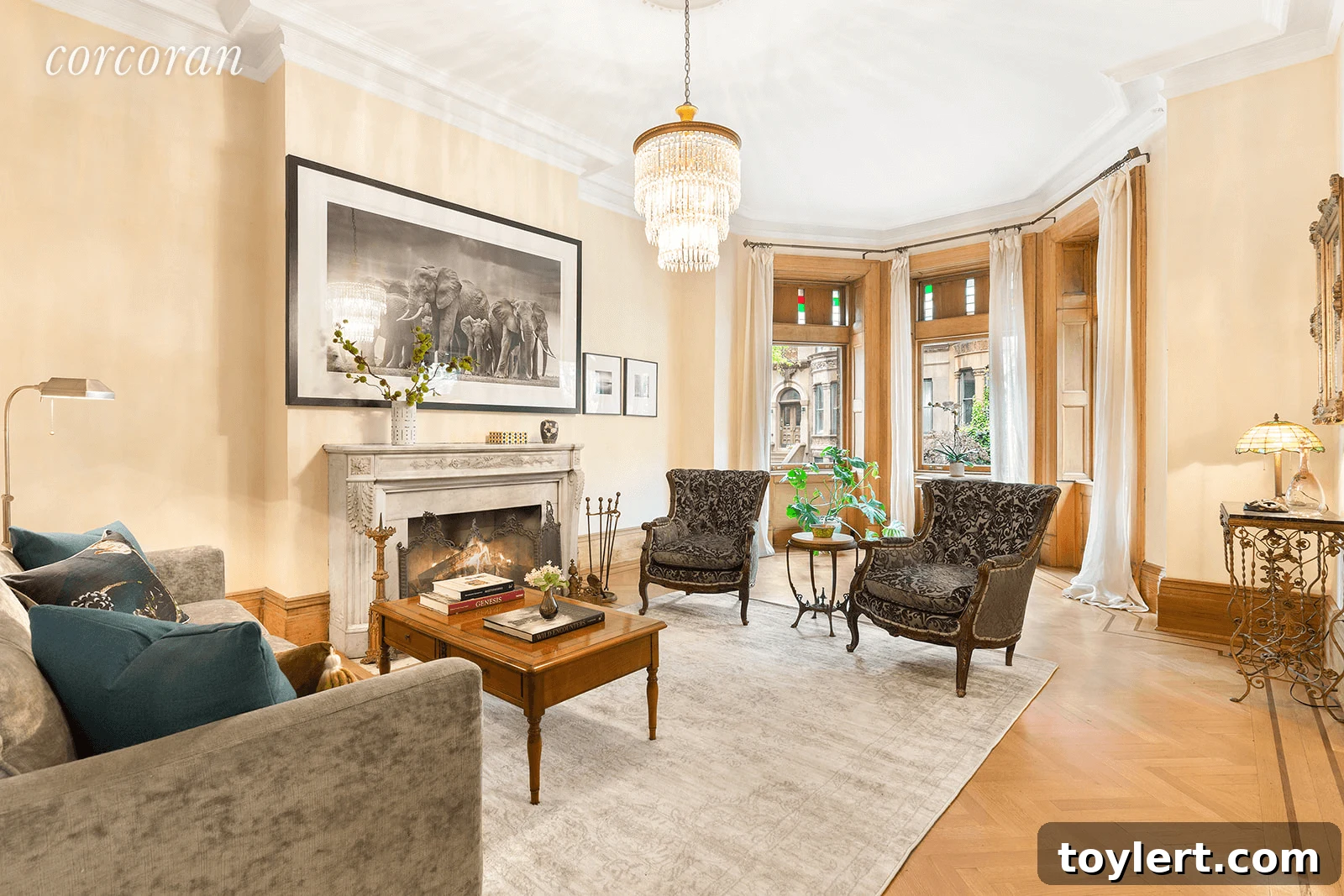
While the original opulent interior details of 60 Montgomery Place may have been lost to the sands of time and successive renovations, the sheer scale and architectural integrity of the house present an incredible opportunity for creating truly magnificent modern interiors. One can envision grand reception rooms with soaring ceilings, expansive windows that flood spaces with natural light from its three exposures, and elegant fireplaces serving as focal points. The 22-foot width of the house allows for generous room sizes and impressive architectural features, such as a sweeping central staircase or a series of interconnected living spaces ideal for entertaining. Imagine gourmet kitchens equipped with state-of-the-art appliances, luxurious bathrooms, and serene bedrooms offering unparalleled comfort. The renovation in 2012 would have likely introduced contemporary amenities, ensuring that while the exterior maintains its historic charm, the interior provides every modern comfort and convenience expected in a luxury residence. This blend of historical grandeur and modern functionality is what makes homes like 60 Montgomery Place so uniquely desirable.
A Legacy Preserved: Investing in Brooklyn’s Historic Future
Owning a property like 60 Montgomery Place is more than just acquiring a residence; it is becoming a steward of a significant piece of Brooklyn’s architectural legacy. Homes designed by C.P.H. Gilbert are not merely buildings; they are cultural artifacts, testaments to an era of unparalleled craftsmanship and architectural ambition. The ongoing preservation and sensitive renovation of such historic mansions ensure that their stories continue to be told for generations to come. In a rapidly evolving urban landscape, properties that seamlessly blend historical integrity with modern amenities represent not only sound investments but also a commitment to preserving the unique character of neighborhoods like Park Slope. 60 Montgomery Place stands as a beacon of Romanesque Revival design, a cherished part of Brooklyn’s past, and a testament to the enduring appeal of timeless architecture in one of New York City’s most distinguished enclaves.