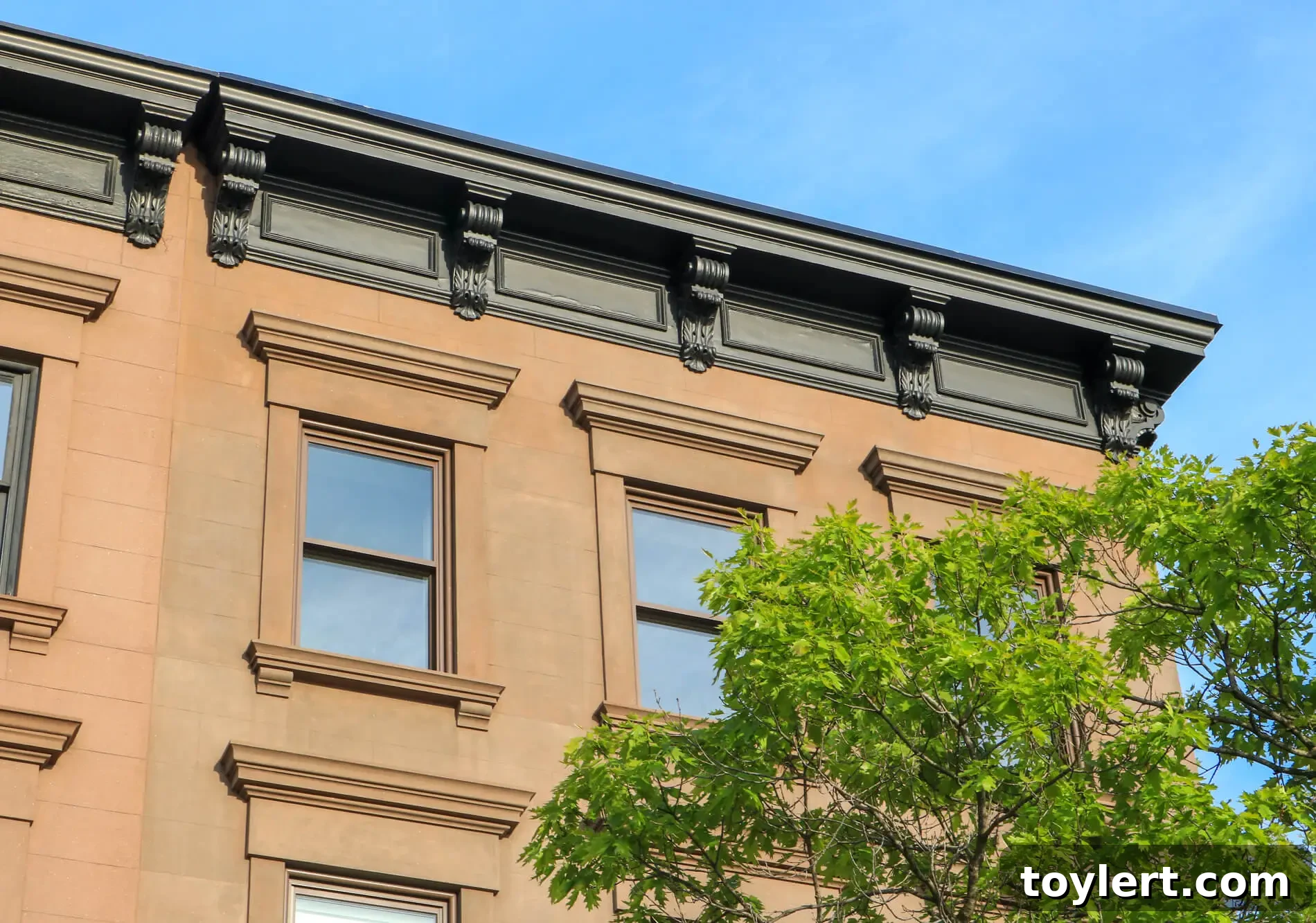
Restoring Your Brownstone Cornice: Achieving Historical Accuracy in Color and Finish
For brownstone homeowners, the journey of exterior restoration is often a meticulous blend of passion, history, and architectural integrity. Among the most prominent features demanding careful consideration is the cornice – the crowning element that defines the building’s aesthetic. Deciding on the perfect color and finish for this significant architectural detail presents a common dilemma: how to balance personal preference with the imperative of historical accuracy. This article delves deep into the factors brownstone owners should consider to ensure their cornice restoration respects the building’s heritage, guiding them through the complexities of color selection and the nuanced choice between a semi-gloss and gloss finish.
Understanding the Significance of the Brownstone Cornice
Brownstones, iconic in cities like New York and Boston, are more than just buildings; they are enduring symbols of a bygone era, reflecting distinct architectural styles predominantly from the 19th and early 20th centuries. The cornice, often intricately detailed, serves as a crucial visual cap, separating the roofline from the facade. Historically, cornices were crafted from various materials, including wood, sheet metal (tin or copper), or even carved brownstone, each influencing the original painting and maintenance strategies. Its design, scale, and ornamentation are integral to the building’s overall architectural style, whether Italianate, Neo-Grec, Queen Anne, or Romanesque Revival.
Restoring a brownstone cornice isn’t merely about applying a fresh coat of paint; it’s about preserving a piece of urban history. An incorrectly chosen color or finish can disrupt the facade’s harmony, detract from the building’s historical character, and even diminish its aesthetic value. Therefore, understanding the original intent and common practices of the period is paramount for any homeowner committed to an authentic restoration.
Historical Context: Decoding Brownstone Cornice Colors
To achieve historical accuracy, homeowners must embark on a journey of discovery into the past. Brownstone architecture flourished during periods with distinct color palettes and material preferences. While general trends existed, specific choices often depended on the architectural style and available pigments of the time.
Common Historical Palettes and Influences:
- Victorian Era (Mid-to-Late 19th Century): This period, encompassing various brownstone styles, saw a shift from more muted, earth-toned palettes to bolder, more complex schemes, especially by the Queen Anne period. However, for cornices, the emphasis was often on complementing the warm tones of the brownstone itself. Darker, subdued colors were frequently used to provide contrast without overwhelming the natural stone. Think deep greens, rich browns, charcoal grays, and occasionally a dark cream or off-white.
- Italianate and Neo-Grec Styles: Early brownstones often featured these styles. Colors tended to be more restrained. Cornices might have been painted to mimic natural stone, or in colors that offered a sophisticated contrast to the brownstone, such as a deep bronze, forest green, or a muted iron gray. The goal was often to highlight the architectural details through shadow and contrast rather than vibrant color.
- Material Influence: If the cornice was wood, it might have been painted in durable, often oil-based paints that could withstand the elements. Metal cornices (tin, copper) were frequently painted to protect them from rust and weather, often in dark, protective colors or sometimes to emulate stone or other metals.
Researching Original Colors:
The most accurate way to determine an original cornice color is through “paint archaeology.” This involves carefully scraping away layers of paint to uncover the oldest pigments. This process, ideally performed by a professional preservationist or architect, can reveal the true historical palette. Additionally:
- Consult Historical Records: Local historical societies, preservation commissions (like the NYC Landmarks Preservation Commission), and architectural archives may hold photographs, building permits, or even original specifications that can offer clues.
- Examine Neighboring Brownstones: Observe other historically preserved brownstones in your neighborhood, particularly those from the same era and style. While not definitive, they can provide valuable insights into common practices.
- Analyze Remaining Fragments: Even small, protected areas of the cornice that haven’t been fully exposed to weather or repainting might retain traces of the original color.
Factors Influencing Your Cornice Color Choice Today
Even with historical research, the final color selection involves several contemporary considerations:
- Architectural Style and Period: As mentioned, this is foundational. A color suitable for an Italianate brownstone might be out of place on a Queen Anne structure.
- The Brownstone Itself: The specific hue of your brownstone (which varies from reddish-brown to a cooler gray-brown) should always be a primary consideration. The cornice color should harmonize with or provide a thoughtful contrast to the stone, rather than clashing.
- Surrounding Elements: Consider the color of your window frames, doors, stoop railings, and other trim. The cornice color should integrate seamlessly with these components to create a cohesive facade.
- Light Exposure: The direction your brownstone faces and the amount of direct sunlight it receives throughout the day will significantly impact how a color is perceived. A color swatch viewed indoors will look different on an exterior cornice. Test swatches on the actual cornice and observe them at different times of day and under varying weather conditions.
- Neighborhood Context: While your brownstone is unique, it exists within a larger streetscape. A color that complements the overall aesthetic of your block can contribute positively to the neighborhood’s historical character.
The Finish Dilemma: Semi-Gloss vs. Gloss
Once a historically appropriate color palette has been established, the next critical decision is the paint finish. For exterior elements like cornices, the choice typically narrows down to semi-gloss or gloss, each offering distinct aesthetic and practical implications.
Historical Precedent for Finishes:
Historically, paint technology was different. Many paints, especially oil-based formulations, had a softer sheen that might be closer to what we consider modern semi-gloss or even satin. Highly reflective, mirror-like glosses were less common or harder to achieve with durability. However, durable finishes were always preferred for exterior trim to protect against the elements. Therefore, a balance of protection and aesthetic appropriateness was sought.
Examining the Options:
1. Gloss Finish:
- Aesthetic Impact: A high-gloss finish is highly reflective, creating a crisp, almost wet look. It dramatically highlights architectural details, making the cornice “pop” and catching the light. This can be visually striking, especially for intricate carvings or unique designs.
- Durability and Maintenance: Gloss paints are generally very durable and hard-wearing. Their smooth, slick surface makes them exceptionally easy to clean, resisting dirt and grime more effectively than flatter finishes. They are often chosen for areas that require frequent washing.
- Considerations for Historical Accuracy: While offering excellent protection, a very high gloss might, in some contexts, appear “too modern” or plasticky for a historic brownstone. It can sometimes accentuate imperfections on older, less-than-perfect surfaces. For some periods and styles, a high gloss might deviate from the softer, more subdued finishes historically used. However, for certain architectural elements or specific historic interpretations, a high gloss might be appropriate, particularly if a protective, durable, and eye-catching finish was intended.
2. Semi-Gloss Finish:
- Aesthetic Impact: A semi-gloss finish offers a softer, more subtle sheen than full gloss. It still provides a degree of reflectivity that enhances architectural details, but without the intense gleam. This creates a more understated elegance and a sense of depth that can be very flattering to historic structures. It is often perceived as more refined and less aggressive than a full gloss.
- Durability and Maintenance: Semi-gloss paints are also very durable and suitable for exterior use. They are easier to clean than matte finishes, though perhaps slightly less so than high gloss. They stand up well to weather and wear.
- Considerations for Historical Accuracy: For many brownstone restorations, a semi-gloss finish is often recommended as it strikes an excellent balance between historical appropriateness and modern durability. Its softer sheen often aligns more closely with the appearance of traditional oil-based paints from the 19th century. It is also more forgiving on older surfaces, camouflaging minor imperfections better than a high gloss. Many historic preservation guidelines lean towards semi-gloss for exterior trim and architectural details.
Practical Steps for Homeowners
Making an informed decision requires a systematic approach:
- Consult Local Historic Preservation Guidelines: If your brownstone is in a historic district or is individually landmarked, you will almost certainly need to adhere to specific guidelines and obtain permits. These guidelines often specify acceptable color palettes and finishes for exterior elements.
- Hire Professionals: Consider engaging an architect specializing in historic preservation or a paint consultant with expertise in period colors. They can provide invaluable advice, conduct paint archaeology, and help navigate local regulations.
- Test Samples Extensively: This cannot be stressed enough. Purchase small quantities of your top color and finish choices and apply them to an inconspicuous section of the cornice, or on large sample boards that can be propped up against the cornice. Observe them throughout the day, in different lighting conditions, and even in various weather. What looks good on a chip might be entirely different when applied to a large, prominent exterior feature.
- Consider the Long-Term: Factor in the maintenance implications of your choice. While both semi-gloss and gloss are durable, consider how often you are willing to clean or repaint, and how the chosen finish will age.
- Balance Accuracy with Practicality: While historical accuracy is the goal, sometimes a slight modification might be necessary for modern durability or aesthetic appeal, provided it doesn’t significantly detract from the building’s character. For instance, using a highly durable modern paint in a historically accurate color and appropriate sheen is generally preferred over attempting to recreate an exact historical paint that might lack modern protective qualities.
Common Pitfalls to Avoid
In your quest for the perfect cornice, steer clear of these common mistakes:
- Guesswork and Assumptions: Never assume a color or finish is historically accurate without proper research.
- Ignoring Context: Choosing a color in isolation without considering the brownstone’s specific hue, the overall facade, and the neighborhood context.
- Underestimating Light: Forgetting that light dramatically alters perceived color and sheen.
- Relying on Small Samples: A tiny paint chip does not accurately represent how a color will look on a large exterior surface.
- Disregarding Professional Advice: While it’s your home, professionals specializing in historic preservation have critical insights.
Conclusion
The brownstone cornice is a testament to the craftsmanship and architectural trends of its era. Deciding on its color and finish is a significant undertaking that requires thorough research, careful consideration, and often, professional guidance. By delving into historical palettes, understanding the nuances of different finishes, and meticulously testing your choices, homeowners can achieve a historically accurate restoration that not only honors their brownstone’s legacy but also enhances its beauty and contributes positively to the urban landscape. The ultimate goal is to select a color and finish that resonates with the building’s original spirit, ensuring its crowning glory stands proud for generations to come, reflecting both its past grandeur and its enduring charm.