Reviving Your Home’s Heart: A Deep Dive into Wood Stripping and Finishing
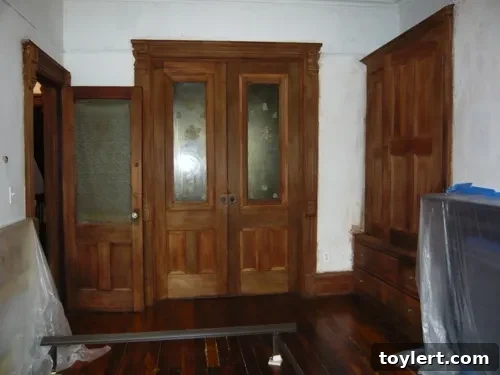
Embarking on a home renovation project often starts with a single, focused goal. For us, it was the ambitious task of stripping the old, tired woodwork in our bedroom. This past weekend marked a significant milestone as we brought in professional help for the challenging stripping process itself. While experts handled the chemical removal of layers of paint and finish, our primary — and surprisingly arduous — contribution involved completely emptying the room. What initially seemed like a straightforward task stretched into several hours across two full days, revealing just how much accumulation a bedroom can gather over the years. This crucial first step, however, was incredibly satisfying. Seeing the raw, beautiful poplar wood emerge from beneath decades of faux mahogany stain and shiny, worn finish was a powerful reminder of the hidden beauty often concealed within older homes.
The Inevitable Renovation Ripple Effect: Tackling Unexpected Discoveries
As anyone who has delved into an old house knows, one project rarely stands alone. The act of completely emptying the bedroom didn’t just clear space; it also cleared our minds, allowing us to see the room with fresh eyes and identify other areas needing attention. This phenomenon, affectionately known as ‘renovation scope creep,’ quickly took hold.
From Fireplace Repairs to Plaster Perfection
With the room bare, the charming, albeit slightly neglected, fireplace came into sharper focus. We’ve scheduled a chimney expert to address necessary repairs, ensuring not only its aesthetic appeal but, more importantly, its safety and functionality. This proactive step is vital in older homes where fireplaces might have unseen issues lurking behind walls and decorative mantels. Simultaneously, the exposed walls revealed various cracks and imperfections in the plaster that had been hidden by furniture and decor. We realized this was the opportune moment to undertake any necessary plaster repairs. Addressing these flaws now, before any new finishes are applied, is critical for achieving a smooth, flawless surface, whether we opt for paint or wallpaper down the line.
Painting, Curtains, and Future Visions
The logical progression from plaster repair is, of course, painting. While we initially hadn’t planned for a full paint job, the stripped-down state of the room makes it an undeniable ‘now or never’ opportunity. A fresh coat of paint will not only brighten the space but also protect the newly repaired plaster. Beyond the structural and surface work, we also decided this would be an ideal time to finally hang those curtains we’ve had “lying around forever.” It’s often the smaller details that truly bring a renovated space to life, and integrating these elements into the larger project workflow makes perfect sense.
Long-Term Dreams: Embracing Wallpaper (Eventually)
While painting is on the immediate agenda, our long-term vision for this room includes wallpaper. However, we’re exercising patience and strategy with this particular design element. Wallpapering, especially in an older home with potentially uneven walls, can be an art form in itself. Our plan is to first practice our wallpapering skills in a less prominent area, like the hallway, which will serve as an excellent training ground. This allows us to experiment with paste types, cutting techniques, and pattern matching without the pressure of a primary living space. Once we’ve honed our technique and gained confidence, we’ll then move on to preparing and papering the living room, which will undoubtedly be a larger and more intricate undertaking. Only after these preparatory projects will we feel ready to tackle the bedroom, ensuring a professional and satisfying result that truly elevates the room’s design.
The Pivotal Decision: How to Finish Stripped Poplar Woodwork
Amidst all these concurrent projects and future plans, one critical decision looms large and requires immediate attention: how to finish the newly stripped woodwork. The wood in question is poplar, a softwood commonly used for trim and mouldings in older homes. Historically, poplar was often painted or given a faux grain finish to mimic more expensive hardwoods like mahogany. Our woodwork, for instance, originally featured a faux mahogany stain topped with a shiny, protective finish, likely shellac or varnish. Now, with the raw wood exposed, we’re faced with an exciting array of possibilities, each with its own advantages and challenges.
Understanding Poplar Wood Characteristics for Finishing
Before diving into the finishing options, it’s helpful to understand poplar. Poplar is known for its relatively smooth texture, fine grain, and a distinct greenish-yellow cast that can sometimes have streaks of purple or gray. While it takes paint exceptionally well, staining poplar can be tricky. Its density can vary significantly even within the same board, leading to blotchiness and uneven absorption if not properly prepped. Achieving a consistent stain color across all pieces requires careful technique, often involving a wood conditioner to ensure even absorption and a more uniform appearance.
Option 1: Replicating the Original Look – Stain and Traditional Finish (Shellac or Varnish)
One compelling option is to restore the woodwork to its original grandeur by applying a similar faux mahogany stain and then protecting it with a traditional finish. This approach aims for historical accuracy and can beautifully complement the character of an old home, preserving its architectural integrity.
- Staining Process: If choosing to stain, preparation is paramount. After stripping, the wood must be thoroughly sanded to achieve a smooth surface and remove any remaining stripper residue. Applying a wood conditioner is highly recommended for poplar to prevent blotchiness and ensure a more even stain application. We could use a premixed stain to simplify color consistency, but careful application is still key. As for the concern about stain getting on the walls, meticulous taping and masking off the surrounding plaster or drywall is essential. Protecting adjacent surfaces with painter’s tape and drop cloths will prevent unwanted marks and save significant cleanup time, ensuring a crisp, clean edge between the wood and wall.
- Shellac: Shellac is a natural resin that has been used for centuries. It dries incredibly fast, provides a beautiful amber tone that deepens with age, and acts as an excellent sealer. However, it is alcohol-soluble, meaning it can be damaged by alcohol or high heat. The main concern, as we’ve heard, is its strong odor and the toxicity of the denatured alcohol solvent. While proper ventilation (opening windows, using fans) and personal protective equipment (respirator, gloves) can mitigate risks for DIYers, some prefer to hire a professional for shellac application, especially in larger areas or for those sensitive to fumes. Its fast drying time also means that technique needs to be precise to avoid lap marks, making it challenging for beginners.
- Varnish (e.g., Polyurethane): As a more modern alternative to shellac, varnish, particularly oil-based polyurethane, offers superior durability and resistance to moisture, heat, and chemicals. It comes in various sheens (satin, semi-gloss, gloss) and provides a hard, protective film that stands up well to everyday wear and tear. Varnish typically requires more drying time between coats than shellac but is generally considered more forgiving for DIY application than shellac, with easier brushability. While it also has fumes, they are generally less acute than shellac’s alcohol vapor, though good ventilation is still crucial for a safe working environment.
Option 2: Stain and Wax Finish
For those seeking a softer, more natural aesthetic with easier repairability, combining a stain with a wax finish presents an attractive alternative that brings out the wood’s inherent warmth without a harsh, glossy sheen.
- Staining Process: The initial staining process would be identical to Option 1, focusing on meticulous preparation and even application to achieve the desired hue. The goal here is to impart color while allowing the wood grain to show through.
- Wax Finish: Waxing is often touted as the “easy” option, and in many respects, it is. It typically involves rubbing a paste or liquid wax onto the stained wood surface with a soft cloth, allowing it to penetrate slightly, and then buffing it to a gentle sheen. This process is less about creating a hard, protective film and more about nourishing the wood and enhancing its natural beauty.
Pros: Wax creates a lovely, tactile finish that feels natural to the touch. It’s relatively easy to apply and can be spot-repaired if minor damage occurs – simply reapply wax to the affected area. It’s also generally less toxic and odorous than shellac or varnish, making it a more pleasant DIY experience. The matte or low-sheen look can be particularly appealing for historical restoration where a “perfect” modern finish might look out of place.
Cons: The ease of application comes with trade-offs in durability. Wax finishes offer significantly less protection against moisture, scratches, and everyday wear compared to film-forming finishes like shellac or varnish. They require more frequent reapplication, especially in high-traffic areas, to maintain their luster and protective qualities. Water rings and heat marks can also be a concern, making coasters a necessity. So, while it’s “easy” to apply, it demands more consistent maintenance over time.
Option 3: Just Wax – Embracing Natural Poplar
The simplest approach, and one that truly celebrates the inherent character of the wood, is to skip the stain entirely and apply only a wax finish to the raw, stripped poplar. This choice allows the wood’s natural beauty to be the star.
- The Look: This option would showcase poplar’s natural greenish-yellow tones and unique grain patterns. Without stain, the wood’s true color would be revealed, offering a brighter, more contemporary, yet still classic, aesthetic. The subtle variations in color within the poplar can create a beautiful, organic texture.
- Process and Considerations: The preparation remains crucial – thorough sanding is necessary for a smooth, clean surface ready to absorb the wax. Any imperfections or remaining stripper residue will be highly visible without stain. The application process for the wax would be the same as described in Option 2. All the pros and cons of a wax finish – its natural feel, ease of repair, but lesser durability and higher maintenance – would apply here, perhaps even more so without the added barrier of a stain layer. This choice is ideal for those who appreciate the raw beauty of wood, are not afraid of its natural color variations, and are committed to its ongoing care to maintain its pristine condition.
Making the Right Choice for Your Home
Each of these finishing approaches offers a distinct aesthetic and level of maintenance. Our decision hinges on balancing historical authenticity, desired durability, and the practicality of application (whether DIY or professional). Considerations like the amount of natural light in the room, the intended use of the space, our comfort level with different materials, and the overall design scheme of our home will all play a role in the final choice. It’s often helpful to test a small, inconspicuous area or a scrap piece of poplar with each finish to truly visualize the outcome.
We Need Your Expertise: Share Your Stories!
As we navigate these crucial decisions, we turn to the collective wisdom of the home renovation community. Have you worked with stripped poplar woodwork? What finishes have you found most successful, especially regarding consistency of stain color or the durability of wax? Do you have experience with the challenges and rewards of applying shellac? Your insights, practical advice, and especially your before-and-after photos, would be invaluable. Please share your experiences and stories here, helping us, and others, make informed choices for our cherished homes.
Understanding Wood Conditioner for Poplar
A wood conditioner is a pre-stain treatment designed to help wood absorb stain more evenly. Poplar, like pine and maple, is prone to blotchiness when stained because its grain has varying densities that absorb stain at different rates. Applying a conditioner before staining helps to ‘seal’ the more porous areas, allowing the stain to penetrate more uniformly and resulting in a much more consistent color across the entire surface. This is a simple yet crucial step for achieving professional-looking results with challenging woods like poplar, ensuring that your chosen stain color appears even and vibrant rather than patchy and inconsistent.