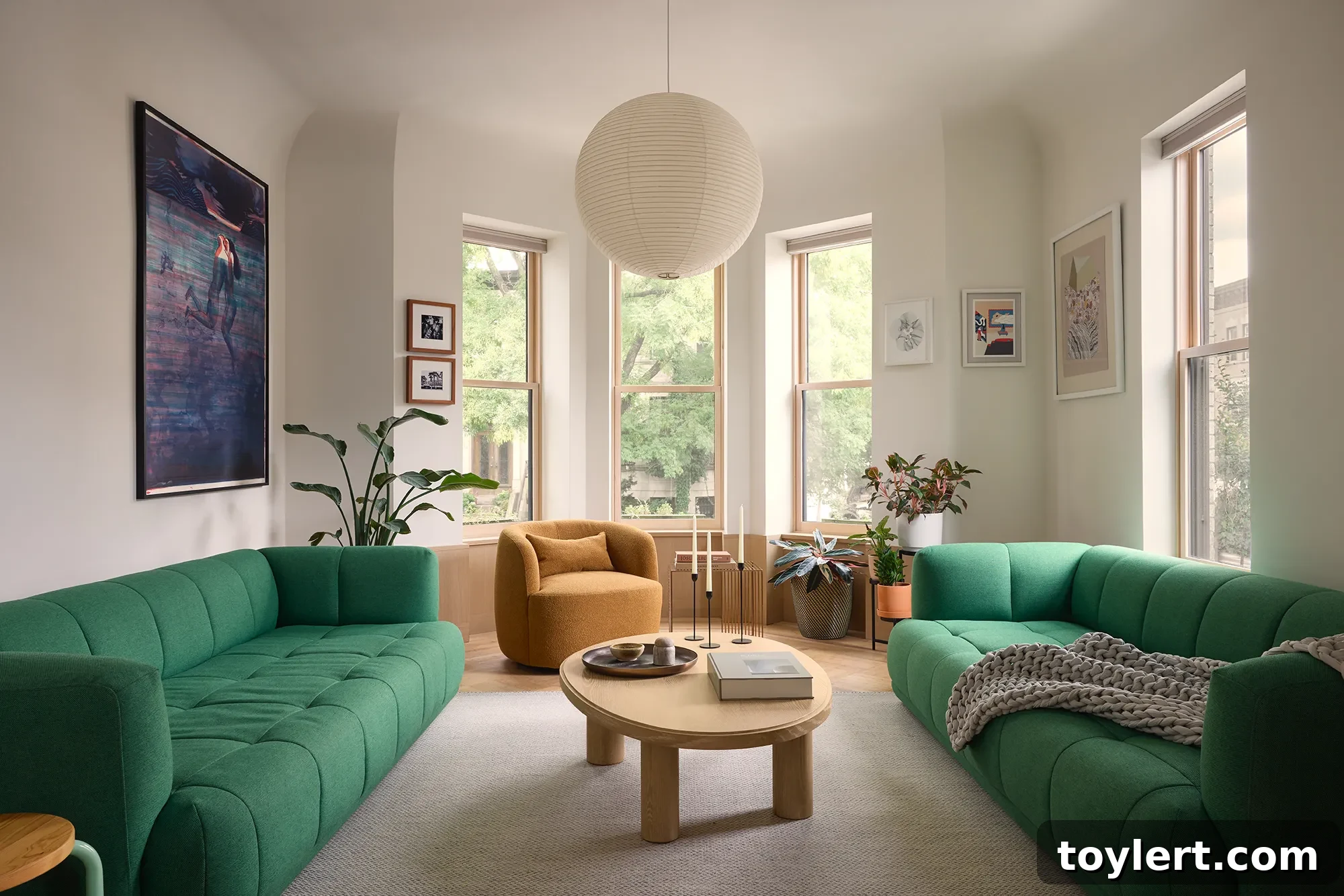
In the heart of Lefferts Manor, a picturesque and historically significant enclave renowned for its grand late 19th and early 20th-century row houses adjacent to Brooklyn’s beloved Prospect Park, stands a landmarked corner property that recently underwent a breathtaking metamorphosis. What was once a home steeped in the heavy aesthetics of its era has been entirely reimagined and brought into the 21st century. New owners, with a distinct appreciation for the serene principles of Japanese design, embarked on a journey to transform this stately residence. Their vision was clear: a home brimming with natural light, equipped with updated mechanical systems, offering intelligent storage solutions, and above all, fostering a bright, functional, and exceptionally kid-friendly environment.
To achieve this ambitious reinvention, they entrusted their cherished brownstone to the skilled hands of Abruzzo Bodziak Architects (ABA). This Brooklyn and Connecticut-based firm, founded in 2009 by partners Emily Abruzzo and Gerald Bodziak, is celebrated for its thoughtful approach to modern architectural challenges within historic contexts. Their expertise was crucial in orchestrating a renovation that would not only meet the family’s contemporary needs but also respectfully engage with the building’s inherent character and landmark status.
Understanding Lefferts Manor: A Tapestry of History and Architecture
Lefferts Manor is more than just a neighborhood; it’s a meticulously preserved piece of Brooklyn’s architectural heritage. Nestled beside the expansive greenery of Prospect Park, this area is characterized by its tree-lined streets and an impressive collection of brick and stone row houses, many of which date back to the turn of the 20th century. Designated as a historic district, homes here are often subject to strict regulations aimed at preserving their original facades and overall streetscape integrity. This particular corner house, with its landmarked status, presented both a unique opportunity and a significant design challenge. The architects at ABA began their process by meticulously studying the architectural language of the surrounding properties. “We looked at houses in the same row, trying to understand the original intent,” explained Emily Abruzzo, emphasizing their commitment to historical context. This investigative phase revealed a common pattern: while many homes in the area retained some original features, most had also undergone various renovations over time, some sympathetic, others less so. The clients’ house was no exception, presenting a patchwork of original detailing alongside subsequent alterations.
A Vision for Modern Living: Japanese Aesthetics Meets Historic Charm
The new homeowners brought a compelling and contemporary vision to their historic dwelling, centered around a profound appreciation for Japanese design principles. This aesthetic is often characterized by minimalism, natural materials, a profound connection to nature, and an emphasis on light and space. Integrating such a distinct style into a traditional Brooklyn brownstone required a nuanced approach, far beyond a superficial application of elements. The clients desired a living space that felt inherently calm, uncluttered, and highly efficient. Beyond the aesthetic, their practical needs were paramount: thoroughly updated mechanical systems to ensure comfort and efficiency, an abundance of natural light to brighten the often-dark interiors typical of such homes, and smart, integrated storage solutions to maintain a sense of order, particularly with a growing family. ABA’s task was to translate these desires into a cohesive architectural language, creating a home where ancient traditions of design met modern family life seamlessly within a historic shell.
Abruzzo Bodziak Architects: Crafting the Transformation
Abruzzo Bodziak Architects are renowned for their thoughtful and innovative approach to architecture, particularly in projects that demand a sensitive dialogue between past and present. Emily Abruzzo and Gerald Bodziak lead a firm that excels in problem-solving, turning complex constraints into creative opportunities. Their expertise extends to understanding the intricate dynamics of historic structures while simultaneously introducing contemporary functionality and aesthetics. For this Lefferts Manor project, their involvement was pivotal from the outset. They didn’t just renovate; they orchestrated a complete reinvention, ensuring that every design decision contributed to the overarching goals of brightness, functionality, and a welcoming environment. The architects delved deep into the existing structure, carefully identifying elements that could be preserved, restored, or thoughtfully reinterpreted. Their philosophy revolves around creating spaces that are not only beautiful but also deeply responsive to the inhabitants’ lifestyle, making them the ideal partners for a project that sought to imbue a historic home with a fresh, modern spirit while respecting its legacy.
Navigating the Past: Respecting Originality While Embracing New
Upon initial assessment, the architects uncovered some of the home’s original features, which, while historically significant, contributed to a sense of darkness and heaviness that didn’t align with the clients’ vision. Among these were a distinctive shallow curved cove at the ceiling, high wainscoting, and an abundance of heavy woodwork that once defined the interior. “It was dark, and didn’t feel right for them,” Abruzzo recalled, highlighting the inherent conflict between the home’s original character and the family’s desire for an airy, contemporary space. This presented a critical design dilemma: how to acknowledge and respect the building’s past without being confined by it. ABA adopted a judicious approach, choosing to retain only a select few original elements, including the foundational flooring, the elegant stair rails, and a striking fireplace surround. These chosen features served as anchors, providing a continuous thread to the home’s history. For elements that were reimagined, such as the curved ceiling cove, the architects sought a “modern, minimal interpretation.” They aimed to capture the “spirit of the original,” but executed it with a lightened and modernized aesthetic, ensuring that new interventions felt harmonious and deliberate rather than jarring or out of place.
The Art of Illumination: Maximizing Natural Light
One of the primary objectives of this Brooklyn townhouse renovation was to banish the inherent darkness often found in historic row houses and flood the interior with natural light. Abruzzo Bodziak Architects employed several strategic design interventions to achieve this. Firstly, the layout was carefully reconfigured to create more open-plan living areas on the main floor, allowing light from windows on the front, side (being a corner house), and rear to penetrate deeper into the core of the home. Obstructive walls were replaced with lighter, often translucent or semi-open partitions where privacy was still required, ensuring visual porosity. Window treatments were kept minimal and intentionally designed to maximize glass exposure, allowing sunlight to stream in unobstructed. Furthermore, the selection of interior finishes played a crucial role. Light-colored paints, natural wood tones with pale finishes, and reflective surfaces were strategically used throughout to bounce and amplify available light, creating an expansive and ethereal ambiance. The thoughtful redesign of the existing curved ceiling cove, rendered in a lighter, simpler form, also contributed to an overall sense of openness and vertical space, enhancing the feeling of brightness.
Seamless Functionality and Family-Centric Design
Beyond aesthetics, the renovation prioritized seamless functionality and a truly family-centric design, crucial for a home intended for active children. Every element was considered through the lens of daily life, resulting in spaces that are both beautiful and incredibly practical. The architects integrated custom built-in cabinetry and ingenious storage solutions throughout the house, from discreet wall units in living areas to intelligently designed closets in bedrooms. This meticulous approach to storage helps maintain an uncluttered environment, essential for both minimalist aesthetics and child safety. Materials were selected for their durability and ease of maintenance, capable of withstanding the rigors of family life without compromising on style. Open-concept areas were designed to facilitate easy supervision while encouraging family interaction, yet specific zones offer quiet retreats. For instance, the kitchen, a central hub, was designed for efficiency and social engagement, with surfaces that are both robust and aesthetically pleasing. The overall layout encourages fluidity of movement, ensuring that the home feels welcoming, safe, and effortlessly adaptable to the evolving needs of the family.
Modern Mechanicals and Sustainable Innovations
A crucial, yet often unseen, aspect of this comprehensive renovation was the complete overhaul of the home’s mechanical systems. The clients’ desire for “updated mechanicals” was not merely about replacing old with new, but about integrating cutting-edge technology for enhanced comfort, efficiency, and sustainability. ABA meticulously planned and installed modern HVAC systems, ensuring optimal climate control and superior indoor air quality throughout the seasons. This likely included energy-efficient heating and cooling units, perhaps even radiant floor heating in select areas for ultimate comfort. Plumbing and electrical infrastructures were entirely upgraded, not only meeting contemporary codes but also supporting smart home technologies that could be integrated for lighting, security, and climate management. While specific details on sustainable innovations are not provided, an architectural firm of ABA’s caliber would typically incorporate energy-saving measures, such as enhanced insulation, high-performance windows, and potentially even consideration for future solar readiness, aligning the historic home with modern environmental consciousness. These thoughtful technological upgrades ensure the house operates with maximum efficiency and provides a comfortable, healthy living environment for years to come.
A Harmonious Blend: Minimalism and Legacy
The success of this Lefferts Manor renovation lies in its masterful achievement of a harmonious blend between the minimalist principles of Japanese design and the enduring legacy of a historic Brooklyn brownstone. Abruzzo Bodziak Architects skillfully navigated this complex design challenge by focusing on clarity, simplicity, and natural elements. The material palette chosen reflects this ethos: light-toned woods, crisp white walls, subtle textures, and an absence of unnecessary ornamentation. Rather than attempting a stark contrast, the new elements subtly complement the retained historical features, creating a cohesive dialogue across different eras. The “modern, minimal interpretation” of the original ceiling cove is a prime example of this nuanced approach, where form and function merge without sacrificing historical reverence. This careful balance ensures that the Japanese design influence feels integrated and organic, rather than an imposition. The resulting aesthetic is one of serene elegance, where every detail serves a purpose, contributing to a sense of calm and order that profoundly enriches the daily lives of the inhabitants, demonstrating how thoughtful architecture can bridge centuries with grace.
The Enduring Appeal of Thoughtful Design
The transformation of this landmarked corner house in Lefferts Manor stands as a testament to the power of thoughtful and client-centric architectural design. Through the meticulous efforts of Abruzzo Bodziak Architects, a once dark and somewhat dated interior has been reborn as a vibrant, light-filled sanctuary that perfectly aligns with the modern family’s aspirations. This project beautifully illustrates how a deep respect for architectural heritage can coexist with a bold embrace of contemporary design principles. By integrating minimalist Japanese aesthetics, maximizing natural light, ensuring robust functionality, and upgrading critical infrastructure, ABA has created a home that is not only visually stunning but also incredibly responsive to the demands of modern living. It is a space where history is honored, present needs are met with elegance, and future memories are poised to be made in a setting of unparalleled tranquility and style. This Lefferts Manor brownstone renovation serves as an inspiring blueprint for how historic homes can be respectfully and intelligently adapted for the 21st century, proving that true architectural innovation often lies in the art of harmonious integration.