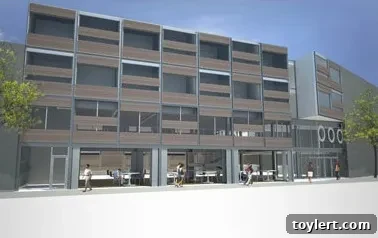
Pod Hotel Unveils New Williamsburg Outpost: Revolutionizing Urban Hospitality with Modular Design
Williamsburg, Brooklyn, continues its dynamic transformation into a premier destination, and at the forefront of its evolving landscape is the announcement of a new Pod Hotel at the bustling intersection of Driggs Avenue and North 4th Street. This forthcoming establishment marks a pivotal moment for the popular micro-hotel chain, signifying its third footprint in New York City and its inaugural venture beyond Manhattan’s borders. With plans for 200 meticulously designed rooms, the Pod Hotel is set to redefine modern travel accommodation in one of Brooklyn’s most vibrant neighborhoods, a development that garnered significant attention from publications like Capital New York.
Williamsburg: Brooklyn’s Booming Hotel Hub
The arrival of the Pod Hotel underscores Williamsburg’s undeniable ascent as a hospitality powerhouse. What was once primarily a residential and industrial enclave has rapidly blossomed into a cultural epicenter, attracting tourists, artists, and entrepreneurs alike. This new Pod Hotel isn’t an isolated event; it represents at least the fourth new hotel project slated for the area, according to Brownstoner. This fresh wave of development complements an already robust collection of at least four existing hotels, including well-known names such as the luxurious Wythe Hotel and the stylish King & Grove (now known as The William Vale and The Williamsburg Hotel, respectively, reflecting the area’s ongoing evolution). The concentration of these establishments highlights Williamsburg’s appeal as a top destination, offering a diverse range of lodging options that cater to various budgets and preferences, from boutique luxury to innovative, cost-effective micro-hotel concepts.
The neighborhood’s unique blend of historic charm, industrial-chic aesthetics, and a thriving arts and culinary scene makes it an irresistible draw for visitors seeking an authentic New York experience beyond the traditional Manhattan tourist circuit. Its excellent accessibility to Manhattan via subway further cements its status as a desirable location for both short-term stays and longer visits. As more hotels choose Williamsburg as their home, the district solidifies its reputation not just as a cultural hotspot, but as a significant economic engine within Brooklyn, continually adapting to meet the demands of a global audience.
Architectural Vision and Amenities: A Glimpse into the Future Pod Hotel
The design of the new Williamsburg Pod Hotel is entrusted to the acclaimed Garrison Architects, a firm renowned for its innovative and often modular approach to urban design. Their vision for the Pod Hotel includes a striking 50-foot tall structure encompassing over 100,000 square feet of meticulously planned space, a detail first brought to light by Curbed. Beyond its 200 rooms, the hotel promises a comprehensive array of amenities designed to enhance the guest experience and foster a vibrant community atmosphere. These include dedicated retail spaces, inviting courtyards that offer serene escapes within the urban bustle, a signature restaurant, and a lively bar. Taking full advantage of its Brooklyn location, the design incorporates not one, but multiple rooftop bars, providing breathtaking views of the city skyline and the surrounding neighborhood. Furthermore, a rooftop garden is planned, offering a green oasis above the streets and a unique space for relaxation and social gatherings.
Garrison Architects’ design philosophy for the Pod Hotel aligns perfectly with the brand’s ethos of maximizing space and functionality while maintaining a stylish, modern aesthetic. The thoughtful inclusion of communal spaces, from courtyards to rooftop venues, reflects a growing trend in hospitality where hotels are not just places to sleep, but destinations for social interaction, work, and leisure. This holistic approach ensures that the Williamsburg Pod Hotel will serve as a dynamic hub for both its guests and the local community, contributing significantly to the lively streetscape of Driggs Avenue and North 4th Street.
The Modular Construction Revolution: A Closer Look at Innovation
One of the most intriguing aspects of the Williamsburg Pod Hotel project lies in its potential embrace of modular construction. Garrison Architects is actively exploring the use of this innovative building method, which would see the hotel constructed from prefabricated 10-foot-by-30-foot components. Each of these modules would typically comprise two guest rooms and a connecting hallway segment, fully outfitted and finished off-site before being transported and assembled on location. This method represents a significant shift from traditional construction, promising a faster, more efficient, and often more sustainable building process.
What is Modular Construction?
Modular construction is a process where a building is constructed off-site, under controlled plant conditions, using the same materials and designing to the same codes and standards as conventionally built facilities. Production occurs in a factory setting, where sections of the building, known as modules, are manufactured. These modules can be nearly fully completed, including plumbing, electrical, and interior finishes, before they are transported to the final building site. Once on site, the modules are lifted into place by cranes and assembled, creating the complete structure. This “plug-and-play” approach drastically reduces on-site construction time and minimizes disruption to the surrounding urban environment, making it an increasingly attractive option for dense city developments like those in New York.
Advantages of Modular Building for Urban Projects
The potential adoption of modular construction for the Pod Hotel highlights several compelling advantages that make it an attractive option for urban development in a dense city like New York:
- Speed and Efficiency: As Curbed reported, modular construction significantly accelerates the building timeline. By manufacturing modules concurrently with site preparation, projects can be completed in a fraction of the time required by traditional methods. This efficiency is crucial in fast-paced urban environments where time is money, and delays can be costly.
- Cost Savings: While initial investment might be comparable, the expedited timeline often translates into substantial cost savings. Reduced labor hours on-site, minimized weather-related delays, and greater control over material waste can lead to up to 15 percent savings in construction costs, as demonstrated by projects like the B2 tower at Atlantic Yards.
- Quality Control: Factory conditions allow for tighter quality control and precision manufacturing, free from the vagaries of weather and site-specific challenges. This often results in higher quality and more consistent finishes throughout the building.
- Reduced Environmental Impact: Modular construction typically generates less waste, as materials are precisely cut and utilized in a controlled environment. The ability to recycle waste within the factory and the reduction in site pollution contribute to a more sustainable building practice.
- Enhanced Safety: A significant portion of the construction work occurs in a controlled factory setting, which is inherently safer than a bustling construction site. This reduces risks and improves worker safety considerably.
- Less Site Disruption: With most of the work done off-site, the impact on the local community during construction is greatly minimized. This means less noise, dust, and traffic congestion, which is a major benefit for residential and commercial areas in Williamsburg.
Navigating the Challenges of Modular Construction
Despite its numerous benefits, modular construction is not without its challenges. The story on Capital New York pointed out a couple of potential downsides:
- Space Inefficiency: One of the commonly cited drawbacks is the potential for wasted space due to the need for double ceilings and walls. Each module must be self-contained and structurally sound for transport, which can lead to redundant layers when modules are joined, potentially reducing overall usable interior space compared to a traditionally built structure.
- Logistical Complexities: Transporting large, prefabricated modules through congested city streets presents significant logistical hurdles. Careful planning, special permits, and precise scheduling are required to avoid disrupting urban traffic and infrastructure.
- Perception and Customization: While quality has vastly improved, there can sometimes be a lingering perception that modular buildings are uniform or lack architectural distinctiveness. However, modern modular design, as envisioned by firms like Garrison Architects, often demonstrates high levels of customization and aesthetic appeal.
- Overseas Manufacturing: The ability to manufacture modules overseas, while offering potential cost benefits, can introduce complexities related to shipping, import regulations, and maintaining oversight of the production process. This also has implications for local job creation within the construction industry.
The B2 Tower Precedent: A Benchmark for Modular Success
The discussion around modular construction for the Pod Hotel draws parallels to other pioneering projects in New York City. Notably, the B2 tower at Atlantic Yards (now known as 461 Dean Street) serves as a significant precedent. This residential tower was designed to be 60 percent modular, a bold endeavor that showcased the potential of this building method on a grand scale. According to Capital New York, the modular approach for B2 was projected to save 15 percent in construction costs and trim four months off the construction timeline. Such an ambitious project underscores New York’s progressive stance on adopting innovative construction techniques to tackle urban development challenges efficiently.
Impact on Local Economy and Urban Landscape
The arrival of the Pod Hotel in Williamsburg is poised to have a multifaceted impact on the local economy and urban landscape. Beyond simply adding 200 rooms, the hotel will generate numerous job opportunities, from construction and hospitality staff to management and ancillary services. It will also draw more tourists and business travelers to the area, boosting foot traffic for local retail establishments, restaurants, and cultural venues. This increased patronage can inject significant revenue into the local economy, supporting small businesses and fostering further growth. However, as with any major development in a rapidly gentrifying area, there are also considerations regarding its effect on neighborhood character, housing affordability, and the balance between new development and preserving the existing community fabric. The careful integration of design elements like courtyards and public-facing retail aims to ensure the hotel contributes positively to the public realm.
Conclusion: A Glimpse into the Future of Urban Hospitality
The upcoming Pod Hotel at Driggs Avenue and North 4th Street is more than just another hotel; it’s a testament to Williamsburg’s enduring appeal and New York City’s continuous push towards innovation in urban development and hospitality. With its strategic location, thoughtfully designed amenities, and the potential adoption of groundbreaking modular construction techniques, the Pod Hotel is set to become a landmark project. It exemplifies how modern architectural practices can meet the demands of a burgeoning tourism market while potentially offering a blueprint for more efficient, sustainable, and rapid construction in dense urban environments. As Williamsburg continues to evolve, the Pod Hotel stands as a vibrant symbol of its future, blending cutting-edge design with a commitment to enhancing the urban experience for all.
New York Moves Into a Modular Construction Phase [Capital New York]
Rendering by Garrison Architects Via Curbed