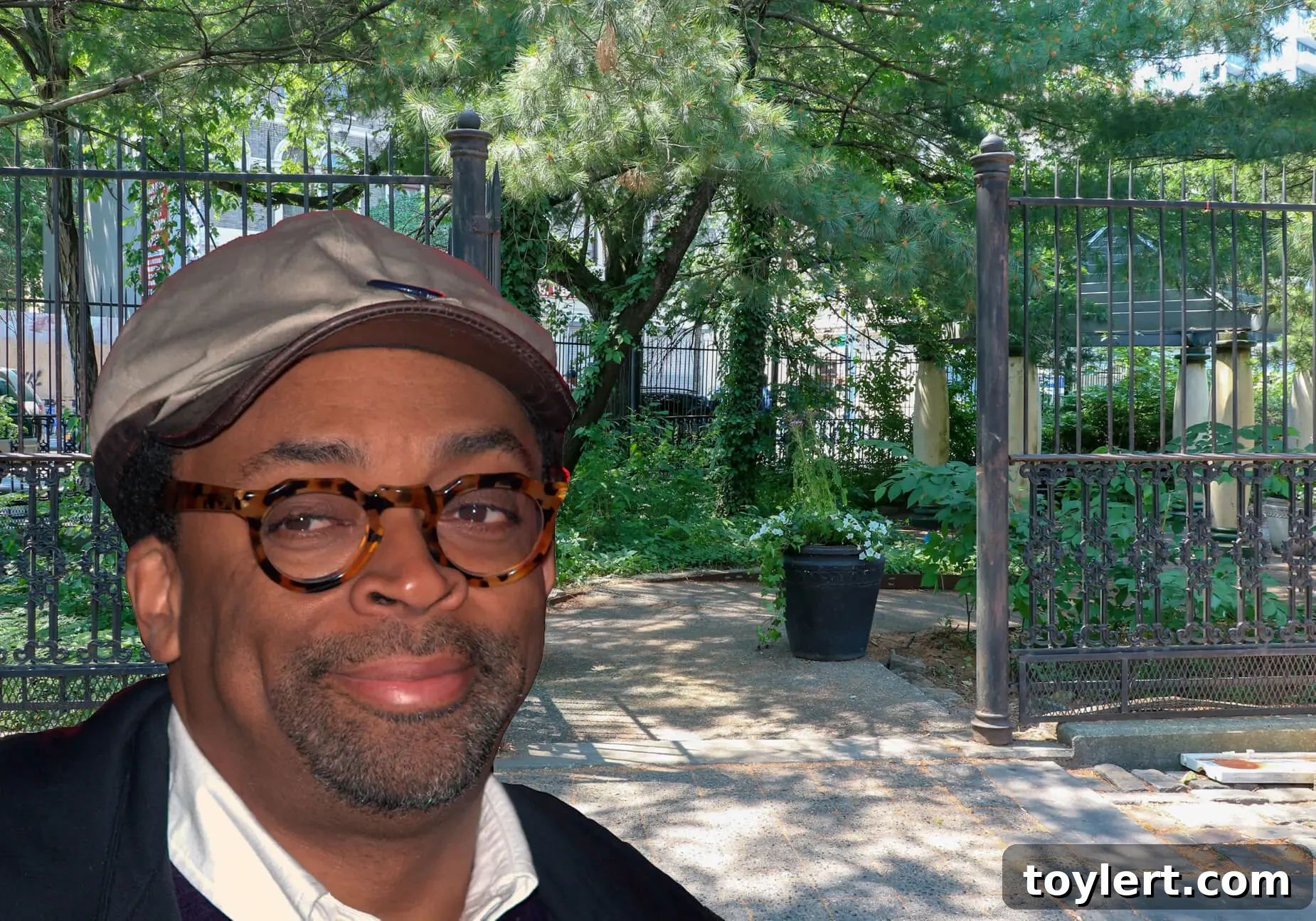
BAM Park’s Fleeting Reopening: Spike Lee, Safety, and the Future of Fort Greene’s Elusive Green Space
In a curious turn of events that has left residents both intrigued and frustrated, BAM Park in Fort Greene, Brooklyn, briefly emerged from its decade-long dormancy, only to snap shut once more. This unexpected opening, which brought a glimmer of hope for a revitalized community space, was quickly revealed to be a mistake, inadvertently linked to the filming activities of acclaimed director Spike Lee. The saga of BAM Park highlights the complex challenges of urban park management, public safety, and the powerful role cultural institutions and local personalities play in shaping their neighborhoods.
A Decade of Dormancy: The History of BAM Park in Fort Greene
Nestled in the vibrant heart of Fort Greene, a historic Brooklyn neighborhood known for its brownstones, cultural institutions, and tight-knit community, BAM Park has long been an enigma. For more than a decade, this potential urban oasis has remained padlocked and inaccessible to the public, declared dangerously unstable. Its closure left a conspicuous void, a barren patch of land in an area continually seeking more green spaces and recreational opportunities for its growing population.
The park’s official custodian, the New York City Department of Housing Preservation and Development (HPD), has maintained its closure due to persistent safety concerns. Over the years, the site has deteriorated, raising questions about structural integrity and the potential hazards it posed to anyone who might try to enter. Local residents, community boards, and park advocates have consistently voiced their desire for the park’s rehabilitation, seeing it as a crucial asset that could enhance the quality of life in Fort Greene, serving as a tranquil retreat, a gathering spot, or simply a safe area for children to play. The long-term closure, however, has symbolized a broader challenge of maintaining public spaces in dense urban environments, often caught between budgetary constraints, complex ownership issues, and the sheer scale of necessary repairs.
The Unexpected Glimpse: BAM Park Briefly Opens Its Gates
Imagine the surprise and delight of Fort Greene residents when, just days ago, the gates of BAM Park, long a symbol of neglect and inaccessibility, were found unexpectedly open. The news spread quickly through local channels and social media, sparking cautious optimism. For a brief period, community members were able to peer into, or even cautiously step onto, the long-forbidden grounds. This sudden availability was a stark contrast to its prolonged closure and naturally led to speculation about a potential, long-awaited reopening initiative by the city. Local news outlets, including Brownstoner, were quick to report on the unusual development, capturing the immediate buzz and hopeful sentiments that rippled through the neighborhood.
However, the joy was short-lived. The enthusiasm quickly gave way to confusion as the park, as swiftly as it had opened, was sealed off once more. The abrupt reversal left many wondering about the true nature of its temporary accessibility. Was it a trial run? A clandestine community effort? Or something entirely different? The mystery surrounding the park’s brief revival only intensified the local community’s yearning for permanent access to this long-dormant green space, highlighting the emotional investment residents have in their shared urban environment.
Spike Lee’s Connection: A Filming Fiasco at the Park
The answer to BAM Park’s mysterious opening and re-closure lay, surprisingly, at the intersection of public land management and the entertainment industry. It turns out the renowned filmmaker Spike Lee, a proud son of Fort Greene with deep roots in the community, had a connection to the park’s recent activities. His production team, working on his critically acclaimed Netflix series “She’s Gotta Have It,” had sought and obtained permission from the HPD to use the BAM Park site as a filming location.
According to a statement from the HPD’s press secretary, permission was indeed granted for the film crew to utilize the area. However, the root of the problem and the cause of the park’s brief, unauthorized public access was a critical lapse in security protocols. “HPD granted permission but has since learned that the site was not properly secured after each filming session,” the spokesperson confirmed. This oversight meant that after filming wrapped for the day, the park gates were left unsecured, allowing unsuspecting members of the public to wander in, mistakenly believing the park was finally open for general use. The irony of a public space being inadvertently opened by a private film production, only to be closed again due to safety concerns, underscores the complexities and potential miscommunications inherent in such arrangements.
The Re-closure and HPD’s Stance on Public Safety
Upon realizing the error and the public’s inadvertent access, HPD promptly acted to re-secure BAM Park. The priority, as always, remained public safety. The park’s “dangerously unstable” condition, the very reason for its decade-long closure, meant that any unauthorized entry posed a significant risk. HPD’s decision to re-seal the park, while disappointing to those who had hoped for a permanent opening, was a necessary step to mitigate potential hazards. The incident served as a stark reminder that despite its appeal as a potential green space, BAM Park is currently far from safe for public use.
The department’s swift response, albeit after the fact, emphasized its commitment to protecting the public from the inherent dangers of the undeveloped site. While the situation highlights a lapse in oversight regarding the film crew’s security measures, it also brings renewed attention to the park’s long-term fate. The HPD’s statement implicitly suggests that until fundamental structural issues are addressed and comprehensive renovations undertaken, BAM Park will remain off-limits, regardless of external factors like film productions.
Community Reactions and the Future of BAM Park
The short-lived opening and subsequent closure of BAM Park have inevitably sparked a range of reactions within the Fort Greene community. Many residents express deep frustration, feeling that their hopes for a new public space were cruelly raised only to be dashed. The incident has reignited calls for HPD and city officials to prioritize the park’s renovation and permanent reopening. Community leaders and local advocacy groups see the park not just as a piece of land, but as a vital component of the neighborhood’s well-being and a testament to urban planning that genuinely serves its residents.
The situation also raises broader questions about the use of public, yet inaccessible, spaces for private ventures. While film productions bring economic benefits and cultural cachet, the public’s right to safe, accessible green spaces remains a paramount concern. The involvement of a prominent figure like Spike Lee, while unintentional in its outcome, brings an unprecedented level of attention to BAM Park. This newfound spotlight could potentially serve as a catalyst for greater public and private investment in the park’s future. There is hope that this incident, rather than simply being a regrettable mistake, might galvanize efforts to finally transform BAM Park from a fenced-off enigma into a cherished public amenity for Fort Greene residents, offering a much-needed haven amidst the bustling cityscape.
Ultimately, the saga of BAM Park is far from over. Its future hinges on proactive measures, substantial funding, and a clear vision for its rehabilitation. The temporary opening, spurred by a film crew’s presence, inadvertently gave the community a taste of what could be, fueling the demand for a genuinely open and safe BAM Park for generations to come.